
Medical tourism in India has been increasing in recent years, patient & visitor guide of We Care Health Services is ensuring a helping hand. There are many patients from foreign countries, even from the European continent, to have treatment because of affordable factors and medical technology in recent years.
Indian hospitals and doctors are helping them with cooperative staff members and all kinds of facilities in a single place. These are the most common things that we have noticed in the testimonials of the patients. A patient's visitor guide will help you to come to India and have treatment for any disease.
Book Appointment
GET A FREE QUOTE
Medical Tourism in India
Medical Tourism is the process of traveling abroad to receive superior medical, dental, and cosmetic care by highly skilled surgeons at some of the most modern medical facilities in the world.. All at a fraction of the price in the US, UK, and Canada.
Medical Tourism gives the global medical tourist the opportunity to get the best quality of medical surgery, cosmetic plastic surgery, and dental surgery at significantly lower costs. While low costs are the primary motivation to travel abroad, some medical tourists seek medical care overseas because of the immediate availability of procedures and sometimes the unavailability of certain procedures.
Today, cheap yet world-class surgeries are just a flight away. But the deluge of information available out there can overwhelm anybody. So, here is a quick patient and visitor's guide to answer most of your questions about the phenomenon.
Is medical tourism legal in India?
Medical tourism in India is completely legal and checks for the genuine patients, and their concern is addressed before the procedure. Medical tourism is also promoted in India through the Ministry of Health and Family Welfare because India is known for its affordable and high-quality healthcare.
Apart from the medical facilities, there are some registered hospitals which are allowed to take the patients from foreign countries. With the help of M-visa, anyone can travel to India and undergo the treatment procedure in the Indian hospitals. The most common treatments which are provided by Indian hospitals are cardiac treatment, organ transplantation, and different types of cosmetic surgeries.
There was a big halt after the introduction of the Assisted Reproductive Act, 2021. It is because the illegal procedure of surrogacy and IVF services is banned. Later in the years, only altruistic surrogacy and the legal method of IVF were introduced in the country. So at present the country is permitting all kinds of treatment in India with a legal Visa policy and cost transparency.
What Does Medical Tourism in India Offer?
The answer to this question is wide and covers different perspectives of present medical tourism in India. There are some key offerings, also covered by the insurance companies. There are also certain factors that are responsible for the cost, like distance and connectivity of your destination. For this purpose, you can also contact some medical agencies in India, which could help you. In recent years, some companies have been working exclusively on projects for disease solutions in Indian hospitals. Here is some idea about those services and benefits to you.
Medical Tourism in India
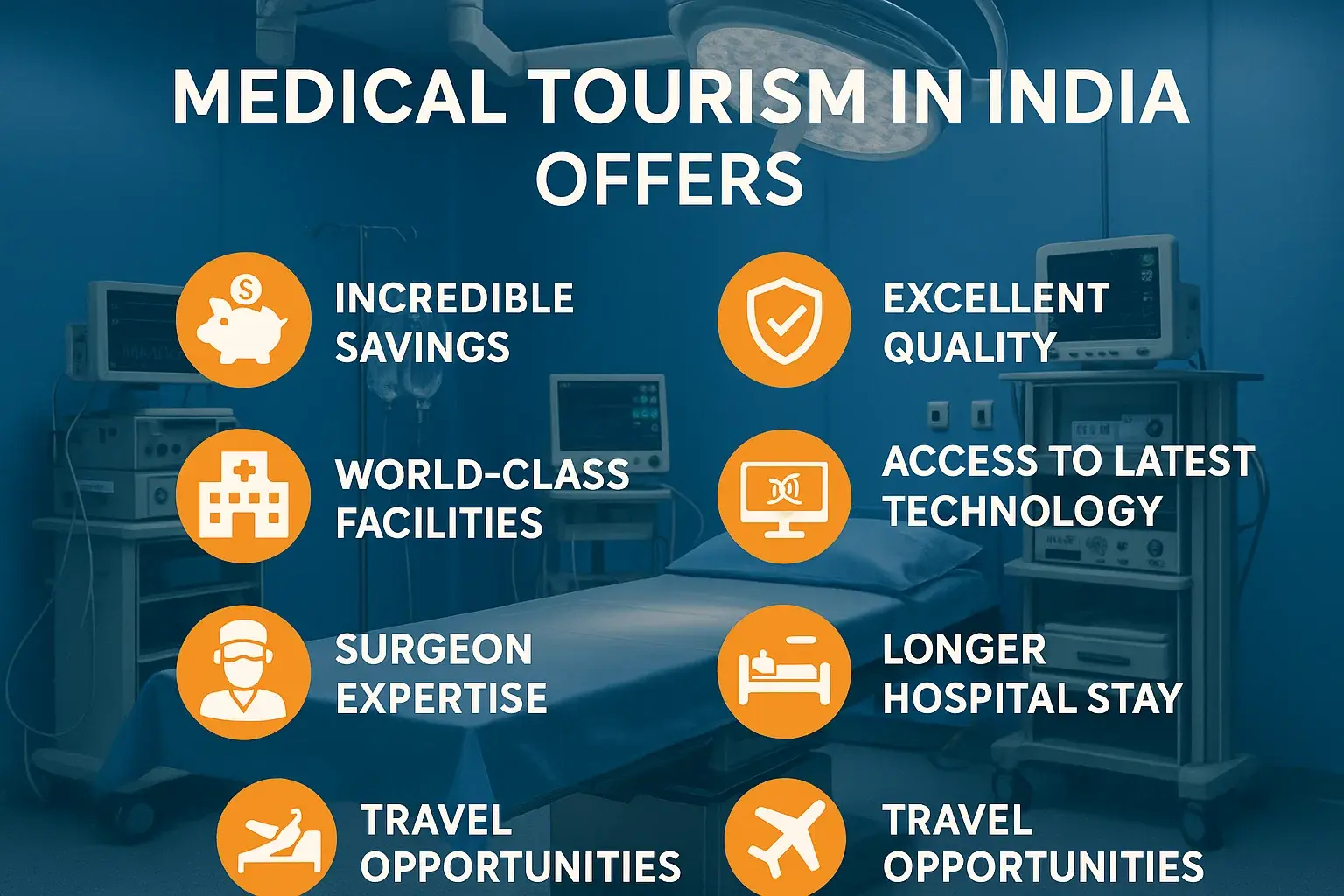
- Incredible Savings: - Savings depend upon where you choose to have your surgery and the cost of the procedure in your home country. Compare a $7,000 hip resurfacing in India with a $48,000 one in the US. That's more than 80% savings even after you have paid for your travel, stay, and vacation. In general, you are able to save at least 50% (say for a dental fix-up across the border in Mexico).
- Excellent Quality: - The quality standards are superior to what you get in the US, UK, or Canada. Many international providers choose to be accredited by organizations like JCI, JCAHO, and ISO or by local accrediting organizations to demonstrate their commitment to quality. If in doubt, read testimonials by patients who have experienced treatment overseas.
- World-Class Facilities: - Most medical tourists will tell you that international hospital facilities are comparable to 5-star hotels with luxurious accommodation, private spacious rooms, and easy access to hospitality services.
- Access to Latest Technology: - The technology used by international health care providers is the latest and greatest. Providers invest heavily in new technology and the training of surgeons.
- Surgeon Expertise: - Most surgeons catering to international patients have either been educated or have received professional training at top schools in the US, UK, or other countries in Europe. They are usually well-versed in English and have experience serving foreign patients.
- No Wait-Lists: - Access to immediate service is what attracts those from countries that have a public health care system towards medical tourism. Canadians and Britons prefer to have their hip resurfacing surgery or spine surgery in India for a few thousand dollars rather than to live with a bad hip or back for 2 years.
- Personalized Service: - Personalized service is another factor contributing to the popularity of medical tourism. Most medical tourists vouch for the genuine and excellent service that they receive from surgeons, nurses, and other medical staff alike. Most of them further go on to say that they have never experienced such service at any hospital in the US, UK, or Canada.
- Longer Hospital Stay: - One of the advantages of medical tourism is that you get to stay in the hospital for a long time without incurring hefty room charges. You can have a longer hospital stay than possible in your local hospital back home under the supervision of your surgeon and physical therapist.
- Great Convenience: - Given the ease of international travel combined with low airfares, your life-changing surgery is just a flight away. Not just that, you can even bring family and friends along.
- Travel Opportunities: - While the primary motivation for most customers is affordable surgery, the opportunity to visit exotic destinations is an additional draw for some. You can choose to have a relaxing recovery in a resort setting, or if your surgeon allows you can even enjoy other tourist attractions.
Book Appointment
GET A FREE QUOTE
Patient & Visitor Guide for India: Legal Procedure of Medical Tourism in India
The legal procedure of coming to India and staying for the treatment has a particular curriculum. The special treatment, such as organ transplantation, requires more time in the same place. The procedure described below makes a stress-free journey for the foreign patients.
Initial Enquiry and Medical Consultation
- Patients share their medical reports with the doctor or coordinators in the hospital.
- With a report history of treatment and diseases is required preferred treatment type is required with an Indian hospital or medical tourism agency.
- The hospital reviews (especially doctors) the case and provides a treatment plan, estimated cost, and duration of stay in the country for treatment.
- Online or video consultations are often arranged before traveling to India, and patients make sure that it is safe to have treatment.
Medical Visa Application
- After confirming treatment of the patient, the hospital issues an official invitation letter.
- Patients apply for an M-Visa (Medical Visa) at the Indian Embassy or online through the e-Visa portal.
- This visa is usually valid for up to six months and can be extended if required.
. Travel and Arrival Assistance
- Many hospitals offer airport pickup facilities, accommodation, and a language interpreter for better communication. These services are provided with the help of medical agencies or on themselves.
- A patient coordinator assists with all logistics, including appointments and billing, and gives you transparency during the whole procedure.
Diagnosis and Treatment
- The main step is ensured after several meetings, and if you agree with the terms and conditions.
- Once admitted, the patient undergoes tests and evaluations before the final procedure.
- These tests are different from the previous reports.
- All treatments are conducted by certified specialists under global safety standards.
Recovery and Post-Treatment Care
- After surgery or therapy, patients receive rehabilitation, physiotherapy, and follow-up monitoring sessions.
- Hospitals provide a detailed medical summary and future care instructions about diet and the safety tips.
Follow-Up After Returning Home
Most hospitals offer online consultations for ongoing guidance and progress tracking.
In essence, the procedure of medical tourism in India is patient-friendly, affordable, and highly organized—making the country a global leader in advanced and ethical healthcare services.
Choosing Any Country for Treatment
This is the very first step, and if you are not researching properly, it could be complex. First, consider every concern; otherwise, you can’t understand which one is best for you. As mentioned above, today you have a wide variety of countries to choose from for your medical tourism needs. In such a market, you must make your selection wisely:
- Quality: - Some countries have a reputation for top-quality cosmetic surgery, while others are famous for their world-class orthopedics, so make your choice accordingly.
- Distance: - A cross-border country would be a prudent choice than a far-off country for small and quick dental works like bridging or cleaning, so you do not have to spend a lot on transportation. However, when considering major dental work like full mouth restoration, it might pay to travel that long distance and go to a far-off country for low-cost high quality dental care.
- Cost: Although quality should not be compromised at any cost, cost can play a
Book Appointment
GET A FREE QUOTE
Choosing the Best Hospital For Treatment
Just like there are many medical tourism destinations, there are many providers who have medical tourism offerings. Some of them are good and some not-so-good. How do you make your choice in such a situation? There are many factors that can help you make your decision. Firstly, don't get swayed by attractive packages and fancy websites. Find out as much as you can through research. Learn from the experience of others: Read and watch what others are saying about the particular hospital, clinic, or surgeon. Check out the facility pictures and videos, as they can give you a good idea of its quality standards.
- Accreditation: Look for NABH or JCI-accredited hospitals that follow international healthcare standards.
- Specialization: Choose hospitals known for expertise in your required field, such as cardiology, oncology, or IVF.
- Qualified Doctors: Check the experience, education, and success rate of the medical team.
- Advanced Technology: Modern hospitals use robotic surgery, digital imaging, and AI-based diagnostics for accurate results.
- Patient Reviews: Read feedback from former patients to understand care quality and outcomes.
- Affordability: Compare treatment costs while ensuring no compromise on safety and facilities.
- Location & Accessibility: Pick hospitals in cities like Delhi, Mumbai, Chennai, or Bangalore, known for excellent infrastructure and connectivity.
Guidelines for Visitors for Treatment in India
India welcomes thousands of international and domestic visitors every year seeking advanced and affordable medical care. If you’re accompanying a patient or visiting a loved one for treatment, following certain guidelines ensures a smooth and respectful experience for everyone involved.
Guidelines for Visitors for Treatment in India
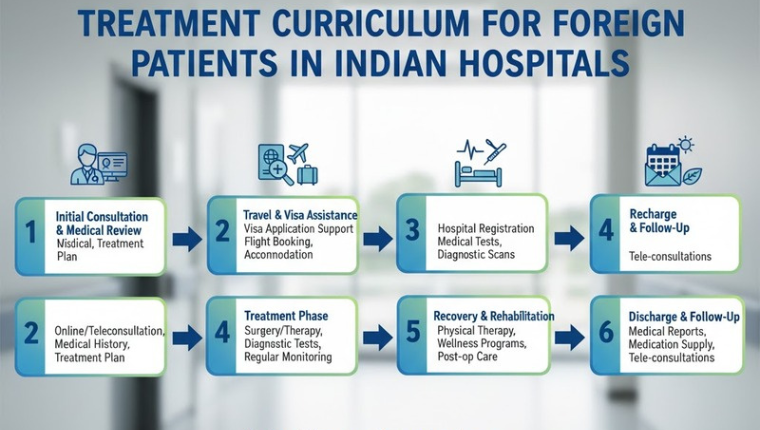
- Initial Consultation and Medical Review
Foreign patients can share their medical reports through email or the hospital’s online portal before arrival. A specialist reviews the case, provides a treatment plan, estimated cost, and duration. Virtual consultations are often available for clarity and preparation. - Travel and Visa Assistance
Hospitals assist in issuing an official medical invitation letter for visa processing. Some also provide airport pickup and lodging assistance for patients and attendants. - Admission and Diagnosis
Upon arrival, the patient undergoes a detailed health evaluation including blood tests, imaging scans, and specialist consultations. This helps confirm the diagnosis and finalize the treatment plan. - Treatment Phase
- Conducted by specialized doctors using advanced medical technology.
- Hospitals maintain international hygiene and safety standards.
- Interpreters and patient coordinators are available to assist throughout the stay.
- Recovery and Rehabilitation
After treatment or surgery, patients receive post-operative care, physiotherapy, and regular monitoring until complete recovery. Dietary and lifestyle guidance are also part of the rehabilitation process. - Discharge and Follow-Up
Before discharge, the doctor provides a detailed report, medication plan, and future follow-up schedule. Many hospitals continue teleconsultations for ongoing support even after the patient returns home. - Accommodation and Comfort
Hospitals often have tie-ups with nearby guest houses and hotels to ensure a comfortable stay for international patients and their families.
This structured curriculum ensures transparency, trust, and a seamless healing experience for foreign patients choosing Indian hospitals for advanced medical care.
Best Indian Hospitals for International Patients
There are different expectations of the patients; most of the time, they require specialized care in a complex situation. Hospitals in Delhi NCR are providing exclusive surgeries and treatments with all kinds of facilities in the hospitals. After Delhi, metro cities in India are also working in the same manner.
We Care Health Services is also coordinated with some best Indian hospitals. We are listing some hospitals with all types of facilities and government accreditation. Later, we will also check for the insurance facilities in India for foreign patients.
|
City |
Specialties |
|
All India Institute of Medical Sciences (AIIMS) |
New Delhi |
|
Apollo Hospitals |
Chennai |
|
Fortis Memorial Research Institute |
Gurugram |
|
Medanta – The Medicity |
Gurugram |
|
Christian Medical College (CMC) |
Vellore |
|
Kokilaben Dhirubhai Ambani Hospital |
Mumbai |
|
Max Super Specialty Hospital |
New Delhi |
|
Artemis Hospital |
Gurugram |
|
Sir Ganga Ram Hospital |
New Delhi |
|
Narayana Health (NH) |
Bengaluru |
|
BLK-Max Super Specialty Hospital |
New Delhi |
|
Jaslok Hospital & Research Centre |
Mumbai |
|
Manipal Hospitals |
Bengaluru |
|
Aster Medcity |
Kochi |
|
Hiranandani Hospital |
Mumbai |
|
Amrita Institute of Medical Sciences |
Kochi |
|
Tata Memorial Hospital |
Mumbai |
|
Lilavati Hospital and Research Centre |
Mumbai |
|
Sri Ramachandra Medical Centre |
Chennai |
|
Gleneagles Global Health City |
Chennai |
Is There Any Insurance Coverage for Medical Treatment in India?
Yes, there is insurance coverage for different medical treatments in India. There are different health schemes, and most of the hospitals in India accept cashless and reimbursement-based insurance. There is insurance for both foreign and Indian patients. You can also check the privacy policy of such schemes at their official website.
Book Appointment
GET A FREE QUOTE
Modern Medical Technology in India
Modern medical technology in India, and its guidance for the patient & visitor guide. Patients from foreign countries like the cost transparency of the Indian hospitals and their treatment system. The government is also working to become one of the most advanced healthcare systems in the world.
Hospitals in the metro cities of India now have advanced medical standards. They are best in their system and services. AI diagnostics, robotic surgeries, and organ transplantation with genomics medicine are several areas of medical technology in India.
- Robotic Surgery
Many leading hospitals like Apollo, Medanta, and Fortis use robot-assisted surgery for complex procedures in urology, gynecology, cardiac, and oncology treatments. It allows minimal incisions, faster recovery, and higher accuracy. - AI and Digital Diagnostics
Artificial Intelligence is increasingly used in radiology, pathology, and oncology to detect diseases early. AI-driven tools help doctors analyze scans with greater precision and reduce diagnostic errors. - Telemedicine and Virtual Care
India’s healthcare sector has embraced teleconsultations, enabling patients from remote areas or other countries to consult top specialists without traveling. This technology has made healthcare more accessible and affordable. - Advanced Imaging Systems
Hospitals now use 3 Tesla MRI, PET-CT, and 4D ultrasound machines for detailed imaging. These tools help in early disease detection and accurate treatment planning. - Organ Transplant and Genomic Medicine
Technological progress has also revolutionized organ transplantation, stem cell therapy, and genetic testing. Personalized medicine based on a patient’s genetic profile is becoming more common. - Digital Health Records and Smart Monitoring
Most hospitals use Electronic Medical Records (EMR) and remote monitoring devices for real-time tracking of patients’ vitals, ensuring timely intervention and coordinated care.
Book Appointment
GET A FREE QUOTE
Frequently Asked Questions:
With certain other medical procedures like cardiac or orthopedic surgeries, you should stay indoors and relax, or exercise as instructed by your physical therapist after your surgery.
In any case, you should concentrate more on the medical part. Tourism should be done only if your surgeon does not object to it. So, always consult your surgeon if you have travel or tourism on your mind.
The best medical facilitator in India is We Care Health Services, with more than 20 years of experience, and it is working with a trusted approach. The treatment journey of the foreign patients starts from the fertility department, but now each treatment is possible. It is also believed by the Indian patients.
In recent years of development We Care Health Services has received certifications as the best facilitator for medical tourism services. You can also contact us with the help of the number provided on the website. We are coordinated with most of the best hospitals in Delhi NCR, and in different metro cities with better connectivity.