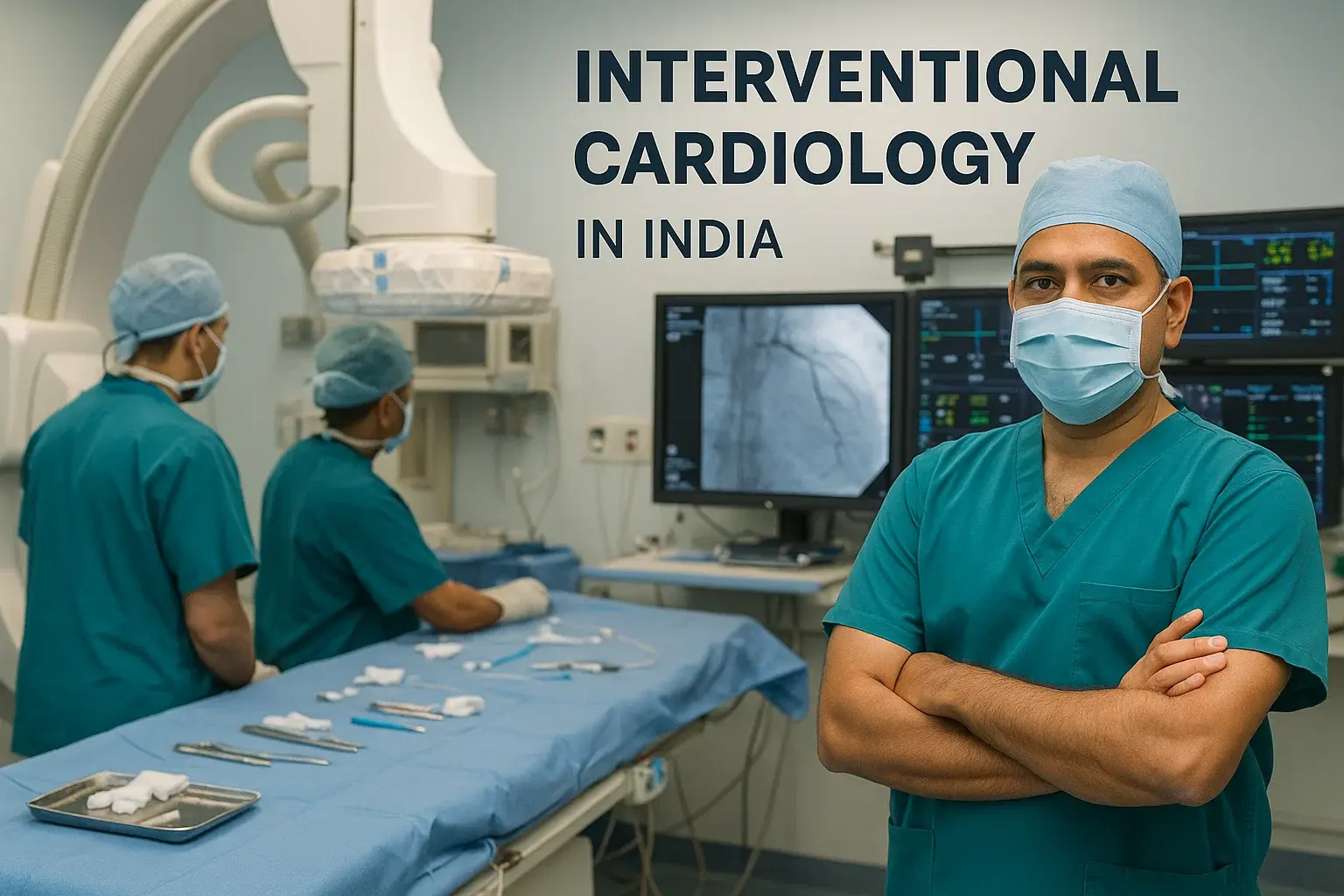
It is a medical term used by cardiologists and includes all cardiac procedures. Interventional cardiology in India is a comfortable option for all patients. In recent years, the adoption of technology in medical science by Indian doctors has increased. This directly impacts the number of hospitals and cardiologists using minimally invasive methods like angioplasty and catheterisation.
Book Appointment
GET A FREE QUOTE
On the other hand, the wide use of technology makes it affordable to middle-class patients and many foreigners. There is a long list of such procedures often used in the diagnosis and treatment of cardiac problems. It is often seen that they are bets over the traditional approach of the surgery.
What is Cardiac Interventional?
Interventional Cardiology India refers to minimally invasive procedures used to diagnose and treat heart problems without open surgery. Doctors insert thin tubes called catheters through blood vessels, usually in the wrist or groin, and guide them to the heart using imaging tools.

What is Cardiac Interventional
These procedures include angioplasty, where a balloon is used to open blocked arteries, and stent placement, which keeps the arteries open. Cardiac interventions also help fix heart valve issues or close small holes in the heart. This approach reduces recovery time, lowers infection risk, and causes less pain compared to traditional surgery, making it safer and quicker for patients.
When should you see an interventional cardiologist?
An interventional cardiologist is a specialist who performs minimally invasive procedures to treat heart conditions, especially those related to blocked or narrowed arteries, valve problems, or heart defects. Knowing when to consult this expert can be crucial for timely diagnosis and treatment.
Symptoms of Coronary Artery Disease (CAD)
If you experience chest pain (angina), pressure, tightness, or discomfort—especially during physical activity or stress—it could indicate narrowed or blocked coronary arteries. Shortness of breath, unexplained fatigue, or sudden sweating, along with chest discomfort, also require urgent evaluation by an interventional cardiologist.
Book Appointment
GET A FREE QUOTE
After a Heart Attack (Myocardial Infarction)
If you have suffered a heart attack or have been diagnosed with acute coronary syndrome, an interventional cardiologist may be needed to open blocked arteries quickly using angioplasty and stents, reducing damage to the heart muscle.
Abnormal Test Results
If tests such as ECG, stress test (TMT), echocardiography, or coronary angiography show evidence of blockages, valve problems, or reduced heart function, your cardiologist may refer you to an interventional specialist for further treatment.
Chronic Stable Angina Not Controlled by Medication
When chest pain or discomfort persists despite medications and lifestyle changes, an interventional cardiologist can assess the need for procedures like angioplasty or stenting to improve blood flow.
Valve Disease
Certain heart valve problems, such as narrowed (stenotic) or leaky (regurgitant) valves, may require minimally invasive interventions like balloon valvuloplasty or device repairs, which are handled by interventional cardiologists.
Structural Heart Defects
Conditions like atrial septal defect (ASD) or patent foramen ovale (PFO) can often be treated with catheter-based closure techniques, avoiding open-heart surgery.
High Risk of Heart Disease
Individuals with a strong family history, diabetes, high cholesterol, high blood pressure, or lifestyle risk factors may be advised to see an interventional cardiologist for early assessment and preventive procedures.
Symptoms of Heart Failure or Arrhythmia
If you have signs of heart failure—such as swelling, breathlessness, or fatigue—or abnormal heart rhythms, an interventional cardiologist may perform diagnostic or therapeutic catheter-based procedures.
Before Major Surgery
Some patients scheduled for major surgery may need cardiac assessment and intervention to reduce perioperative risk.
Interventional Cardiology Procedures List
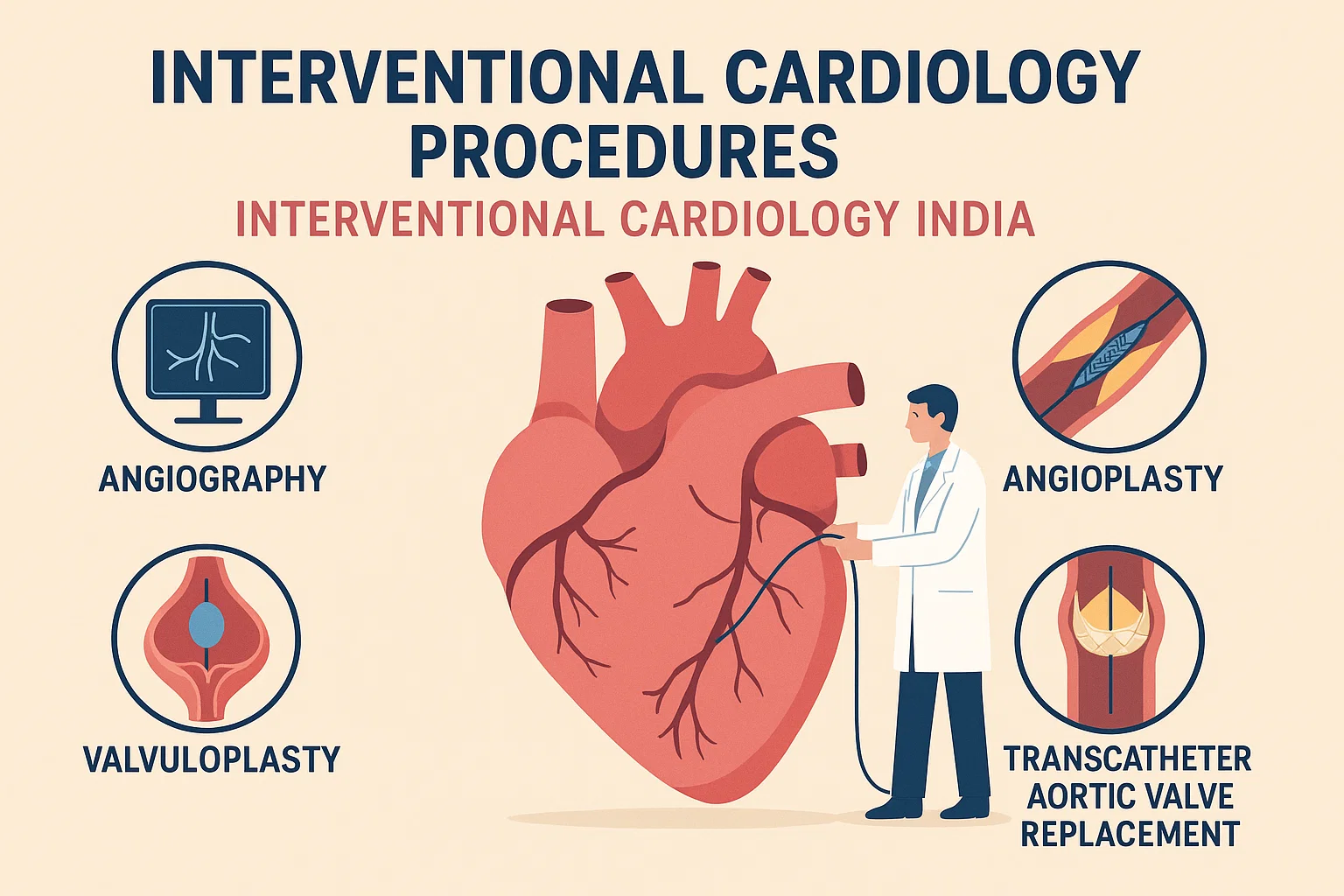
Interventional cardiology offers a range of procedures performed using catheters, eliminating the need for open-heart surgery. These procedures are highly effective in diagnosing and treating various heart conditions with minimal discomfort and quicker recovery. Below is a detailed list of commonly performed interventional cardiology procedures:
Coronary Angioplasty
Also known as balloon angioplasty, this procedure is used to open up blocked or narrowed coronary arteries. A small balloon is inflated inside the artery to widen it and improve blood flow to the heart.
Book Appointment
GET A FREE QUOTE
Stent Placement
Often done alongside angioplasty, a stent is a tiny wire mesh tube that is placed in the artery to keep it open. Drug-eluting stents are commonly used to reduce the chance of the artery narrowing again.
Cardiac Catheterisation
This is a diagnostic procedure where a catheter is inserted into a blood vessel and guided to the heart. It helps measure pressure and blood flow, detect blockages, and assess the function of heart valves and chambers.
Valvuloplasty
Used to treat narrowed heart valves, valvuloplasty involves inserting a balloon catheter to stretch open a stiff valve and improve blood circulation. It is commonly done for mitral or aortic valve stenosis.
TAVR (Transcatheter Aortic Valve Replacement)
TAVR is used to replace a diseased aortic valve through a catheter, eliminating the need for surgery. It's ideal for patients at high risk from traditional open-heart procedures.
ASD and PFO Device Closure
Holes in the heart, like atrial septal defects or patent foramen ovale, can be closed using a special device delivered through a catheter, sealing the defect permanently.
Book Appointment
GET A FREE QUOTE
Rotational Atherectomy (Rotablation)
For hard, calcified blockages, a rotating burr is used to break down plaque. This clears the way for stent placement or further treatment.
Thrombectomy
This is the removal of a blood clot from an artery during or after a heart attack to restore normal blood flow and reduce damage to the heart muscle.
Interventional Cardiology Procedures: Interventional Cardiology India
Interventional cardiology involves a range of procedures performed using catheters through small openings in blood vessels, most commonly through the wrist or groin. These procedures are designed to treat heart conditions without open-heart surgery, offering quicker recovery, less discomfort, and reduced hospital stays. Below are the major interventional cardiology procedures commonly performed by specialists.
Interventional Cardiology in India
Top 10 Interventional Cardiologists in India
|
Name |
Hospital/Institute |
City |
|
Dr. Ashok Seth |
Fortis Escorts Heart Institute |
New Delhi |
|
Dr. Devi Prasad Shetty |
Narayana Health City |
Bengaluru |
|
Dr. Ajay Kaul |
BLK-Max Super Speciality Hospital |
New Delhi |
|
Dr. S.S. Bansal |
Metro Heart Institute |
Faridabad |
|
Dr. Naresh Trehan |
Medanta – The Medicity |
Gurugram |
|
Dr. K.K. Talwar |
Max Super Speciality Hospital, Saket |
New Delhi |
|
Dr. G. Sengottuvelu |
Apollo Hospitals |
Chennai |
|
Dr. K. Sarat Chandra |
CARE Hospitals |
Hyderabad |
|
Dr. Balbir Singh |
Max Super Speciality Hospital, Saket |
New Delhi |
|
Dr. Yugal Mishra |
Manipal Hospital (formerly Fortis Vasant Kunj) |
New Delhi |
|
Dr. Ravinder Singh Rao |
Eternal Hospital (EHCC) |
Jaipur |
|
Dr. Rajneesh Kapoor |
Medanta – The Medicity |
Gurugram |
|
Dr. Bhupendra Singh |
Max Hospital, Vaishali |
Ghaziabad |
|
Dr. Samin Sharma |
Mount Sinai Hospital, New York (Indian origin) |
Global |
|
Dr. M.S. Hiremath |
Ruby Hall Clinic |
Pune |
We Care Health Services For Interventional Cardiology in India
When it comes to sensitive heart procedures, choosing the right care provider is essential. Show We Care Health Services stands out for its patient-first approach, experienced medical partnerships, and commitment to affordability without compromising on quality. Whether it’s angioplasty, stenting, or valve repair, the platform ensures access to India’s top interventional cardiologists, advanced hospital facilities, and personalized guidance every step of the way. For anyone looking for safe, timely, and trusted interventional cardiology in India, Show We Care Health Services offers a dependable hand to hold.
Book Appointment
GET A FREE QUOTE
- Connects patients with top-tier interventional cardiologists across India.
- Provides access to NABH and JCI-accredited hospitals with cutting-edge cardiac labs.
- Offers cost transparency and budget-friendly treatment options without hidden charges.
- Ensures quick appointment scheduling and fast-tracked diagnostics.
- Dedicated care coordinators guide you throughout your procedure journey.
- Partners with hospitals offering emergency and advanced interventional facilities.
- Specializes in second opinions and early-stage cardiac assessments.
- Prioritizes patient comfort with personalised aftercare and recovery support.
- Trusted by hundreds of patients seeking interventional cardiology in India.
- Offers language and travel assistance for outstation and international patients.
Benefits of Interventional Cardiology India
Interventional cardiology procedures are generally less invasive than traditional surgery. In most cases, these procedures require only one small incision for insertion of the catheter. Most interventional cardiology patients do not require general anaesthesia, and some procedures can take as few as 30 minutes to perform.
In many cases, patients are hospitalised for only one night following interventional cardiology procedures, instead of the longer hospital stay required by other types of surgery. Recovery time often is shorter as well, and symptoms, such as shortness of breath and chest pain, are usually relieved quickly and effectively.
Book Appointment
GET A FREE QUOTE
Some heart attack patients benefit substantially from angioplasty. Opening an artery and restoring blood flow quickly is one step toward preventing heart damage. Balloon valvuloplasty is often the best option for infants and children with congenital heart defects.
Complications of Interventional Cardiology
While interventional cardiology procedures are generally safe and less invasive than open-heart surgeries, they are still medical interventions and carry certain risks. Complications are rare when performed by experienced specialists, but patients should be aware of possible issues that may arise during or after the procedure.
- Minor bleeding or bruising can occur at the catheter insertion site during interventional cardiology procedures.
- Blood vessel damage is a rare risk but possible in complex cases treated through interventional cardiology in India.
- Allergic reactions to contrast dye may happen, especially in sensitive patients undergoing interventional cardiology India tests.
- Blood clots during the procedure can lead to complications like stroke in interventional cardiology India treatments.
- Some patients may experience irregular heartbeats temporarily after interventional cardiology India procedures.
- Though rare, infections can occur if proper care isn’t taken post-interventional cardiology India surgery.
- Use of contrast dye in interventional cardiology India may affect kidney function, especially in those with pre-existing issues.
- Treated arteries can re-narrow over time, which is a long-term concern in interventional cardiology care.