

Knee Replacement Surgery in India gives access to choose from many designs based on weight, physical activity, health and age. A surgeon cuts away the damaged part of the knee and they implant artificially made joints. There are many disorders which result in complete knee damage. With the latest technologies and the best possible experience of the surgeons, India became a hub for knee replacement.
In other words, it is also known as arthroplasty, which is possible with a minimally invasive procedure. There are 5 types of knee transplantation and surgical technique is also different. Most knee replacements try to replicate your natural ability to hold weight and allow specific movement.
Why Do We Need Knee Replacement?
Knee replacement surgery, or knee arthroplasty, is a medical procedure that relieves pain and restores mobility in patients with severe knee arthritis or injury. In cases of hyper-immune response, knee replacements may also be needed for young patients.
There are some severe symptoms, diseases and structural dysfunction that are responsible for knee replacement surgery. Here are details of the requirements for knee replacement.
What disease causes knee replacement?
Primarily auto-immune diseases are responsible for knee replacement. Rheumatoid Arthritis is a condition in which the lower extremities are affected with extreme pain and knock knees. Another disease is osteoarthritis, which mostly occurs in old age people. Knock knees condition also occurs in the body when there is less synovial fluid in the knees because of uric acid crystals. All such conditions are either autoimmune diseases or lack of protein metabolism.
Anatomical Dysfunction Responsible for Knee Replacement
The above-mentioned diseases cause anatomical disposition and dissolution of the joint and this condition is responsible for knee replacement. There are other reasons to like Injuries because of any kind of accident, and tumours in the region of the knee. Bone deformity is also a condition responsible for knee replacement. They could also be operated on and removed if not malignant but there are major chances of knee replacement. The knee replacement surgery in India can also be performed to normalise such conditions.
Symptoms for Knee Replacement Surgery
All of the above-mentioned conditions show some symptoms that recognise a clear need for knee replacement. These conditions show fluid deficiency, low protein metabolism and improper circulation in the knee region. Knock knees are the primary condition showing replacement needs other is pain and difficulty in the different movements. Common symptoms responsible for Knee replacement surgery in India are:
- Knock knees problem, feeling like less fluid in the joints.
- Severe pain in the lower extremities and the knees especially.
- Stretched feeling and chronic pain like tearing of tissue.
- Difficulty in movements such as running, swimming and jumping.
- Difficulty in climbing up stairs.
- Chronic inflammation and swelling in the knee.
- The feeling of rubbing together knees and uric acid crystal is diagnosed in the knee joint.
With all such conditions, a patient may face more than one type of symptoms which make it hard to mobilise the knee. All conditions can be cured with knee replacement surgery in India.
Types of Knee Replacement Surgeries: Which knee replacement lasts the longest?
Knee replacement is performed in response to the bad anatomical structure and chronic pain. The symptoms also involve the degenerative bone condition. The bones are diagnosed and seen through the X-ray and the MRI to know the actual cause and determine knee replacement. There are 5 major types of knee replacement surgery in India:
Total Knee Replacement (TKR)
It is performed when a patient has auto-immune deficiency and both knees are affected by the severe condition. Both knee joint surfaces are replaced with prosthetic components. This is the most common type of knee replacement and is performed when the entire knee joint is damaged with the disposition of anatomy.
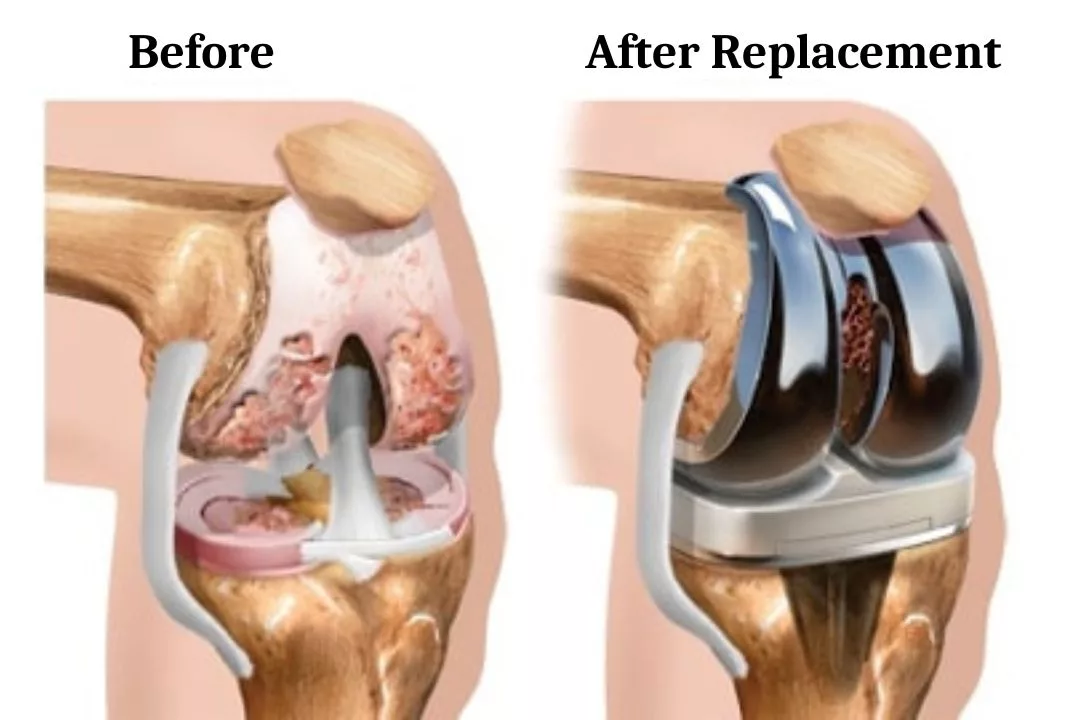
Total Knee Replacement (TKR)
Partial Knee Replacement (PKR)
Partial Knee Replacement is done in response to the dissolution of the knee cap and joint structure. Only a portion of the knee joint is replaced (knee cap), preserving healthy tissue. This procedure is suitable for patients with damage limited to one component of the knee like the kneecap or patella bone.
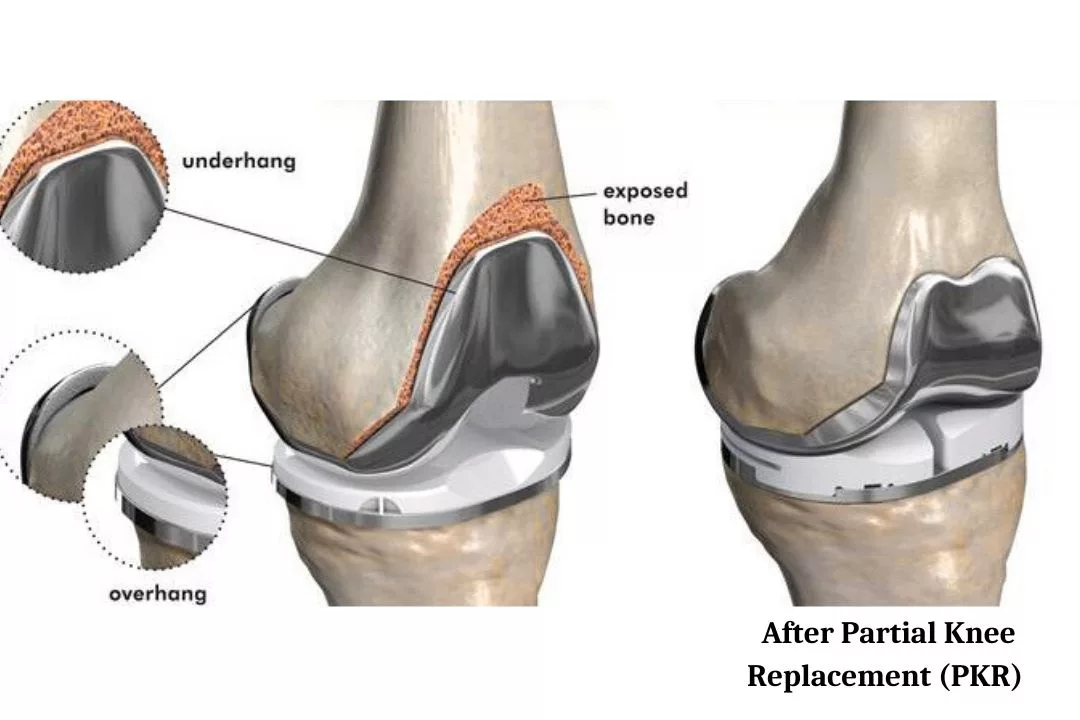
Partial Knee Replacement (PKR)
Revision Knee Replacement
A complex knee replacement is a kind of treatment when a person has a second or third knee replacement in the same knee. It occurs when arthritis is severe and there is a potential loss of an important part of the bone. It is more complex than the first or second replacement. With the severity of the condition, it may be required to repeat the replacement. The component tends to be stronger and can interlock with the bone to form a hinge.
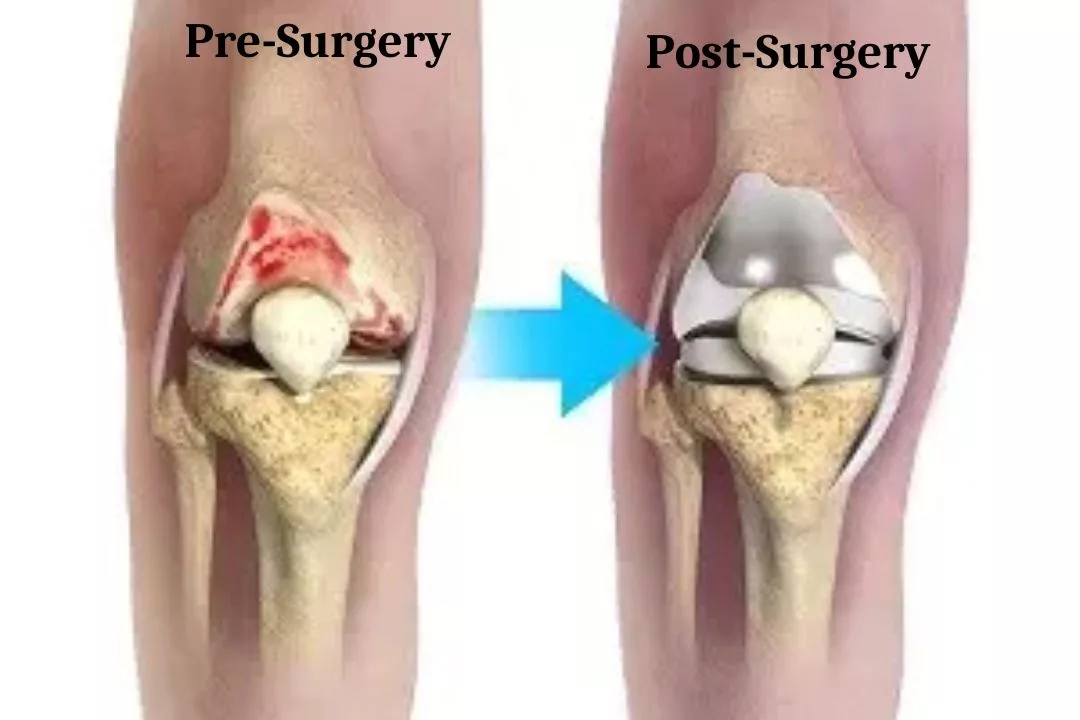
Revision Knee Replacement
Knee Cap Replacement (Patellofemoral Replacement)
Sometimes the only part affected by the arthritis is the patella bone which is known as the kneecap and it is replaced with an under-surface procedure. It is a kind of minimally invasive surgery and has less recovery time but is not preferred for arthritis patients. It only works in 1 out of 40 patients, because patients must not have arthritis conditions. It works for accidental injury patients, Knee replacement surgery in India is not performed in such a way for diseased patients.
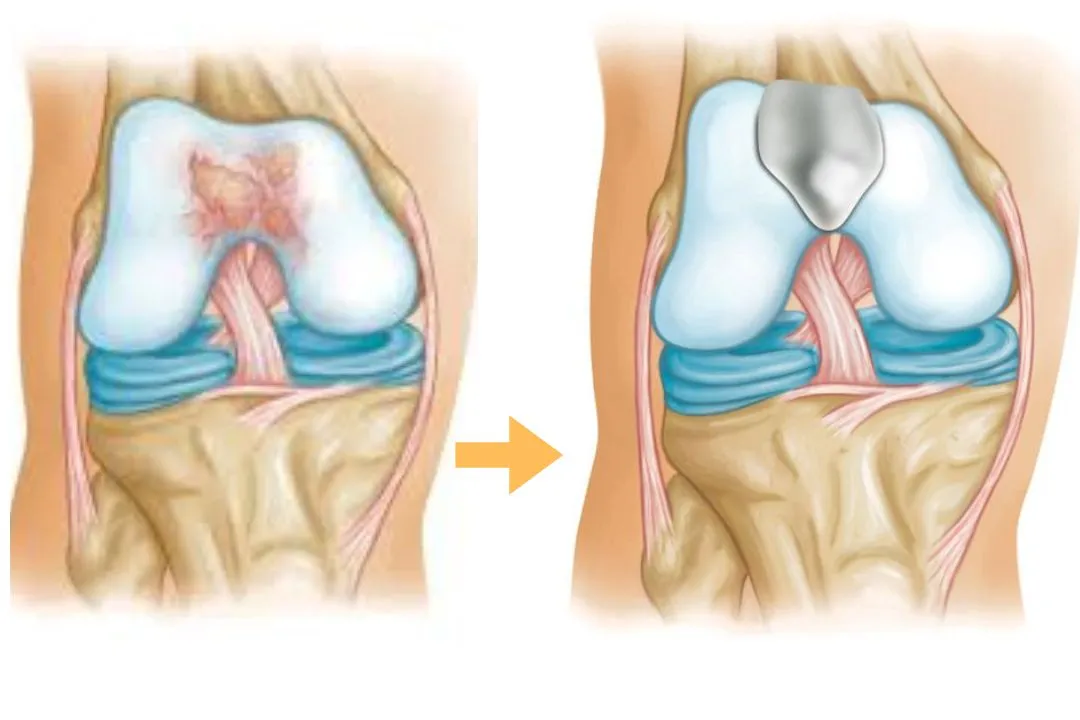
Knee Cap Replacement (Patellofemoral Replacement)
Bilateral Knee Replacement (BKR)
Both knees are replaced simultaneously or in two separate surgeries, depending on the patient's health and needs. This is a time-consuming procedure and a major procedure preferred for rheumatic patients. The surgery is preferred in different simultaneous sessions. Patients have to stay in the hospital for more days.

Bilateral Knee Replacement (BKR)
Procedure of Knee Replacement- What are the steps of a knee replacement?
There are different procedures as mentioned in the above section. The procedure seems like cutting and adding but it involves the care of a patient during the surgery. The procedure involves additional steps in case of total replacement, partial interlock is done in such a way as to form a hinge joint. There is a preoperative assessment which shows the real condition of the knee and determines which replacement needs to be performed. Here are the steps guiding you:
Preoperative Preparation
Before surgery, the patient undergoes a CT scan, MRI, and X-ray. Blood tests detect the patient's overall health. Patients must discontinue blood thinners and other medications. Lifestyle adjustments and diet should be maintained to reduce recovery time.
Fasting before surgery, arranging post-surgical assistance at home, and a careful intake of diet. Blood thinners are discontinued because of fear of more blood flow during operation.
Surgical Procedure
The surgical procedure starts with anaesthesia and then ends with the procedure of wound care. Doctors also ensure that the artificial knee cap or the complete joint fits well in the place of the previous one. Cutting off the damaged bones to replace them with new ones is also a cumbersome procedure.
Post-Surgical Procedure and Recovery
Post-surgical recovery is essential for successful healing and mobility restoration in hip replacement surgery in India. The key aspects of recovery include:
- The patient is closely monitored in a recovery room (ICU) before being moved to a regular hospital ward.
- Pain management through medications, painkillers and ice therapy.
- Physical therapy starts within 24-48 hours to restore mobility and strengthen the knee.
- Walking with assistance (walker or crutches) begins within a few weeks.
- A hospital stay typically lasts 3-5 days, if everything is fine then the patient is allowed to go home. The patient came for stitches removal.
- Full recovery and return to daily activities may take 6-12 weeks, depending on the individual’s progress and adherence to rehabilitation programs.
Gradually patients return to normal activities and patients have to avoid activities like running or jumping to prevent implant wear and tear.
Cost of Knee Replacement Surgery in India: How much does knee replacement surgery cost in India?
You can expect the Cheapest Knee replacement surgery in India, among the developed countries. The value for many is equally possible with the best treatment. In recent years, technology has entered the medical field and helped many critical cases to improve the situation of the knee, heart, liver and kidneys. Although cost is directly proportional to the technological influence, assurance of the treatment is provided within the packages. Both Knee Replacement Surgery Cost in India is more expensive as it is a bilateral component.
|
Knee Treatment Procedure |
Cost in INR |
|
Cost of Unilateral Knee Replacement |
3 to 4 lakhs |
|
Cost of Bilateral Knee Replacement |
6 lakhs |
|
Cost of Total Knee Replacement |
4.4 to 7 Lakhs |
|
Cost of Revision Knee Replacement |
5 to 6 Lakhs |
|
Cost of Patellofemoral Replacement |
2 to 3 Lakhs |
|
Cost of Partial Knee Replacement |
2.5 to 3 Lakhs |
These costs are based on the types of surgery and treatment procedures. There are also different factors involved in the cost like implant material, the experience of the doctor and the infrastructure of the clinic. The clinic which has a high success rate also charges more for knee replacement surgery in India.
Factors Affecting Knee Replacement Surgery Costs
Knee replacement is not a mere procedure involving multiple levels and a proper cause of replacement. Also, another factor is the material used in the implant. Total replacement costs more in comparison to the partial replacement. The experience of a doctor is another big factor that coordinates with the staff. Knee Replacement Surgery in India has different costs based on the below factors.
Types of Surgery Impact
Total knee replacement costs the most in comparison to all other surgeries. The time of surgery is also different based on the procedure, all these proceedings are considered in a single chip and the name given is “kind of surgery”.
Type of Implant
There are two types of implant attachment cemented and uncemented. Five types of implant are:
- Ceramic on ceramic
- Metal on metal
- Metal on polythene
- Ceramic in polythene
- Ceramic on Metal
The most durable of these is ceramic on ceramic and is costly too, the second most durable is metal on metal. The durability of the implant is directly proportional to the cost of the material.
Surgical Technique
There are three anatomical surgical approaches of the surgeon:
- Direct Anterior
- Direct lateral
- Posterior
These three approaches need different operation techniques and could be differentiated into major and minor surgeries. The hip replacement surgery in India was also decided with the surgical technique.
Hospital stay
When patients stay for more time in the hospital it takes more cost. The cost is different for the family member who stays with the patient. ICU cost is more than general monitoring care. During a hospital stay, there are times when a patient needs physiotherapy and there are separate costs for extra procedures.
City
Different cities have different costs for knee replacement surgery in India. The fact that these cities have differences in the thousands is a collective factor from the experience of doctors and the collective success rate. The cost of Chennai and Hyderabad is in comparison to other cities.
Success Rate
It is defined based on collective data from some previous year. The success rate of knee replacement surgery in India is quite high because of technical advancements in recent years. It exceeds 95% which means patients experience pain relief after the replacement and surgery is successful in comparison to previous conditions.
Experience of Doctor
Many doctors charge specifically for their surgery irrespective of which clinic or hospital they are sitting in. Most of the time these doctors are trained from the international centres of the surgery. Doctors and staff should have the best coordination to achieve such a result.
Best Hospital for Knee Replacement in India: Listing According to Success Rate

Best Hospital for Knee Replacement in India
The best hospital is one which can provide multiple facilities at different levels. The names provided have better success rates and exclusive patient care. It is better that you can check ratings at Google by yourself. The We Care Health Services is also providing the best coordination in the services of knee replacement.
|
Cities |
Hospital Name |
|
Bangalore |
Columbia Asia Hospital |
|
Delhi |
Fortis Escorts Heart Institute |
|
Delhi |
Max Hospital |
|
Mumbai |
Kokilaben Dhirubhai Ambani Hospital |
|
Gurgaon |
Medanta Hospital |
|
Mumbai |
Apollo Hospital |
|
Delhi |
Medanta Medicity |
|
Delhi |
Apollo Hospital |
|
Delhi |
Jaslok Hospital |
|
Bangalore |
Narayana Health |
|
Bangalore |
Wockhardt Hospital |
|
Delhi |
Blk Super Speciality Hospital |
|
Mumbai |
Lilavati Hospital |
|
New Delhi |
Venkateshwar Hospital |
|
Bangalore |
Manipal Hospital |
|
Delhi |
CK Birla Hospital |
|
Chennai |
Global Hospital |
|
Delhi |
Indraprastha Apollo Hospital |
|
Gurgaon |
Paras Hospital |
|
Chennai |
Frontier Lifeline Hospital |
|
Delhi |
Metro Hospital |
|
Delhi |
PSRI Hospital |
Facilities provided by these Hospitals are as follows:
- Regular updates on mental and emotional counselling of the patients during hospital stay for any diseases.
- There are many times patients need pre-diagnosis treatment sessions, they are provided by the doctors.
- All kinds of laboratory facilities are available.
- Technical facilities are also provided by the hospital.
- Experienced doctors with special training at the International Centres.
- They have government accreditation from various recognised organisations.
- The staff is well-maintained and well-coordinated with the doctors.
- Hospitals with a strong focus on personalized treatment plans, patient education, and holistic care improve outcomes.
- For international patients, hospitals offering visa assistance, language support, and accommodation facilities provide a seamless treatment experience.
- They accommodate top knee replacement surgeons in Delhi.
- Clear cost structures, insurance support, and financial assistance programs help make the surgery accessible to more patients.
We Care Health Services- Best Facilities Provided by the Clinics
We Care Health Services is a coordinated programme for different surgeries like open heart surgery and hip replacement surgery. They are giving treatment for various diseases including fertility care. The clinic has a personalized approach for patients. Access to cardiologists, anesthesiologists, physiotherapists, and pain management specialists ensures comprehensive care before, during, and after surgery. You will find reasonable prices with affordable packages. The unique approaches are:
- They are the best service provider and use a personalized approach to treating patients.
- Hygiene, care and management are basic qualities of the clinic.
- Here you can expect the best technical types of equipment for advanced procedures such as laparoscopy and other diagnostic methods such as ECG, MRI and CT scan.
- Cryopreservation and vitalization are processed at a lower temperature. Advanced techniques such as robotic-assisted techniques used in surgeries.
- Knee Replacement cost in India is the reasonable option which is provided with a separate listing for all IVF series treatments.
- India is a house of many experienced surgeons and experienced doctors, who will help you through We Care Health Services.
- Ethical practices of the various surgical treatments are provided by the clinic with the coordination of law and order.
- The clinic continuously maintains a high success rate for various surgeries and the best rating on Google, which means it has a good reputation.
Top 5 Knee Replacement Surgeons in India
Other than personalized focus India harbours the best surgeons for various replacements. Most have already completed thousands of surgeries in just a few years. The well-focused approach is the working criteria behind successful surgeons. They are also giving priority to the latest technology in knee replacement surgery in India.
There are a few times when a patient gets attracted by the name of doctors. Some specific doctors are taken from the list like Dr Harshvardhan Hegde, Dr IPS Oberoi, Dr Subhash Jangid, Dr. Rakesh Mahajan, Dr Pradeep Bhosale.
|
Name of the Surgeon |
Indian City Of Their Practice |
|
Dr. Ramneek Mahajan |
Kailash Colony, Delhi |
|
Dr Ashok Rajgopal |
Gurugram, Medanta Hospital |
|
Dr. Dhananjay Gupta |
Max Hospital |
|
Dr. Harshvardhan Hegde |
Fortis Escorts Heart Institute, Delhi |
|
Dr. IPS Oberoi |
Artemis Hospital, Gurgaon |
|
Dr. Sameer Anand |
Max Hospital |
|
Dr. Vijay C Bose |
Apollo Hospital, Chennai |
|
Dr. Ameet Pispati |
Jaslok Hospital, Mumbai |
|
Dr. Pradeep Bhosle |
Nanavati Hospital, Mumbai |
|
Dr. A.B. Govindraj |
Fortis Malar Hospital, Chennai |
|
Dr. Kaushal Malhan |
Fortis Hospital Mumbai |
Latest Technology in Knee Replacement Surgery in India
There are also alternatives for knee replacement surgery in India such as robotic-assisted surgery, 3D printing, and Augmented reality. There are smart implants also which are widely accepted by the patients. These techniques are minimally invasive and have less recovery time. To explain all these in a series here is guidance:
Benefits of Knee Replacement: Can you get Benefits if you have Knee Replacement?
Knee replacement surgery in India is a verdict to the domestic Indian cases. There are also international patients. India is the greatest surgical hub for various countries and patients of different diseases. When we talk about knee replacement patients fear of it like losing of movement and getting bedridden. There is no such implication patients get relief from knee replacement surgery in India and major symptoms get cured first. Here is the symptoms from which you will get relief:
- Most knee replacements last from 15 to 20 years, after that you may need revision of the knee replacement.
- You will get a quick relief in pain. After recovery, most patients experience a substantial reduction or complete elimination of knee pain, improving their quality of life.
- Knee replacement allows patients to regain movement and flexibility in the joint, often restoring the ability to walk.
- Climbing stairs, or engaging in low-impact activities with greater ease is possible with knee replacement surgery in India.
- It helps people regain their independence by improving the functionality of the knee joint.
- This can also lead to improved mental health and stress relief. Patients get relief from chronic pain, and increased physical activity is closely tied to overall well-being.
- New advancements in surgical techniques and implants have also enhanced the longevity of knee replacements.
- New advancements in surgical techniques and implants have also enhanced the longevity of knee replacements.
- For individuals with advanced arthritis or joint degeneration, knee replacement helps prevent further deterioration of the joint. Comparative degeneration is less in comparison to the previous scenario.

Benefits of Knee Replacement