
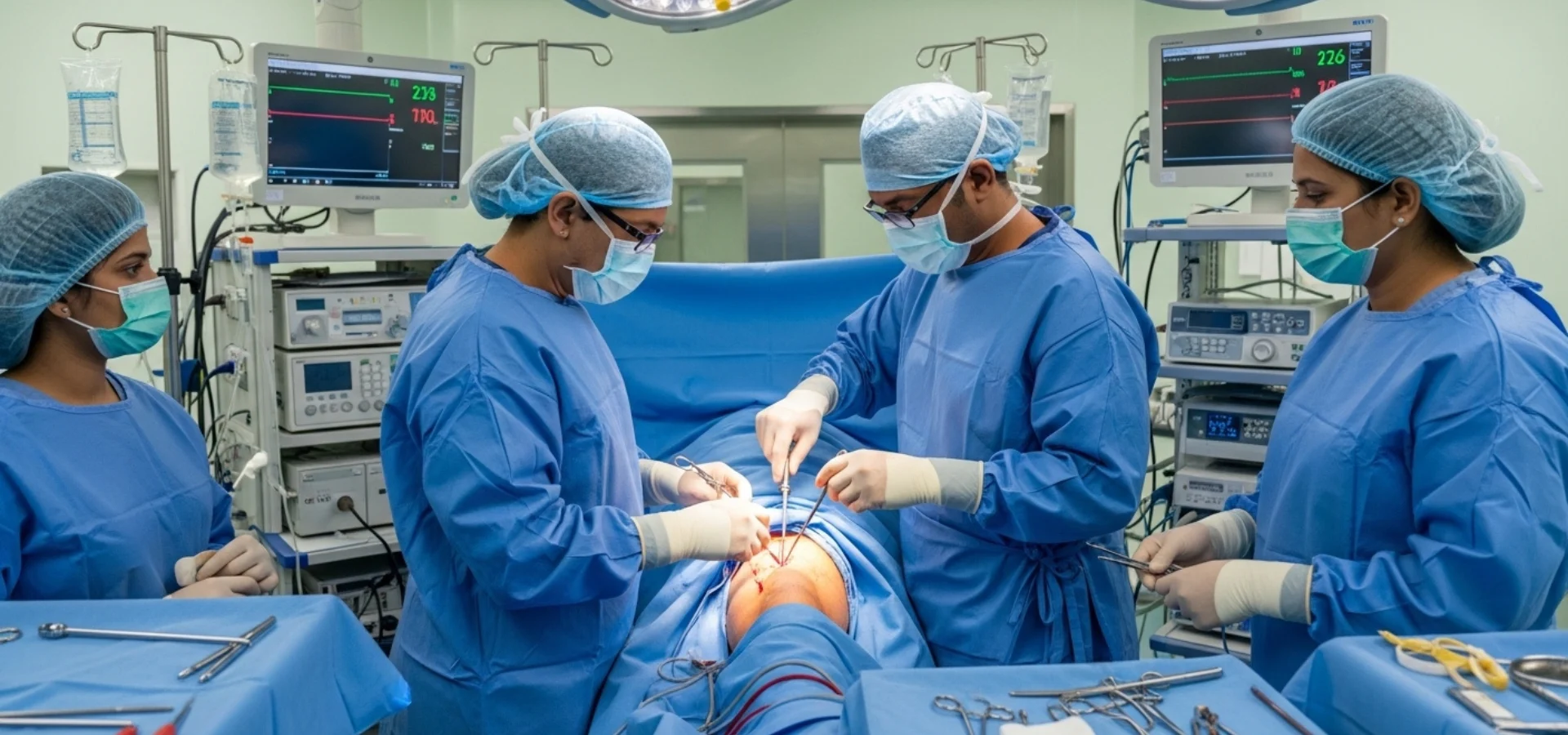
Unicondylar knee replacement surgery in India (partial knee replacement) refers to a surgical procedure that involves only operating on one side of the knee that is affected by arthritis. This type of arthroplasty surgery is performed frequently in India because of many qualified and skilled orthopedic surgeons and modern surgical techniques and equipment available for use. The preservation of healthy bone as well as ligaments leads to the restoration of natural movement following surgery.
Patients have been shown to have less pain from surgery when compared to total knee replacement, use a smaller incision, recover faster, and have shorter stays in the hospital than patients who undergo total knee replacement. Unicondylar knee replacement is typically performed on active patients with isolated knee degeneration.
What is Unicondylar Knee Replacement?
Unicondylar knee arthroplasty of the medial compartment conserves bone and ligaments, which have been reported to result in a more normal gait, better quadriceps function, and better knee flexion than those treated with TKR. However, the success of this treatment is highly dependent on the accurate assessment of possible arthritic involvement of the patellofemoral compartment. Undetected pathology and disease progression to the patellofemoral compartment have been correlated with late failure of the unicondylar knee arthroplasty.
Different Knee Issues
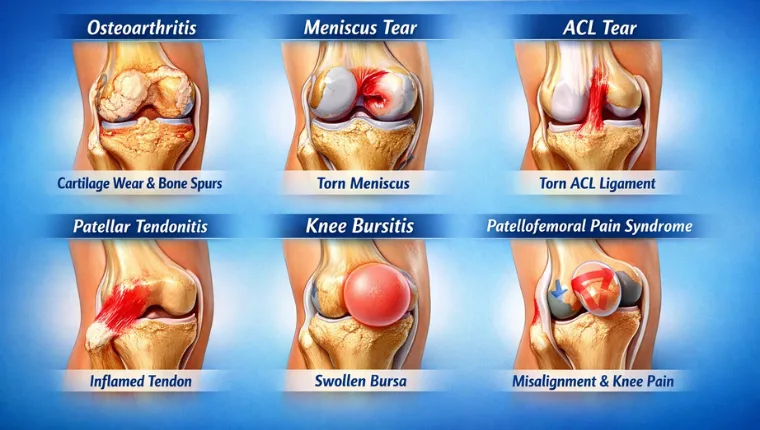
Many people experience knee issues; however, knee problems aren't restricted to just athletes or older adults-use people may also experience knee issues. One of the more common knee problems is osteoarthritis (OA).
Different Knee Issues
- OA is the progressive degeneration of the articular cartilage, causing people to experience pain, stiffness and decreased motion in the knee joint due to bone-on-bone or joint friction due to loss of cartilage.
- Another knee problem, rheumatoid arthritis (RA) occurs as a result of an autoimmune response where inflammation occurs in the knee joint, and RA typically affects both knees.
- Commonly seen from sports and acute trauma to the knee are ligaments that have been torn, such as the ACL, PCL, MCL, and LCL.
- Tears may cause a person to experience knee instability, swelling in the knee, and difficulty ambulating.
- The meniscus that cushions the knee may suffer injury, resulting in a meniscus tear, usually due to twisting motion or degeneration from aging.
- Commonly called runner's knee, patellofemoral pain syndrome is characterized by a person experiencing pain around the patella while performing activities such as climbing stairs or sitting for prolonged periods of time.
- Another knee problem, bursitis, develops when the bursa tissue surrounding the knee becomes inflamed due to repetitive stress or overuse.
Several other knee issues exist, such as tendonitis from repetitive injury or overuse of the tendon that attaches to the knee, and knee fractures secondary to falls or other accidents occurring. Timely diagnosis, appropriate treatment(s), and making lifestyle changes are key to proper management and prolonging the joint's health.
Understanding Unicondylar Knee Replacement (UKR)
There are different types of knee replacement surgery in India. Some of them depend on the condition of the knee. Bilateral knee replacement surgery is for both knees, and unilateral or unicondylar is for one knee. Arthroplasty is a kind of resurfacing on the knee. Knee degeneration over the years causes replacement of the more part otherwise, resurfacing is also an option for the patients.
What is Partial Knee Arthroplasty (PKA)?
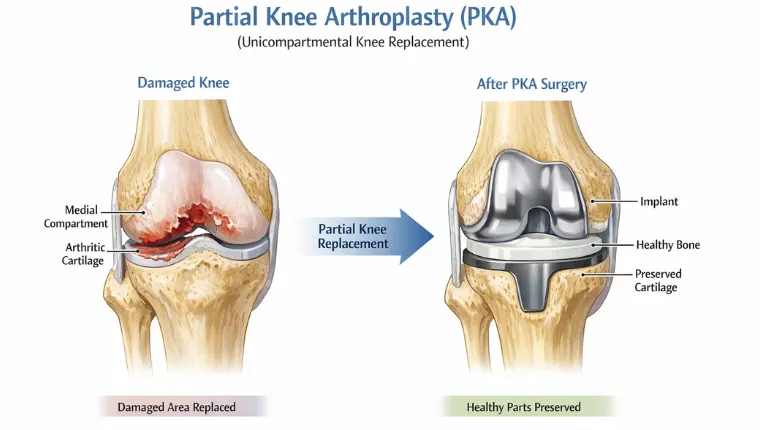
Partial knee arthroplasty fixes only the worn-out section of your knee. The knee has three parts: inside (medial), outside (lateral), and under the kneecap (patellofemoral). UKR swaps out just one bad compartment with metal and plastic parts. This beats total knee replacement, which changes the whole joint. TKR cuts more bone and removes all ligaments in some cases.
What is Partial Knee Arthroplasty (PKA)
Surgeons aim for exact fits during UKR. They save your natural knee motion this way. Patients keep a more normal feeling after healing. This precision helps knees bend and twist like before.
- Key differences from TKR: UKR uses a smaller cut, about 4-6 inches, while TKR needs 8-10 inches.
- Bone saving: Up to 75% of your knee stays original.
- Ligament role: Your ACL and others guide the new part better.
Who is an Ideal Candidate for UKR?
Not everyone qualifies for unicondylar knee replacement surgery in India. You need arthritis in just one knee spot. The other areas must look healthy on scans. Age matters too—most good cases happen in people 50 to 75 years old. Younger folks with active lives might do well if their ligaments hold strong.
Doctors check for stable knees without big twists. If arthritis spreads later, UKR could fail fast. Common pitfalls include ignoring multi-compartment damage or weak ligaments. Pick UKR only after a pro weighs your full health picture.
- Top signs you fit: Pain stays in one knee area; X-rays show single-spot wear.
- No-go factors: Full knee deformity, rheumatoid arthritis, or obesity with a BMI 35.
- Assessment steps: Full physical exam plus ligament tests.
Advantages of UKR Over Traditional Knee Surgery
UKR cuts down on surgery shock. You face less blood loss and quicker healing than with TKR. Many patients walk with a cane the next day. Pain drops faster, so you skip heavy meds sooner.
This option lets you return to golf or biking in weeks, not months. Studies show UKR knees last 10-15 years in right picks. It feels more like your own joint over time.
- Recovery speed: Hospital out in 1-3 days vs. 3-5 for TKR.
- Pain edge: 30-50% less post-op discomfort reported.
- Activity boost: Easier climb stairs or kneel without full joint swap.
The Landscape of UKR in India: Quality and Affordability
Quality and Affordability are two different factors for the knee replacement. There are different costs according to the services and hospital facilities. We Care Health Services is one of the best options which is giving the cost transparency to the patients. Here are some guidelines regarding UKR or unilateral knee replacement surgery in India.
Leading Hospitals and Centers of Excellence
India leads in joint fixes with world-class spots. Places like Apollo Hospitals in Chennai or Fortis in Mumbai hold JCI nods. These centers use clean rooms and top gear for safe UKR. Delhi and Bangalore pull in experts too.
Staff handle high volumes, over 500 knee cases a year per surgeon. They offer English care for global patients. Travel eases with airport shuttles and stay packages. These spots make India a smart stop for partial knee arthroplasty.
- Top picks: AIIMS in Delhi for public care; Nanavati in Mumbai for private tech, and we care health services.
- Accredits matter: NABH seals mean strict safety checks.
- City perks: Metro hubs cut travel costs and boost quick access.
Surgeon Expertise and Selection Criteria
Find a doc with 100+ UKR surgeries under their belt. The skill curve for this beats TKR's ease. Look for fellows from UK or US programs in knee work. Ask about their success rates—aim for 95% good outcomes.
Check reviews and before-and-after stories. Video consults help from afar. In India, many surgeons train abroad and then return home.
- Vet tips: See case logs; request revision rates under 5%.
- Red flags: Low yearly volumes or no UKR focus.
- Build trust: Meet in person or via telemed for a fit.
The right surgeon turns your knee worry into confidence. Here is a table of the best surgeons in India, who are supporting knee replacement surgery continuously for both Indian and foreign patients.
|
Surgeon / Hospital |
City |
|
Dr. Ramkumar S. Raja |
Chennai |
|
Dr. Ashok Rajgopal |
Gurugram |
|
Dr. Arvinder Singh Soin |
Gurugram |
|
Dr. Shekhar Srivastav |
New Delhi |
|
Dr. Atul Mishra |
New Delhi |
|
Dr. Anil Arora |
New Delhi |
|
Dr. Ishwar Bohra |
New Delhi |
|
Dr. D. K. Dhiraj |
New Delhi |
|
Dr. Deepak Thakur |
New Delhi |
|
Dr. Vikram Mhaskar |
Mumbai |
|
Dr. Ashish Babhulkar |
Nagpur |
|
Dr. R. K. Venkatesh |
Bengaluru |
|
Dr. Manoj Miglani |
New Delhi |
|
Medanta – The Medicity |
Gurugram |
|
Apollo Hospitals |
Chennai |
|
Fortis Hospital |
Multiple Citi |
Cost Analysis: Unicondylar Replacement in the Indian Market
Unicondylar knee replacement cost in India runs $4,000 to $8,000 total. That's 70-80% less than the $20,000-plus in the US. Prices shift by city—Mumbai costs more than Hyderabad. Imported implants from Zimmer or DePuy add $1,000-2,000.
|
Region / Type |
Estimated Cost per Knee (INR) |
|
Standard UKR (typical package) |
₹1,50,000 – ₹3,00,000 |
|
Mid-range UKR with better implants |
₹2,00,000 – ₹3,50,000 |
|
UKR in premium private hospitals (top implants / facilities) |
₹3,00,000 – ₹4,00,000+ |
Packages cover surgery, 3-day stay, and basic physio. Local brands cut bills without skimping quality. Add flights and lodging for under $10,000 full trip.
- Breakdown: Surgeon fee: $1,500; hospital: $2,000; implant: $1,500.
- Vs. abroad: Save big, get same Oxford partial knee parts.
- Extras watch: Visa and follow-up scans might add $500.
This deal packs high value for your knee fix.
The Surgical Journey: Procedure and Technology
Technology is an Essential part of the surgical procedure nowadays. Immunity is less, and open surgeries result in loss of blood and immunity. This may cause late recovery, and getting back to normal life sounds impossible. Here are pre-planned journeys for the patients.
- Pre-Operative Assessment and Planning
- Minimally Invasive Surgical Techniques
- Implant Technology Used in Indian Surgeries
Pre-hab builds leg strength with simple squats. Quit smoking two weeks out to heal better. Indian clinics offer full checkups in one day. Solid prep sets you up for a smooth UKR.
- Image musts: Weight-bearing films show true alignment.
- Fitness prep: Daily walks cut surgery risks.
- Team talk: Anesthetist reviews your med history.
The op lasts 1-2 hours under spinal block. Tools guide the saws for clean bone trims. Compared to TKR's big open method, this feels like a tweak. Gentle methods speed your steps home.
- Incision win: 3-5 cm vs. TKR's larger scar.
- Robot role: Mako systems in top hospitals match anatomy perfectly.
- Blood save: Less loss means no transfusion often.
These parts aim for a 15-20-year life with care. Indian surgeons pick based on your activity. Data shows 90% are still good at 10 years. Tech keeps your new knee moving freely.
- Cemented pros: Instant stability for older patients.
- Material edge: Cross-linked poly cuts wear by 50%.
- Custom fits: 3D prints match your knee shape.
We Care Health Services: Immediate Post-Operative Care and Hospital Stay
We are providing a strong hand behind you at every step of the treatment. Right after, you get ice and elevation for swelling. Most bear weight on the new knee the same day with a walker. Pain meds come via pump for steady relief. Nurses check vitals every few hours. The stay lasts 1-2 days in India. They teach crutch use before discharge. Eat light and move toes to boost blood flow.
- First moves: Bend the knee 90 degrees by day two.
- Watch for: Redness or fever—call doc fast.
- Home shift: Arrange help for week one chores.
Structured Physiotherapy and Rehabilitation Timelines
Physio kicks off day one with ankle pumps. Weeks 1-6 focus on straight-leg lifts and knee bends. Early care locks in good starts. Aim for 120-degree flex by month end. Compliance here boosts strength big.
Later, add pool walks or bike rides. Full life returns in 3-6 months. India packages include home visits for follow-through.
- Week 1: Daily sessions, 10-15 reps per exercise.
- Month 2: Low-impact like yoga for balance.
- Track progress: Use apps for
- Stick to it—your knee, thank you.
Understanding Long-Term Success Rates and Revision Potential
UKR holds up in 85-90% of cases at 10 years. Good picks see even better. Activities like running shorten life, but walking fits fine. Weight control helps too.
If it wears, switching to TKR eases since less bone is cut first. Revisions run 5-10% over 15 years. Docs monitor with yearly checks.
- Success keys: Follow rehab; keep BMI under 30.
- Revision ease: Extra bone stock makes a full swap simple.
- Data note: UK registries report high patient scores.
Conclusion
Unicondylar knee replacement surgery in India blends expert care, fresh tech, and wallet-friendly prices. You get faster healing and a natural feel without a full joint overhaul. Top hospitals and surgeons make it reliable for locals and visitors alike. Talk to a knee pro soon. Set real goals like pain-free strolls. Your move to better mobility starts now—book that consult and step forward.