
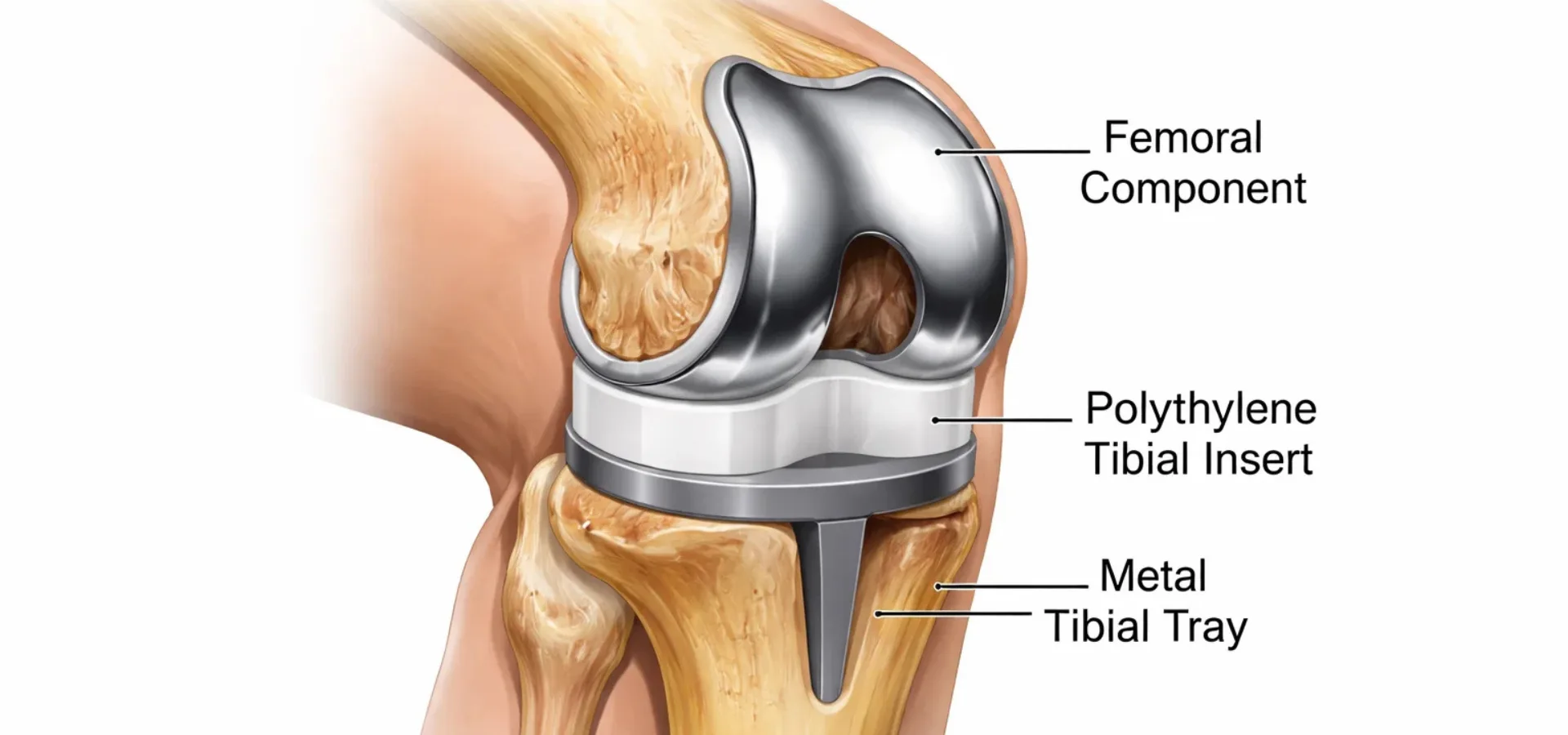
The anatomy of the knee joint is made by three bones and resurfacing of the three is part of high flex knee replacement in India. There are different types of other knee replacement surgery which are very similar to the high flex. India is home to an innovative and high-flexible knee replacement procedure that enables patients to achieve greater bending at the knee after their replacements than they would have been able to do previously with conventional knees. This means that individuals who are active will be able to perform tasks such as sitting in a cross-legged position, bending down to the ground and squatting, as well as climbing stairs without restriction after the replacement of their knees. The high-flexible knee replacement results in deeper bending of a patient’s knee with greater stability and strength than would have otherwise been possible.
What is a High Flex Knee?
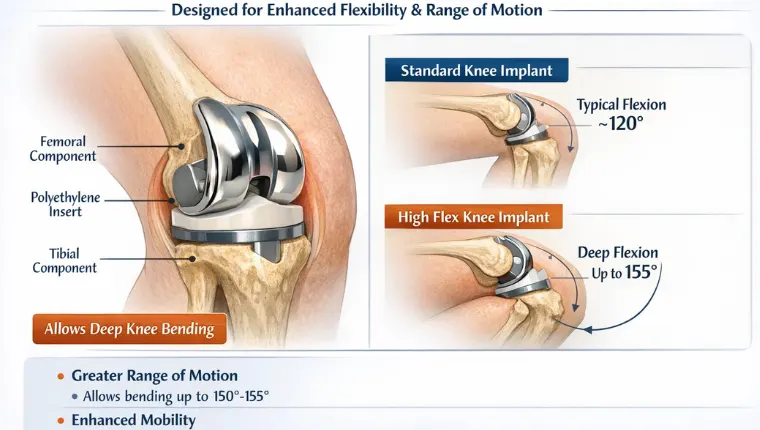
A high-flex knee is an implanted knee replacement device that is uniquely shaped to offer deeper bending capabilities than standard versions. Its design includes altered surface shapes and contours that prevent excess force on the joint during deep bending, while providing stability within the joint throughout full range of motion during the activity (for example: squatting, kneeling, sitting cross-legged, etc.).
Consult Now
GET A FREE QUOTE
What is a High Flex Knee
Patients who have sufficient muscle strength and flexibility to perform these types of activities may be good candidates for a high-flex knee if they have appropriate surgical technique performed by the surgeon and if they participate in appropriate physical therapy to rehabilitate following surgery to develop range of motion and comfort. There are many factors that determine a patient's eligibility for high-flex knees, including those who have the proper surgical and rehabilitation techniques to yield optimal outcomes from surgery.
Anatomy of the Knee Structure: Understanding Surgery
The knee is the hinge joint consisting of three bones. The upper part of the hinge is at the end of the upper leg bone (femur), and the lower part of the hinge is at the top of the lower leg bone (tibia). When the knee is bent, the end of the femur rolls and slides on top of the tibia. A third bone, the kneecap (patella), glides over the front and end of the femur.
In a healthy knee joint, the surfaces of these bones are very smooth and covered with a tough protective tissue called cartilage. Osteoarthritis causes damage to the bone surfaces and cartilage where the three bones meet and rub together. These damaged surfaces can eventually become painful. There are several ways to treat the pain caused by osteoarthritis. One way is a total knee replacement surgery. The decision to have total knee replacement surgery should be made very carefully after consulting your doctor and learning as much as you can about the knee joint, osteoarthritis, and the surgery.
Understanding High-Flex Knee Replacement Technology
High-flex knee replacement focuses on giving back more bend than ever. These implants shine for people who stay busy, from weekend hikers to daily yoga fans. Let's break down what makes this tech tick.
Consult Now
GET A FREE QUOTE
Standard prosthetics top out around 110 degrees. That means less hassle for simple tasks like using the toilet or gardening on your knees. In India, surgeons often pair these with precise tools to fit your body's unique shape. Think of it like upgrading from a rusty bike chain to a smooth gear system—motion flows easier. Patients report feeling the difference right away in their stride.
Plus, the fit reduces pain during twists and turns. It's like your knee got a flexible upgrade that matches your old one more closely. Active patients love how it supports hobbies without limits.
Choosing India for Advanced Knee Surgery
India draws patients for knee work because it mixes skill, tech, and savings. Top centers handle thousands of cases yearly, with success rates matching global standards. Why go far when quality care waits close by?
Cost-Effectiveness Without Compromising Quality
A high-flex knee replacement in India runs about $7,000 to $10,000 total. In the US, the same hits $40,000 or higher. That gap covers premium implants, expert fees, and a week in a private room. Hospitals keep costs low through efficient systems and local sourcing. You get the same titanium or ceramic parts as abroad, without the markup. Many packages include meds and follow-ups.
Savings let you add travel or recovery stays. Patients often return home with cash left for physio gear. It's a smart value for a life-changing fix.
Expertise and Centers of Excellence
Indian orthopedic pros train at places like AIIMS or abroad in the UK and US. They specialize in tricky knee jobs, using tools like computer navigation for spot-on placement. Centers in Chennai and Bangalore lead with over 90% patient satisfaction.
Many hospitals earn JCI seals, meaning they meet world safety rules. Surgeons here do 500+ knees a year, sharpening their skills. You trust hands that know every curve.
Robotic arms help guide cuts, boosting high-flex success. It's like having a GPS for your joint—precise and reliable.
The Medical Tourism Ecosystem
India eases the trip for outsiders with full-service help. Agencies book flights, visas, and even airport pickups. Once there, English-speaking staff handle everything from tests to sightseeing. Post-op, you get tailored rehab plans with local therapists. Some packages offer virtual check-ins after you fly home. It's a smooth ride from consult to full recovery. Families join too—hotels near hospitals make visits easy. One patient shared how her son explored Delhi while she healed. Support turns worry into excitement.
The Surgical Procedure and Recovery Protocol
The process starts with planning your custom fit. Surgery lasts 1-2 hours under safe anesthesia. India's teams stress minimal invasion for quicker bounces back.
Patient Selection and Managing Expectations
Picking the right folks ensures great results. Not every knee needs high-flex, but for the fit ones, it's a win. Let's look at how docs decide.
Comprehensive Pre-Operative Assessment
Imaging like MRI or CT scans reveal bone health and soft tissue state. Functional tests check your walk and bend range now. This spots if high-flex fits your build. Ligament checks ensure stability post-op—no loose feels wanted. Blood work rules out issues too. It's a full picture to match the implant to you. Expect talks on goals: Want to garden? That sways the choice. Honest chats set the stage.
Real-World Functional Outcomes
Studies show high-flex knees in India last 15-20 years, with 95% satisfaction. Active patients squat fully and report less pain at five years. One case: A 55-year-old hiker returned to trails in months. But results tie to rehab effort—lazy routines limit gains. Indian centers track outcomes, with low infection rates under 1%. It's proof this works for real lives. Long-term, wear stays low thanks to smart designs. You invest now for decades of ease.
Consult Now
GET A FREE QUOTE
Cost of the High Flex Knee Surgery
Imagine bending down to tie your shoes without a twinge of pain after knee surgery. That's the promise of high flex knee fixation in total knee arthroplasty, or TKA. It lets patients reach deep knee bends, up to 130 degrees or more, boosting daily life and joy. But what does "high flex knee fixation" mean? It's the way surgeons anchor implant parts to bone, using designs that handle extra stress from those big motions. Challenges like bone rubbing or tight muscles can trip things up.
|
Category |
Cost Range in India (INR) |
|
High-Flex Knee Implant Cost |
₹1,50,000 – ₹2,50,000 |
|
Surgeon Fees |
₹50,000 – ₹1,00,000 |
|
Hospital Stay and OT Charges |
₹60,000 – ₹1,20,000 |
|
Anesthesia and Medicines |
₹30,000 – ₹60,000 |
|
Physiotherapy and Follow-up |
₹20,000 – ₹40,000 |
|
Total Estimated Cost |
₹3,00,000 – ₹4,50,000 |
High Flex Knee Design and Patient Selection
High flex knee implants need smart setup from the start. They aim for smooth moves in deep bends. Without the right base, fixation fails fast. Fixed-bearing systems lock the plastic insert to the tibia. They guide the knee's roll and slide in flexion. High flex versions cut the back of the femur thinner to avoid hits during bends.
Factors Affecting to Cost: Procedure of High Flex Knee Replacement
Mobile-bearing designs let the insert float a bit. This eases stress on fixation points. In deep flex, it tracks the condyles better, cutting wear. Think of it like a sled on ice versus wheels on rails—both work, but mobile shines in tough spots. High flex profiles often add a deeper groove for the kneecap. This setup fights impingement. Surgeons pick based on patient needs, like active lifestyles.
Candidate Profiling for High Flexion Implants
Not every knee suits high flex. You need good ligaments that don't sag too much. Solid bone stock holds the fix well. Surgeons check if your pre-op flex hits 120 degrees. If so, high flex might fit. Poor bone or stiff tissues? Stick to standard. Weight-bearing X-rays spot issues like bowlegs. They guide choices. A quick scan shows if deep bends are in reach post-surgery.
A Deep Dive into Bone-Implant Fixation Modalities
Fixation glues or grips the implant to bone. In high flex, it faces big forces. Pick wrong, and it loosens. Cement, like PMMA, bonds parts tight. It fills gaps in weak bones. Pressurize it to push deep into spongy areas. For high flex, aim for a full coat around stems. This fights sinking under load. Mix cement fresh; it sets strong.
Cemented Fixation Techniques for High Flex Stability
Cement, like PMMA, bonds parts tight. It fills gaps in weak bones. Pressurize it to push deep into spongy areas. For high flex, aim for a full coat around stems. This fights sinking under load. Mix cement fresh; it sets strong. Best tip: Pulse irrigation cleans bone before cement. This boosts grip, key for deep knee stress. Patients see less pain long-term.
Cementless Fixation Strategies: Porous Coatings and Conforming Surfaces
No cement means bone grows into the implant. Porous coatings, like titanium beads, invite that growth. They spread loads even in flex. Press-fit tight at first. It stops wiggling while bone heals. High flex needs this for quick stability. Surfaces match bone shape for fit. Over time, it acts like a natural bone. Active folks love it—no cement cracks.
Hybrid Fixation: Combining Cemented and Cementless Components
Mix them when bone varies. Cement the tibia if it's soft; go cementless on femur if strong. This balances risks. In high flex, hybrids handle uneven stress. Long-term, they match pure types in hold. Watch for mismatches in motion. Surgeons use it for older patients with patchy bone. Results show good flex without fails.
Patellar Component Design for High Flex Kinematics
Dome shapes round out for easy glide. Trochlear ones hug the groove better in deep flex. Thinner poly cuts bulk. In high flex, the femoral groove shifts to ease patella load. This stops rubs on the inner side. Systems like DePuy's off-load facets smartly. Pick based on your anatomy. Tests show dome lasts in active knees.
We Care Health services for High Flex Knee Fixation
High flex knee fixation is done in both cemented and uncemented way. India Health Tour provides all aspects together for this knee surgery. Cement works for most patellas. It seeps into holes for hold. Screws add bite in thin bone. For high quad pull, pegs or screws lock better. Drill precise; avoid cracks. Post-op, watch for clunks—ice and PT help. Tip: Resurface only if arthritis hits. This cuts pain in bends. Patients bend deeper sooner. Soft tissues wrap the fix. Off balance, and it strains. Get this right for lasting high flex.
Consult Now
GET A FREE QUOTE
Achieving Balanced Ligamentous Tension in Deep Flexion
Flex gap needs more space than extension. Cut the back femur even to match. This keeps stability in bends. Too tight? Flex hurts. Loose? It shifts. Aim for 2-3 mm difference, per AAOS guides. Balance with trials. It protects fixation from pulls.
Role of Component Retroversion and Valgus Correction
Tilt the femur back a tad for good tracking. Too much? It stresses cement lines. Just right aids patella glide. On tibia, fix varus to stop inner rubs. This cuts shear on bonds. In deep knee, it saves the setup. Align with jigs. Errors show in X-rays later.
Monitoring for Aseptic Loosening Under High Flex Stresses
Loosening hits without infection. Look for baseplate sinks or lines on films. High flex speeds this if off. Studies peg revision at 5% over 10 years for high flex TKAs, versus 3% standard. Track yearly. Pain on stairs? Get checked. Early fix saves bone.
Managing Soft Tissue Impingement and Component Wear
Deep flex ups slide miles on poly. Wear bits spark inflammation, hurting bone growth. Patterns show inner thinning. Counsel limits: No deep squats at first. Swim instead. This extends life. Tips: Yearly checks spot debris. Adjust activities to keep it tight.
Conclusion
High-flex knee replacement in India blends top tech, skilled hands, and smart prices for unmatched results. You gain deep bends, steady strides, and an active tomorrow without breaking the bank. Surgeons here deliver outcomes that let you live fully, from cultural squats to mountain climbs. Choose this path as your step toward lasting motion. Contact a trusted Indian center today—your knees deserve that flex. Reclaim the activities you love, starting now.
High flex knee fixation ties design, cement or growth, and tissues together. Cemented grips fast; cementless builds naturally. Balance gaps and align true for wins. It's more than picking parts—nail the steps for strong holds under bends. Patients gain freedom, but follow-up keeps it. Talk to your doc; the right type boosts your steps. Ready for deeper life? Start with a consultation today.