
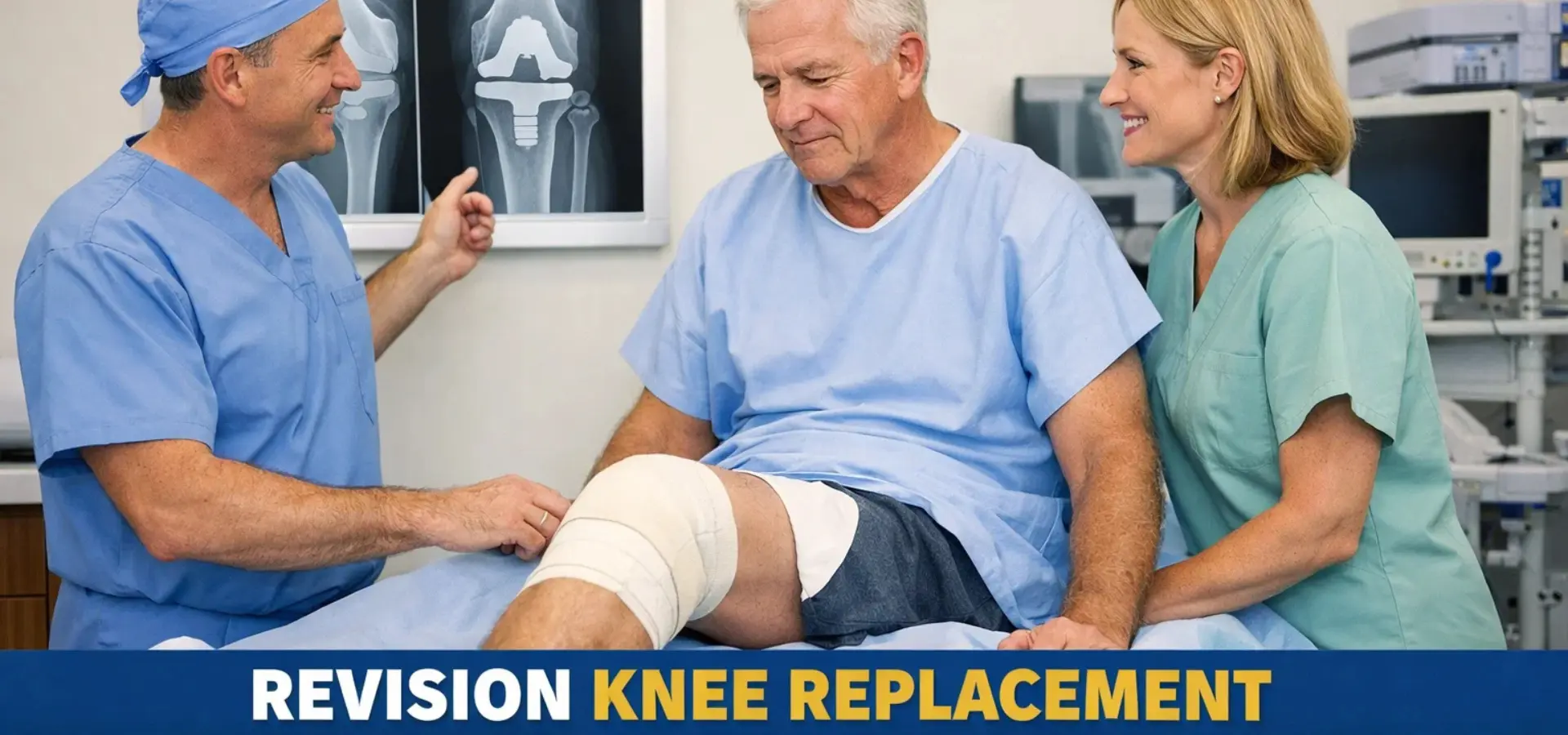
Revision knee replacement surgery in India is performed by the best doctors who are trained under the international centres. Indian revision knee replacement surgeries provide patients with a second chance at restoring the joint when an initial joint replacement does not perform well and has failed because of wear, loosening, infection, instability, or persistent pain. Because the first step in performing a revision knee replacement is removing the failed implant, it is significantly more complicated than the initial surgery.
Indian orthopedic centers use imaging and modular implants, and many surgeons have extensive experience performing backup repairs for these types of surgeries. As a result, after a revision knee replacement procedure, many patients in India can improve their mobility and reduce suffering from pain, and restore the function of their joints through proper preoperative planning and comprehensive rehabilitation programs that result in successful long-term outcomes, cost-effectively compared to many other countries.
Indications of Total Knee Replacement
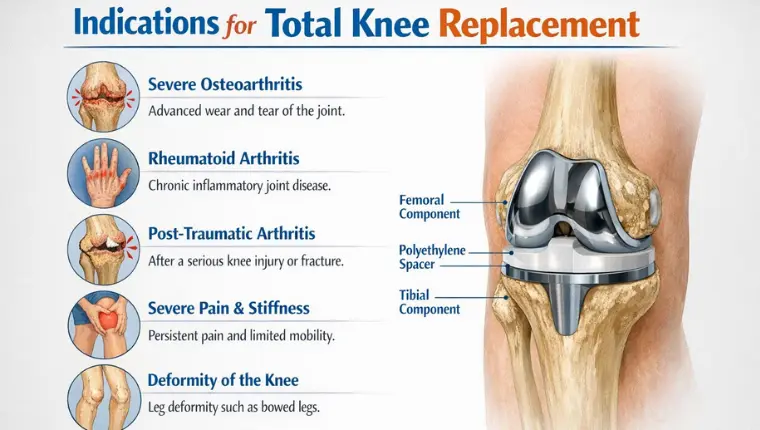
When knee joint damage interrupts a person's routine, a doctor may advise them to undergo knee replacement surgery. Commonly, advanced osteoarthritis occurs when cartilage between the thigh and lower leg deteriorates, causing persistent discomfort and limited mobility. Additionally, rheumatoid arthritis and post-traumatic arthritis can eventually destroy and deform the knee joint by leading to increasing joint deterioration and deformity.
Consult Now
GET A FREE QUOTE
Indications of Total Knee Replacement
- Deep vein thrombosis: This is prevented by giving blood thinners, and if it occurs, it is treated with specific blood thinners, usually Warfarin.
- Infection: The risk of infection is less than 1%, and pre-operative antibiotics are given to prevent this from happening.
- Stiffness: Occasionally, knee replacement may stiffen up, particularly in patients who are significantly overweight or have diabetes. Occasionally, one will require a manipulation under an anaesthetic should this occur.
- Nerve and vessel damage: It is unlikely that any major nerve or vessel will be damaged. It is unlikely that any major nerve or vessel will be damaged. It is, however, very common to have a small area of numbness over the other side of your knee where a superficial skin nerve is always cut during the surgery. This little numb patch is of no significance.
- Prosthesis failure: The prosthesis may fail due to the plastic wearing out, and it may require revision.
- Reflex sympathetic dystrophy: Very rarely, a condition can occur where the leg becomes stiff, hypersensitive, and painful. This requires specific treatment with a pain management specialist.
- Excessive scarring: Some skin will scar up significantly (keloid).
- Fluid build-up in the knee joint: Occasionally, this may occur and require drainage. It is usual for knees to be a little swollen and a little warm.
Recognizing the Signs of Revision
You might feel sharp pain that won't quit, even at rest. Instability makes your knee buckle during walks. Stiffness locks it up, cutting your bend range. Swelling builds without a clear cause. These signs scream for a check-up. Don't wait—early detection boosts success odds.
- Persistent ache around the knee joint.
- Limping or trouble bearing weight.
- Warmth or redness from a hidden infection.
The Complexity of Revision Procedures Compared to Primary Surgery
Revision work demands more skill than the first operation. Scar tissue from before clings tight, needing careful removal. Bone loss often requires grafts or special fillers. Surgeons pick constrained implants to hold things steady. These differ from basic ones by linking parts more firmly. The whole process takes longer, with higher risks if not done right. Picture rebuilding a house after a fire—it's messier than starting fresh. That's why expert hands matter most.
Knee Revision Surgery in India
India pulls ahead in knee revisions thanks to its blend of talent and tools. Patients save big while getting world-class care. Top hospitals handle thousands of these cases yearly. From bustling Delhi to coastal Chennai, centers buzz with activity. This focus builds sharp skills. You get results that match or beat those abroad.
Best Knee Surgeon in India
Many surgeons here train abroad in top programs. They return with skills in tough revisions. High patient loads sharpen their edge—some do over 500 knees a year. Look for fellows from places like the Mayo Clinic. In cities like Mumbai, teams specialize in bone rebuilding. Experience counts; pick one with a strong track record. This setup means fewer errors and quicker recovery for you.
Consult Now
GET A FREE QUOTE
|
Surgeon Name |
Specialty |
Experience |
City / Hospital |
|
Dr. Ashok Rajgopal |
Total & Revision Knee Replacement |
35+ years |
Medanta – The Medicity, Gurugram |
|
Dr. I.P.S. Oberoi |
Knee & Joint Replacement |
25+ years |
Artemis Hospital, Gurugram |
|
Dr. Ramkinkar Jha |
Knee Replacement & Arthroscopy |
20+ years |
Medanta / Delhi NCR |
|
Dr. Subhash Jangid |
Knee Replacement |
20+ years |
Fortis Hospital, Gurugram |
|
Dr. Jayant Arora |
Joint Replacement Surgery |
18+ years |
Fortis Hospital, Delhi |
|
Dr. S.K.S. Marya |
Orthopedic & Knee Surgery |
30+ years |
Medanta – The Medicity, Gurugram |
Advanced Technology and Implant Choices
India's clinics stock the latest gear. Navigation systems guide cuts with pinpoint accuracy. Custom guides fit your unique bone shape. For big losses, hinge implants lock in place. Trabecular metal fills gaps like a sponge soaks water. These tools cut surgery time and boost fit. Brands like Zimmer or DePuy arrive fresh, no shortages. You access options rare elsewhere.
Cost Advantages Over Western Markets
A revision in the US costs between $50,000 and $100,000. In the UK, expect £20,000 or more. India slashes that to $8,000-$15,000, covering everything. Savings reach 70-80% without compromising quality. Top spots use the same implants as overseas. Add in short waits, and it's a smart pick. Data from 2025 shows that over 500,000 medical tourists chose India for orthopedics. Costs stay low due to local sourcing and efficient systems.
|
Type of Knee Replacement Surgery |
Approximate Cost Range (INR) |
|
Total Knee Replacement (Single Knee) |
₹1,80,000 – ₹4,50,000 |
|
Partial Knee Replacement |
₹1,50,000 – ₹2,80,000 |
|
Bilateral Knee Replacement (Both Knees) |
₹3,50,000 – ₹8,00,000 |
|
Revision Knee Replacement Surgery |
₹3,00,000 – ₹8,00,000 |
|
Kneecap (Patellofemoral) Replacement |
₹1,00,000 – ₹4,00,000 |
Step-by-Step Revision Knee Replacement in India
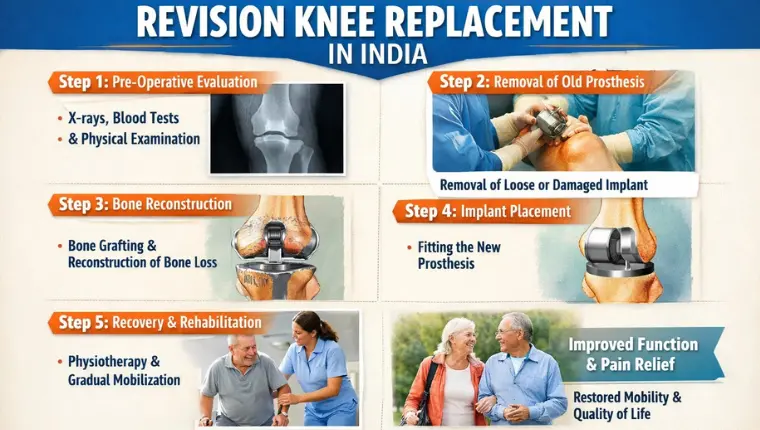
Planning a trip for surgery feels big, but it's straightforward. Start with a virtual consultation to share your story. From there, the path unfolds clearly. Domestic folks follow similar steps, often faster. International patients get visa help and airport pick-up. Each stage builds toward smooth sailing.
Consult Now
GET A FREE QUOTE
Step-by-Step Revision Knee Replacement in India
Travel for health raises questions. How do you know it's safe? India answers with strong standards and helps. Pick accredited spots for peace of mind. Support teams handle the rest. You focus on healing, not hassles.
We Care Health Services in India for Knee Surgery
We Care Health Services is the people’s choice in terms of treatment and revision surgery. There are different types of treatment needed to diagnose and to consider the revision surgery. Now there is also one question: why is revision surgery needed? Revision knee replacement surgery in India is performed when the original primary total knee replacement has worn out or loosened in the bone. Revisions are also carried out if the primary knee replacement fails due to recurrent dislocation, infection, fracture, or, very rarely, ongoing pain and significant leg length discrepancy. The revision total knee replacement is a more complex procedure, often because there is a reduced amount of bone to place the new total knee into. Here is How We care: Health Services is helping in Health Goals:
Consult Now
GET A FREE QUOTE
Imagine waking up each day with knee pain that won't quit, even after your first knee replacement. That failed implant steals your steps and joy. Revision knee replacement surgery offers a fresh shot at walking without wince. In India, this complex fix draws folks from afar, thanks to top skills at lower costs. We Care Health Services stands out as your guide, making the trip smooth and safe.
Why is Revision Knee Replacement Necessary?
Knee replacements aim to last long, but sometimes they don't. When pain returns or the joint feels loose, you might need a redo. Revision knee replacement in India fixes these issues with expert care.
Common Causes of Primary Implant Failure
Your first total knee arthroplasty, or TKA, can fail for clear reasons. Aseptic loosening happens when the implant pulls away from the bone without infection. Wear and tear over time grinds down parts, especially if you're active.
Infection, known as periprosthetic joint infection or PJI, strikes in about 1-2% of cases. It hides deep and causes swelling or fever. Fractures around the implant add stress, cracking the bone near the metal. Biology plays a part too. Poor bone quality from age or disease speeds failure. Mechanical issues, like bad alignment, wear things out faster. Spot these early with check-ups to avoid big problems.
Surgeon Selection and Pre-Operative Planning
We Care matches you to surgeons who fix your exact issue—like infection or loose parts. They review your case with ortho stars who do 200+ revisions a year. Experience counts big. Pre-op, they set up CT scans for clear views. This helps pick the right implant size. No guesswork means better fit and less risk. Think of it as custom tailoring—your knee gets what it needs. We Care ensures all data reaches the doc fast.
Consult Now
GET A FREE QUOTE
Revision Knee Replacement Procedure Checkpoints
The process for revision knee replacement surgery in India feels structured yet personal. Tests confirm the plan. Surgery rebuilds with care. Recovery builds step by step.
Diagnostic Protocols Before Surgery
Start with X-rays to spot loose bits or bone gaps. Doctors draw fluid from the knee to check for bugs if infection lurks. Blood tests flag inflammation. 3D CT or MRI maps the joint deeply. This spots hidden wear. For sneaky infections, PCR tests catch low-level germs. These steps rule out fixes short of surgery. Clear results mean you're set. It's like a full car check before a long drive—spot issues early.
Surgical Techniques Used in Revision TKA
Surgeons pick implants based on your bone health. Standard stems fill simple gaps. Hinged types lock for wobbly knees. Rotating hinges allow natural moves while steadying. Bone grafts from your hip or bank rebuild lost stock. They use cement or press-fit for holding. Access needs care—old scars mean slow peels. Tools extract parts without extra damage. The op lasts 2-4 hours. Pros in India nail these, cutting blood loss.
The Role of Long-Term Physiotherapy Adherence
Physio rebuilds after revision knee replacement. Scar tissue stiffens things, so sessions stretch it out. Aim for 2-3 times weekly, plus daily homework. Compliance ups implant life to 15+ years. Low activity helps—skip runs, favor swims. Weight control eases the load. Factors like your age and follow-ups matter. Stick to plans, and you'll climb stairs easily. It's the glue for a lasting fix. This path restores steps and spirit. Don't let a failed first hold you back—reach out to We Care today. Reclaim your active life with a solid second chance.
Knee Replacement Surgery Hospitals in India
JCI seals mean global-level safety. NABH adds local trust. These enforce clean rooms and germ checks. The best hospitals in India for performing knee replacement surgery are those with a great reputation, high success rates, and highly skilled orthopedic teams. Examples of some of these hospitals. Medanta - The Medicity, located in Gurugram, offers advanced surgical procedures for complex knee revisions. Apollo Hospitals & their established orthopedic hospitals in several cities. Fortis Hospital & Max Super Specialty Hospital both have operating rooms designed for orthopedic surgery. All India Institute of Medical Sciences, New Delhi, has long been trusted as the best government-funded Hospital to offer affordable, but high-quality surgical treatment.
Packages, Inclusions, and Transparency in Pricing
Look for bundles covering surgery to stay. Include 10-15 therapy days and meds. Implants come with warranties. Ask for breakdowns—no hidden fees. Top providers quote in dollars for ease. Compare three to find the best fit. Set up apps for video check-ins. Your surgeon shares tips weekly at first. Track pain and motion with journals. For long-term, yearly X-rays spot issues. Local docs abroad can link back. This bridge keeps gaining solid ground. Plan visits around milestones, like month three.
- Hospital stay: 4-7 nights.
- Airport transfers and lodging for kin.
- Follow-up consults, even remote.
Conclusion
Revision knee replacement in India offers expert care, modern tools, and real savings. You gain mobility without breaking the bank. Pick surgeons with proven skills and accredited hospitals for top results. Thorough prep and clear plans lead to long relief. Don't let a failed implant hold you back. Reach out to a trusted center today—start your path to pain-free steps. Your active life waits.
Revision knee replacement surgery in India blends top expertise, modern tools, and smart savings. We Care Health Services makes it simple, from consultation to comeback. You dodge high costs while gaining skilled hands.