Fill in your details, we will contact you
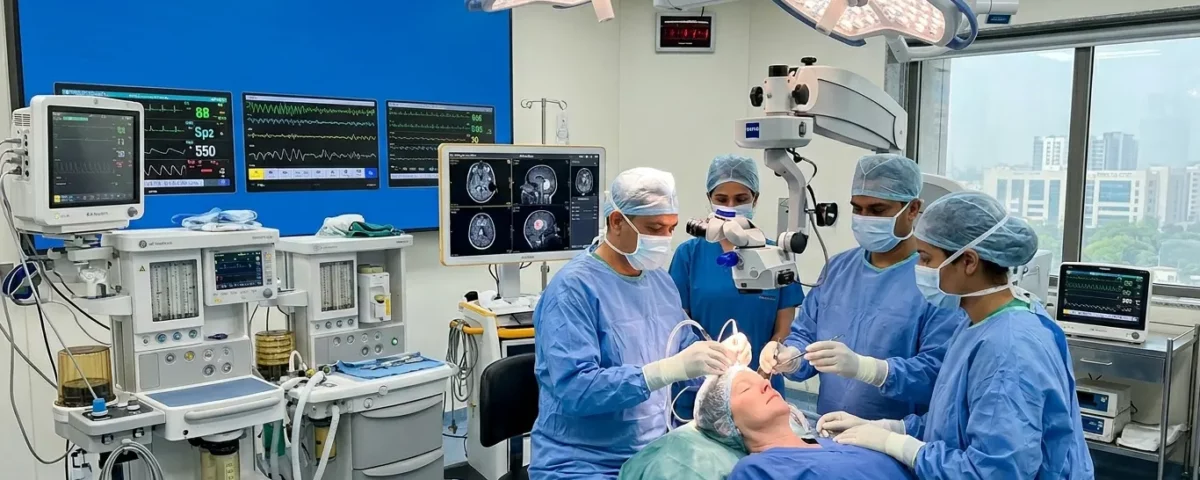
Neurosurgery in India is possible with the help of minimally invasive methods; it is no longer a mystery. There are more than 50 centres of excellence that provide all kinds of healthcare services. With the help of a neuronavigation system, a minor tumor can be detected and can be removed. It was previously believed that all kinds of good treatment were only possible in developed nations.
Conditions like brain tumour, head injuries, epilepsy, spinal cord injuries, and congenital abnormalities can be treated with the help of Neurosurgery. The field is not new to the doctors; the technology integration is new. It is part of robotic surgeries, and the number of doctors performing these surgeries has also increased in the last decade.
Neurosurgery in India has evolved from ancient wisdom to a high-tech, advanced modern-day practice. The ancient text Sushruta Samhita contains some of the earliest references to diseases affecting the brain and nerves, as well as examples of surgical techniques for managing head injuries. By the 1950s, modern neurosurgery started to emerge as more neurosurgical units were created in large hospitals. Presently, India is recognised globally for its highly skilled neurosurgeons, the latest technology used in surgery, contributions to research on neurosurgery, and providing affordable access to neurosurgical care for domestic and international patients.
There are numerous treatments that are provided by the Indian hospitals, and with the increase in technology, it is becoming easier. There are some rare conditions like hydrocephalus, which is a congenital disease that can be treated with some minor surgeries. Head injuries, Parkinsonian diseases, and nerve compression in the head or spine can be corrected with different neurosurgery procedures.
Neurosurgery is considered one of the toughest fields in medicine as it involves the functions of the nerves. With procedures like craniotomy, deep brain stimulation, spinal fusion, and robotic-assisted surgeries for nerve compression, it has now become easy for doctors to treat patients, even with chronic conditions.
Neurosurgery in India has improved procedural methods with the application of technology. Here are some neurosurgery procedures:
Craniotomy is done for the resection of a brain tumour, which can be malignant or benign. In this procedure, doctors open the bone flap and reach the brain, then remove the tumour and screw the plates back.
There are two main procedures, laminectomy and discectomy, which are used for treating nerve compression. When the growth of the bone (lamina) is dissected, it is known as a laminectomy. When a herniated disc is removed, it is known as a discectomy.
These are types of brain tumour in malignant form, which are treated with radiation or chemotherapy first and then operated. The goal is to remove the tumor while keeping the patient's speech and movement intact.
These surgeries focus on the vascular system or blood vessels of the brain. Arteriovenous Malformation (AVM) Embolization, Carotid Endarterectomy, and Angioplasty are some examples.
Deep Brain Stimulation enhances the electrical signal given by the nerve. It can cure chronic pain and also prevent dystonia and tremors in Parkinson's and epilepsy patients.
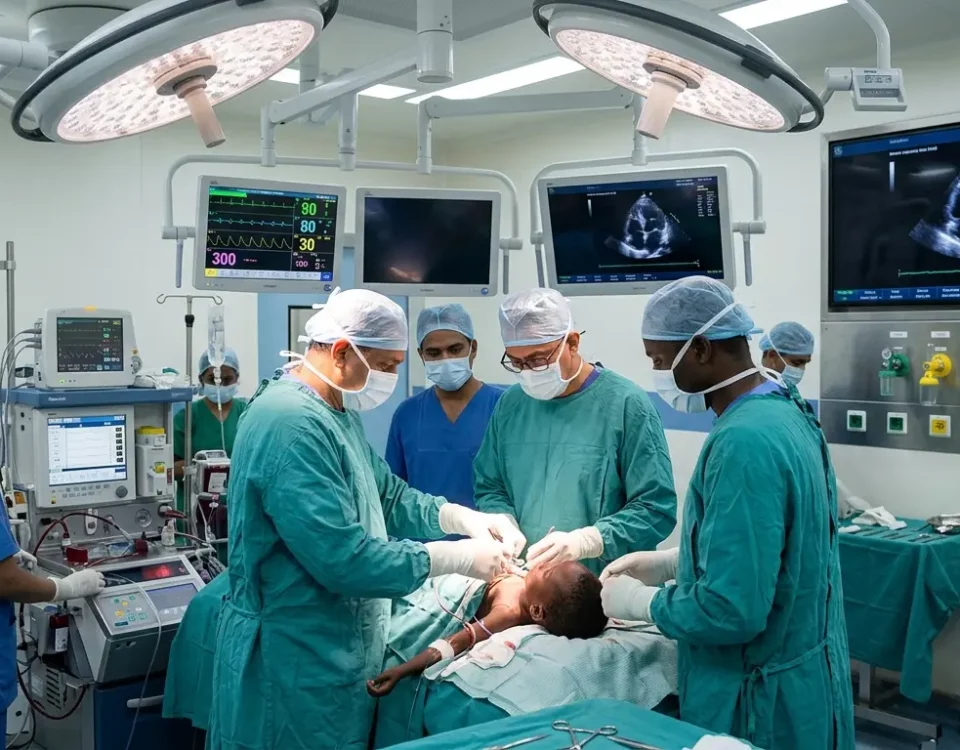
Pediatric neurosurgery includes treating congenital conditions like hydrocephalus, spine conditions, tumour growth, and other evolutionary disturbances in children.
A neurological examination is typically the initial step before planning any neurosurgery in India. There are some advanced procedures included in this method, like MRI, CT scans, and some special laboratory tests.
MRI delivers intricate images of the brain, spinal cord, and complex adjacent organs. CT scans are effective in identifying fractures, hemorrhages, and urgent medical situations. Angiography is conducted to visualize blood vessels and detect aneurysms.
Electroencephalography checks the activity of the brain and helps detect epilepsy. Electromyography (EMG) checks nerve conduction and helps diagnose peripheral nerve injuries.
Laboratory tests include analysis of the CSF or cerebrospinal fluid from the spine. These help diagnose specific neurological and inflammatory conditions.
It is very necessary to proceed with a medical Visa procedure in India for legal treatment.
Obtain medical documents or reports of your diagnosis.
Get permission from a recognised hospital of India for treatment.
Apply for medical Visa with these documents:
After Visa approval, complete FRRO registration within 14 days if treatment exceeds 180 days.
One of the best choices could be We Care Health Services, which has been in the field for 20 years. There are skilled surgeons and staff available day and night. You can also take a free consultation by sending your report.
Costs incurred during various neurosurgical procedures can differ widely based on the complexity of your medical problem, the type of procedure, location within India, and the length of hospital stay.
| Neurosurgical Procedure | Approximate Cost (INR) |
|---|---|
| Brain Tumor Surgery | ₹2,50,000 – ₹8,00,000 |
| Spine Surgery (Discectomy/Laminectomy) | ₹1,50,000 – ₹5,00,000 |
| Cervical Spine Fusion | ₹2,50,000 – ₹6,00,000 |
| Aneurysm Clipping Surgery | ₹3,00,000 – ₹10,00,000 |
| Deep Brain Stimulation (DBS) | ₹8,00,000 – ₹20,00,000 |
| Epilepsy Surgery | ₹4,00,000 – ₹12,00,000 |
| Hydrocephalus Shunt Surgery | ₹1,00,000 – ₹3,50,000 |
| Minimally Invasive Spine Surgery | ₹2,00,000 – ₹6,00,000 |
| Craniotomy | ₹2,00,000 – ₹7,00,000 |
| Endoscopic Brain Surgery | ₹2,50,000 – ₹8,00,000 |
Modern-day neurosurgical facilities in India utilize MRIs, CTs, neuronavigation systems, intra-operative MRIs, neuroendoscopy, and microscopes to provide precise diagnostic information and minimally invasive surgical options.
Many facilities also offer deep brain stimulation, awake brain surgery, robotic-assisted techniques, and guided imaging spinal surgery. The field of neurosurgery in India is among the most innovative fields of medicine in the country.
There are some general complications which come after the surgery. The recovery rate and success rate of surgery from our hospital are more than 85%.