
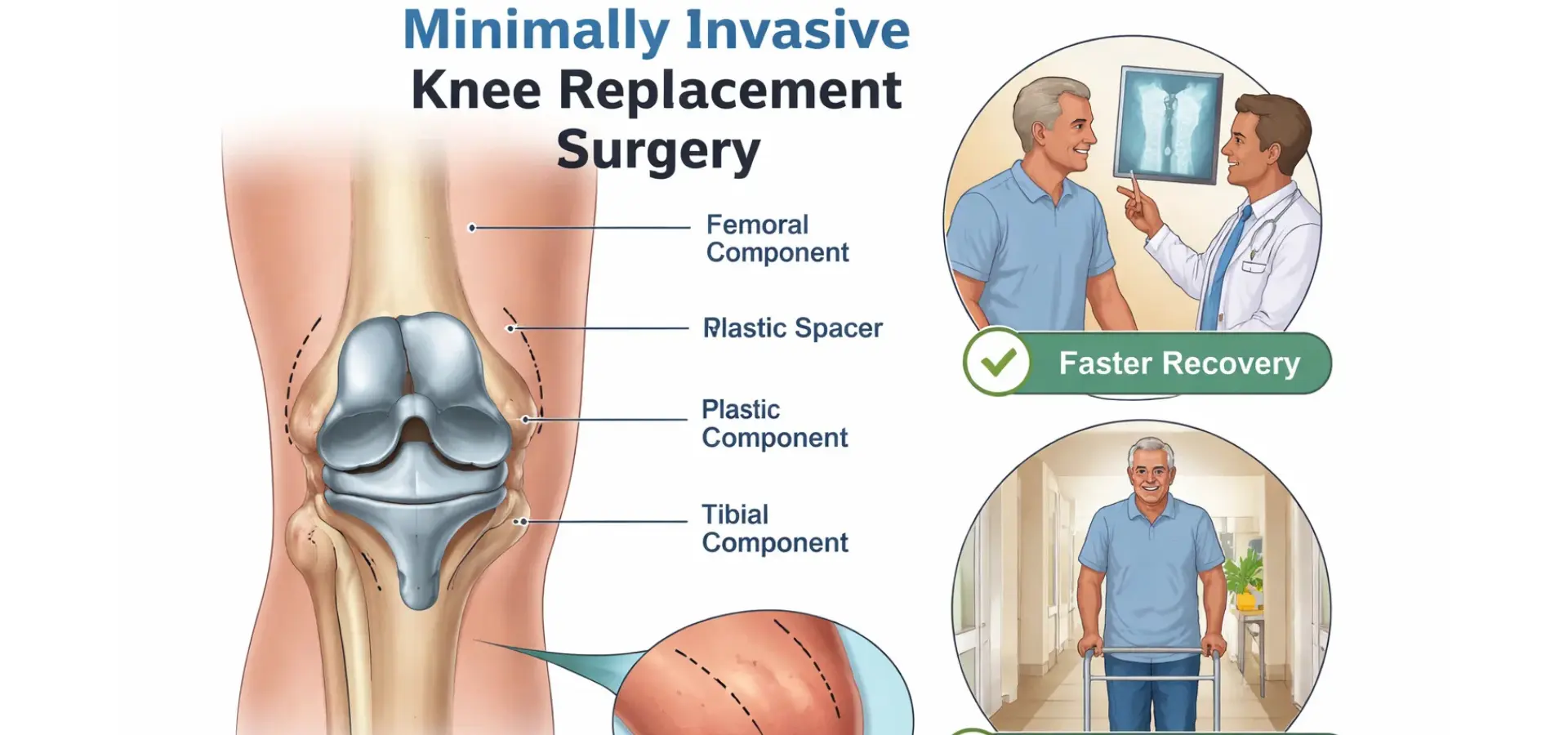
There are different techniques used for minimally invasive knee replacement surgery in India; most of them are good options for resurfacing. The goal of the minimally invasive knee replacement procedure in India is to minimize pain and recovery time from surgery. This approach aims to decrease the length of stay in the hospital and dramatically decrease the amount of disruption to soft tissue and muscle around the knee by utilizing smaller incisions than those used in conventional surgical techniques. As such, patients will have an improved range of motion and will be able to return to their normal activities much earlier than with traditional surgery.
Consult Now
GET A FREE QUOTE
The cost of this modern method of treating patients is substantially lower than that of many Western countries, while still providing the same level of quality. Many of India's orthopedic surgeons are well-trained, utilize state-of-the-art facilities for surgical procedures, and provide comprehensive post-operative rehabilitation programs for patients who have had minimally invasive knee replacement surgery, making India one of the best places to receive this type of treatment.
Minimally Invasive Knee Replacement
The most common reason for knee replacement is knee arthritis, and this could be worse. Knee arthritis leads to pain, which often happens with activity. The knee can also hurt at rest. Patients often find it difficult to climb or go down stairs, walk distances, or get up from low seats. Patients may also have swelling about the knee, stiffness, or a feeling of looseness.
- Lesser open-surgery incisions compared to traditional knee replacement surgery.
- Lesions that the surrounding soft tissues and muscles sustain are fewer with this technique.
- Surgical procedures that cause pain and bleeding after surgery...
- Allow early ambulation and physiotherapy for patients.
- Short hospital stays and quicker overall recovery...
- Reduced the number of postoperative complications, such as surgical site infections.
- Improved cosmetic results (due to less scarring)...
- Technology is widely available in India, with many skilled orthopedic surgeons and appropriate facilities for their use.
Diseases or Conditions Responsible for Knee Replacement Surgery
When prolonged diseases related to the knee, such as osteoarthritis and rheumatoid arthritis, interfere with the daily needs of the patients, replacement is the only option left. These conditions can’t be corrected with conservative treatment anymore. Knee replacement surgery will generally be performed when your knees have deteriorated to the point of not being able to perform daily activities, and previous attempts at conservative management have failed. A variety of medical conditions can result in a significant amount of damage to the knee, which makes joint replacement the best way to reduce pain and regain mobility. Here are some more specific elaboration fore knee replacement surgery.
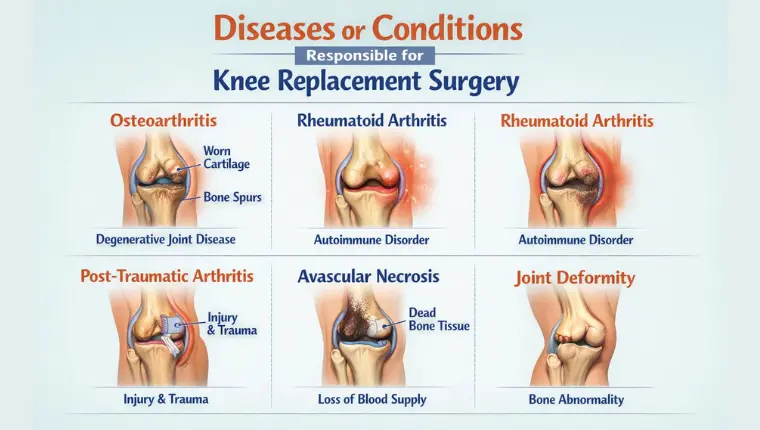
Diseases or Conditions Responsible for Knee Replacement Surgery
Past injuries, like a twisted ankle from soccer, throw off your gait and wear one side more. Genes play a role, too; if family members had early knee issues, you're more likely to follow suit.
Non-Surgical treatment For Knee Conditions
The first steps in treating knee arthritis are activity modification, regular exercise, and weight loss. The muscles around the knee protect it during activity. With every step, forces equal to several times a person's body weight are transmitted through the knee. Therefore, improved strength and decreased body weight can prolong the life of the knee. Soft knee braces and shoe modifications can sometimes help. Pain relievers and anti-inflammatory medications are also recommended. Some dietary supplements might also help.
A cane or walker can also be tried to assist with walking and to improve mobility. Steroid injections directly into the knee can be used to decrease inflammation. A lubricant may be used to improve the function of the knee. These can offer some relief. They can be repeated from time to time if they help.
Surgical Treatment for Knee Conditions: Minimally Invasive Techniques for Knee Replacement
In the classic method, doctors make a long slice, about 10 to 12 inches, right down the front of your knee. They pull back skin and muscle to reach the joint. This often means cutting the quadriceps tendon, the strong band that helps you straighten your leg. After surgery, you might stay in the hospital for three to five days. Healing takes time because the body works hard to mend that big wound. Many patients need help with daily tasks for weeks.
Consult Now
GET A FREE QUOTE
Minimally Invasive Surgery (MIS) for the Knee
MIS flips the script with cuts under 4 to 6 inches. Surgeons slip in through small doors, avoiding big muscle splits. They keep the quadriceps tendon whole, so your leg stays strong from day one. This approach targets the knee joint without tearing up nearby tissues. You often go home the next day. Less damage means your body bounces back faster.
Key Technological Advancements Enabling MIS
Special tools make these small cuts work. Think slim saws and drills that fit through tight spaces. High-definition cameras, like tiny TV screens inside your knee, guide every move. Navigation systems use computers to map the joint in real time. Robotic arms add extra steady hands, cutting bone just right. These gadgets turn tricky jobs into precise fixes. Studies show they boost accuracy by up to 20 percent.
Specific Minimally Invasive Surgical Techniques
Now, let's look at the hands-on ways surgeons do MIS knee replacement. Each style fits different needs. They all aim to spare as much healthy tissue as possible.
Benefits and Proven Outcomes of Minimally Invasive Knee Surgery
When pain becomes constant, mobility is restricted, and quality of life is compromised, knee replacement surgery is considered to restore function and comfort. Why pick MIS for your knee? The perks go beyond looks. Real data backs up the gains in comfort and speed.
Reduced Postoperative Pain and Blood Loss
Smaller cuts mean less ripping of muscles and skin. Right after, pain scores drop by 30 to 50 percent, per recent trials. You need fewer pain pills and blood boosts. One study of 500 patients found that transfusion rates were cut in half with MIS. Your body loses less fluid, so you feel steadier sooner. This ease helps you focus on healing, not hurting.
Expedited Rehabilitation and Return to Function
Get up and go quicker—that's the MIS promise. Many walk without aid by day two, unlike the week or more in open surgery. Full bend in your knee hits in weeks, not months. To make the most of it:
- Start gentle bends in bed the same day.
- Aim for 30 minutes of therapy twice daily, early on.
- Track progress with a journal to stay motivated. These steps build strength fast. Patients often drive in two weeks and hike lightly by month three.
Cosmetic Results and Scar Management
Who wants a long scar down their leg? MIS leaves a neat line, easy to hide under shorts. Skin heals more tightly with less tension. Use vitamin E cream and silicone sheets to fade marks. Sunblock keeps them from darkening. Most folks say the small mark boosts confidence. It's a win for both function and feel.
What is the cost of Minimally Invasive Knee Replacement Surgery?
Surgeon fees form the base of minimally invasive surgery bills. They cover skills and time in the operating room. Anesthesia adds another layer, with experts keeping you under or numb.
Consult Now
GET A FREE QUOTE
Facility charges hit for the room setup, tools, and staff. Pre-op tests like scans or blood work pile on before the cut. After rehab or follow-up visits, tack on extra dollars.
Get a good-faith estimate in writing before the date. It lists expected totals, helping you plan. CMS tracks average ranges across states, so peek there for benchmarks.
|
Cost Component |
Estimated Cost Range (INR) |
What It Includes |
|
Pre-operative evaluation |
₹10,000 – ₹25,000 |
Blood tests, X-rays, ECG, physician clearance |
|
Surgeon’s fee |
₹60,000 – ₹1,20,000 |
Surgical expertise and procedure planning |
|
Anesthesia charges |
₹15,000 – ₹30,000 |
Anesthetist and medications |
|
Knee implant cost |
₹80,000 – ₹2,50,000 |
Indian or imported implant depending on choice |
|
Operation theatre charges |
₹40,000 – ₹80,000 |
OT usage, instruments, surgical consumables |
|
Hospital stay |
₹30,000 – ₹70,000 |
Room charges for 2–4 days |
|
Medicines and disposables |
₹20,000 – ₹40,000 |
Antibiotics, pain relief, dressings |
|
Post-operative physiotherapy |
₹15,000 – ₹30,000 |
In-hospital and early rehab sessions |
|
Total estimated cost per knee |
₹3,00,000 – ₹6,50,000 |
May vary by hospital and city |
Preoperative Considerations for MIS
Knee replacement is recommended for knee arthritis if nonsurgical treatments have failed and the pain is limiting lifestyle and activities. Surgical options include knee arthroscopy (although this is rarely used just for arthritis), partial knee replacement, and total knee replacement. MIS isn't for everyone. Picking the right fit matters a lot. Let's cover who shines with this path.
Anatomical and Pathological Criteria for Candidacy
Your knee's shape sets the stage. Mild bends, like slight inward or outward leans, work best—severe ones might need open fixes. Strong bones and steady ligaments help implants stick. Keep BMI under 35 for easier access. If arthritis hits just one side, PKA could be perfect. Surgeons check these in office visits. Matching patient to method ups success odds.
The Role of Advanced Imaging in Surgical Planning
Before the knife, scans light the way. CT gives 3D bone views for exact cuts. MRI spots soft tissue issues early. These maps let teams size parts perfectly from afar. Alignment plans cut errors. One clinic cut revision rates by 15 percent with routine imaging. It's like a dress rehearsal for the real show.
Actionable Tips for Preparing for Minimally Invasive Surgery
Prep smart to speed recovery. Build leg strength with wall sits and leg lifts weeks ahead. Drop extra weight if needed— even 10 pounds eases surgery. Review meds with your doc; stop blood thinners as told. Quit smoking to boost healing oxygen. Stock home with grabbers and raised seats. These habits turn good outcomes into great ones.
Addressing Misconceptions About Knee Replacement Surgery: Choosing We Care Health Services
No surgery skips risks, and MIS has its own. Balance the views to set real hopes. Knowledge clears confusion. We Care Health Services has adopted technology to provide the best solution for different side effects. There are different types of misconceptions, such as there are no chances of infection, or it is risk-free.
While it is not. The common belief that minimally invasive surgery is a rapidly completed, less invasive way of doing traditional surgery is misleading. Many people wrongly believe that there is no risk to using minimally invasive methods and that those techniques don't expose the patient to those risks. Although minimally invasive techniques typically cause significantly smaller incisions and cause less damage to the body's tissue, these techniques still come with risks, including infection, bleeding, possible complications from anesthesia, etc.
Potential Challenges Unique to Minimally Invasive Approaches by We Care
Tight spaces can hide spots from view. If tools glitch, alignment might slip, leading to uneven wear. New surgeons face a steep skill climb with fancy gear. Fat patients or stiff knees add hurdles. Experts note a 5 percent higher fix rate early on, but it drops with practice. Talk risks with your team upfront.
Consult Now
GET A FREE QUOTE
Clarifying MIS vs. Standard Arthroscopy
Don't mix these up. Standard arthroscopy uses pin-sized holes for peeks or small repairs, like trimming cartilage. MIS knee replacement cuts bone and sets metal parts—it's a full rebuild. Arthroscopy lasts an hour; MIS takes two to three. One's a tune-up, the other's an engine swap. Know the difference to match your needs.
Long-Term Durability and Implant Survivorship
Worried about lasting fixes? Good news: MIS holds up like open ones. Implants last 15 to 20 years if placed correctly. Studies indicate a 90 percent success rate at 10 years. Precise tech ensures an even load on parts. Daily care, such as low-impact walks, can extend life. Your new knee can carry you far.
Benefits of Minimally Invasive Methods of Surgery
Minimally invasive methods of surgery have changed the way many medical and surgical conditions are treated. Instead of large incisions, these techniques use smaller cuts and specialized instruments to reach the affected area, which offers several practical benefits for patients.
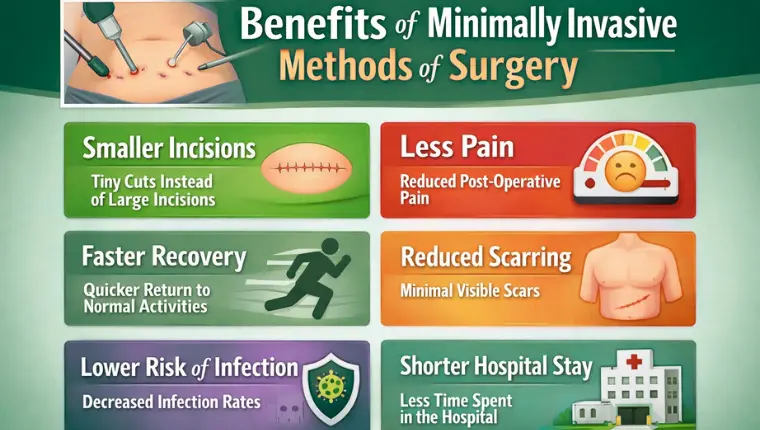
One of the main advantages is reduced pain after surgery. Because muscles and soft tissues are disturbed less, patients usually experience less discomfort and require fewer pain medications. This also lowers the risk of medication-related side effects.
Consult Now
GET A FREE QUOTE
Another important benefit is faster recovery. Smaller incisions heal more quickly, allowing patients to start moving sooner and return to daily activities in a shorter time. Hospital stays are often shorter, which is both convenient and cost-effective.
Conclusion
Minimally invasive techniques reshape knee surgery from rough to refined. They blend sharp fixes with kind handling of your body's frame. You get solid joint relief plus swift steps to normal life. Shorter stays, fewer aches, and neat scars mark the wins. Long-term strength matches the old ways when done right. If knee pain slows you, see an orthopedic pro skilled in these tools. They can check if MIS fits your story. Take that first step toward easier days.