
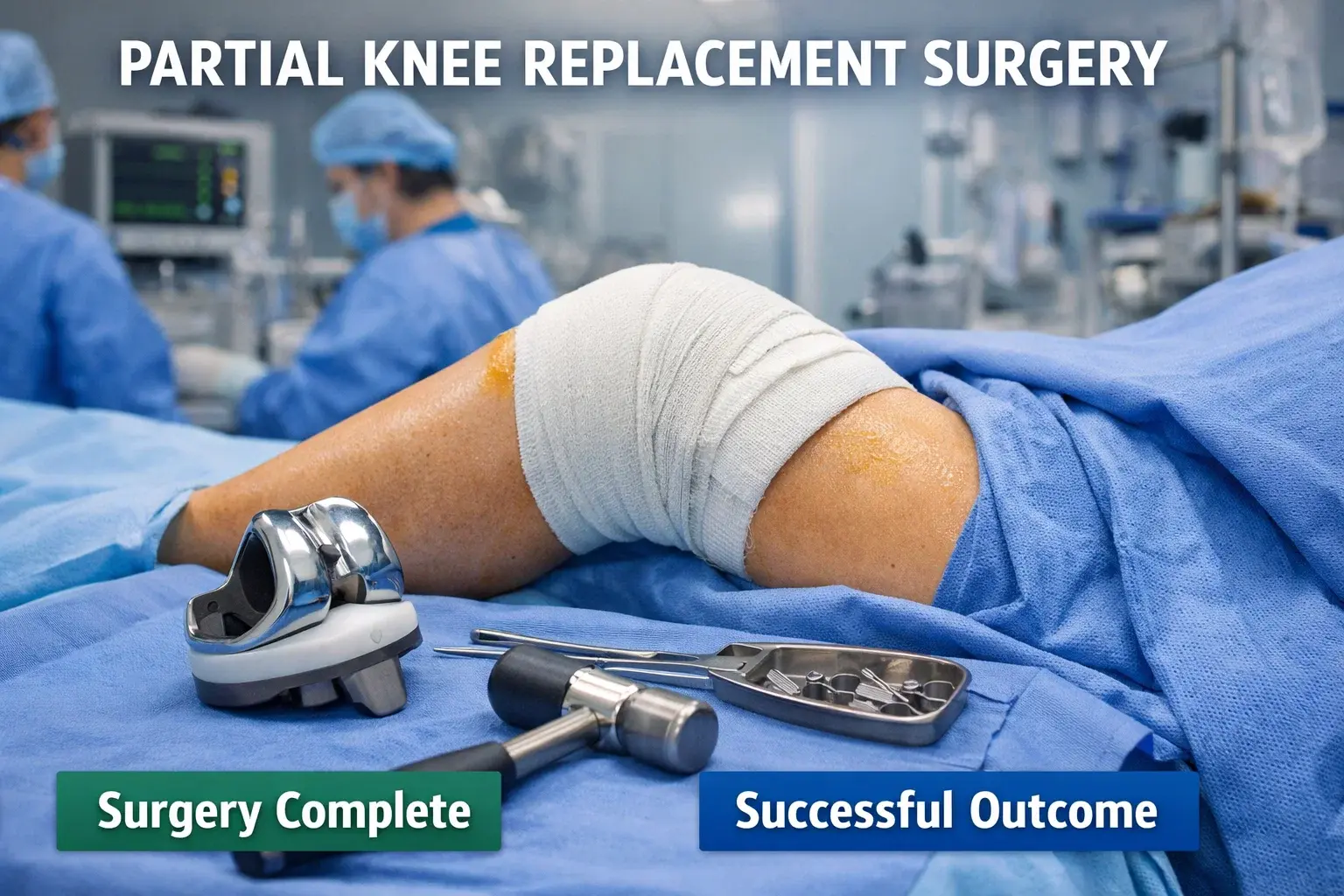
Partial knee replacement surgery in India is also referred to as Unicompartmental Knee Replacement. Only the damaged surfaces of the joint are replaced, leaving much of the bone and soft tissue in place. This is the best solution if a person does not have widespread arthritis. If it is not widespread to different parts of the same knee, then the destroyed part can be replaced with the help of a minimally invasive method.
Partial knee replacement is always a minimally invasive method; the recovery period for Partial Knee Replacement (PKR) is less in comparison to the traditional methods. There are different types of procedures in the same scenario. Conservative measures may include, but are not limited to, medications (such as Advil, Naprosyn, Celebrex, and Vioxx), cortisone injections, strengthening exercises, and weight loss.
Indications of Partial Knee Replacement
Partial or unicondylar knee replacements (PKR) may be suitable for patients who have experienced injury or a wear-and-tear type of injury that did not affect the entire joint but only a certain part of the joint. This type of surgery helps preserve the healthy bone and ligament tissue surrounding the damaged area, which means patients recover more quickly, achieve a greater range of motion when compared to patients who underwent total knee replacement.
- No presence of competitive stiffness & stiffening of ligaments.
- Physically active individuals who do not participate in elite physical activity.
- Normal or near normal knee alignment in addition to a lack of significant knee instability.
- An absence of inflammatory joint diseases (rheumatoid arthritis).
- Healthy bone quality capable of withstanding the implant.
- Place realistic expectations on patients for potential outcomes that may restrict the patient's activities.
Patients with limited damage to their knee who want to increase their knees' mechanical efficiency without causing any (or very little) additional pain are good candidates for PKR surgery. However, there are several characteristics that an individual must have to achieve optimal success following PKR surgery. These include: having an accurately diagnosed knee injury by a doctor qualified to perform PKR surgery; using advanced imaging techniques to evaluate the condition of the patient's knee; and having extensive surgical experience performing PKR surgeries. If all three of these requirements are met, the chances of achieving long-term pain relief from PKR surgery are excellent, and the individual can return to his/her normal lifestyle or even to a pre-injury level of activity.
What is Partial Knee Replacement Include?
In a partial knee replacement, the portion of the knee joint affected is treated, and the other two compartments are preserved. The surgeon will remove the damaged cartilage and bone from the only compartment affected by the disease. After removing the damaged cartilage and bone, the surgeon will insert metal and medical-grade plastic to replace this damaged area. Therefore, the smooth movement of your joints can be restored by placing these two items back together.
The long-term results are very good when the minimally invasive partial knee replacement is done in the right patients.
Older studies showed very poor results of the partial knee replacement, but these results are thought to be due to poor patient selection. If the minimally invasive procedure is done on a patient with too widespread arthritis, the results are very likely to be less than satisfactory. If your doctor does not recommend a partial knee replacement, you may be in this situation. If this is the case, further conservative treatment (e.g., injections, physical therapy, medications, etc.), or total knee surgery are the best options.
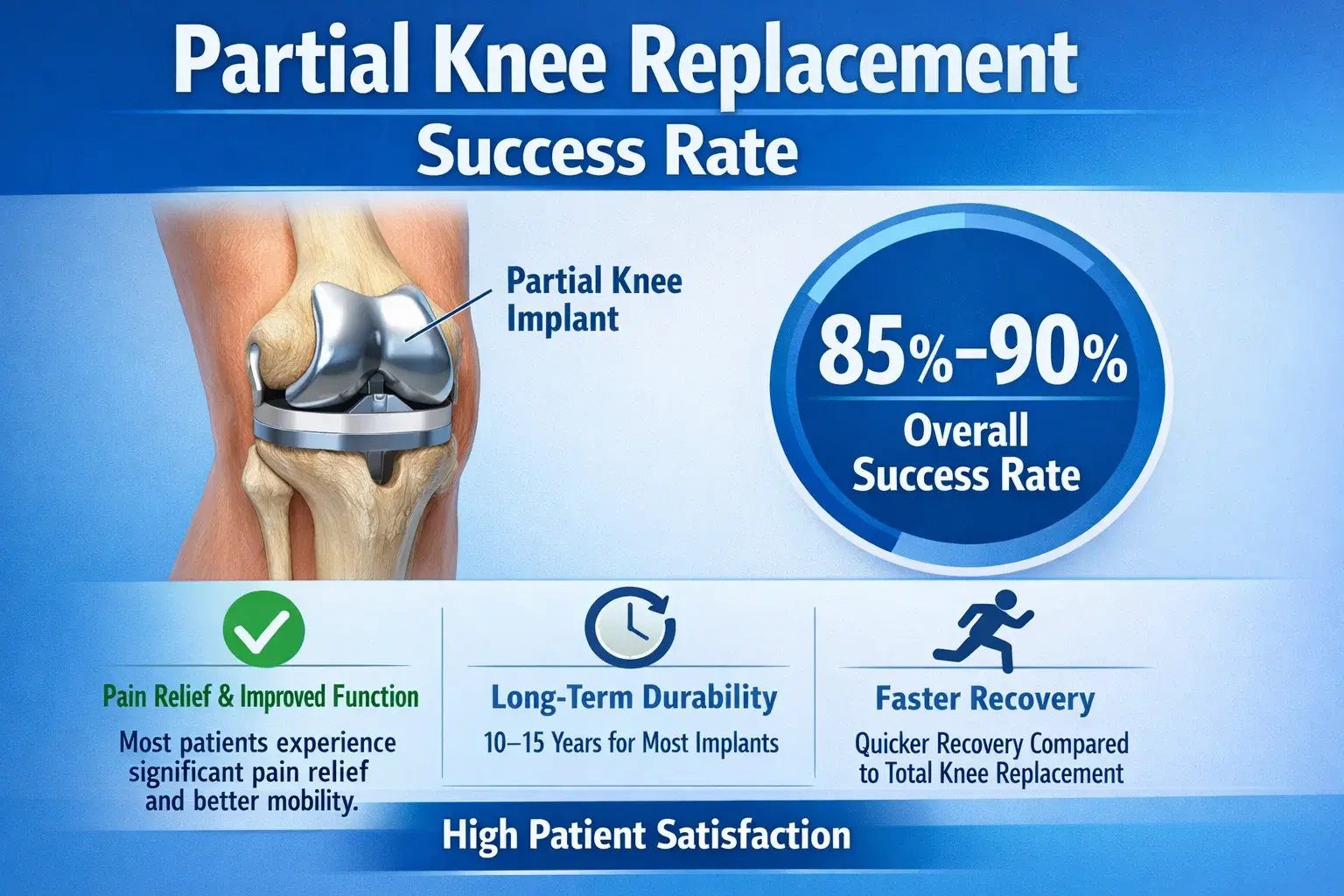
Partial Knee Replacement Success Rate
There are cases with a kind of problem in the knees, partial knee replacement surgery in India first goes on the diagnosis section, to know the exact reason. This procedure, also called unicompartmental knee arthroplasty or UKA, targets just the damaged part of your knee. It leaves healthy areas untouched. India stands out as a top spot for this surgery. Costs stay low, yet quality matches world standards. Skilled doctors and modern hospitals draw patients from everywhere. Success rates often hit 90% or higher for pain relief and function.
The Success Rate of the Surgery depends on the condition of the Patient when he chooses to go for surgery. Most of the time, we notice surgical inspection at the time of chronic symptoms. Remember, if there is a bone deformity of any structural issue, then it may cause failure of the replacement.
Choosing India For Partial Knee Replacement Surgery
India pulls in folks seeking knee fixes for good reasons. Affordable prices mix with top-notch care. You get expert treatment without breaking the bank. Plus, the country's hospitals follow global rules.
|
Outcome Measure |
Success Rate |
|
Overall patient satisfaction |
85%–95% |
|
Pain reduction |
90%–95% |
|
Implant survival at 10 years |
85%–90% |
|
Implant survival at 15 years |
75%–85% |
|
Return to daily activities |
90%+ |
|
Improvement of knee mobility |
80-90% |
|
Revision surgery requirement |
5-8% |
The Success Rate of the Surgery depends on the condition of the Patient when he chooses to go for surgery. Most of the time, we notice surgical inspection at the time of chronic symptoms. Remember, if there is a bone deformity of any structural issue, then it may cause failure of the replacement.
Choosing India For Partial Knee Replacement Surgery
India pulls in folks seeking knee fixes for good reasons. Affordable prices mix with top-notch care. You get expert treatment without breaking the bank. Plus, the country's hospitals follow global rules.
Cost-Effectiveness Without Compromising Quality
Partial knee replacement surgery in India costs far less than in the US or Europe. There, you might pay $30,000 to $50,000. In India, it's often $5,000 to $10,000. This includes hospital stays and follow-ups. Major spots like Apollo or Fortis offer clear price lists upfront. No hidden fees surprise you. Savings come from lower living costs, not skimped care. Patients still get the same implants and tech. Why choose India? You save money and focus on healing.
|
Cost Component |
Estimated Cost (INR) |
|
Government or trust hospital |
₹1,00,000 – ₹1,50,000 |
|
Standard private hospital |
₹1,80,000 – ₹2,50,000 |
|
Premium private hospital |
₹2,80,000 – ₹4,50,000 |
|
Robotic assisted partial knee replacement |
₹4,00,000 – ₹6,00,000 |
|
Implant cost (included in package) |
₹80,000 – ₹1,80,000 |
|
Surgeon and anaesthesia fees |
₹40,000 – ₹1,00,000 |
|
Hospital stay and OT charges |
₹30,000 – ₹80,000 |
Advanced Infrastructure and International Accreditation
Hospitals in India shine with JCI labels from the US. These spots meet strict safety checks. Think of places like Max Healthcare in Delhi. They handle thousands of knee cases yearly. Tools like robotic arms guide cuts with pinpoint accuracy. Navigation systems help place parts just right. This cuts errors and boosts success. For partial knee replacement, such tech means smaller scars and faster steps. You arrive, get treated in a clean setup, and leave stronger.
Surgeon Expertise and Volume of Procedures
Indian doctors train at top schools worldwide. Many specialize in knee work for years. A surgeon might do 500 partial knee replacements a year. That's way more than most in other countries. High numbers mean sharper skills and fewer risks. Pick a doc certified by the Indian Orthopaedic Association. They know how to spot who fits UKA best. Experience shows in quick surgeries—often under two hours. Your odds for a smooth outcome rise with their know-how.
Partial Knee Replacement Surgery in India: Procedure and Technique
Partial knee replacement fixes one worn section of the joint. It suits folks with pain in just the inner or outer part. Unlike full swaps, it keeps your natural ligaments and bone. Recovery feels quicker. Let's break it down.
Unicompartmental knee arthroplasty (UKA) is a partial knee joint replacement surgery. This type of surgery is typically performed when there is an area of arthritis on one side of the knee joint, generally in a specific location. During the surgery, the surgeon will remove the damaged cartilage, and a small area of bone beneath the cartilage, from the arthritic compartment of the knee. A precisely shaped metal and medical plastic components will replace these areas. Ligaments and non-injured compartments of the knee will remain intact because of the way UKA surgery works. UKA is less invasive than a total knee replacement so there is less bleeding, less recovery time, and the knee will move more naturally after the surgery.
Partial Knee Replacement Outcomes in India
Success in partial knee replacement surgery in India shows in numbers and stories. Rates hover at 95% for good function after five years. Many walk without aids soon. Long-term data backs this up.
We Care Health Services for Partial Knee Replacement
We Care Health Services coordinates with a group of highly skilled orthopaedic surgeons to provide coordinated care and low-cost surgical packages for those in search of knee replacement surgery (including partial knee replacement). For both local and global patients, We Care Health Services is dedicated to providing quality knee surgery. This dedication manifests itself in the way that they provide individualized care by developing tailored treatment plans, performing thorough assessments before surgery, and providing continuous support throughout the surgical journey of the patient. Traveling for knee surgery? India makes it smooth. From visa to visa home, steps line up.
Pre-Operative Planning and Consultation Process for Medical Tourists
Book a video call first. Send X-rays and MRIs ahead. Docs review in days. Need good images of your knee alignment. Plan arrival a week early for tests. Hospitals like Medanta handle pickups and stays. Visa help comes free. Ask about package deals covering all. This prep cuts stress. You're set before wheels touch down.
Quality of Implants and Regulatory Oversight
India uses trusted brands like DePuy or Smith & Nephew. These match US FDA standards. The CDSCO approves imports strictly. No cheap knockoffs in big hospitals. Traceability ensures safety. Your implant gets a barcode for life. This oversight keeps success high. Rest easy knowing parts are top-shelf.
Post-Discharge Support and Follow-Up Mechanisms
Leave with a care kit and app for check-ins. Telehealth calls happen weekly at first. X-rays via email if needed. For far-off patients, local ties help. Indian teams follow up for a year. Issues? Quick fixes via partners abroad. This net catches problems early. You heal without worry.
Conclusion
Partial knee replacement surgery in India blends skill, tech, and savings for top results. Success rates near 95% prove it works for the right folks. If your knee has a kind of stiffness, then first of all, have a check-up about the RA factor. As you go to the next move, it will be medications, and further replacement is the last option in this case.
You keep more of your knee, move sooner, and spend less. From picking candidates to rehab, every step aims at your best life. If one-sided knee pain holds you back, explore UKA here. Contact a trusted clinic today—your steps await.