
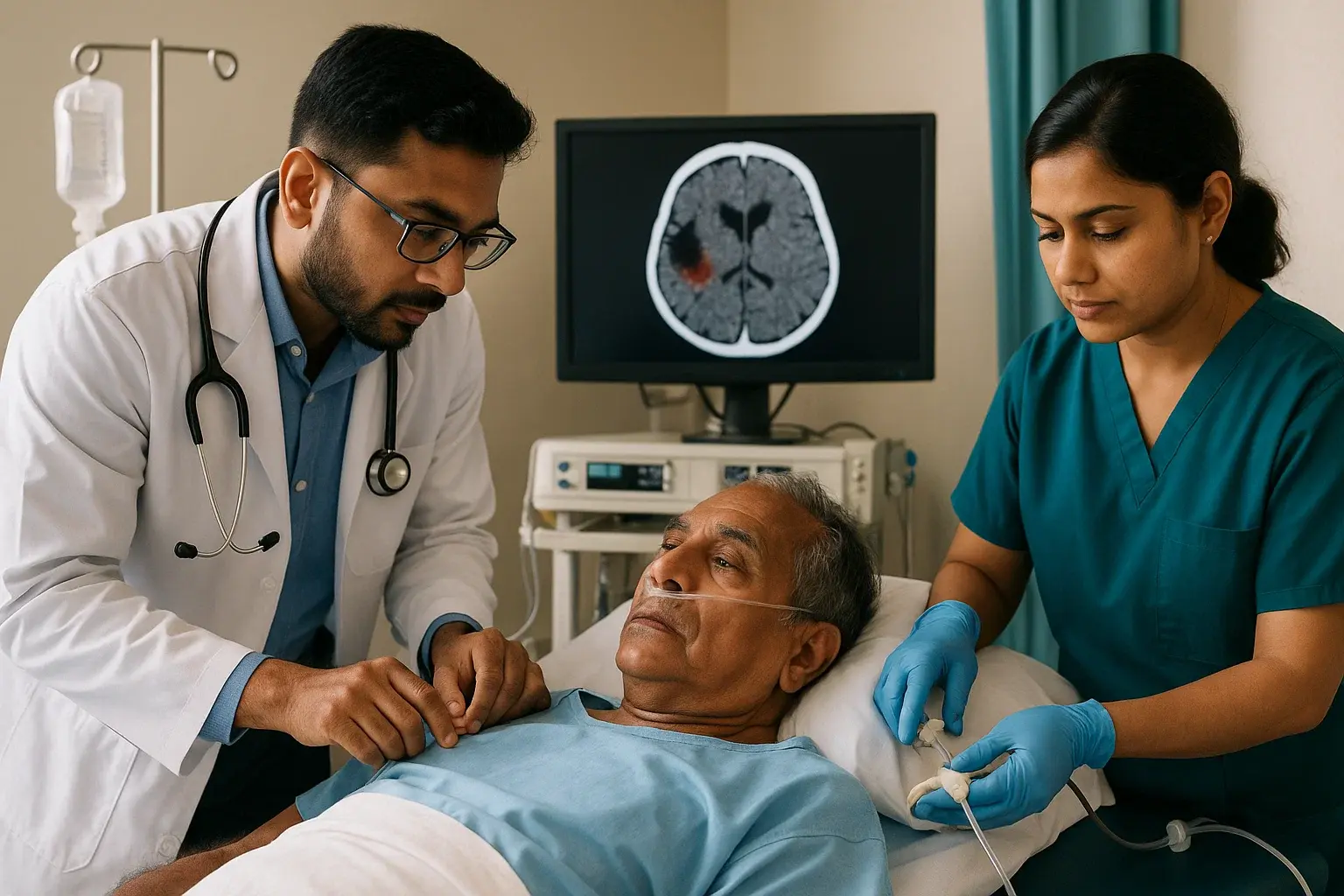
Stroke treatment in India has advanced significantly, offering patients access to world-class care through modern technology and expert medical teams. With rising awareness and improved emergency response systems, India now provides timely diagnosis, specialized stroke units, and comprehensive rehabilitation services.
Book Appointment
GET A FREE QUOTE
Treatments like thrombolysis, mechanical thrombectomy, and neurocritical care are available at top hospitals. The country is also known for offering affordable yet high-quality stroke treatment, attracting international patients seeking reliable care. Early intervention and holistic recovery plans make stroke treatment in India not only effective but also accessible for people from diverse backgrounds.
What is a Stroke?
A stroke is a general term used to describe an injury to the brain caused by either bleeding ("hemorrhagic") or a lack of oxygen ("ischemic"). While people have used this term for many different conditions, it usually implies some type of permanent injury to the brain. The term "infarct" (or infarction) can also be used to describe a stroke.
What are the major types of stroke?
Stroke treatment in India depends greatly on the type of stroke diagnosed. The three main types of stroke are ischemic stroke, hemorrhagic stroke, and transient ischemic attack (TIA). Ischemic stroke, the most common, is caused by a blocked artery. Hemorrhagic stroke results from bleeding in the brain due to a ruptured blood vessel. TIA, often called a “mini-stroke,” occurs due to a temporary blockage and serves as a warning sign. Accurate identification of stroke type is crucial for effective stroke treatment in India, as each requires a distinct medical approach.
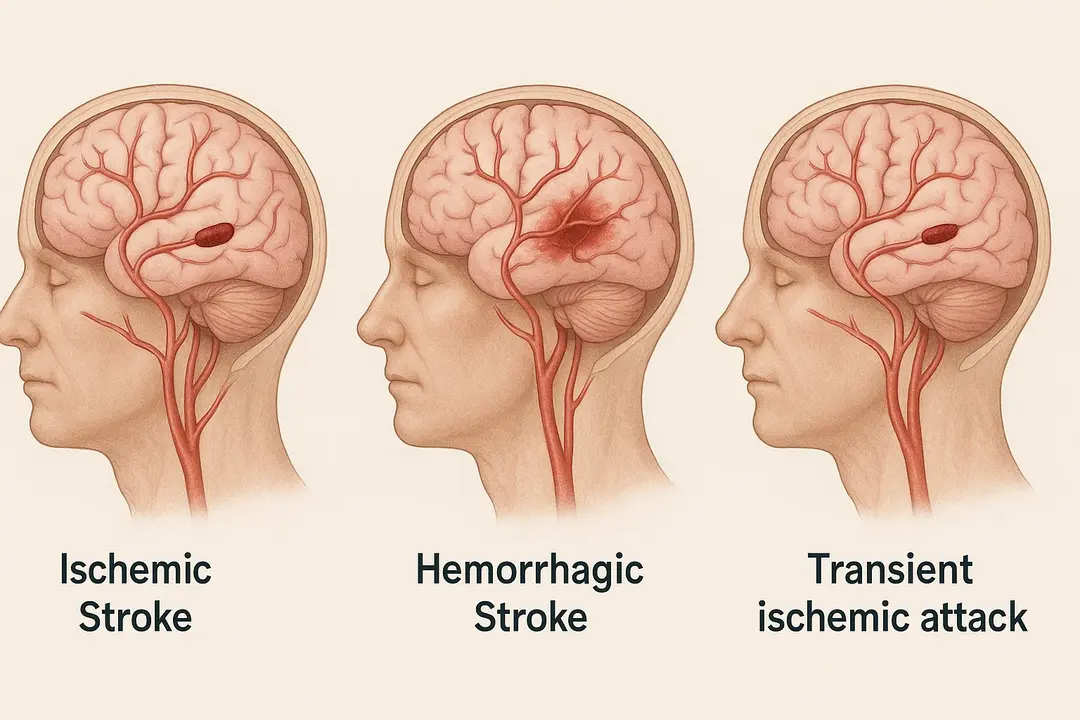
Types of stroke
Causes of Stroke
- First, the blood supply to the brain may be blocked - tiny clots (emboli or thrombi) may plug the vessels that bring blood to parts of the brain, or the vessels themselves may be narrowed, reducing the amount of blood to the brain (as is seen in Moyamoya Syndrome, for example).
- Second, the blood may not have enough oxygen in it to begin with (as in cases when someone can't breathe for long periods or in the setting of carbon monoxide poisoning).
- Else, the blood may not be circulating fast enough to bring fresh oxygen to the brain (as might occur if the heart is not beating appropriately).
- Lastly, the brain itself might be under pressure (as occurs in brain swelling after trauma or when there is bleeding around the brain) or there may be bleeding within the substance of the brain itself, which directly injures the brain tissue and also makes it harder for blood with oxygen to be delivered to it.
- In these cases of increased pressure, the blood with oxygen from the heart cannot enter the confines of the skull if the pressure is too high.
What are the stages of ischemic stroke?
The stages of ischemic stroke help doctors determine the severity, timing, and appropriate stroke treatment in India. An ischemic stroke typically progresses through four key stages:
Book Appointment
GET A FREE QUOTE
- Onset (Hyperacute Stage): This occurs within the first 6 hours of stroke symptoms. Immediate signs include sudden weakness, slurred speech, vision problems, and confusion. Quick diagnosis and treatment, such as thrombolysis, are critical at this stage to restore blood flow.
- Acute Stage: Lasting up to 48–72 hours, this stage involves close monitoring and supportive care in a stroke unit. Brain imaging confirms the extent of damage, and treatments like blood thinners or clot retrieval may be applied.
- Subacute Stage: Spanning days to weeks post-stroke, the focus shifts to stabilising the patient and preventing complications such as brain swelling or secondary strokes.
- Chronic/Recovery Stage: This long-term phase emphasises rehabilitation, including physiotherapy and speech therapy, tailored to each patient's condition.
Types of stroke and treatment: Best Stroke Treatment
Stroke treatment in India varies depending on the type of stroke diagnosed. The three major types of stroke are ischemic stroke, hemorrhagic stroke, and transient ischemic attack (TIA). Each requires a unique treatment approach, and early diagnosis plays a crucial role in improving recovery outcomes.
With modern medical infrastructure and expert neurologists, India offers effective and affordable stroke care across all types.
Best hospital for stroke treatment in India
Choosing the best hospital for stroke treatment in India is crucial for timely care and recovery. Leading hospitals across the country offer specialised stroke units, advanced neuroimaging, and 24/7 emergency services. These centres provide comprehensive stroke care—from emergency intervention to long-term rehabilitation—supported by experienced neurologists and neurosurgeons.
Book Appointment
GET A FREE QUOTE
Facilities like thrombolysis, mechanical thrombectomy, and neurocritical care are widely available. With advanced technology and affordability, India is a preferred destination for stroke treatment, offering world-class medical expertise and high success rates in both ischemic and hemorrhagic stroke management.
|
Hospital Name |
Location |
|
All India Institute of Medical Sciences (AIIMS) |
New Delhi |
|
Apollo Hospitals |
Chennai |
|
Fortis Memorial Research Institute |
Gurugram |
|
Medanta – The Medicity |
Gurugram |
|
Christian Medical College (CMC) |
Vellore |
|
Kokilaben Dhirubhai Ambani Hospital |
Mumbai |
|
Max Super Specialty Hospital |
Delhi |
|
Manipal Hospitals |
Bangalore |
|
Narayana Health City |
Bangalore |
|
PGIMER |
Chandigarh |
|
Jaslok Hospital |
Mumbai |
|
Sir Ganga Ram Hospital |
Delhi |
|
NIMHANS |
Bangalore |
|
Ruby Hall Clinic |
Pune |
|
Amrita Hospital |
Kochi |
Cost of Stroke Treatment in India
The cost of stroke treatment in India is significantly more affordable compared to many Western countries, without compromising on quality. The total expense depends on the type of stroke, the hospital, and the intensity of care required—such as ICU stay, surgery, or rehabilitation. Ischemic strokes may involve thrombolysis or clot removal, while hemorrhagic strokes might require neurosurgery.
On average, the treatment cost ranges between ₹1,50,000 to ₹6,00,000. India’s combination of skilled specialists and advanced infrastructure makes it a preferred destination for high-quality yet budget-friendly stroke care.
|
Treatment Type / Component |
Estimated Cost (INR) |
|
Initial Consultation & Diagnosis |
₹2,000 – ₹5,000 |
|
MRI/CT Scan |
₹5,000 – ₹15,000 |
|
Hospital Admission (per day) |
₹5,000 – ₹20,000 |
|
Thrombolysis (tPA injection) |
₹80,000 – ₹1,50,000 |
|
Mechanical Thrombectomy |
₹2,50,000 – ₹4,00,000 |
|
Hemorrhagic Stroke Surgery |
₹2,00,000 – ₹5,00,000 |
|
ICU Charges (per day) |
₹10,000 – ₹25,000 |
|
Post-stroke Rehabilitation (per month) |
₹15,000 – ₹40,000 |
|
Total Stroke Treatment Cost Range |
₹1,50,000 – ₹6,00,000+ |
We Care Health Services for the Best Stroke Treatment in India
When it comes to advanced and compassionate stroke treatment in India, We Care Health Services stands out as a trusted leader. With a vast network of top-tier hospitals, skilled neurologists, and 24/7 support, We Care ensures timely, personalized care for every patient. Whether it’s an ischemic stroke requiring thrombolysis or a hemorrhagic stroke needing neurosurgery, We Care provides seamless access to the most effective treatments. Their focus on affordability, quality, and patient satisfaction makes them the best choice for stroke treatment across India’s leading cities.
Comprehensive Care Network
Comprehensive Care Network
We Care Health Services partners with the best hospitals for stroke treatment in India, including AIIMS, Apollo, Fortis, Medanta, and CMC Vellore. This wide network allows patients to receive expert care close to home or travel conveniently to top cities like Delhi, Mumbai, Chennai, or Bangalore. Their team ensures patients get admitted to well-equipped stroke centres that offer rapid diagnosis, clot removal procedures, neurocritical care, and post-stroke rehabilitation.
Book Appointment
GET A FREE QUOTE
Expert Neurological and Surgical Support
Expert Neurological and Surgical Support
At We Care, patients are treated by highly qualified neurologists, neurosurgeons, and stroke specialists who follow global protocols for managing stroke. They ensure immediate brain scans, timely administration of tPA for ischemic strokes, and surgical intervention for hemorrhagic cases when needed. The entire care process—from emergency admission to discharge and recovery—is handled with precision and empathy.
Affordable & Transparent Stroke Treatment in India
Affordable & Transparent Stroke Treatment in India
One of the strongest reasons to choose We Care is their commitment to affordable stroke treatment in India. They provide detailed cost estimates upfront, with no hidden charges. Their team helps international and Indian patients manage costs related to hospital stay, ICU, rehabilitation, and medication, making world-class treatment financially accessible.
Personalized Patient Support
Personalized Patient Support
We Care doesn’t just coordinate treatment—they offer end-to-end support. From travel arrangements and visa assistance to post-treatment follow-ups and physiotherapy recommendations, their care is holistic and ongoing. Family counselling, emotional care, and patient education are core parts of their approach.