
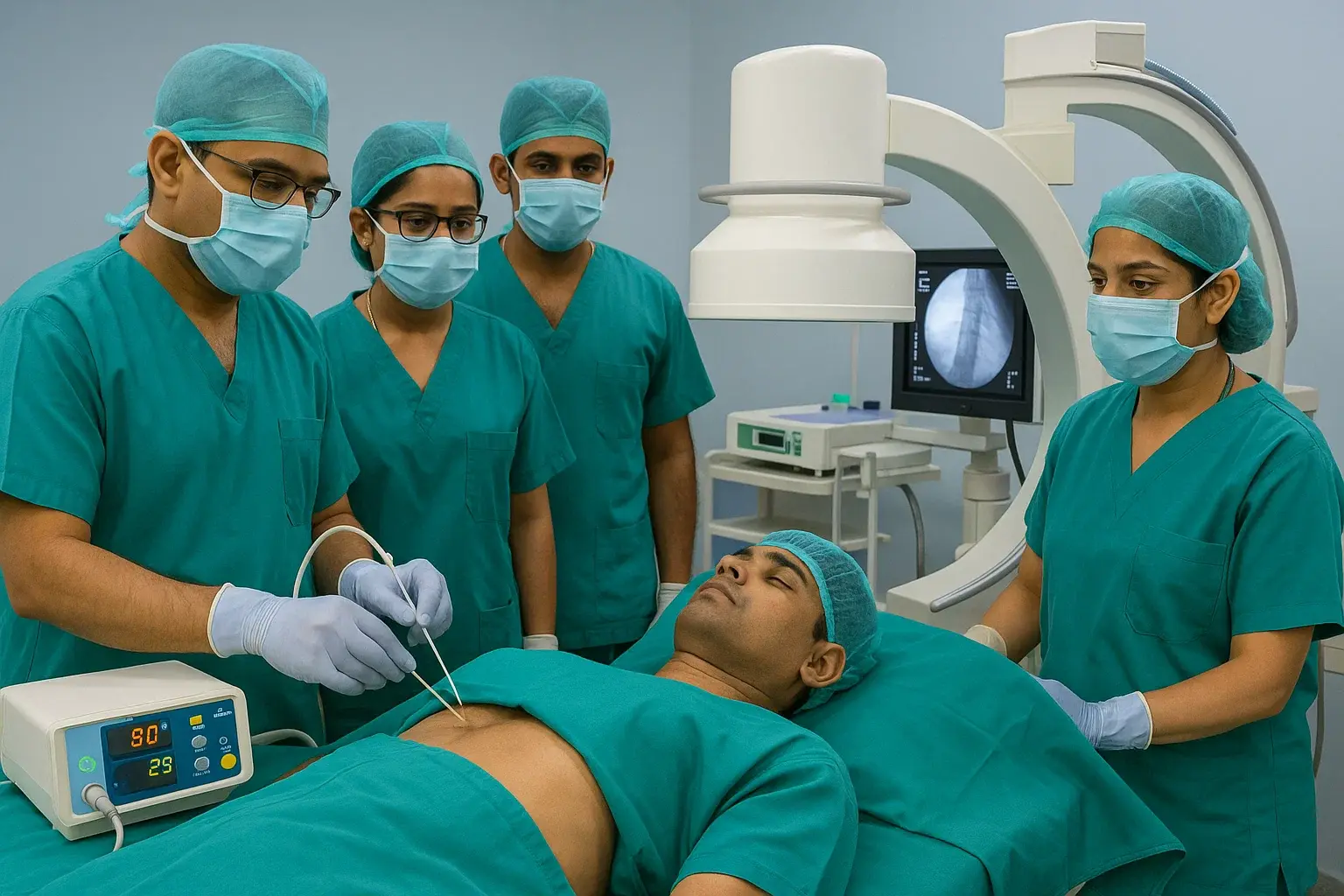
R F Ablation surgery in India disables tissues in case of tumour, pain and arrhythmias. R F Ablation Surgery in India has emerged as a popular and effective treatment for chronic pain and certain medical conditions, offering relief to thousands of patients. It can be a common treatment for various conditions in which pain is certain, whether they are acute or chronic.
Book Appointment
GET A FREE QUOTE
Known formally as Radiofrequency Ablation (RFA), this minimally invasive procedure uses heat generated from radio waves to target specific nerves, thereby reducing or eliminating pain. India, with its world-class hospitals, experienced specialists, and cost-effective treatment options, has become a hub for patients seeking this advanced pain management solution.
What is R F Ablation Surgery?
Radiofrequency Ablation (RFA) is a medical procedure that utilises radio waves to generate heat. This heat is then directed at a specific nerve tissue to disable it from sending pain signals to the brain. It’s commonly used to treat chronic pain conditions, such as arthritis of the spine, neck pain, lower back pain, and even some cancer-related pain.
Radiofrequency Ablation Uses
RFA is not just limited to pain relief. It is also used in treating conditions like:
- Chronic joint pain (especially in the spine and knees)
- Peripheral nerve pain
- Certain cardiac arrhythmias (like atrial fibrillation)
- Liver, kidney, and bone tumours
- Varicose veins
Due to its versatility, RFA is a preferred option when traditional medications and therapies fail to provide sufficient relief.
RFA Procedure: What to Expect During R F Ablation Surgery in India
The RFA procedure is typically done on an outpatient basis. The patient lies on a table, and under the guidance of imaging techniques like fluoroscopy or ultrasound, a thin needle is inserted near the targeted nerve. A small amount of electrical current is passed through the needle to confirm the correct nerve. Once confirmed, radiofrequency waves are delivered to heat the nerve tissue.
Book Appointment
GET A FREE QUOTE
Pre-Surgery Procedure
Before entering into the surgery procedure, there are some formalities of the management and the patients. It is also necessary that the patient has all information regarding the procedure and its contraindications. Here are some essential considerations:
- Consulting & Imaging: CT scan, MRI, ultrasound, or ECG, depending on the case.
- Fasting: Usually required for 6–8 hours before the procedure.
- Medication Review: Blood thinners or diabetes medicines may be adjusted.
- Consent: Informed consent is taken after explaining the risks.
Detailed Procedure: R F Ablation Surgery in India
Radiofrequency ablation (RFA) is a minimally invasive procedure used to destroy abnormal tissue with heat. It’s most commonly used to treat chronic pain, irregular heart rhythms, tumors, or varicose veins. The procedure is carefully planned and performed with precision to ensure safety and effectiveness. Below are the step-by-step stages of how an RF ablation procedure typically unfolds:
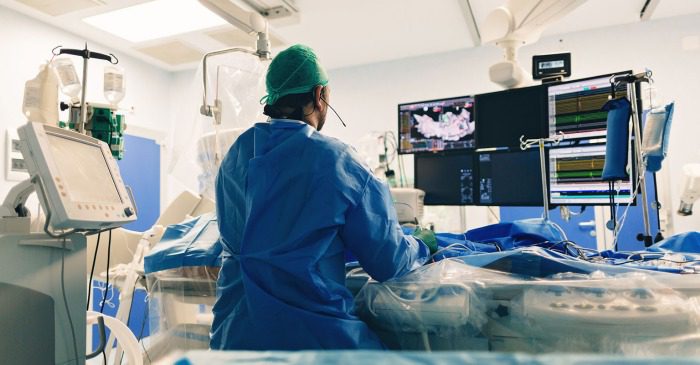
RF Ablation Surgery in India
- 1. Pre-operative preparation begins with a thorough clinical assessment and diagnostic imaging. The doctor may use an ultrasound, CT scan, or MRI to locate the exact target area. You may be asked to fast for a few hours before the procedure, and any medications, especially blood thinners, will be reviewed and adjusted if needed.
- 2. Once you're ready, you're taken to a sterile procedure room and positioned based on the treatment site. Depending on the condition being treated, you might lie flat or on your side. The area where the needle will be inserted is cleaned and sterilised to reduce the risk of infection.
- 3. Local anaesthesia is then administered to numb the skin and deeper tissues around the target site. In some cases, light sedation or general anaesthesia may be used, especially if the procedure is expected to take longer or if it's in a particularly sensitive area.
- 4. Using real-time imaging, the doctor guides a thin, hollow needle (or catheter) through the skin and towards the abnormal tissue. This needle acts as a pathway for the radiofrequency probe and must be positioned with extreme care to avoid damaging nearby organs or structures.
- 5. After confirming the needle placement, the radiofrequency electrode is inserted through the needle. This is the tool that delivers the energy, and it's positioned exactly at the site of the damaged or diseased tissue.
- 6. A brief electrical test may be done to confirm that the electrode is in the correct location. This is especially common in procedures targeting nerve tissue or heart tissue, where precision is crucial to avoid unintended damage.
- 7. The doctor then activates the radiofrequency current, which heats the tip of the probe to a high temperature. This heat destroys the abnormal tissue by creating a small, localized burn, without affecting the surrounding healthy structures. The ablation usually lasts for about 60 to 90 seconds per cycle.
- 8. In most cases, multiple ablations may be done during the same session. The doctor may reposition the probe slightly and repeat the process in nearby areas to ensure complete coverage of the abnormal tissue.
- 9. Once all the targeted areas are treated, the electrode and needle are slowly removed. Pressure is applied to stop any bleeding, and the site is cleaned and bandaged. No stitches are usually needed, and the incision is typically very small.
Recovery & Rehabilitation
After the procedure, you're moved to a recovery area where you’ll be monitored for a short period. Most patients can go home the same day, though in some cases, especially after cardiac or liver ablations, an overnight stay might be recommended.
What Kind of Anaesthesia is Used for Radiofrequency Ablation?
Local anaesthesia is most commonly used for RF Ablation Surgery in India. The area around the nerve is numbed to minimise discomfort. In some cases, mild sedation may also be given, especially if the patient is anxious or if the procedure is expected to be prolonged.
RFA Procedure Time
The duration of the RFA procedure can vary depending on the area being treated, but generally, it takes about 30 to 90 minutes. Patients are usually monitored for a short period after the procedure before being discharged.
Book Appointment
GET A FREE QUOTE
Radiofrequency Ablation Cost in India
One of the major reasons international and domestic patients choose R F Ablation Surgery in India is its affordability. The radiofrequency ablation cost in India typically ranges between INR 30,000 to INR 1,00,000, depending on the hospital, city, and complexity of the case. Compared to Western countries, this is significantly lower, without compromising on quality.
|
Treatment Type |
Average Cost Range (INR) |
|
Cardiac RF Ablation |
₹1,50,000 – ₹4,50,000 |
|
Tumor Ablation (Liver, Lung, Kidney) |
₹80,000 – ₹3,00,000 |
|
Spinal RF Ablation (Pain Management) |
₹40,000 – ₹1,00,000 |
|
Varicose Vein RF Ablation |
₹60,000 – ₹1,20,000 |
|
Trigeminal Neuralgia RF Ablation |
₹90,000 – ₹2,00,000 |
|
Facet Joint RF Ablation |
₹45,000 – ₹90,000 |
|
Cancer Pain RF Ablation (Palliative) |
₹50,000 – ₹1,50,000 |
Radiofrequency Ablation Cost with Insurance
The good news is that many health insurance providers in India cover RFA procedures, especially when they are deemed medically necessary. The radiofrequency ablation cost with insurance can be reduced substantially. Patients are advised to consult their insurance provider and the hospital’s billing department in advance to understand the extent of the coverage. Here are cost of R F Ablation Surgery in India in different cities:
|
City |
Cost Range (INR) |
|
Delhi NCR |
₹60,000 – ₹4,50,000 |
|
Mumbai |
₹75,000 – ₹4,00,000 |
|
Bangalore |
₹65,000 – ₹3,50,000 |
|
Chennai |
₹60,000 – ₹3,20,000 |
|
Hyderabad |
₹50,000 – ₹3,00,000 |
|
Kolkata |
₹45,000 – ₹2,50,000 |
|
Tier-2 Cities |
₹40,000 – ₹2,00,000 |
Radiofrequency Ablation Side Effects
Like any medical procedure, RFA has potential side effects, though they are generally mild and temporary. Common radiofrequency ablation side effects include:
- Mild swelling or bruising at the site of the injection
- Temporary numbness or tingling
- Muscle weakness
- Soreness in the treated area
Severe complications are rare but may include infection or nerve damage. Choosing a skilled specialist significantly minimises such risks.
How Long Does It Take for Nerves to Die After Radiofrequency Ablation?
Typically, the targeted nerve takes about 1 to 3 weeks to be fully disabled after the procedure. During this period, patients might feel a gradual reduction in pain. Some patients report immediate relief, while others notice changes more slowly.
How Long Should You Rest After Nerve Ablation?
Most patients can resume light activities within 24 to 48 hours after the procedure. However, it is advised to avoid strenuous physical activity for at least a few days to a week. Your doctor will give personalised guidelines based on your health condition and the site of treatment.
What Are the Restrictions After Nerve Ablation?
Following R F Ablation Surgery in India, patients should:
- Avoid heavy lifting and high-impact activities for at least a week
- Monitor the injection site for signs of infection
- Follow the prescribed medication and physiotherapy (if recommended)
- Attend follow-up appointments
These restrictions are in place to ensure optimal healing and long-term pain relief.
Why Choose R F Ablation Surgery in India?
India offers several advantages when it comes to RFA treatment:
- Highly qualified pain specialists and neurologists
- State-of-the-art hospitals with advanced imaging and treatment technologies
- Affordable pricing with or without insurance
- Personalised patient care
- Minimal waiting time for appointments and surgeries
Many hospitals also have international patient departments to assist with travel, accommodation, and medical documentation.
Choosing We Care Health Services For R F Ablation Surgery in India
It is a new term for some patients, and they have many second thoughts about the procedure. In the above section, there are answers to all possible questions. Now, the question is, which hospital in India offers this facility? Without a doubt, We Care Health Services is the best medical unit which offers different treatments and supports medical tourism in India.
Many medical treatments, like Heart transplant and minimally invasive surgery, are provided by them. IVF and Surrogacy treatment is also possible, with their help. Here are some of the key points of their treatment system:
- Various treatments under the same roof.
- Technological advancements in ICUs and all treatments.
- Use of minimally invasive methods for surgery.
- Advanced laboratories for clinical research and medicines.
- Good management skills of the staff
- A supportive environment for medical tourism and communication is also possible in multiple languages.
- Affordable treatment for all kinds of conditions and diseases.
- High success rate for all kinds of surgeries.
- Harbouring doctors from various Indian states, having all specific expertise in treatments like Liver transplant, chemotherapy and surgeries.
Final Words About R F Ablation Surgery in India
Radiofrequency ablation (RFA) surgery in India has gained strong credibility due to its high success rate and increasing adoption of advanced technologies. On average, the success rate of RFA ranges between 85% to 95%, depending on the condition being treated, such as arrhythmias, chronic pain, or tumours.
Book Appointment
GET A FREE QUOTE
In recent years, India has seen rapid growth in minimally invasive treatment options, and RF ablation stands out as a preferred choice due to its precision, quick recovery, and low complication rate. Indian hospitals now use real-time 3D mapping systems, ultrasound and fluoroscopy-guided probes, and robot-assisted ablation tools to improve accuracy and safety. These advancements have made RF ablation surgery in India a reliable and cost-effective option for both domestic and international patients.
- Success rate of 85–95% across various conditions
- Use of image-guided techniques for precision
- Robot-assisted ablation systems in top hospitals
- Effective for pain, heart rhythm issues, tumours, and nerves.
- Lower cost compared to Western countries with similar outcomes.