
RP is a group of rare diseases that is inherited from the parents. Retinitis pigmentosa surgery in India could be the only treatment protecting your vision. There are different surgeries performed in response to the problem observed in the eyes. Most of the time, photoreceptors gradually break down and stop working in these diseases.
Most of the time, vision is affected by the side of the lens, and after some time, it is affected in between the eyes. The sideways or notice a loss of peripheral vision can change into repeated loss to give a tunnel vision to the eye. Various problems can be created during this progressive disorder, and daily life activities can be affected.
What is Retinitis Pigmentosa?
Retinitis pigmentosa, or RP, is basically an inherited eye glitch that slowly destroys your retina—the part at the back of your eye that actually lets you see the outside world. The photoreceptors (those tiny light-catching cells) start going out like old Christmas lights. First, you’ll probably notice you can’t see squat at night—like, good luck driving after sunset. Then, boom, your side vision starts shrinking. Imagine looking through a paper towel roll; that’s tunnel vision for you. If things get really bad, even your central vision can bail on you, and suddenly things like reading, driving, or even figuring out who’s waving at you across the room become a nightmare.
- Cause: It is genetic and can be passed down in families. Mutations in different genes can cause different types of RP.
- Symptoms: Night blindness, gradual loss of side vision, trouble adjusting to darkness, and eventually reduced central vision.
- Progression: Usually slow and gradual, starting in childhood or early adulthood, though the speed varies.
- Treatment: Currently, there is no permanent cure, but cataract surgery, medications for retinal swelling, low vision aids, and experimental treatments like gene therapy or stem cell therapy may help manage symptoms or slow progression.
What is Retinitis Pigmentosa treatment in India?
One of the most popular and accepted treatments is retinitis pigmentosa surgery in India. Other include several supportive therapies for the patient’s eye and the supply of proper nutrition. There is also ongoing research about the treatment, and India is considering gene therapy for this treatment. There are certain techniques, like gene therapy for a specific RPE65 mutation, that can be allowed after further research. At present, there are no allowances.
What is Retinitis Pigmentosa treatment in India?
You can ask the retina experts if you have doubts about this disease; a diagnostic test may also help you. Genetic testing can give clarity about diseases. At present, nutrition support, diet supplements, surgery for the extreme cases, and treatment complications come under the specific form of treatment.
Which Diseases can be developed in A Retinal Pigmentosa Patient?
Retinitis pigmentosa (RP) primarily affects the retina, but over time, it can lead to or be associated with other eye conditions. These secondary issues may result in the loss of eyesight. Here is an explanation of retinal pigmentosa-related vision loss.
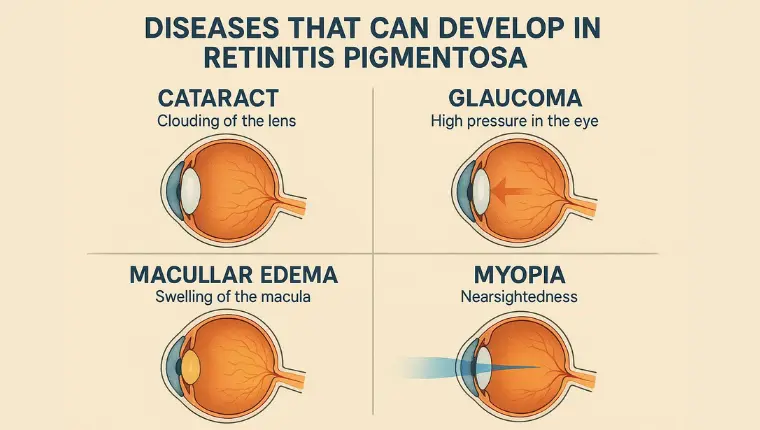
Which Diseases can be Developed in A Retinal Pigmentosa Patient
- Cataracts at a younger age are noticed in the RP patients, and they further blur the vision.
- A fluid-filled cavity in the central part of the retina causes swelling and thickening.
- RP patients are always at slightly higher risk of glaucoma, and pressure in the ear may result in rupture of the optic nerve.
- A rare condition called Keratoconus, in which the cornea thins and bulges outward, causing distorted vision.
- Retinal Pigmentosa may also cause Retinal detachment, and the retina may peel away from the underlying tissue.
- Night blindness can also be caused by RP, progressive issues often worsen with age, and secondary complications
What is the New Treatment for Retinitis Pigmentosa in India?
The new treatment for retinitis pigmentosa includes gene therapy and stem cell therapy. Retinal prostheses, UV blocking lenses are some treatments for the retinitis pigmentosa surgery. Laser therapy and cataract surgery are highlighted in the surgery section. We will mention each treatment and its availability in the Indian Hospitals:
Laser and Cataract Surgery in India
Treatment of macular edema and low vision because of cataract is possible in India. The solutions from the different aids can treat the genetic problem, but it is a long, less technology in India, and treatment is not ensured. If any clinic is promising you stem cell therapy or any genetic treatment, check their organization's genuineness because surgery and laser are options, but not genetic treatment.
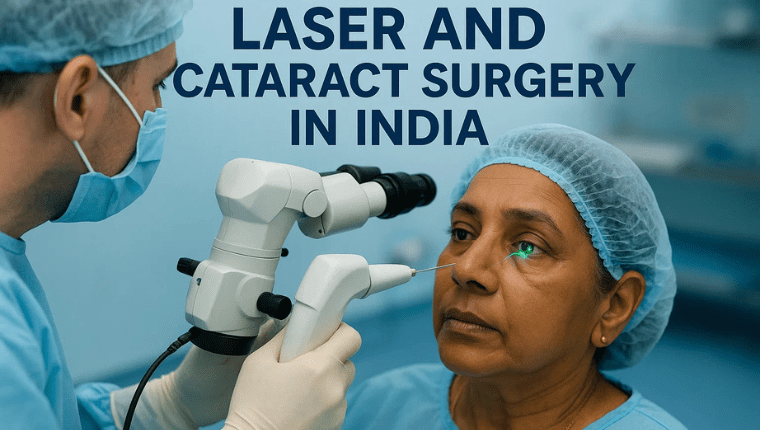
Laser and Cataract Surgery in India
Femtosecond Laser-Assisted Cataract Surgery - FLACS, is a kind of laser surgery that corrects blurred vision and normalizes vision aids. R.P. patients most of the time may develop cataract, and cataract surgery could help them re-establish normal vision.
How much does retinitis pigmentosa treatment cost in India?- Cost of Retinitis Pigmentosa Surgery in India
The cost of the retinitis pigmentosa treatment depends on the procedure you are undergoing. Not all treatments are available in India, and the available one needs specialization. The treatment is considered meaningful in the procedure with progress.
It is better that you choose a package that includes pre-operative and post-operative care of the patients. The cost of cataract surgery in India varies based on factors such as the type of surgery, lens selection, and hospital location. The cost of treatment for Retinitis Pigmentosa (RP) in India varies a lot, depending on what treatment is being done (basic vs advanced), which city, which hospital, whether it’s experimental or well-established, etc. Below are some current cost ranges, what influences cost, and what you might expect to pay. Here is the table showing guidance about the cost:
We Care Health Services for Retinitis Pigmentosa Treatment in India
We Crae Health Services, can provide a common treatment for all eye and health problems. In the Course of time, treatment improved and helped many patients. We are open for foreigners' treatment for each kind of surgery and will also assist them with paperwork. We are offering a package with cost transparency, and it is really a surprise for the patient to get treatment with us. There is separate treatment for each section of the body, and diagnosis is also possible under the same roof. Overall, We Care Health Services is the best option for retinitis pigmentosa surgery in India. Here are some points to prove our worth:
- You’ve got this legit crew of hospitals all over India—teaming up with the big shots in eye care, especially when things get gnarly with retinal stuff nobody wants to mess with. I’m talking serious expertise.
- Not your run-of-the-mill eye peeps. We’re talking retina surgeons and ophthalmologists who’ve seen it all—Retinitis Pigmentosa, weird complications, you name it. These folks know their way around a tricky eyeball.
- All kinds of Eye surgery are possible at our place.
- It’s not just about zapping your eyeballs and sending you off, either. They’ll walk you through the whole thing—genetic tests, rehab for low vision, the works. It’s like a one-stop shop, but with less waiting room boredom.
- Packages, estimates, all that jazz—so you’re not sitting there sweating about money, especially if you’re coming in from out of the country. (Yeah, international folks get the VIP treatment too—visas, travel help, a place to crash, sorted.)
- And, honestly, none of that “one-size-fits-all” nonsense. They actually bother to tweak the treatment depending on where you’re at with your condition, what you need, all that personal stuff.
- We don’t vanish. You get proper follow-ups, tips for rehab, and someone actually keeping tabs on your vision. No ghosting. Just solid, ongoing care.