
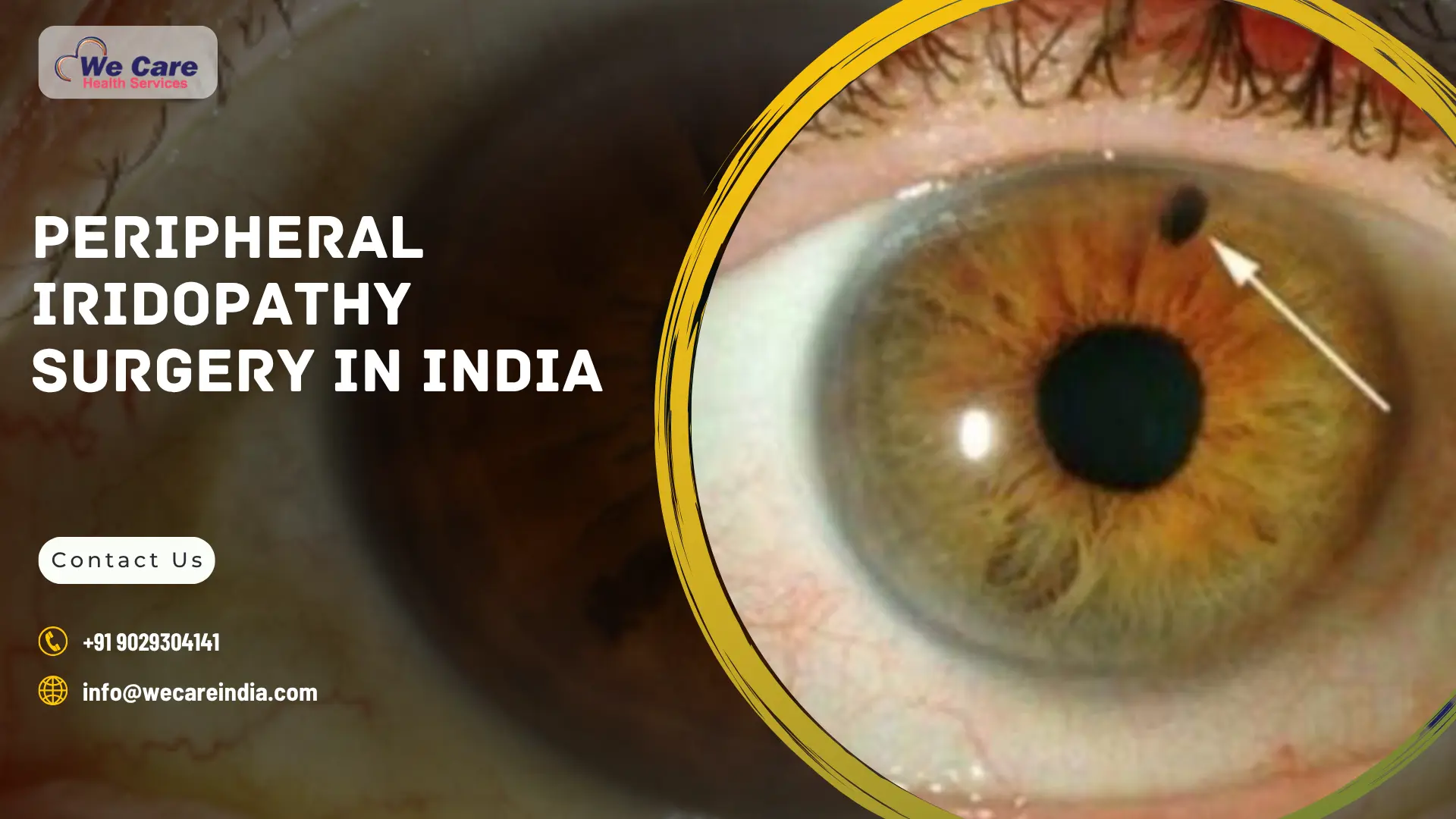
Peripheral iridopathy surgery in India is performed the drain the eyes of any patient. The reason behind fluid-filled cavities can be varied. Most of the time it is bacterial fluid or contaminated with bad sources. It can happen in glaucoma and pupillary blockage.
Peripheral iridopathy refers to abnormal changes or disease affecting the peripheral (outer) part of the iris, the colored part of the eye. It is usually identified during a slit-lamp examination or gonioscopy by an ophthalmologist and is often seen in association with other eye conditions.
What is Peripheral Iridopathy?
Peripheral iridopathy refers to abnormal changes or damage in the outer (peripheral) part of the iris, the colored structure of the eye. It is often discovered during a slit-lamp exam or gonioscopy and may present as thinning, pigment loss, scarring, or transillumination defects. Causes include pigment dispersion syndrome, chronic angle-closure glaucoma, uveitis, trauma, or post-laser procedures like peripheral iridotomy. The key characteristics are:
Book Appointment
GET A FREE QUOTE
- Atrophy or thinning of the iris margin
- Transillumination defects (light passes through thinned areas)
- Pigment clumps or scarring
- Irregular or patchy iris colour
Although sometimes asymptomatic, peripheral iridopathy can indicate underlying eye diseases, especially those affecting intraocular pressure. Early detection is important for managing potential complications, particularly in conditions like glaucoma, where iris changes can impair fluid drainage and lead to vision loss.
How is Peripheral Iridopathy Surgery Performed?
Peripheral iridopathy itself typically does not require surgery, as it is often a sign of an underlying condition, not a standalone disease. However, surgical or laser procedures may be performed to treat the cause or to prevent complications like glaucoma. In short, surgery is not for iridopathy itself but for managing its effects, especially when it impacts eye pressure or fluid drainage.
Surgeries or procedures related to peripheral iridopathy:
Peripheral iridopathy surgery in India involves various advanced procedures to manage complications like angle-closure glaucoma. One of the most common treatments is-
Laser Peripheral Iridotomy (LPI)
Laser Peripheral Iridotomy (LPI)
In this minimally invasive laser procedure, a small hole is created in the peripheral iris to allow better fluid flow between eye chambers, reducing intraocular pressure. It's a quick outpatient surgery with high success rates.
Trabeculectomy
Trabeculectomy
For advanced or unresponsive cases, trabeculectomy or glaucoma drainage implants are performed. These surgeries create new pathways for fluid drainage to effectively control eye pressure. They are typically done when peripheral iridopathy has led to uncontrolled glaucoma.
Cataract Surgery
Cataract Surgery
Cataract surgery (phacoemulsification) is also effective when lens removal helps widen the drainage angle, particularly in narrow-angle patients. It often improves vision and lowers eye pressure simultaneously.
Book Appointment
GET A FREE QUOTE
Iridoplasty
Iridoplasty
Another option is iridoplasty, where laser energy is applied to shrink and reshape the peripheral iris, pulling it away from the angle to restore normal drainage.
India offers these procedures at world-class eye hospitals like LV Prasad Eye Institute, Aravind Eye Hospital, and Shroff Eye Centre. With skilled ophthalmologists and affordable costs, peripheral iridopathy surgery in India provides safe, effective treatment for patients both locally and internationally.
Symptoms of Cataract
Peripheral iridopathy often develops silently and may not produce noticeable symptoms in its early stages. However, as it progresses or when associated with other eye conditions like glaucoma or uveitis, several symptoms can emerge. One of the most common signs is blurry or fluctuating vision, especially in dim lighting. This happens due to changes in the iris that affect how light enters the eye. Some individuals may also experience eye discomfort, a mild ache, or a sensation of pressure, particularly if intraocular pressure begins to rise.
- Blurry or fluctuating vision – Especially noticeable in dim or low light.
- Eye discomfort or aching – Mild, persistent pain around the eye.
- Glare or halos around lights – A common sign of increased intraocular pressure.
- Eye redness – Can result from inflammation or pressure changes.
- Light sensitivity (photophobia) – Discomfort in bright lighting conditions.
- Pigment dispersion – Seen as pigment floating in the front of the eye.
- Iris shape or colour changes – Rare but can occur after trauma or severe inflammation.
- Reduced peripheral vision – Especially if associated with angle-closure glaucoma.
Peripheral iridopathy is typically detected during a comprehensive eye exam using a slit lamp, gonioscopy, or anterior segment imaging. It often points to underlying conditions that require medical or surgical intervention.
Common Causes of Peripheral Iridopathy
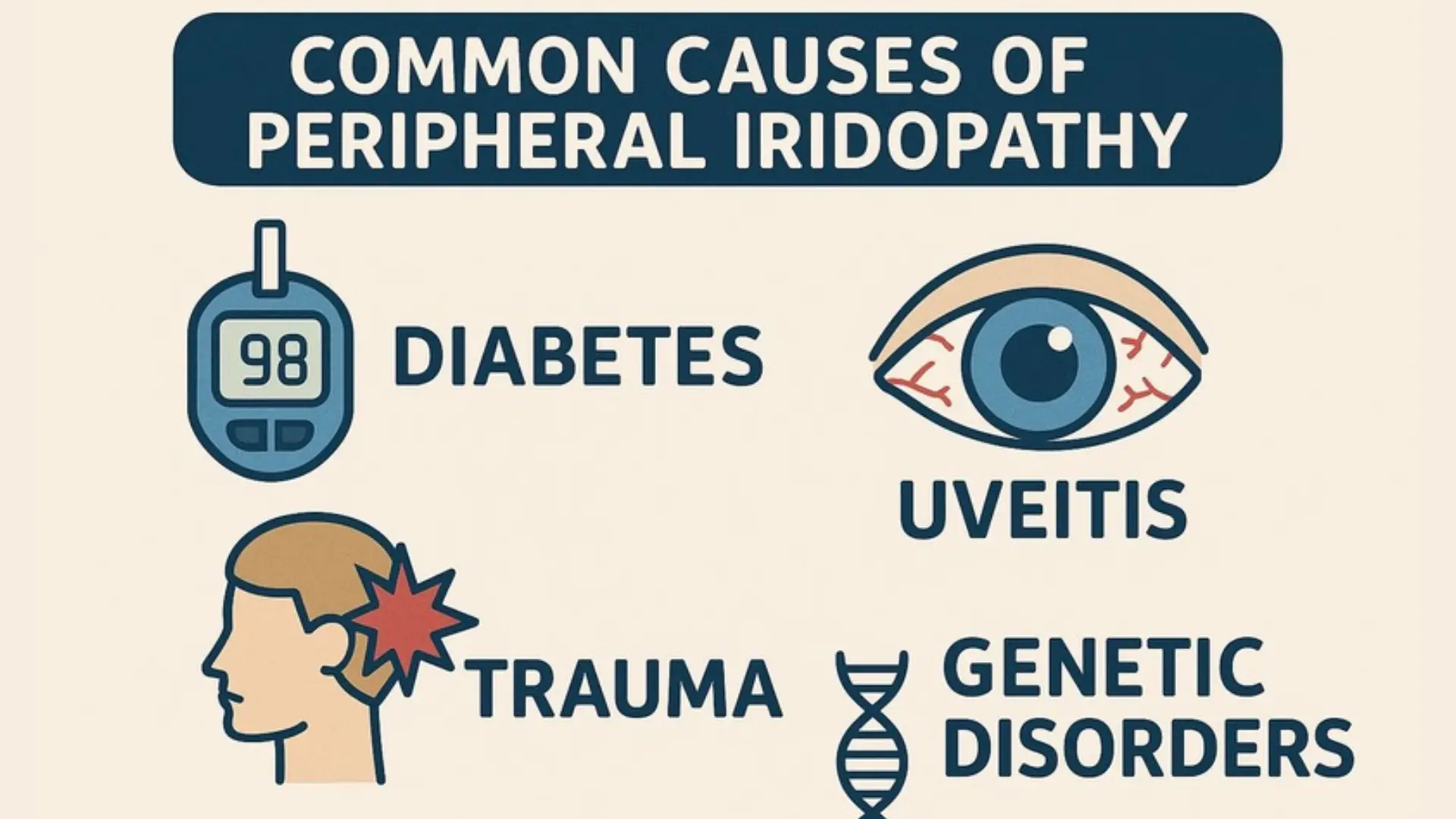
Common Causes of Peripheral Iridopathy
- Pigment dispersion syndrome – Pigment granules from the iris rub off and accumulate in the drainage angle.
- Chronic angle-closure glaucoma – Long-standing contact between the iris and trabecular meshwork may cause atrophy or changes in the peripheral iris.
- Uveitis – Inflammation may leave scarring or defects at the iris margin.
- Laser procedures (like peripheral iridotomy) – Can lead to localised tissue changes at the peripheral iris.
- Trauma – Previous blunt or penetrating trauma can damage the iris structure.
Success Rate of Peripheral Iridopathy
The success rate of peripheral iridopathy treatment depends on the underlying condition being managed, most commonly glaucoma. When laser peripheral iridotomy (LPI) is performed to treat or prevent angle-closure glaucoma caused by peripheral iridopathy, it has a success rate of 85% to 95% in relieving intraocular pressure and preventing future attacks. In cases where trabeculectomy or glaucoma drainage devices are used due to advanced damage, success rates range from 70% to 90%, depending on the patient’s age, disease stage, and response to treatment.
Timely diagnosis and treatment greatly improve outcomes. In India, peripheral iridopathy surgery is widely available at top eye hospitals with skilled ophthalmic surgeons. Most patients experience significant symptom relief and stabilisation of vision post-surgery. However, long-term success also depends on regular monitoring, adherence to medications, and controlling underlying conditions. With proper care, recurrence or complications are minimal in most cases.
Peripheral Iridopathy Surgery In India Cost- How Much Does an Iridotomy Cost?
The cost of an iridotomy procedure varies based on the hospital, city, and technology used. In India, laser peripheral iridotomy is generally affordable and ranges from ₹5,000 to ₹35,000 per eye. The cost may include consultation, diagnostic tests, and the laser procedure.
Book Appointment
GET A FREE QUOTE
Premium hospitals or those in metro cities may charge more. Government hospitals or charitable eye centres often offer the procedure at subsidised rates or free of cost. It's a day-care procedure, so no overnight hospital stay is needed, keeping costs low.
|
Hospital Type |
City Type |
Cost (Per Eye) |
|
Government Hospital |
Any |
₹0 – ₹5,000 |
|
Private Clinic |
Tier 2 City |
₹7,000 – ₹15,000 |
|
Private Hospital |
Metro City |
₹15,000 – ₹25,000 |
|
Premium Eye Hospitals |
Metro City |
₹20,000 – ₹30,000 |
Best Hospital for Peripheral Iridopathy
India is home to several world-class eye hospitals offering advanced diagnosis and treatment for peripheral iridopathy and related conditions. Among the best is LV Prasad Eye Institute (Hyderabad), known for modern technology and skilled specialists in glaucoma and iris disorders. Aravind Eye Hospital (Madurai and other branches) is globally recognised for affordable, high-quality care and surgical expertise.
Shroff Eye Centre (Delhi) and Narayana Nethralaya (Bangalore) are also leading choices for iridopathy evaluation and surgeries like laser peripheral iridotomy or trabeculectomy. These hospitals combine advanced diagnostics, experienced ophthalmologists, and personalised care. Whether you require surgery or monitoring, they provide comprehensive treatment with excellent success rates, making them ideal for managing peripheral iridopathy in India.
|
Hospital Name |
Location |
|
We Care Health Services |
New Delhi |
|
LV Prasad Eye Institute |
Hyderabad |
|
Sankara Nethralaya |
Chennai |
|
Aravind Eye Hospital |
Madurai & multiple cities |
|
Shroff Eye Centre |
New Delhi |
|
Centre for Sight |
Pan India |
|
Dr. Agarwal’s Eye Hospital |
Pan India |
|
Narayana Nethralaya |
Bangalore |
|
Netrajyoti Eye Hospital |
Kolkata |
|
Visakhapatnam Eye Hospital |
Visakhapatnam |
|
Vasan Eye Care |
Pan India |
|
Aditya Jyot Eye Hospital |
Mumbai |
|
Icare Eye Hospital |
Noida |
|
Disha Eye Hospital |
Kolkata |
|
Eye7 Chaudhary Eye Centre |
New Delhi |
We Care Health Services For Peripheral Iridopathy Surgery in India
We Care Health Services is a trusted name for Peripheral Iridopathy surgery in India, offering personalised care, expert surgeons, and access to top-tier hospitals. The organisation ensures patients receive the latest treatments, including premium intraocular lens options, with cost-effective packages. You can shift your treatment from other hospital to us.
Book Appointment
GET A FREE QUOTE
With a strong network of accredited eye care centres across major Indian cities, We Care assists with consultation to recovery. Their team helps domestic and international patients navigate every step smoothly, ensuring quality outcomes and a comfortable medical experience in India.
- Access to top hospitals and renowned eye surgeons across India.
- Offers all types of Peripheral Iridopathy surgery: monofocal, multifocal, toric, and accommodative lenses.
- Coordination with NABH & JCI-accredited hospitals in Delhi, Mumbai, Chennai, Hyderabad, and Bangalore.
- Pre-surgery consultation, eye scans, and personalised surgical planning.
- Assistance in choosing the right intraocular lens (IOL) based on medical and lifestyle needs.
- End-to-end care for international patients, including visa, accommodation, and language support.
- Packages starting from ₹18,000 for basic phacoemulsification to ₹1,00,000 for premium lens implants.
- Transparent pricing with no hidden charges
- Fast-track surgery appointments with minimal waiting time.
- Post-operative care, follow-up consultations, and recovery support.
- 24/7 helpline for patient queries and emergencies.
- Facilitates medical insurance claims wherever applicable.
- Dedicated patient coordinators for a smooth and stress-free experience.
- Trusted by thousands of patients globally for safe, affordable, and reliable Peripheral Iridopathysurgery in India
Best Surgeons for Iridopathy in India
India is home to some of the most skilled and experienced ophthalmic surgeons who specialise in managing glaucoma and iris-related conditions. For patients seeking treatment for peripheral iridopathy in India, the following surgeons are highly regarded:
- Dr. Harsha Bhattacharjee
– Founder of Sri Sankaradeva Nethralaya, Assam
Renowned for his work in anterior segment surgeries, Dr. Bhattacharjee has extensive experience in treating complex cases of iris abnormalities and glaucoma. - Dr. Sirisha Senthil
– Glaucoma specialist at LV Prasad Eye Institute, Hyderabad
A globally recognised expert in glaucoma management, she frequently performs laser procedures like peripheral iridotomy and advanced filtration surgeries. - Dr. Ramani Ramchandran
– Chief Medical Officer, Sankara Eye Foundation, Coimbatore
Known for delivering high-quality eye care, he has vast experience in cataract, glaucoma, and iris-related surgeries, including cases of peripheral iridopathy in India.