
Kidney general surgery in India is performed with the best technical facilities and by the doctors. There are different types of surgery, which depend on the purpose of performing the surgery. Tumour, stone, blocked tubes, and infection in the kidney can be causes of the surgery. The common surgeries performed in response to the kidney stones are URS and PCNL.
The other reason for the surgery is a tumour, which can be transformed into a malignant one if not removed on time. These minimally invasive methods have many benefits, like less recovery time. Stent placement in the ureter also reduces the pain and urine infection.
Book Appointment
GET A FREE QUOTE
A common condition affecting the kidneys is blockage of the ureters, the tubes that transport urine from the kidneys to the bladder. Blockages of the ureters can be present from birth or acquired through illness or injury, and can create serious side effects like infections and kidney stones. If left untreated, blockages can cause chronic pain and may damage the kidney over time. These conditions can all be treated through the kidney's general surgery.
What kind of surgeries are done for kidneys?- Kidney Surgery Types
Our kidneys work silently every day, filtering waste and keeping the body’s fluid balance with a proper check on concentration. When something goes wrong, such as kidney stones, tumours, blockages, or even kidney failure, surgery may become the only solution. Thanks to medical advancements, kidney surgeries today are safer, less invasive, and more effective than ever. Let’s take a closer look at the main types of kidney surgeries and when they are usually needed.
Surgery for Kidney Stones
Kidney stones are one of the most common reasons people end up in the operating room. While some stones are small enough to pass on their own, others can cause unbearable pain, repeated infections, or block the flow of urine. The good news is that with modern techniques, most kidney surgeries are safer, less invasive, and offer quicker recovery than ever before. If you or a loved one is facing kidney surgery, knowing the options can make the journey a little less overwhelming and a lot more hopeful. In such cases, surgery helps.
- Shock Wave Lithotripsy (ESWL): A non-invasive procedure where sound waves are used to break the stone into tiny pieces that can pass naturally in urine.
- Ureteroscopy (URS): A thin tube with a camera is inserted through the urinary tract to locate and remove the stone or break it with a laser.
- Percutaneous Nephrolithotomy (PCNL): Used for very large or complex stones. A small incision is made in the back to access the kidney and remove the stone directly.
Nephrectomy (Removing a Kidney)
Sometimes, part or all of the kidney needs to be removed. This is known as a nephrectomy and is usually done when the kidney is badly damaged, infected, or affected by cancer.
- Partial Nephrectomy: Only the diseased part of the kidney is removed. This helps preserve as much healthy kidney tissue as possible.
- Radical Nephrectomy: The entire kidney, along with surrounding tissue, is removed. This is often necessary in advanced cancers.
Kidney Transplant
For people with end-stage kidney disease, a transplant offers a fresh start. In this surgery, a healthy kidney from a living or deceased donor is placed inside the patient’s body. The new kidney takes over the function of filtering waste, often giving patients a much better quality of life compared to long-term dialysis.
Pyeloplasty
When the connection between the kidney and ureter (the tube that drains urine) is blocked, urine can back up and cause swelling or infections. Pyeloplasty is the surgery done to fix this problem. Surgeons reconstruct the affected area so urine can flow smoothly again. This procedure is prevalent in children but is also performed in adults.
Minimally Invasive and Robotic Surgeries
Gone are the days when every kidney surgery meant a big incision and a long recovery. Today, many procedures are done using laparoscopic or robotic-assisted techniques. These involve small cuts, cameras, and precise instruments, which means less pain, quicker healing, and smaller scars. Whether it’s kidney stone removal, pyeloplasty, or even a nephrectomy, minimally invasive surgery has become the preferred option in many hospitals.
Surgery for Kidney Injuries
In rare cases, a serious accident or trauma can damage the kidney. If the injury is severe, surgery may be needed to repair or, in extreme cases, remove the kidney. Kidney surgeries are not one-size-fits-all. The right approach depends on the condition's severity, the patient's overall health, and its condition.
Reason for the Kidney Surgery- Cause of Kidney Surgery
Kidneys play a vital role in maintaining overall health, but when they are affected by disease, damage, or obstruction, surgery may become necessary. Kidney General Surgery in India is performed for various conditions ranging from stones to cancer, and modern hospitals now offer minimally invasive options for quicker recovery. Understanding the common reasons for kidney surgery helps patients make informed decisions about their treatment.
- Kidney Stones: When stones are too large to pass naturally, block urine flow, or cause severe pain and infection, surgical removal may be needed.
- Kidney Cancer or Tumours: Surgery is often the first line of treatment for kidney cancer. Depending on the stage, doctors may perform partial nephrectomy (removing only the tumour) or radical nephrectomy (removing the entire kidney).
- Kidney Failure: In cases of end-stage kidney disease, a kidney transplant becomes the most effective treatment option.
- Ureteropelvic Junction (UPJ) Obstruction: This blockage prevents urine from flowing properly from the kidney to the bladder, and pyeloplasty is performed to restore normal flow.
- Kidney Injury or Trauma: Severe accidents may damage the kidneys, requiring surgical repair or, in rare cases, removal.
- Infections or Abscesses: When infections become chronic or unresponsive to medicines, surgery may be necessary to remove the affected tissue.
Why India for Kidney Surgery?- Choosing India for Kidney Surgeries
Patients from across the globe travel here for procedures ranging from stone removal to complex transplants. The growing demand for kidney general surgery in India is driven by a unique combination of medical expertise, technology, and affordability.
Book Appointment
GET A FREE QUOTE
- Experienced Surgeons: India is home to highly trained urologists and nephrologists who have expertise in performing complex kidney surgeries with excellent outcomes.
- Advanced Technology: Hospitals are equipped with modern tools such as laparoscopic, laser, and robotic surgery systems, ensuring precision and faster recovery.
- Affordable Treatment: Compared to Western countries, the cost of kidney surgery in India is significantly lower while maintaining international standards of care.
- High Success Rates: Kidney stone removal, transplants, and cancer surgeries performed in India report strong success rates, often on par with global benchmarks.
- World-Class Hospitals: India has many NABH and JCI-accredited hospitals offering specialised kidney care units with 24/7 support.
- Short Waiting Times: Patients can often undergo surgery within days of consultation, unlike in many countries where waiting lists are long.
- Comprehensive Care: From pre-surgery evaluation to post-surgery rehabilitation, hospitals in India provide complete support, including diet guidance and long-term follow-ups.
For patients seeking safe, effective, and affordable kidney care, kidney general surgery in India offers a reliable solution. With expert doctors, cutting-edge technology, and patient-centered care, India continues to stand out as a global hub for kidney treatments.
Kidney Tumour Removal Surgery- Kidney General Surgery in India
Kidney tumour removal surgery is one of the most effective treatments for managing kidney cancer or non-cancerous growths that threaten kidney function. The surgery aims to eliminate the tumour while preserving as much healthy kidney tissue as possible, depending on the size and spread of the tumour.
There are two main approaches to this surgery. In a partial nephrectomy, only the tumour and a small margin of surrounding tissue are removed. This option is usually preferred when the tumour is detected early, as it allows the rest of the kidney to continue functioning normally. On the other hand, a radical nephrectomy involves removing the entire kidney, along with nearby tissue and sometimes lymph nodes, especially if the cancer is advanced.
Thanks to advancements in medical technology, these surgeries can now be performed using minimally invasive techniques such as laparoscopy or robotic-assisted surgery. This means smaller incisions, reduced pain, and faster recovery for patients compared to traditional open surgery.
Kidney tumour removal surgery not only helps control the disease but also improves long-term survival rates. Early diagnosis, timely surgery, and proper follow-up care are key to ensuring the best outcomes for patients facing kidney tumours.
Conditions of Kidney Transplantation
A kidney transplant is often considered the best treatment option for patients with end-stage kidney disease. Unlike dialysis, which only replaces some kidney functions, a transplant provides a long-term solution and improves the quality of life. However, not everyone is immediately eligible. Several conditions must be met before undergoing this procedure, especially when seeking kidney general surgery in India.
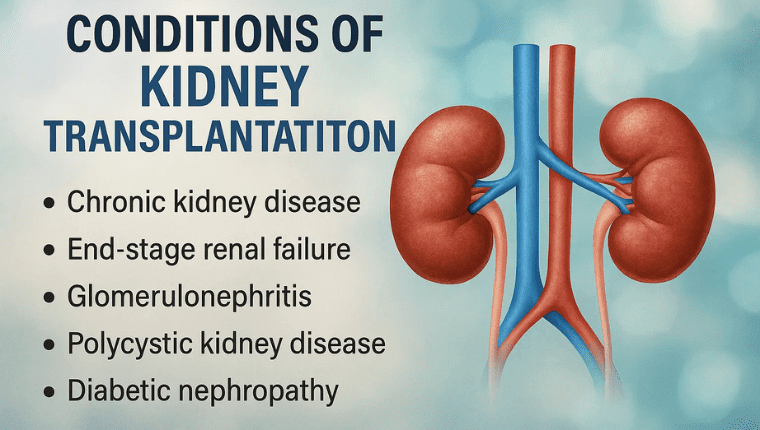
Conditions of Kidney Transplantation
Medical Conditions for Kidney Transplant
- End-Stage Kidney Disease (ESKD): The patient must have severe, irreversible kidney failure where the kidneys can no longer perform their functions.
- Overall Health: Candidates should be healthy enough to undergo surgery. Severe heart or lung disease may prevent eligibility.
- Absence of Active Infections: Any ongoing infections must be treated before transplantation to reduce the risk of complications.
- No Active Cancer: Patients with cancer must complete treatment and remain cancer-free for a specific period before becoming eligible.
- Compatible Donor: A living related donor, living unrelated donor, or deceased donor kidney must be available and medically suitable.
- Age Consideration: While there is no strict age limit, the patient should be fit enough for surgery and long-term immunosuppressive therapy.
- Psychological Readiness: Patients must be mentally prepared to follow lifelong medication and lifestyle adjustments.
- Financial Preparedness: Even though kidney general surgery in India is more affordable compared to many countries, patients must be prepared for surgery costs, post-operative care, and lifelong medicines.
Recovery From Kidney Surgery
Recovery after kidney surgery depends on the type of procedure performed, whether it was for stones, tumour removal, or a transplant. Minimally invasive techniques such as laparoscopy and robotic-assisted surgery usually allow faster healing compared to open surgery. However, certain general guidelines apply to most patients.
What to Expect After Surgery?
- Hospital Stay: Patients may need to stay in the hospital for 2–7 days, depending on the complexity of the surgery.
- Pain Management: Mild to moderate pain around the incision site is common and managed with medications.
- Mobility: Gentle walking is encouraged soon after surgery to improve circulation and speed up recovery.
- Diet: A kidney-friendly diet with adequate hydration, low salt, and limited protein may be recommended.
- Incision Care: Keep the surgical site clean and dry to prevent infection.
- Activity Restrictions: Avoid heavy lifting and strenuous exercise for 4–6 weeks or until advised by the doctor.
- Medications: Take prescribed antibiotics, painkillers, or immunosuppressants (in case of transplants) regularly.
- Follow-Up Visits: Regular check-ups are necessary to monitor kidney function and overall healing.
- Warning Signs: Watch for fever, unusual pain, swelling, or changes in urine output, and report them immediately.
Book Appointment
GET A FREE QUOTE
With proper care, most patients recover well from kidney surgery. Following medical advice, eating a healthy diet, and making lifestyle adjustments can help ensure long-term kidney health and prevent complications.
Foods to Avoid After Kidney Removal
Kidney removal surgery (nephrectomy) can put extra strain on the remaining kidney, which now has to perform the work of two. Diet plays a crucial role in protecting kidney health and preventing further complications. While the exact plan should be tailored by a doctor or dietitian, there are some common foods patients are generally advised to avoid after kidney removal.
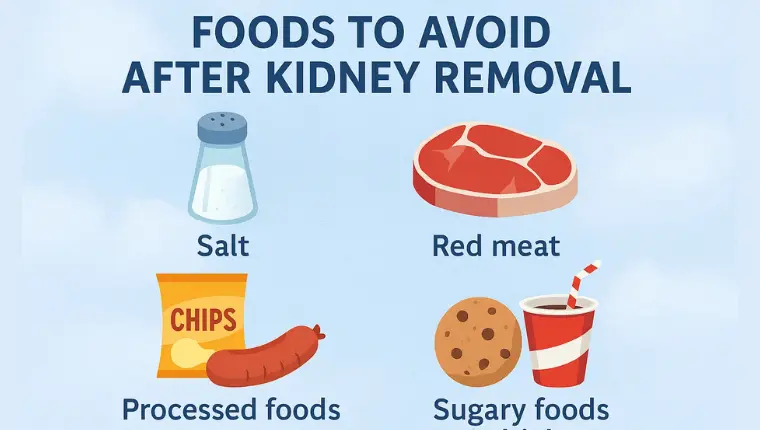
Foods to Avoid After Kidney Removal
- High-Sodium Foods: Processed snacks, pickles, canned soups, fast food, and salty packaged items can raise blood pressure and overwork the kidneys.
- Red Meat & Processed Meats: Beef, pork, sausages, and cold cuts are high in protein and phosphorus, which may stress kidney function.
- High-Protein Diets: Excess protein from protein powders, eggs, or poultry should be avoided as it increases waste products that the kidneys must filter.
- Dairy Products in Excess: Milk, cheese, and yoghurt are rich in phosphorus and potassium, which can be harmful if levels rise too high.
- High-Potassium Foods: Bananas, oranges, potatoes, and spinach should be eaten in moderation, as too much potassium can affect heart rhythm.
- Sugary Foods & Beverages: Cakes, sweets, and carbonated drinks increase the risk of obesity and diabetes, further straining the kidney.
- Alcohol & Caffeine: Both can dehydrate the body and reduce kidney efficiency.
After kidney removal, a balanced diet low in sodium, protein, and processed foods is vital. Always follow a customised diet plan recommended by your healthcare provider to protect the health of your remaining kidney.
Cost of Kidney General Surgery in India
The cost of kidney general surgery in India varies depending on the type of procedure, hospital, city, and medical complexity. India is considered affordable compared to Western countries, while offering advanced technology and experienced surgeons. Minimally invasive and robotic-assisted techniques may cost slightly higher but ensure faster recovery. On average, kidney surgeries in India are 50–70% more affordable than in the USA or UK, making the country a popular medical tourism hub for international patients.
|
Type of Surgery |
Average Cost (INR) |
Average Cost (USD) |
|
Kidney Stone Surgery (URS/ESWL) |
₹60,000 – ₹1,20,000 |
$750 – $1,500 |
|
Percutaneous Nephrolithotomy (PCNL) |
₹1,20,000 – ₹2,00,000 |
$1,500 – $2,500 |
|
Partial Nephrectomy |
₹2,00,000 – ₹3,50,000 |
$2,500 – $4,500 |
|
Radical Nephrectomy |
₹2,50,000 – ₹4,50,000 |
$3,200 – $5,500 |
|
Kidney Transplant |
₹5,00,000 – ₹7,50,000 |
$6,500 – $9,500 |
Hospitals With Best Nephrology Departments
Many patients travel across the globe seeking exceptional kidney care. India offers a range of hospitals with world-renowned nephrology departments—combining advanced treatments, experienced specialists, and comprehensive support. These centres of excellence in kidney general surgery in India deliver top-tier care for conditions like dialysis, kidney transplants, and complex kidney disorders.
|
Hospital Name |
Location |
|
We Care Health Services |
Delhi |
|
Medanta – The Medicity |
Gurugram |
|
Sir H. N. Reliance Foundation Hospital |
Mumbai |
|
Indraprastha Apollo Hospital |
Delhi (Sarita Vihar) |
|
KIMS Hospitals |
Hyderabad |
|
Max Super Speciality Hospital |
Delhi (Saket) |
|
Apollo Hospitals |
Bengaluru |
|
Jaslok Hospital & Research Centre |
Mumbai |
|
BLK Super Speciality Hospital |
Delhi (Rajinder Nagar) |
|
Apollo Health City |
Hyderabad |
|
Apollo Gleneagles Hospital |
Kolkata |
|
Fortis Healthcare Ltd. |
Gurugram |
|
Sir Ganga Ram Hospital |
Delhi (Rajinder Nagar) |
|
Fortis Hiranandani Hospital |
Mumbai (Vashi) |
|
Bombay Hospital |
Mumbai (Marine Lines) |
|
Cooper Hospital |
Mumbai (Juhu) |
|
Aakash Healthcare Super Speciality Hospital |
Delhi (Dwarka) |
|
SevenHills Hospital |
Mumbai (Andheri East) |
|
Christian Medical College & Hospital (CMC) |
Vellore |
|
Care Hospitals |
Hyderabad |
We Care Health Services for Kidney Surgery
Going through kidney surgery can feel overwhelming: from finding the right hospital to worrying about costs and recovery. That’s where We Care Health Services steps in. They don’t just connect you with doctors; they guide you through the entire journey, making the process less stressful and more reassuring. For patients considering kidney general surgery in India, they’ve become a trusted helping hand.
- Access to Top Doctors and Hospitals: They work with some of the best nephrology teams in India, so you know you’re in safe hands.
- Affordable Choices: Treatment in India is already cost-effective, and We Care makes it even easier with clear, upfront pricing.
- Full Support System: From arranging your hospital admission to helping with travel and even follow-ups after surgery, they take care of the details.
- Support for International Patients: If you’re coming from abroad, they help with visas, translators, and settling in comfortably.
- Comprehensive Care Options: Whether it’s kidney stone removal, transplant, or major surgery, they connect you with the right specialists.
- Compassionate Approach: What makes them stand out is the personal attention—they make sure patients and families feel supported, not just treated.
With We Care Health Services, kidney surgery in India doesn’t have to feel like a daunting experience. Instead, patients find themselves guided, cared for, and confident about their health journey.
Lifestyle Management for Kidney Diseases
Managing kidney disease isn’t just about medications or surgeries — lifestyle plays a crucial role in slowing disease progression and maintaining overall health. Simple, consistent habits can make a huge difference in protecting your kidneys and improving your quality of life.
Success Rate of Various Kidney Surgeries in India
The success rate of the kidney surgeries is generally high in comparison to other countries. It depends on the technical facilities provided by any hospital. The success of kidney surgeries depends on the type of procedure, patient’s overall health, and the expertise of the surgical team. Advances in medical technology and minimally invasive methods have significantly improved outcomes, especially in kidney general surgery in India, where specialised hospitals offer world-class care at affordable costs. Most kidney surgeries now achieve very high success rates, giving patients a better quality of life and long-term recovery.
|
Type of Surgery |
Average Success Rate |
|
Kidney Stone Surgery (URS/ESWL) |
90–95% |
|
Percutaneous Nephrolithotomy (PCNL) |
92–95% |
|
Partial Nephrectomy |
85–90% |
|
Radical Nephrectomy |
90–95% |
|
Kidney Transplant |
85–90% (1-year survival) |
Data of Kidney Surgery in India- Reasons for Kidney Diseases
There are 15 thousand to 20 thousand kidney transplant surgery performed in India and success rate of these surgeries is 85 to 80 %. There is no specific survival rate, and most of the time, living donors are prioritised in India. The deceased body start decay and chances of infection in case of organ transplantation more in such cases.
Book Appointment
GET A FREE QUOTE
There are different treatments like dialysis and nepretomies, these all help in solving that specific problems. India has become a prominent destination for kidney-related treatments, offering advanced medical care at a fraction of the cost compared to many Western countries.
Kidney Transplants
- Annual Procedures: Approximately 15,000–20,000 kidney transplants are performed annually in India.
- Success Rate: The 1-year survival rate for kidney transplants in India is around 85–90%.
- Types: Both living and deceased donor transplants are conducted, with living donor transplants being more common.
Nephrectomies (Kidney Removal)
- Annual Procedures: Data on the exact number of nephrectomies performed annually in India is limited. However, nephrectomies are commonly performed for conditions like kidney cancer, trauma, and chronic kidney disease.
- Success Rate: The success rate for nephrectomies is generally high, with most patients recovering well post-surgery.
Kidney Stone Surgeries
- Annual Procedures: Over 1 million kidney stone-related procedures are performed annually in India, including surgeries and non-invasive treatments.
- Types: Procedures include Extracorporeal Shock Wave Lithotripsy (ESWL), Ureteroscopy (URS), and Percutaneous Nephrolithotomy (PCNL).
- Success Rate: Success rates vary by procedure but generally range from 85–95%.
Dialysis Treatments
- Annual Procedures: India conducts over 17 million dialysis sessions annually, catering to a large population with end-stage renal disease.
- Types: Both hemodialysis and peritoneal dialysis are available.
- Access: Dialysis centres are widespread, with both public and private facilities offering services.