

Degenerative disc disease surgery in India is one of the best options for people coming from a moderate background. Physical therapy is often prescribed, and usually includes stretching exercises to improve flexibility and extension exercises to help maintain the spine’s natural curve. A different diagnosis method for disc pain is MRI, CT scan, X-ray, Discography, and some blood tests.
For Free Online Consultation
GET A FREE QUOTE
There are different types of surgery offered in India with a technical understanding of the pain. The most common surgeries are cervical discectomy, cervical corpectomy, and anterior cervical discectomy. Artificial disc replacement is one of the most common types of disc surgery. Here, we are hoping to present all kinds of surgery we know.
What are Degenerative Disc Diseases?
Degenerative disc disease is the gradual wear of spinal discs (that cushion vertebrae) over time. Discs deteriorate when their fluid content decreases with age, thus reducing the amount of shock that they can provide when "cushioning" the vertebrae. A result of this deterioration may be that even small movements may incur excessive pancake loading on the spine. Most patients initially suffer from long-lasting dull pain in the back or neck; this pain can become sharper during certain types of motion (sitting, bending, or lifting). Some patients also report that the pain radiates down into either their arms or legs due to pressure on or irritation of a spinal nerve adjacent to the disc in question.
Degenerative Disc Disease is a term that sounds very aggressive, but in fact, degenerative disc disease is a normal process of aging for most patients, and most patients do not experience significant symptoms associated with their degenerative disc disease. Several factors can influence the extent of a patient's degenerative disc disease (genetic make-up, cigarette smoking, excess weight, history of prior injury, and repetitive stress). As the disc degenerates, it may become thinner, creating less space between vertebrae and subsequently creating more inflammation around the nerve.
Different Types of Degenerative Disc Disease Surgery in India
For acute or sudden neck pain, doctors prescribe pain relief medications such as acetaminophen, anti-inflammatory agents, and muscle relaxants. Temporary bed rest or a brace may also be suggested. Usually, patients are encouraged to get up and gradually increase their activities of daily living.
For Free Online Consultation
GET A FREE QUOTE
Patients who suffer from a herniated disc, ruptured disc, or degenerative disc disease and have failed conservative therapy are often treated with an Anterior Cervical Discectomy and Fusion. An Anterior Cervical Discectomy and Fusion has been the gold standard of treatment.
Degenerative Disc Disease Symptoms
The onset of degenerative disk disease is gradual, with varying degrees of severity from mild discomfort to periods of limited range of motion that disrupt daily activities. Some people experience intermittent episodes of pain rather than continuous. People who experience degenerative disk disease feel more discomfort after prolonged periods of time in a sitting position, when lifting an object, or after sleeping than when they are lying down or taking a walk. Another symptom associated with degenerative disk disease is that there is increased stiffness in the spine on arising in the morning or at the end of a long day.
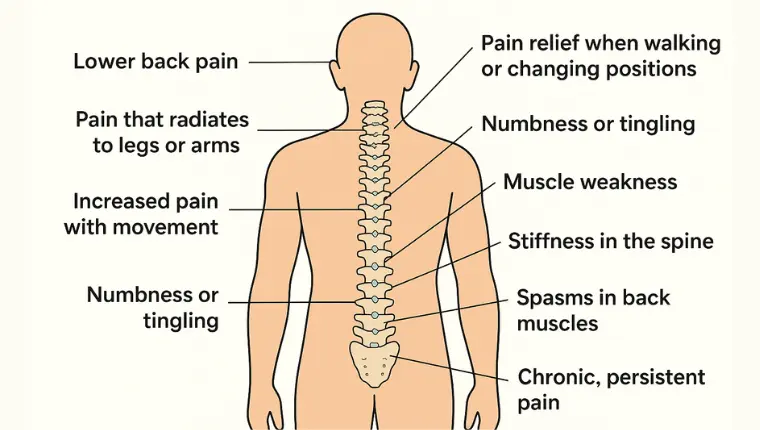
Degenerative Disc Disease Symptoms
- If you experience chronic back or neck pain characterized as dull, aching, or even sharp during episodes of exacerbation.
- The pain you experience increases when bending forward, twisting, or remaining seated for extended periods of time.
- Changing positions, lying down, or walking slowly provides relief from the pain.
- You may also experience radiating pain down the arm(s) or leg(s) due to the irritation of the nerve(s).
- Tingling, numbness, and/or a "pins-and-needles" feeling in the arms/legs.
- Weakness or excessive heftiness of the muscles when the nerve(s) are compressed.
- Stiffness in your back, especially after a period of resting or inactivity.
- Infrequent bouts of extremely intense pain followed by periods of only mild discomfort.
- Gentle movement and/or gentle stretching can help reduce the amount of pain you feel.
Degenerative Disc Disease Surgery Cost
The cost of degenerative disc disease surgery in India varies widely, from moderate to very high depending on the type of procedure and the type of implant used. For instance, decompression surgeries tend to be less expensive while fusion and artificial disc replacement tend to be more costly than decompression procedures due to their complexity, employing expensive instrumentation, and requiring longer operating time.
For Free Online Consultation
GET A FREE QUOTE
There is also variation in prices based on city, hospital class, and whether the surgeon employs minimally invasive surgical techniques; however, no matter what cost is associated with surgery, the majority of patients will select a hospital providing excellent post-operative care, including physiotherapy support and consultation from a spine specialist, due to the significant impact these factors will have on long-term success and comfort after recovery.
|
Procedure |
Approx Cost (₹) |
|
Discectomy |
1,50,000 – 2,75,000 |
|
Decompression (Laminectomy/Foraminotomy) |
1,50,000 – 2,50,000 |
|
Spinal Fusion |
2,50,000 – 5,00,000 |
|
Artificial Disc Replacement |
3,60,000 – 6,00,000 |
Best Clinic For Degenerative Disc Surgery
Discectomy surgery is usually done for disc herniation and has a higher success rate for patients than other forms of surgery. If you're in the process of researching where to get your surgery done, then I highly recommend you consider the top-rated hospitals across the world for this type of surgery. These hospitals have highly talented and skilled staff who perform surgeries using the latest technology available. In addition, they provide their patients with a great deal of attention after the surgery. They follow a proven recovery plan to ensure the patient's comfort and reduce pain associated with the surgery as much as possible. The Medanta, Fortis, and Apollo hospitals all have specialized teams dedicated solely to the study and research of spine surgery and can offer their patients excellent success rates in recovery and rehabilitation, including physical therapy services.
We Care Health Services For Degenerative Disc Surgery
Degeneration of the intervertebral disc, often called "degenerative disc disease" (DDD) of the spine, is a condition that can be painful and can greatly affect the quality of one's life. While disc degeneration is a normal part of aging and, for most people, is not a problem, for certain individuals, a degenerated disc can cause severe, constant, chronic pain. There are different types of surgery, and the cost is also different depending on their management method.
For Free Online Consultation
GET A FREE QUOTE
The most likely cause of the surgery nerve pain because to the disc replacement. There are artificial methods also, but not yet that supportive.
Fusion disc operation is good for people looking for flexibility even after the operation.
There are several possible causes for Degenerative disc disease. Sometimes discs become dry and shrunken due to the leaking of protein from the disc. Degenerative disc disease can result from trauma (acute or chronic/repetitive), infection, or the natural processes of aging. It can euphemistically be referred to as the “grey hairs of the spine”.
For treating these conditions, experts from the We Care Health Services suggest surgery with a minimally invasive method. There are good chances to recover in less time. Here are the best facilities by We Care Health Services:
For Free Online Consultation
GET A FREE QUOTE
- Affordable Treatment With Cost Transparency
- Variety of minimally invasive methods.
- Good for recovery in less time.
- Handled by different types of experts trained in International centres.
- There are few or no side effects
- Best for the young patients because technology is used in the surgery
Conclusion
Degenerative disc disease must be addressed with a comprehensive, multipronged strategy that includes early diagnosis, prompt treatment, and ongoing recovery support through physical therapy. Surgical treatments for patients with persistent pain (after completing conservative care) and those whose ability to perform daily tasks is affected by the continued pain from degenerative disc disease should only be performed when necessary and after careful consideration of the surgical treatment options (i.e., fusion, artificial disc replacement, or decompression) available today in many countries around the world, including India. Patients who engage in physiotherapy after a surgical procedure have a much better chance of recovering and achieving full functional capabilities. The real objective of rehabilitation for degenerative disc disease is not only pain management but also the restoration of a patient’s mobility, confidence, and overall quality of life. Most patients will return to active and fulfilling lifestyles following successful surgery, provided the care and support of their caregivers are adequate.