
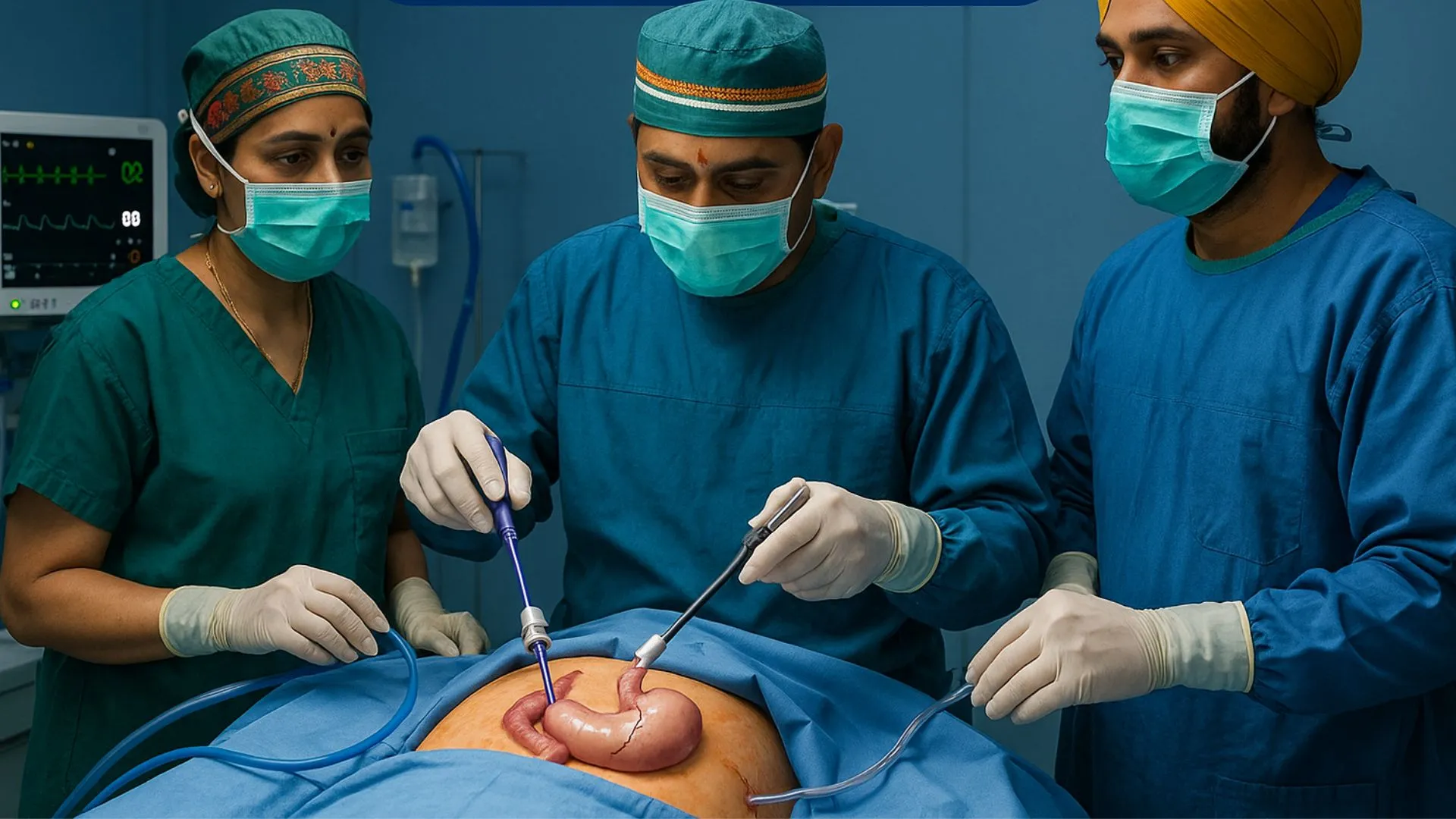
Gastric bypass Surgery in India is often performed by clinical experts, with trained at various international centers. It is a kind of bariatric surgery and has cosmetic importance. Most of the patients looking for gastric surgeries are personality developers or celebrities. Significant weight reduction is the prominent benefit of the surgery.
Gastric bypass surgery in India is a popular option for individuals struggling with obesity and related health issues, offering significant weight loss benefits. The surgery involves altering the digestive system by creating a small pouch from the stomach and rerouting the intestines to this new pouch. This limits the amount of food you can eat and reduces the absorption of nutrients.
What is Gasteric Bypass Surgery?
Gastric bypass surgery is a type of weight-loss surgery that helps individuals with obesity achieve significant weight reduction. The procedure involves creating a small pouch from the stomach and rerouting the small intestine to this pouch. This limits the amount of food a person can eat and also reduces the absorption of calories and nutrients.
Book Appointment
GET A FREE QUOTE
It is typically recommended for individuals with a body mass index (BMI) of 40 or higher, or those with a BMI of 35 or higher who have obesity-related health problems, such as type 2 diabetes or heart disease. Gastric bypass surgery in India not only helps in substantial weight loss but can also improve or resolve several obesity-related conditions. The surgery is usually performed laparoscopically, which means through small incisions, offering faster recovery and less pain. However, it requires lifelong commitment to a healthy diet, exercise, and regular follow-ups with healthcare professionals to ensure success and prevent complications.
What Does Gastric Bypass Surgery Do?
Gastric bypass surgery in India is a procedure designed to help people with obesity lose weight by making changes to their digestive system. It works in two main ways:
- Restricting Food Intake: The surgeon creates a small pouch at the top of the stomach, which limits how much food a person can eat. This makes you feel full after eating smaller amounts of food.
- Malabsorption of Nature The small intestine is rerouted, which means that food bypasses a portion of the stomach and small intestine. As a result, fewer calories and nutrients are absorbed from the food you eat, contributing to weight loss.
- The surgery leads to significant weight loss by reducing both the quantity of food you can eat and the amount of calories your body absorbs.
- It also often improves or resolves obesity-related health conditions like type 2 diabetes, hypertension, and sleep apnea.
Book Appointment
GET A FREE QUOTE
It requires a commitment to a healthier lifestyle and lifelong nutritional monitoring. Sometimes, the purpose of gastric surgeries is to maintain a frozen metabolic rate because of a bad lifestyle.
Types of Gastric Bypass Surgery
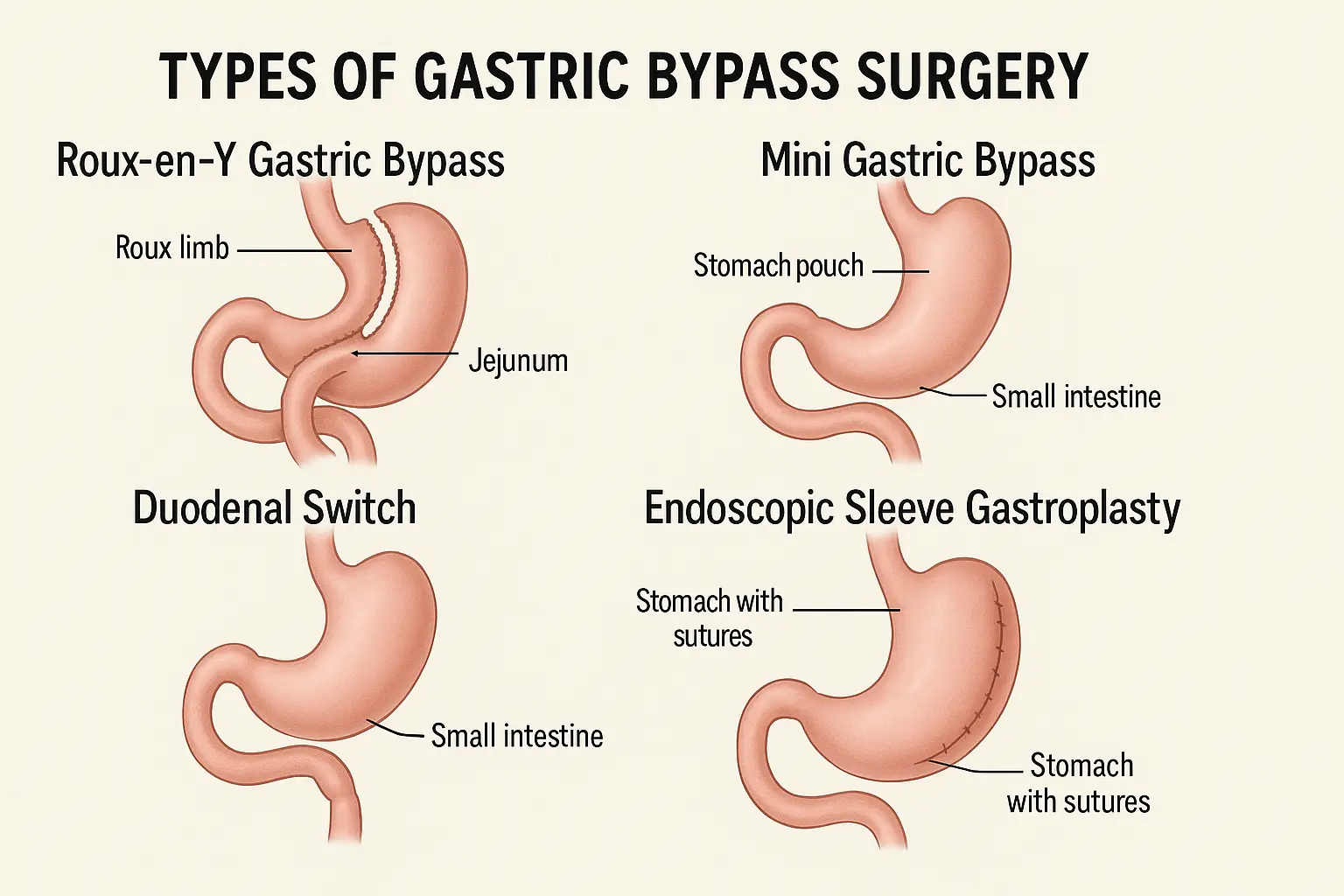
Gastric bypass surgery is one of the 3 types of bariatric surgery. It is one with prominent demand and has more benefits. There are several types of gastric bypass surgery in India, each with a slightly different approach to how the digestive system is altered. Each type has its own benefits and risks, and the choice depends on factors like your overall health, weight loss goals, and the surgeon’s expertise.
Types of Gastric Bypass Surgery
Roux-en-Y Gastric Bypass (RYGB)
Roux-en-Y Gastric Bypass (RYGB)
- Most common and widely performed.
- The stomach is divided into a small pouch, which is then connected to the middle part of the small intestine (the jejunum), bypassing the rest of the stomach and upper intestine.
- This reduces the amount of food a person can eat and also limits nutrient absorption.
Mini Gastric Bypass (MGB) or One-Anastomosis Gastric Bypass (OAGB)
Mini Gastric Bypass (MGB) or One-Anastomosis Gastric Bypass (OAGB)
- A less complex procedure that involves creating a smaller stomach pouch and attaching it directly to the small intestine, bypassing a portion of the stomach and upper intestine.
- It's often considered less invasive and has a shorter recovery time compared to Roux-en-Y.
- It may be associated with slightly higher complication rates, but it is gaining popularity.
Duodenal Switch (Biliopancreatic Diversion with Duodenal Switch - BPD/DS)
Duodenal Switch (Biliopancreatic Diversion with Duodenal Switch - BPD/DS)
- It is a more complex surgery that combines a sleeve gastrectomy (removal of a large portion of the stomach) with a rerouting of the small intestine.
- It limits calorie and nutrient absorption.
- It results in a significant amount of weight loss but requires strict dietary monitoring due to higher risks of malnutrition and vitamin deficiencies.
Endoscopic Sleeve Gastroplasty (ESG)
Endoscopic Sleeve Gastroplasty (ESG)
- Though not technically a "gastric bypass," this is a newer, minimally invasive procedure where the stomach is stitched to reduce its size.
- It’s done through an endoscope (a thin tube with a camera) and does not require incisions.
- It’s still an evolving procedure and is often used for people who cannot undergo traditional surgery.
Book Appointment
GET A FREE QUOTE
Gastric Bypass Surgery Price
The gastric bypass surgery cost has some deciding factors, some of which are also related to the cities and their infrastructure. Reputed surgeons and hospitals usually cost more in comparison to others with less famous identities. Here is the cost guidance for different cities:
|
City |
Cost Range (INR) |
|
Delhi |
₹2,00,000 – ₹4,86,500 |
|
Mumbai |
₹1,85,000 – ₹5,00,000 |
|
Bangalore |
₹2,28,000 – ₹3,50,000 |
|
Chennai |
₹2,00,000 – ₹3,00,000 |
|
Hyderabad |
₹2,00,000 – ₹3,50,000 |
|
Jaipur |
₹2,20,000 – ₹6,00,000 |
|
Gurgaon |
₹2,28,000 – ₹3,50,000 |
|
Chandigarh |
₹5,00,000 – ₹9,00,000 |
|
Pune |
₹2,00,000 – ₹3,50,000 |
|
Ahmedabad |
₹2,00,000 – ₹3,50,000 |
Inclusions & Exclusions From The Cost Packages- Gastric Bypass Surgery in India
It is a general perception that inclusions involve all kinds of costs in the surgery, but there are certain limitations. It is better to define all these in a separate mode. Generally, patients seek a helpful hand with the cost, but it is not possible every time. There is also insurance coverage for bariatric surgeries that could help the patients. Here is the list of inclusions and exclusions from the cost packages:
- All kinds of tests like ECG, MRI before surgery are included in the cost packages.
- Surgery equipment, initial consultations, hospital stay and dietary support during the hospital stay.
- Post-operative monitoring and care are also included in the packages.
- Exclusions are additional consultations with specialists or doctors beyond the standard ones.
- While initial painkillers and antibiotics are usually included, ongoing supplements like multivitamins are not included in the cost packages.
- Extended care in the hospital: if the patient’s recovery takes longer than expected, additional days in the hospital may not be covered.
- Any complications arising from the surgery, like infections or bleeding, might not be covered under the initial package.
- If you are traveling from another city, travel and accommodation costs will generally be outside the package.
Best Hospitals For Gastric Bypass Surgery
If you're considering gastric bypass surgery in India, it's essential to choose a hospital that offers advanced techniques, experienced surgeons, and comprehensive postoperative care. India has become a popular destination for bariatric procedures due to its high-quality healthcare services, skilled professionals, and affordable options.
Book Appointment
GET A FREE QUOTE
The hospitals listed below are renowned for their expertise in performing gastric bypass surgery, utilizing the latest technologies and minimally invasive methods to ensure the best outcomes for patients. Whether you're located in a metropolitan city or planning to travel for surgery, these hospitals provide specialized care tailored to your weight loss needs.
|
City |
Hospital Name |
|
Delhi |
Fortis La Femme Hospital |
|
Mumbai |
Breach Candy Hospital |
|
Bangalore |
Manipal Hospital |
|
Chennai |
MIOT International Hospital |
|
Hyderabad |
Sunshine Hospitals |
|
Kolkata |
AMRI Hospitals |
|
Pune |
Ruby Hall Clinic |
|
Ahmedabad |
CIMS Hospital |
|
Chandigarh |
Post Graduate Institute of Medical Education & Research (PGI) |
|
Jaipur |
Fortis Escorts Hospital |
Best Bariatric Surgeons in India
When considering gastric bypass surgery in India, selecting a skilled bariatric surgeon is crucial for achieving successful results. Bariatric surgeons in India are highly trained in performing a variety of weight-loss procedures, including the widely performed gastric bypass surgery.
These surgeons specialise in minimally invasive techniques, ensuring shorter recovery times and reduced risk of complications. With their extensive experience in metabolic and weight-loss surgeries, they provide personalised care, helping patients achieve long-term success in managing obesity.
|
Surgeon Name |
Hospital/Clinic |
Specialty/Expertise |
|
Dr. Muffazal Lakdawala |
Saifee Hospital, Mumbai |
Renowned for advanced bariatric surgeries, including gastric bypass |
|
Dr. Ramen Goel |
Morbidity and Mortality Institute, Mumbai |
Expert in laparoscopic bariatric surgery and gastric bypass |
|
Dr. Rajeev Puri |
Fortis La Femme, Delhi |
Leading bariatric surgeon, specialising in gastric bypass and metabolic surgery |
|
Dr. Shanthala Thuppanna |
Sakra Premium Hospital, Bangalore |
Expertise in weight loss surgeries, including gastric bypass |
|
Dr. Sandeep Puri |
Adiva Hospital, Delhi |
Specializes in laparoscopic gastric bypass and obesity management |
|
Dr. Pradeep Chowbey |
Max Super Speciality Hospital, Delhi |
Renowned for obesity and metabolic surgery, including gastric bypass |
|
Dr. Nitin Agarwal |
Care Clinic, Hyderabad |
Known for advanced laparoscopic bariatric surgery, including gastric bypass |
|
Dr. A. K. Gour |
Fortis Escorts, Jaipur |
Specializes in gastric bypass and other weight-loss surgeries |
|
Dr. Anup K. S. |
Gleneagles Global Health City, Chennai |
Expertise in laparoscopic bariatric surgeries, including gastric bypass |
|
Dr. K. K. Agarwal |
Medanta The Medicity, Gurgaon |
Expert in metabolic and bariatric surgeries, including gastric bypass |
Many of these surgeons are affiliated with top hospitals across the country, where they use state-of-the-art technology and follow international medical standards. If you're looking for an expert to guide you through gastric bypass surgery in India, the surgeons at these renowned institutions are well-equipped to offer the best possible care and outcomes.
Best Services of We Care Health Services For Gastric Bypass Surgery in India
We Care Health Services is a leading healthcare facilitator in India, offering comprehensive support for gastric bypass surgery and other bariatric procedures. They specialize in connecting patients with top hospitals and surgeons across India, ensuring that individuals receive world-class treatment for weight loss. With a dedicated team of medical experts, We Care Health Services ensures personalized care throughout the entire process, from initial consultation to post-surgery follow-up.
Key Features of We Care Health Services for Gastric Bypass Surgery:
- Expert Surgeons: We Care collaborates with highly experienced and skilled bariatric surgeons who specialize in gastric bypass surgery and other weight-loss procedures.
- Affordable Packages: They offer cost-effective treatment options without compromising the quality of care, making weight-loss surgery accessible to a broader range of patients.
- Comprehensive Services: We Care Health Services provides end-to-end support, including travel arrangements, medical visas, accommodation, and post-operative care.
- Top Hospitals: The company partners with leading hospitals in India, ensuring that patients have access to state-of-the-art facilities and international medical standards.
- Personalized Care: From pre-operative assessments to recovery, We Care Health Services ensures each patient receives tailored treatment plans and continuous support.
- International Patients: With extensive experience in handling international patients, We Care offers services in multiple languages and facilitates seamless communication throughout the treatment process.
- High Success Rate: The hospitals associated with We Care Health Services have a proven track record of successful weight-loss surgeries, providing excellent outcomes for patients.
Mini Gastric Bypass Surgery
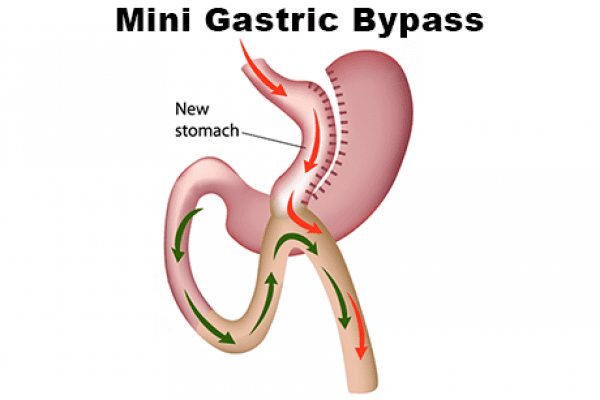
Mini Gastric Bypass Surgery (MGB) is a weight-loss surgical procedure that offers an effective solution for individuals struggling with obesity. It is a variation of the traditional gastric bypass surgery but with a simpler and less invasive approach. Here are some key points about the Surgery:
Mini Gastric Bypass Surgery
- In MGB, a small pouch is created at the top of the stomach, which is then directly connected to the small intestine, bypassing a portion of the stomach and the duodenum.
- This helps reduce the amount of food that can be consumed and limits nutrient absorption, resulting in significant weight loss.
- The advantages of Gastric Bypass Surgery in India include a shorter procedure time, quicker recovery, and fewer complications compared to traditional gastric bypass.
- It also has a lower risk of malnutrition and vitamin deficiencies because a smaller part of the intestine is bypassed.
- MGB is an attractive option for those looking for an effective and relatively low-risk surgery to manage obesity and improve associated health conditions. For Example: type 2 diabetes, hypertension, and sleep apnea.
- However, like all weight-loss surgeries, it requires lifelong commitment to dietary changes, exercise, and regular follow-up care.
Book Appointment
GET A FREE QUOTE
Gastric Bypass Side Effects
Gastric Bypass Surgery in India is a highly effective weight-loss procedure, but like any surgery, it comes with potential side effects and risks. These side effects can vary from mild to severe, depending on the individual and their health condition. It's essential to understand these before deciding to undergo the procedure.
- Nausea and Vomiting: After the surgery, some patients experience nausea and vomiting, especially if they consume food too quickly or in large quantities.
- Dumping Syndrome: This occurs when food moves too quickly from the stomach to the small intestine. It can cause symptoms such as diarrhea, dizziness, and sweating, particularly after consuming sugary or high-fat foods.
- Nutritional Deficiencies: Since the stomach is reduced in size and part of the small intestine is bypassed, the body may have difficulty absorbing essential nutrients, leading to deficiencies in vitamins and minerals such as vitamin B12, iron, calcium, and vitamin D.
- Stomach Ulcers: Some patients may develop ulcers at the site of the surgery, which can cause pain, nausea, or bleeding.
- Gallstones: Rapid weight loss can increase the risk of developing gallstones, which may require further treatment or surgery.
- Constipation or Diarrhea: Changes in the digestive system can cause alterations in bowel movements, leading to either constipation or diarrhea in some patients.
- Regain of Weight: Although gastric bypass surgery in India is effective in promoting weight loss, it is still possible to regain weight if proper dietary and lifestyle changes are not maintained.
- Infection: As with any major surgery, there is a risk of infection at the incision sites or inside the abdominal cavity.
- Blood Clots: Blood clots can form after surgery, especially if the patient has a sedentary recovery period, increasing the risk of deep vein thrombosis (DVT) or pulmonary embolism (PE).
- Leaks:Leaks can occur at the surgical site, leading to serious infections or complications that may require further surgery.
Management and Prevention of Gastric Bypass Surgery Side Effects
To minimize these side effects, patients must follow their surgeon's guidelines regarding diet, exercise, and vitamin supplements. Regular follow-up appointments are essential to monitor nutritional levels and overall health after the surgery. Here are some details about the management:
- After surgery, patients are typically advised to follow a structured, gradual diet plan that progresses from liquids to soft foods and eventually to solid foods.
- Patients should eat smaller portions throughout the day, typically 4-6 meals, to avoid overeating, which can lead to nausea and vomiting.
- Prioritize protein-rich foods (e.g., lean meats, eggs, legumes, and tofu) to promote healing, preserve muscle mass, and support overall health.
- To prevent dumping syndrome, patients should avoid foods high in sugar and fat.
- Adequate fluid intake is crucial.
- Patients should avoid drinking large amounts of liquid during meals to prevent overfilling the stomach and to ensure proper digestion.
Gastric Bypass vs Sleeve Gasterectomy
Gastric Bypass and Sleeve Gastrectomy are two of the most commonly performed weight-loss surgeries. Both are highly effective in helping individuals with obesity achieve significant weight loss, but they work in different ways and have distinct advantages and disadvantages. Here’s a comparison between the two:
|
Factor |
Gastric Bypass |
Sleeve Gastrectomy |
|
Surgical Complexity |
More complex and invasive |
Simpler and less invasive |
|
Weight Loss |
Faster and more significant (60-80% of excess weight) |
Gradual and steady (50-70% of excess weight) |
|
Mechanism of Action |
Restriction and malabsorption |
Restriction only (removes part of the stomach) |
|
Nutrient Absorption |
Reduced absorption; requires supplements |
Minimal impact on absorption |
|
Risk of Complications |
Higher risk (dumping syndrome, leaks, gallstones) |
Lower risk (leaks, GERD) |
|
Reversibility |
Irreversible |
Irreversible |
|
Ideal Candidates |
Severely obese (BMI 40+), metabolic conditions like type 2 diabetes |
Moderately obese (BMI 30-35) or those with less complex obesity |
|
Procedure Duration |
Longer surgery time (2-4 hours) |
Shorter surgery time (1-2 hours) |
|
Hospital Stay |
2-3 days post-surgery |
1-2 days post-surgery |
|
Dietary Changes |
Stricter long-term dietary changes (due to malabsorption) |
Focus on portion control, fewer dietary restrictions |
|
Potential for Weight Regain |
Lower potential (due to malabsorption) |
Higher potential if lifestyle changes are not maintained |
|
Recovery Time |
Longer recovery, more intense follow-up |
Shorter recovery and less follow-up needed |
Book Appointment
GET A FREE QUOTE
Both surgeries are effective in promoting significant weight loss, but the choice between gastric bypass and sleeve gastrectomy depends on the patient’s health conditions, weight loss goals, and preference for surgical complexity and long-term lifestyle changes. Consulting with a healthcare provider and bariatric surgeon is essential to determine the most suitable option based on individual needs.
What Does Gastric Bypass Surgery do- Procedure of Gastric Bypass Surgery
The other name of the surgery is stomach reduction surgery. Gastric Bypass Surgery in India is a widely performed weight-loss surgery designed to help individuals with obesity lose weight by altering the digestive system. The procedure involves both restriction (reducing the amount of food the stomach can hold) and malabsorption (limiting the absorption of calories and nutrients).
Pre-operative Instructions: Patients are usually asked to follow a specific diet (low-calorie or liquid diet) for several weeks before surgery to shrink the liver and make the procedure safer. Patients will also need to stop taking certain medications.
Anesthesia: The patient is put under general anesthesia, meaning they will be asleep and pain-free during the entire procedure.
- The surgeon divides the stomach to create a small pouch (about the size of an egg or a golf ball) that will hold food. This pouch will be the only part of the stomach that will receive food after surgery.
- The surgeon cuts the small intestine and reroutes it so that the bottom part of the small intestine is connected directly to the newly created stomach pouch. This bypasses the majority of the stomach and the first part of the small intestine (the duodenum).
- The upper portion of the small intestine is then reattached further down, creating a "Y" shape, which is where the name Roux-en-Y Gastric Bypass comes from.
- The small intestine is reattached to the stomach pouch, and digestive enzymes and bile still flow into the intestine, but only after food has passed through the stomach pouch.
- After making all necessary adjustments, the surgeon checks for leaks and proper alignment before closing the small incisions. The stomach and intestines are secured, and the surgery is complete.
- Patients may experience some discomfort, which is managed with pain medications.
- Laparoscopic surgery generally results in less pain and a quicker recovery compared to open surgery.
- Following gastric bypass, patients must follow a very specific diet to avoid complications and promote weight loss.
- This includes smaller, more frequent meals and a focus on high-protein, low-sugar, and low-fat foods.
Our Partner







Post Graduate Institute of Medical Education & Research (PGI)
Frequently Asked Questions:
The first part of the small intestine, called the duodenum, is bypassed, along with a portion of the jejunum (the middle section of the small intestine), which is rerouted and connected directly to the stomach pouch. This rerouting prevents food from passing through the duodenum and part of the small intestine, which limits calorie and nutrient absorption. While the stomach is altered and portions of the intestine are bypassed, other organs such as the pancreas, spleen, and gallbladder, remain intact and continue to function.