
Esophageal cancer treatment in India is good for patients diagnosed in the early stage, as their survival rate is higher. The rate of cancer is increasing day by day. In 2022, India recorded an estimated 70,637 new cases of esophageal cancer, with an age-standardised incidence rate (ASR) of 5.0 per 100,000 population.
It originates from the squamous tissues and it is accounting for 85% of cases in countries like India. The treatment for esophageal cancer is possible after early detection. Most of the time, hormonal therapy, radiation therapy and chemotherapy are the treatments given to the patients.
What is esophageal cancer?
Esophageal cancer is a type of cancer that develops in the esophagus, the long, muscular tube that carries food and liquids from the throat to the stomach. It occurs when abnormal cells in the esophageal lining grow uncontrollably, forming a tumour. There are two main types: squamous cell carcinoma, which starts in the flat cells lining the esophagus, and adenocarcinoma, which begins in glandular cells near the stomach.
Common symptoms include difficulty swallowing, chest pain, persistent cough, unexplained weight loss, and hoarseness of voice. Risk factors include tobacco use, alcohol consumption, poor diet, and long-term acid reflux. Early detection improves treatment outcomes, but many cases are diagnosed in advanced stages, making awareness and timely medical evaluation crucial.
What is the first sign of Esophageal cancer?- Symptoms of Esophageal Cancer
The first noticeable sign of esophageal cancer is often difficulty swallowing (dysphagia). In the early stages, this may feel like food is getting stuck in the throat or chest. Initially, it happens only with solid foods, but as the tumour grows and narrows the esophagus, it can progress to difficulty swallowing liquids as well. This symptom is a red flag that should prompt immediate medical evaluation.
Other symptoms of esophageal cancer can include:
- Unexplained weight loss due to reduced food intake and cancer-related metabolism changes.
- Persistent chest pain or discomfort, which may radiate to the back.
- Hoarseness of voice or chronic cough caused by nerve or airway involvement.
- Regurgitation of food or frequent choking.
- Indigestion or heartburn that does not respond to usual treatments.
- Fatigue and weakness due to poor nutrition and cancer progression.
Because these symptoms often appear when the disease is already advanced, awareness is critical. Many patients in India present late, which can limit treatment options. However, advances in esophageal cancer treatment in India—including minimally invasive surgery, targeted therapy, modern radiotherapy, and combined chemoradiotherapy—offer hope for better survival and quality of life. Leading cancer centres such as Tata Memorial Hospital (Mumbai), AIIMS (New Delhi), and Apollo Hospitals provide world-class care at comparatively lower costs than in many countries.
Early recognition of symptoms, prompt diagnosis, and timely access to specialised care are key to improving outcomes. Anyone experiencing persistent swallowing difficulties should consult a gastroenterologist or oncologist without delay.
Causes of Esophageal Cancer
Esophageal cancer develops when cells in the lining of the esophagus undergo genetic changes that cause uncontrolled growth. In India, the majority of cases are squamous cell carcinoma, strongly linked to lifestyle and dietary habits, while a smaller proportion are adenocarcinoma, often related to chronic acid reflux.
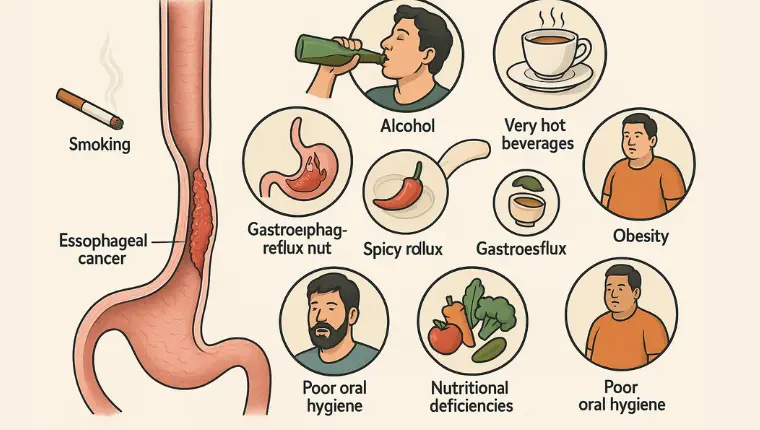
Causes of Oesophageal Cancer
- The leading causes include tobacco use (both smoking and chewing), which exposes the esophageal lining to harmful carcinogens, and excessive alcohol consumption, which increases irritation and cellular damage.
- Regular intake of very hot beverages or spicy foods can also injure the mucosa over time.
- Nutritional deficiencies—especially diets low in fresh fruits and vegetables—reduce the body’s natural cancer-fighting antioxidants.
- In certain regions, local practices such as chewing betel nut or consuming alkaline-rich foods like kalakhar in Assam are significant risk factors.
- Long-term gastroesophageal reflux disease (GERD) can lead to Barrett’s oesophagus, a precancerous condition linked to adenocarcinoma.
- Other contributing factors include obesity, poor oral hygiene, and exposure to certain environmental toxins.
With timely diagnosis and access to advanced esophageal cancer treatment in India, including surgery, chemotherapy, radiotherapy, and targeted therapy, outcomes can improve significantly. Prevention through lifestyle changes, public awareness, and regular screening in high-risk areas remains the best strategy to reduce the disease burden.
Oesophageal Cancer Success Rate
The success rate of oesophageal cancer treatment in India depends largely on the stage at which the disease is diagnosed, the patient’s overall health, and the treatment approach used. When detected in the early stages (Stage I or II), the chances of long-term survival are significantly higher—five-year survival rates can range from 50% to 70% with appropriate surgery and/or chemoradiotherapy. Unfortunately, many cases in India are diagnosed at advanced stages (Stage III or IV), where the five-year survival rate drops to 15–20% due to limited curative options.
- Advances in oesophageal cancer treatment in India have improved outcomes in recent years.
- Minimally invasive esophagectomy, advanced radiotherapy techniques like IMRT, and targeted chemotherapy regimens are helping patients recover faster and experience fewer side effects.
- Multidisciplinary cancer centres such as Tata Memorial Hospital (Mumbai), AIIMS (New Delhi), and Apollo Hospitals combine surgical expertise with modern oncology care to maximise survival chances.
- Another important factor influencing success rates is access to care.
- Patients who begin treatment promptly after diagnosis and receive care at specialised centres generally achieve better results.
- Supportive care, nutritional rehabilitation, and post-treatment monitoring also contribute to improved quality of life and longer survival.
- While the overall survival rates for oesophageal cancer in India remain lower than for some other cancers, early detection, lifestyle modifications, and the availability of world-class oesophageal cancer treatment in India are steadily increasing the likelihood of successful outcomes for many patients.
- Public awareness and screening in high-risk areas are key to further improving these statistics.
Best Hospital for Oesophageal Cancer Treatment
India has several renowned hospitals offering advanced care for oesophageal cancer, combining skilled surgical teams, cutting-edge technology, and comprehensive oncology services. These hospitals provide treatments such as minimally invasive esophagectomy, targeted therapy, radiotherapy, and palliative care at costs far lower than in many other countries.
Leading institutions like Tata Memorial Hospital, AIIMS, and Apollo Hospitals follow global protocols to ensure high success rates. Many centres also have dedicated gastro-oncology departments and multidisciplinary tumour boards to personalise treatment plans, making them some of the best choices for esophageal cancer treatment in India.
|
Hospital |
City |
|
Tata Memorial Hospital |
Mumbai |
|
AIIMS |
New Delhi |
|
Apollo Hospitals |
Chennai |
|
Fortis Memorial Research Institute |
Gurugram |
|
Max Super Speciality Hospital |
New Delhi |
|
Kokilaben Dhirubhai Ambani Hospital |
Mumbai |
|
Medanta – The Medicity |
Gurugram |
|
Narayana Health City |
Bengaluru |
|
Rajiv Gandhi Cancer Institute |
New Delhi |
|
Amrita Institute of Medical Sciences |
Kochi |
|
HCG Cancer Centre |
Bengaluru |
|
CMC Vellore |
Vellore |
|
Manipal Hospitals |
Bengaluru |
|
BLK-Max Super Speciality Hospital |
New Delhi |
|
Asian Institute of Gastroenterology |
Hyderabad |
Cost of Esophageal Cancer in India
The cost of esophageal cancer treatment in India varies depending on the stage of the disease, the type of treatment, and whether care is sought at a government or private hospital. On average, treatment is significantly more affordable than in Western countries, with high-quality care available in leading cancer centres.
Surgery, chemotherapy, and radiotherapy may be used alone or in combination, influencing the total expense. Government schemes like Ayushman Bharat can cover costs for eligible patients. Early detection can reduce expenses by avoiding advanced, prolonged treatment.
|
Hospital |
Average Cost (INR) |
|
Surgery (Esophagectomy) |
₹2,00,000 – ₹6,00,000 |
|
Chemotherapy (per cycle) |
₹20,000 – ₹50,000 |
|
Radiotherapy (total course) |
₹1,00,000 – ₹3,00,000 |
|
Targeted Therapy (per cycle) |
₹80,000 – ₹2,50,000 |
|
Palliative Care (monthly) |
₹15,000 – ₹40,000 |
We Care Health Services for Esophageal Cancer
We Care Health Services is a trusted medical tourism and patient care facilitator in India, connecting patients with the country’s top hospitals for advanced esophageal cancer treatment in India. They offer end-to-end support, from diagnosis to post-treatment recovery, ensuring access to experienced oncologists and world-class facilities. Their network includes leading cancer centres equipped with modern surgical, chemotherapy, and radiotherapy options. With personalised treatment planning, cost transparency, and assistance in travel and accommodation, We Care Health Services ensures that both domestic and international patients receive quality care at affordable rates, improving survival chances and quality of life for oesophageal cancer patients.
Key Features:
- Access to leading hospitals for oesophageal cancer treatment in India.
- Connection with experienced gastro-oncologists and surgical oncologists.
- Support in diagnosis, staging, and personalised treatment planning.
- Assistance with medical visas, travel, and accommodation.
- Coordination for minimally invasive surgery, chemotherapy, and radiotherapy.
- Cost-effective treatment packages compared to Western countries.
- 24/7 patient assistance during the treatment journey.
- Post-treatment rehabilitation and nutritional guidance.
- Transparent communication on treatment plans and expenses.
- Priority appointments and fast-track consultations.
- Guidance on government schemes like Ayushman Bharat.
- Special care arrangements for international patients.
- Comprehensive follow-up care to monitor recovery.