
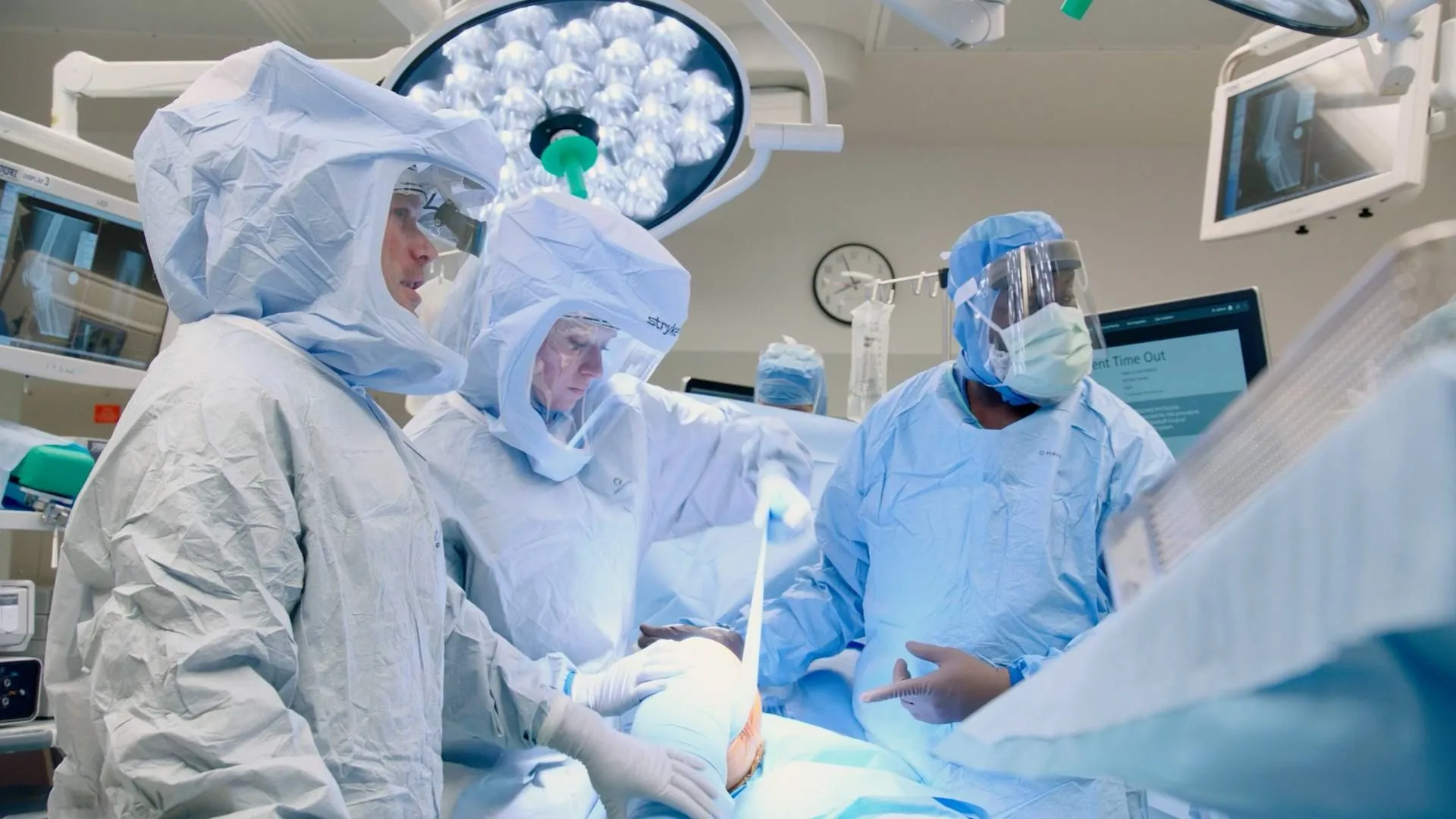
Computer-assisted hip Replacement in India has become more common over the last decade and has helped patients to recover in minimal time. Hip replacement is a widely performed surgery that helps people regain movement and reduce pain caused by serious damage to the hip joint. This damage can result from conditions like arthritis, old injuries, or simply years of wear and tear.
Book Appointment
GET A FREE QUOTE
For decades, traditional surgical techniques have delivered reliable outcomes in hip replacement procedures. However, with continuous progress in medical technology, more advanced and precise methods have emerged. These tools assist in positioning the implant with greater accuracy and ensuring optimal alignment within the joint. As a result, patients often experience better joint function, increased stability, and longer-lasting results compared to conventional methods.
What is Computer-Assisted Hip Replacement?
Computer-assisted hip replacement is the latest and most advanced way of doing hip replacement surgery. In this method, the surgeon doesn’t rely only on their eyes or hands—they also use computer tools that guide them during the operation. These tools show real-time images and data, which help in placing the implant in the most accurate position.
Before the surgery, the doctor takes scans like X-rays or CTs to create a 3D view of the hip. During the operation, this 3D model helps the surgeon understand exactly where and how to place the new joint. This reduces common issues like the legs becoming uneven or the joint becoming loose later on.
The goal of using computer assistance is to make the surgery more accurate, improve how the joint works after surgery, and help the new implant last longer. It’s a mix of technology and the surgeon’s skills coming together to give better results.
Types of Computer-Assisted Surgery: Types of Computer-Assisted Hip Replacement in India
Computer-assisted surgery isn’t just one single method, it includes different types of techniques and tools that help the surgeon during the operation. This method combines the surgeon’s expertise with real-time digital guidance, allowing for greater accuracy in implant positioning and alignment. By using detailed imaging and navigation tools, surgeons can make more informed decisions during the operation, leading to better joint function and long-term results. With the detailed Explanation, here is the type of Computer-Assisted Surgery in India:
Book Appointment
GET A FREE QUOTE
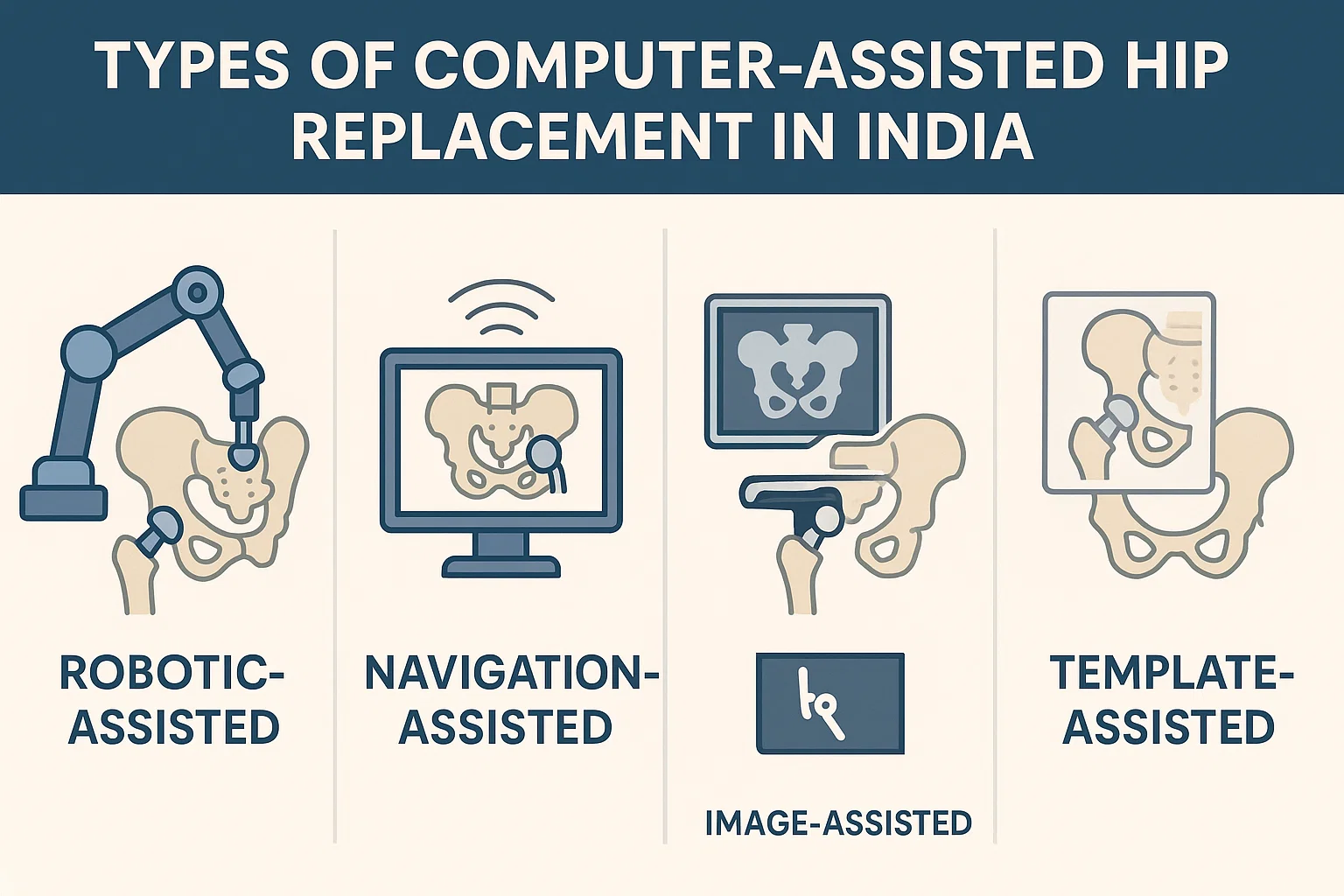
Types of Computer-Assisted Hip Replacement in India
Data Analytics About Computer-Assisted Hip Replacement Surgery in India
Computer-assisted hip replacement surgery is slowly becoming popular in India, especially in big cities and top hospitals. Though it’s not available everywhere yet, more and more surgeons are getting trained in this technology. Hospitals are also investing in computer-based systems because they help improve the accuracy of the surgery. It’s not something you’ll find in every government or small private hospital yet, but in places like Apollo, Fortis, and Max, it's already being used.
One of the biggest benefits of using computer assistance during hip surgery is that it helps the surgeon place the implant with more precision. This means the chances of post-surgery problems, like uneven leg length or joint dislocation, go down a lot. Also, the new joint tends to work better and last longer. Many top hospitals in India are reporting success rates of 95% to 98% for these surgeries, thanks to advanced tools and experienced doctors.
Success Rate of Computer-Assisted Surgery in India
While precise national statistics are scarce, CAHRS is primarily available in major urban hospitals and specialised orthopaedic centres. Its adoption is increasing as more surgeons receive training and as healthcare facilities invest in advanced surgical technologies.
Success Rates: India boasts high success rates for hip replacement surgeries, with figures ranging from 95% to 98% in top hospitals. This is attributed to experienced surgeons, advanced techniques, and stringent infection control measures.
|
Type of Joint Replacement |
Success Rate (%) |
|
Hip Replacement Surgery |
90% – 98% |
|
Knee Replacement Surgery |
85% – 95% |
|
Shoulder Replacement Surgery |
85% – 90% |
|
Elbow Replacement Surgery |
80% – 90% |
|
Ankle Replacement Surgery |
75% – 85% |
|
Wrist Replacement Surgery |
70% – 80% |
Computer-Assisted Hip Replacement, Arthroscopy, Surgery
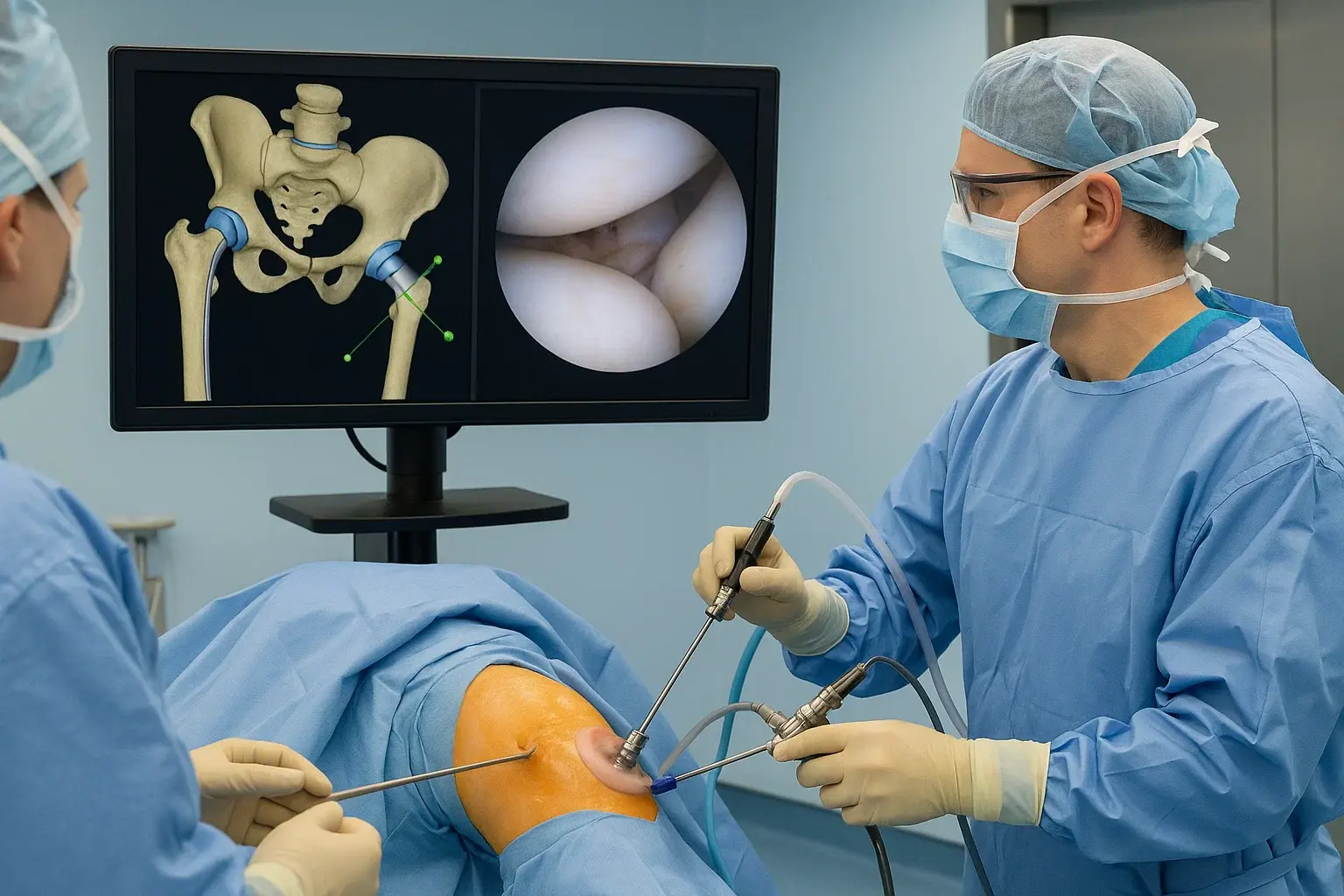
Computer-Assisted Hip Replacement
Computer-assisted hip Replacement is a modern technique where surgeons use computer technology to guide the placement of the artificial hip joint. It helps make the surgery more precise by providing real-time imaging and navigation during the procedure. This method aims to improve accuracy, reduce complications, and enhance recovery.
Arthroscopy is a minimally invasive surgery used mainly to diagnose and treat problems inside the hip joint. Instead of large incisions, the surgeon makes small cuts and inserts a tiny camera and instruments to fix issues like cartilage damage, labral tears, or inflammation. Arthroscopy is usually for less severe problems and is not a replacement surgery.
Book Appointment
GET A FREE QUOTE
Traditional Hip Surgery involves replacing the damaged hip joint with an artificial implant through a larger incision. The surgeon relies on their experience and manual tools to position the implant. While effective, this method doesn’t use computer guidance, which may sometimes affect the precision of implant placement.
Cost of Computer-Assisted Hip Replacement in India
The cost of computer-assisted hip replacement is more than traditional surgeries, because the procedure involved is technically advanced. The cost of Computer-Assisted Hip Replacement Surgery in India can vary widely depending on the city, hospital, and the overall setup. In major cities like Delhi, Mumbai, or Bangalore, the cost generally falls between ₹3,00,000 to ₹5,50,000. In smaller cities like Jaipur or Lucknow, it can be slightly lower, around ₹2,50,000 to ₹4,00,000. However, if the surgery is performed in premium hospitals such as Apollo, Fortis, or Max Healthcare, the price may go up to ₹7,00,000 or more.
|
Component |
Estimated Cost (INR) |
Details |
|
Pre-surgery Consultation |
₹1,500 – ₹5,000 |
Includes orthopaedic consultation and physical evaluation |
|
Diagnostic Tests (X-ray, MRI, CT) |
₹5,000 – ₹15,000 |
Imaging to assist surgical planning and navigation |
|
Blood Tests & Pre-op Investigations |
₹3,000 – ₹7,000 |
CBC, ECG, urine tests, coagulation profile |
|
Computer-Assisted Technology Fee |
₹30,000 – ₹80,000 |
Charges for navigation system/robotic assistance |
|
Surgery Package (including Implants) |
₹2,00,000 – ₹4,00,000 |
Hospital stay (5-7 days), anaesthesia, surgeon fee, OT charges, implant cost |
|
Post-operative Physiotherapy |
₹10,000 – ₹30,000 |
5–10 sessions for mobility and recovery |
|
Medicines and Consumables |
₹5,000 – ₹15,000 |
Painkillers, antibiotics, dressing, etc. |
|
Follow-up Visits (2–3 times) |
₹2,000 – ₹6,000 |
Recovery monitoring, suture removal, and x-ray follow-ups |
|
Total Estimated Cost |
₹2.6 – ₹5.6 Lakhs |
May vary based on hospital, city, and implant type |
Computer-Assisted Hip Replacement in India Price Table
Factors Affecting the Cost of Computer-Assisted Surgery
There are various factors affecting the cost of computer-assisted surgery. Private hospitals and government hospitals also impact on cost. Type of surgery, surgeon’s experience, hospital stay, and health of the patient are the various factors. We will discuss all these factors on a separate basis:
- Private or Multi-Speciality Hospitals (like Medanta, Apollo) charge more due to infrastructure and high-end facilities.
- Government or Teaching Hospitals (like AIIMS) offer lower costs but may have longer wait times.
- Highly experienced or internationally trained surgeons often charge higher fees.
- Surgeons with specialised training in robotic or navigation-assisted surgery increase the overall cost.
- Robotic-assisted systems (e.g., Mako, ROSA) are costlier than standard navigation systems.
- Upgraded software and real-time imaging systems can add to expenses.
- Imported implants (like Zimmer Biomet, DePuy Synthes) cost more than Indian brands.
- Some implants are custom-made or designed for specific robotic compatibility.
- Metro cities like Delhi, Mumbai, Bengaluru, and Chennai usually have higher treatment costs.
- Smaller cities or Tier-2 areas may offer affordable options.
- Longer post-surgery stays, especially in private rooms or ICUs, increase costs.
- Faster discharge options in fast-track recovery programs can reduce expenses.
- Includes diagnostic imaging (MRI, CT), lab tests, medications, physiotherapy, and follow-up visits.
- Computer-assisted surgeries often require detailed planning scans, which add to the cost.
- General anaesthesia is costlier than spinal or regional anaesthesia.
- Anaesthesia specialist fees also vary depending on the case complexity.
- Complex or revision surgeries (repeat surgeries) cost significantly more.
- Comorbidities like diabetes, obesity, or heart conditions also add to the cost due to extra care.
Insurance Coverage on Computer-Assisted Hip Replacement in India
The extent of coverage and approval from insurers affects out-of-pocket expenses. Not all policies cover robotic or high-tech navigation surgeries fully. It is also based on the policy of insurance companies, and a private enquiry is needed for this factor.
Best Hospitals for Computer-Assisted Hip Replacement in India
Computer or robotic-assisted surgeries are expensive in comparison to minimally invasive and traditional methods of surgery, and the reason is the use of technology. They are highly verified techniques used in rare hospitals. Hospitals maintain American standards are providing such technology in the treatment and surgery. Recently, the number of these hospitals has increased overall in India.
Book Appointment
GET A FREE QUOTE
Here is the list of hospitals with maintained standards and mentioned cities in various states of India:
|
City |
Speciality/Note |
|
Medanta – The Medicity |
Gurugram |
|
Apollo Hospitals |
Chennai |
|
Max Super Speciality Hospital |
New Delhi |
|
Fortis Memorial Research Institute |
Gurugram |
|
Kokilaben Dhirubhai Ambani Hospital |
Mumbai |
|
AIIMS (All India Institute of Medical Sciences) |
New Delhi |
|
Manipal Hospital |
Bengaluru |
|
Sir Ganga Ram Hospital |
New Delhi |
|
Artemis Hospital |
Gurugram |
|
Hinduja Hospital |
Mumbai |
|
Aster Medcity |
Kochi |
|
Narayana Health City |
Bengaluru |
|
Sancheti Hospital |
Pune |
|
BLK-Max Super Speciality Hospital |
New Delhi |
|
CARE Hospitals |
Hyderabad |
Lifetime Precautions After Hip Replacement
After a hip replacement, lifelong care is essential to keep the joint strong and pain-free. You should avoid high-impact activities and maintain a healthy weight to protect the implant. Simple routines like staying active, doing gentle exercises, and regular follow-ups can make a big difference. Be cautious while bending or lifting, and use assistive tools when needed. With mindful habits, your new hip can last many comfortable years.
- Avoid crossing your legs while sitting.
- Do not bend your hip beyond 90 degrees.
- Use a raised toilet seat if advised.
- Sleep with a pillow between your legs (side sleeping).
- Avoid running, jumping, or high-impact sports.
- Maintain a healthy body weight.
- Do low-impact exercises like swimming or walking.
- Be careful on wet or slippery floors.
- Use support while getting in or out of bed.
- Inform your doctor before dental or surgical procedures (to prevent infection).
- Avoid lifting heavy weights.
- Go for regular follow-up checkups and X-rays.
Key Specifications: Computer-Assisted Orthopaedic Surgery in India
- It uses advanced tools like 3D cameras, sensors, and robotic arms to guide the surgeon during bone or joint surgery.
- Most commonly done for hip replacements, knee replacements, spine issues, and complicated bone fractures.
- Helps the surgeon place implants with very high accuracy, reducing the chances of future problems.
- Leads to less blood loss, smaller cuts, and quicker healing compared to traditional surgery.
- The surgery may take a little longer, but it’s much safer and more controlled.
- Recovery is usually faster because tissues around the joint are less disturbed.
- The surgeon is still in full control—technology is there to assist, not replace.
- Requires special setup like a robotic station, tracking devices, and a clean, high-tech operation room.
- Cost usually falls between ₹2.5 to ₹5.5 lakhs, depending on the hospital and type of technology used.
- You’ll usually need to stay in the hospital for 3 to 5 days after surgery.
- Physiotherapy is started within 1–2 days to help you move again and regain strength.
- This technology is available in top private hospitals in cities like Delhi, Mumbai, Bengaluru, and Chennai.
Book Appointment
GET A FREE QUOTE
We Care Health Services- Computer-Assisted Hip Replacement in India
We Care Health Services is a renowned medical tourism provider in India, offering advanced computer-assisted hip replacement surgeries. Their commitment to precision, patient safety, and personalised care makes them a preferred choice for individuals seeking advanced orthopaedic solutions. Here are ten key offerings:
- Advanced Computer Navigation: Utilises 3D imaging and infrared tracking to enhance surgical accuracy, ensuring optimal implant positioning.
- Experienced Surgical Team: A team of skilled orthopaedic surgeons with over 20 years of experience in computer-assisted hip replacements.
- High Success Rates: Achieves a success rate exceeding 90%, reflecting their expertise and commitment to patient outcomes.
- Minimally Invasive Techniques: Employs smaller incisions, leading to reduced tissue damage, less postoperative pain, and quicker recovery times.
- Reduced Complication Risks: Enhanced precision minimises the chances of implant misalignment, leg length discrepancies, and the need for revision surgeries.
- Customised Treatment Plans: Tailors surgical approaches based on individual patient anatomy and needs, ensuring personalised care.
- Comprehensive Preoperative Assessment: Conducts thorough evaluations to determine the most suitable surgical approach and implant type for each patient.
- Postoperative Rehabilitation Support: Provides structured physiotherapy programs to aid in recovery and restore mobility.
- Affordable Packages: Offers cost-effective treatment options without compromising on quality, making advanced care accessible.
- International Patient Services: Assists overseas patients with travel arrangements, accommodation, and language support, ensuring a seamless medical journey.
Difference Between Computer-Assisted Hip Surgery & Traditional Hip Surgery
Traditional hip surgery is different because of the recovery time and surgery technique. There are various key differences between traditional surgery and computer-assisted surgery. Other than cost factors, most of the others are benefits of computer-assisted surgery.
Computer-assisted hip Surgery uses advanced technology like 3D imaging, infrared sensors, and real-time navigation to guide the surgeon during the procedure. It helps ensure the artificial joint is placed with high accuracy and proper alignment.
In contrast, Traditional Hip Surgery relies mainly on the surgeon’s experience, visual estimation, and manual tools to place the implant. While both methods aim to relieve pain and improve mobility, computer-assisted surgery often results in better joint positioning, less tissue damage, quicker recovery, and longer-lasting results.
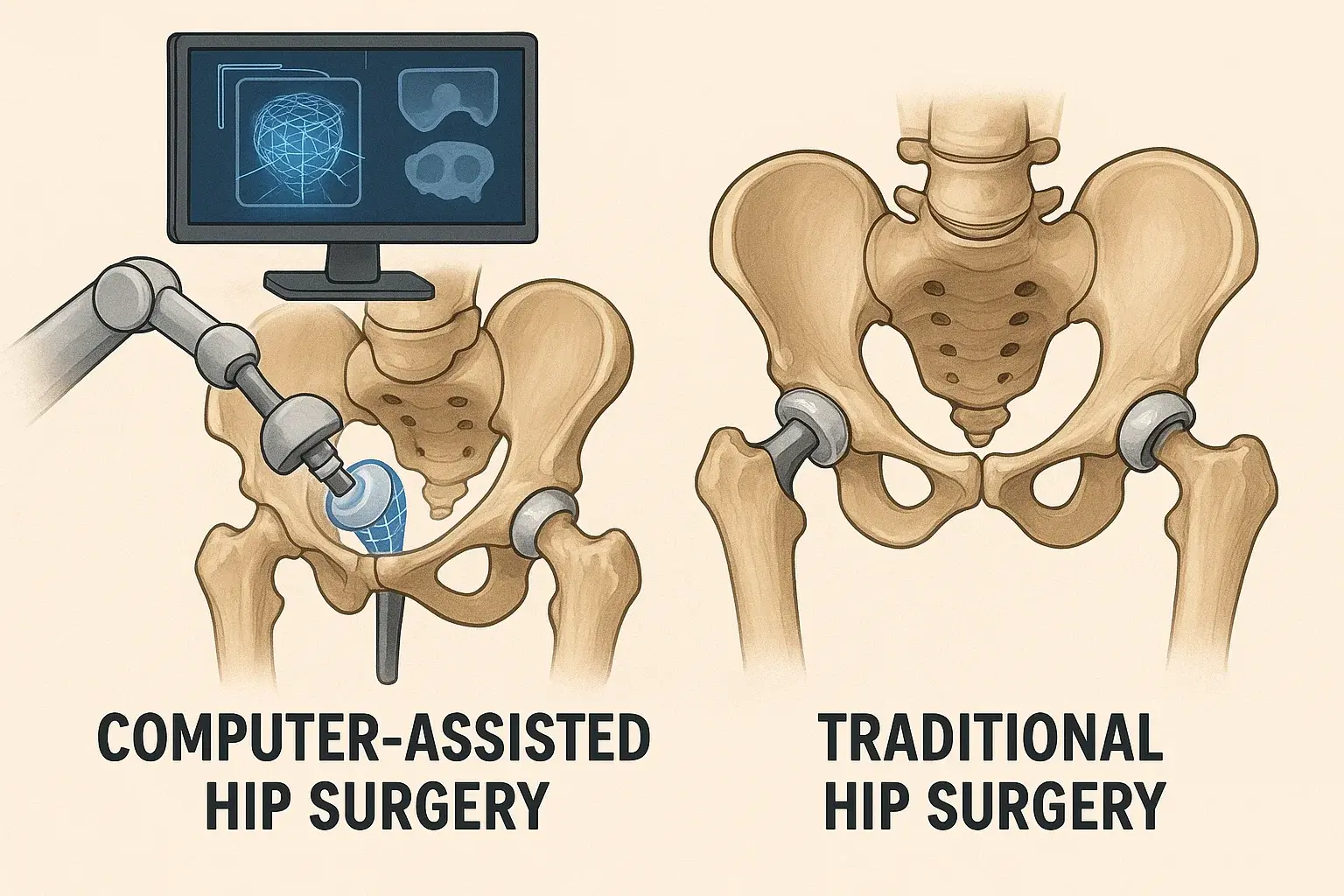
Difference Between Computer-Assisted Hip Surgery & Traditional Hip Surgery
However, it usually costs more due to the use of modern systems and requires specialised equipment and trained surgical teams. Traditional methods are still widely used and effective, but may have a slightly higher risk of implant misalignment or future revision surgery in some cases.
|
Aspect |
Computer-Assisted Hip Surgery |
Traditional Hip Surgery |
|
Technology Used |
Advanced 3D navigation, sensors, and robotic tools |
Manual tools and the surgeon’s visual estimation |
|
Precision |
High accuracy in implant placement |
Depends on the surgeon’s experience |
|
Recovery Time |
Faster, due to minimal tissue damage |
Slightly longer, more tissue disturbance is possible |
|
Blood Loss |
Generally less |
May involve more blood loss |
|
Implant Longevity |
Better alignment may extend implant life |
Slightly higher risk of misalignment |
|
Surgeon Role |
Surgeon is assisted by technology for better accuracy |
Fully manual, guided only by the surgeon |
|
Infection Risk |
Reduced, due to smaller incisions and a controlled environment |
Slightly higher, with larger incisions |
|
Hospital Stay |
Shorter, usually 3–5 days |
May be slightly longer |
|
Cost |
Higher due to technology and equipment |
More affordable |
|
Post-Op Complications |
Lower risk with accurate implant fit |
Greater risk if alignment is off |
|
Availability |
Limited to advanced hospitals and metro cities |
Widely available across hospitals |
|
Suitability |
Ideal for younger or active patients who need long-term outcomes |
Suitable for older or budget-conscious patients |
How to Recover From Hip Surgery?- Computer-Assisted Hip Replacement in India
Recovery from hip surgery requires patience, care, and consistent effort. After the procedure, rest is important but so is gentle movement. Doctors usually start physiotherapy within a day or two to improve mobility and prevent stiffness. Using a walker or crutches helps avoid strain while healing. It’s important to follow medication schedules, attend follow-up visits, and avoid bending or twisting the hip.
Book Appointment
GET A FREE QUOTE
A balanced diet rich in protein and calcium supports bone healing. Home safety—like removing rugs or using support bars—reduces fall risk. With proper care, most patients regain strength, comfort, and independence within a few months after surgery.
- Take it easy after surgery—don’t rush back into daily routines too fast.
- Move a little every day, even if it’s just walking around the room with support.
- Go for physio when the doctor says so—it helps, even if it feels tiring.
- Crutches or a walker aren’t forever—use them to avoid hurting your hip again.
- Keep your wound clean and dry—ask someone to help if reaching it is hard.
- Pain meds? Don’t skip them. It’s okay to need help with pain in the beginning.
- Avoid bending down too much—it puts extra stress on your new hip.
- Don’t sit cross-legged or twist your body suddenly, even if it feels fine.
- Choose chairs that are high and firm, not sofas you sink into.
- The toilet is too low? Use a seat raiser. Trust me, your hip will thank you.
- Eat proper food—dal, veggies, nuts, milk—anything that helps bones heal.
- Drink enough water, even if you’re just resting in bed all day.
- Fix up your room—remove stuff you could trip on, like wires or loose rugs.
- At night, if you sleep on your side, keep a pillow between your knees.
- Don’t compare your healing to others. Everyone’s body takes its own time.
What is the Newest Technique for Hip Replacement?
- Robotic-Assisted Surgery: Utilises 3D imaging and robotic arms to assist surgeons in precise implant placement, leading to better alignment and potentially longer-lasting results.
- Minimally Invasive Technique: Approaches like the direct anterior method allow surgeons to access the hip joint without cutting major muscles, resulting in less pain and quicker recovery.
- Advanced Implant Materials: New materials such as ceramic-on-ceramic and highly cross-linked polyethene reduce wear and extend the lifespan of hip implants.
- Patient-Specific Instrumentation: Customised surgical tools based on individual anatomy improve the fit and function of the implant.
Book Appointment
GET A FREE QUOTE
How Long Does it Take to Walk Normally After Hip Surgery?
Most people start walking with help, like a walker or crutches, within a day or two after hip surgery. But walking normally, without any support, takes more time. For some, it’s around 4 to 6 weeks; for others, it can take up to 3 months. It depends on your age, how healthy you were before surgery, and how regular you are with physiotherapy. Some people feel steady early on, while others take longer to gain full confidence. The key is to stay patient, do your exercises, and listen to your body. Slowly, step by step, you’ll get back to normal walking.