

Cardiology is related to heart treatment, and cardiac surgery is a solution for people with severe heart diseases. Many times these conditions are diagnosed at their peak. In such cases, surgery is necessary, and a long waiting list in hospitals is the factor stopping emergency services. It could be fatal to life sometimes.
Cardiology services are given in hospitals with the best technical development. It is a positive factor about Indian Hospitals that they have minimal waiting lists, affordable costs and the best doctors to perform surgery. All kinds of the latest technology are also available in the Indian Hospitals.
What is Cardiology?
Cardiology is the branch of medicine that focuses on diagnosing, treating, and preventing diseases related to the heart and blood vessels. It covers a wide range of conditions such as coronary artery disease, heart failure, arrhythmias, congenital heart defects, and hypertension. Cardiologists use advanced diagnostic tools like ECG, echocardiography, stress tests, and cardiac catheterisation to assess heart health and recommend suitable treatments.
Book Appointment
GET A FREE QUOTE
Cardiology treatment availability in India is among the best in the world, with state-of-the-art hospitals, experienced cardiologists, and affordable medical packages. Indian cardiology centres offer procedures like angioplasty, bypass surgery, valve replacement, pacemaker implantation, and heart transplants, ensuring comprehensive care. Many Indian hospitals are accredited internationally, attracting patients from across the globe for quality yet cost-effective heart treatments. With modern technology, expert care, and high success rates, India is a preferred destination for advanced cardiology services.
Why is the Cardiology Department in Any Hospital Different?
The cardiology department in any hospital stands apart from other medical specialities because it deals with one of the most vital organs of the body—the heart. Cardiac care requires a unique combination of advanced technology, specialised expertise, and emergency preparedness. The complexity of heart-related diseases demands precise diagnosis, immediate intervention, and continuous monitoring, which sets cardiology apart from other departments. Here’s why:
- Highly Specialised Expertise- Cardiologists undergo years of advanced training to handle complex heart conditions like arrhythmias, coronary artery disease, and heart failure.
- Advanced Diagnostic Technology- The cardiology department uses cutting-edge tools like ECG, echocardiograms, cardiac MRIs, and catheterisation labs for accurate assessment.
- Emergency Preparedness- Heart attacks and cardiac arrests require immediate medical action. Cardiology units are equipped with 24/7 emergency care facilities.
- Interventional and Surgical Procedures- Treatments like angioplasty, bypass surgery, valve replacement, and pacemaker implantation are highly specialised.
- Comprehensive Preventive Care- Cardiology also focuses on prevention through lifestyle management, medication, and risk assessment programs.
- Multidisciplinary Approach- Cardiologists work closely with radiologists, surgeons, and rehabilitation specialists for holistic care.
- International Standards of Care- Many hospitals with cardiology treatment availability in India follow globally recognised protocols, ensuring safe and effective treatment.
- Patient Education and Rehabilitation- Post-treatment care, cardiac rehabilitation, and patient education are integral to the department’s services.
The cardiology department is not just about treating diseases; it’s about saving lives within minutes, improving long-term heart health, and ensuring patients regain their quality of life. With India’s growing reputation for affordable and world-class heart care, these departments play a crucial role in global medical tourism and domestic healthcare excellence.
Book Appointment
GET A FREE QUOTE
Symptoms of Cardiac Problems
Cardiac problems often develop silently, but recognising early signs can be life-saving. The heart is responsible for pumping blood and oxygen to the body, and any disruption in its function can lead to serious health issues. Common symptoms of heart problems vary depending on the condition, but certain warning signs should never be ignored.
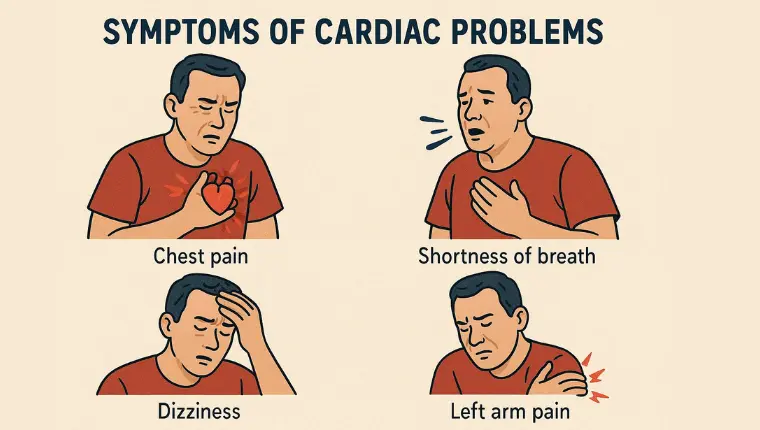
- The most common symptom is chest pain or discomfort, often described as pressure, tightness, or a squeezing sensation.
- This can occur during physical activity or at rest. Shortness of breath is another red flag, especially if it happens without exertion.
- Palpitations, or a feeling of rapid or irregular heartbeat, can signal arrhythmias.
- Other symptoms include fatigue, dizziness, or fainting, which may indicate reduced blood flow to the brain.
- Swelling in the legs, ankles, or feet (oedema) can be a sign of heart failure.
- Some people, especially women, may experience atypical symptoms like nausea, indigestion, or back pain.
- Persistent symptoms should prompt immediate medical evaluation.
With cardiology treatment availability in India, advanced diagnostic tools and expert care are accessible, making early detection and timely intervention possible. Recognising and acting on these warning signs can significantly improve outcomes and prevent life-threatening complications.
Success Rate of Cardiac Surgery in India
The success rate of any surgical procedure depends on the condition and age of the patients. Also, there are some patients who remain disciplined and have a higher survival rate than others. In the case of Indian cardiac surgery, there is a survival rate of 95% over five years, even if the patient is old.
Factors influencing the success rate include the patient’s age, overall health, severity of the heart condition, and presence of other medical issues like diabetes or kidney disease. Minimally invasive techniques and robotic-assisted surgeries have further increased safety and reduced recovery time.
Book Appointment
GET A FREE QUOTE
In India, cardiology treatment availability is world-class, with many hospitals equipped with state-of-the-art technology and highly skilled cardiac surgeons. Patients benefit from advanced diagnostics, experienced medical teams, and affordable treatment compared to many Western countries.
Timely diagnosis, proper preparation, and adherence to post-surgery care play a crucial role in achieving optimal results. Overall, with the right medical facility and expert care, the chances of a successful cardiac surgery remain extremely high.
Cardiology Services in India
India offers comprehensive and advanced cardiology services, making it a top destination for heart care globally. These services range from preventive cardiology to complex cardiac surgeries. Treatment options include angioplasty, bypass surgery, valve repair/replacement, pacemaker implantation, heart transplant, and minimally invasive cardiac procedures. Specialised pediatric cardiology services are also available for congenital heart defects.
- ECG (Electrocardiogram)
- Echocardiography
- Cardiac MRI
- CT Coronary Angiography
- Stress Tests
- Angioplasty & Stent Placement – Opens blocked arteries.
- Atherectomy – Removes plaque from arteries.
- Coronary Artery Bypass Grafting (CABG)
- Heart Valve Repair & Replacement
- Minimally Invasive Heart Surgery
- Heart Transplant
- Pacemaker Implantation
- Implantable Cardioverter-Defibrillator (ICD)
- Cardiac Resynchronisation Therapy (CRT) Pediatric Cardiology
Specialised care for children with congenital heart defects, including corrective surgeries and catheter-based treatments.
With affordable costs, modern infrastructure, and skilled cardiologists, cardiology treatment availability in India is among the best in the world, attracting thousands of patients every year.