

Cancer is a malignant form of tumour, and cancer treatment is available in India with a minimal waiting list and at an affordable cost. The ratio of cancer in the last decade has increased suddenly because of lifestyle, food and radiation in the environment. Types of cancer are defined according to the tissue of origin.
Malingering doesn’t happen in one day; it is hidden or complex for intake both emotional and physical. The use of steroids in food is also a reason for cancer. Surgery, different therapies are the treatment of cancer according to its origin and type. Early-stage diagnosis helps in the early detection of cancer.
What is Cancer?
Cancer is a disease in which some of the body’s cells grow uncontrollably and spread to other parts of the body. It starts when normal cells change and begin to divide without stopping, forming a lump or mass called a Tumour (in most cancers). These abnormal cells can invade nearby tissues and, through the blood and lymph systems, spread to distant parts of the body. Cancer can affect almost any organ or tissue and may cause serious health problems if not treated properly. There are over 100 different types of cancer, including breast, lung, prostate, and blood cancers.
Basic Symptoms of Cancer
These are symptoms that are noticed in the initial formation of the cancer tissues. They release interferons and give signals to the nearby cells. However, these symptoms are not easily noticeable. All Types of Cancer Treatment available in India can be made possible with hormonal therapy and immunotherapy. These treatments increase the defence mechanism of the body. Here are some symptoms by which you can detect cancer in a person.
- Persistent fatigue even after less physical work.
- Unexplained weight loss and feeling weak.
- Mild or persistent pain in some areas of the body may be a specific organ.
- Unexplained or lumps in the body.
- A disturbed menstrual cycle in the female for a longer duration.
- Dark spots, yellowish skin (jaundice), or persistent sores can be seen in the external skin in some specific areas.
- Blood scum in stool or urine, and at the time of coughing.
- Persistent bloating in the lower abdomen, trouble swallowing food, or chronic indigestion.
- A cough that lasts more than 3 weeks or hoarseness in the throat for unexplained reasons.
- Frequent changes in the bowel movement of a person like constipation, diarrhea, or frequent urination.
Different Types of Cancer
Cancer is a group of diseases characterized by the uncontrolled growth and spread of abnormal cells in the body. There are over 100 types of cancer, each named after the organ or tissue where it starts. Early diagnosis and proper medical care are crucial because cancer treatment is available and can be highly effective, especially in the initial stages.
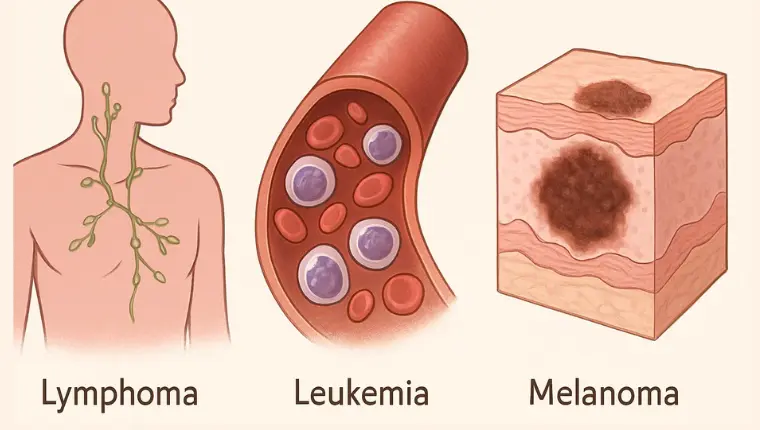
Different Types of Cancer
Prostate cancer affects the male reproductive gland and is common in older men. Colorectal cancer, which begins in the colon or rectum, is often linked to diet, age, and genetics.
Fortunately, cancer treatment is available across various hospitals and cancer centers worldwide. Depending on the type and stage, treatments include surgery, radiation therapy, chemotherapy, immunotherapy, targeted therapy, and hormone therapy. Personalized treatment plans help improve outcomes and quality of life.
Raising awareness about different types of cancer helps promote early detection, which significantly increases survival rates. With medical advancements, cancer treatment is available and becoming more effective every year.
What are 5 Ways to Detect Cancer? Diagnostics Method for Cancer
Cancer is diagnosed with the help of physical examination if it can be observed externally. The other ways of detecting cancerous cells are MRI, X-rays, CT scan, Bone scan etc. In the next section, all the different methods of cancer diagnosis are mentioned with a proper explanation. All Types of Cancer Treatment available in India are possible with different diagnostic methods too. There are six dominant methods:
- Lab Testing
- Biopsy
- Imaging Tests
- Endoscopy
- Genetic Testing
- Pap smear test
- Various imaging tests could detect the part of the body in which cancer or malignant tumours are taking place. Different machines do different tasks and share results; after that, these images are carefully observed by the doctors to give a proper remark about cancer occurrence. Common imaging tests are:
- CT Scan: This procedure uses an X-ray to take pictures of the whole body. The pictures detect abnormal structures in the body. Cancer care in India checks different-angle CT scans before any chemotherapy session.
- PET Scan: This is a different method of detection. The patient receives an injection of radioactive material to detect the exact location of cancerous cells in the body. The material is different from cancer treatment drugs.
- Ultrasound- This is a way of imaging with the help of high-frequency sound waves. Usually used for the internal imaging of the reproductive organs and the abdominal region.
- X-ray- It is a quick method and can be used for bone structure and detecting cancers. The method is composed of low doses of radiation. Cancer Cure in India, especially for bone cancer requires bone imaging.
Different Cancer Treatments in India
There are different cancer treatments like chemotherapy, radiation and immunotherapy, in the last surgery. Based on the types of cancer, there are different customised treatments.
Immunotherapy
It works primarily on the immune system of the body, making it strong and resonating with the natural capabilities of the body. Helps boost the body’s immune system to fight cancer. Activate T helper cells in recognising and attacking cancer cells. There are also chances of Organ dysfunction temporarily. There are two ways in which immunotherapy could be classified:
- Checkpoint Inhibitors: Help immune cells recognise and kill cancer cells (e.g., Pembrolizumab).
- CAR-T Cell Therapy: A genetic modification of T-cells to target cancer.
- Cancer Vaccines: Boost the immune response (e.g., HPV vaccine for cervical cancer).
Targeted Therapy
All Types of Cancer Treatment available in India is best possible in the form of targeted therapy. The method uses drugs to block specific molecules (proteins, genes) that cancer cells need to grow. There are two types of targeted therapy.
- Monoclonal Antibodies: They have only one binding site, and they bind to specific proteins in cancer cells.
- Tyrosine Kinase Inhibitors: Tyrosine is an enzyme that works as a chemical messenger in the body's cells. The therapy blocks signals that cancer cells use to grow.
Hormone Therapy
It is a temporary hormonal manipulation for a specific organ cure during the cancer treatment. Hormones are non-nutrient Chemical messengers that can manipulate the function of the cells in the body. The hormones block or lower hormone levels to slow down hormone-sensitive cancers. There are two types of hormonal therapy:
- Anti-Estrogens (Tamoxifen): It is used for breast cancer and blocks steroid receptors.
- Anti-Androgens (Bicalutamide): It is used for prostate cancer, the same as blocks steroid receptors.
Stem Cell Implant
Stem Cell therapy includes a particular therapy that replaces damaged bone marrow with healthy stem cells. Used in blood cancers after high-dose chemotherapy or radiation. There are two types of Stem cell implants:
Autologous: Uses the patient’s stem cells to culture and then administers them into the body.
Allogeneic: Uses donor stem cells, which have genes similar to those of the patient and are implanted in the body of the patient.
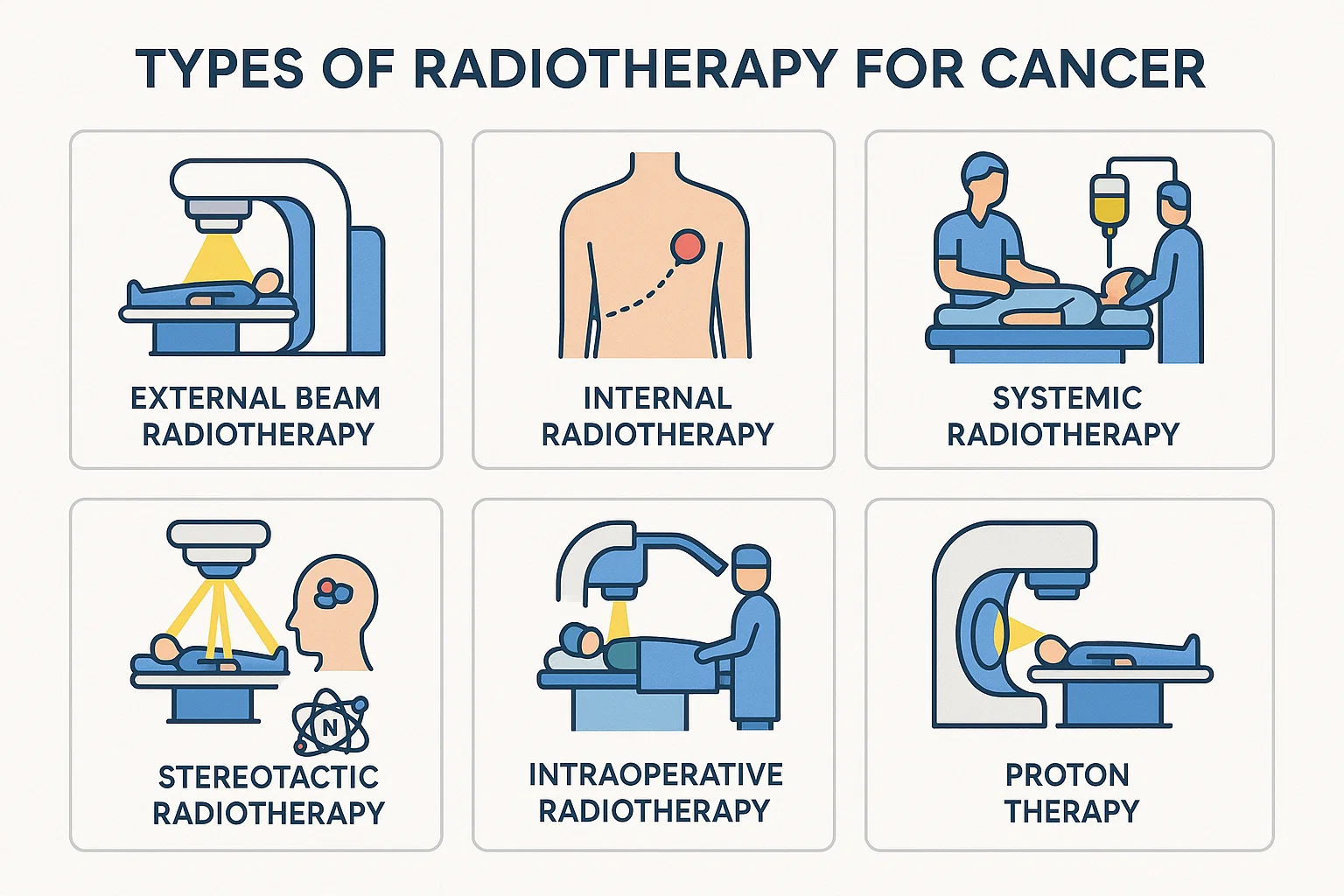
Types of Radiotherapy For Cancer
External Beam Radiotherapy
The most common type of radiotherapy is when radiation is directed at the tumour from outside the body using a machine called a linear accelerator. The other name is IMRT in India; there are many categories in this, too.
- 3D Conformal Radiotherapy (3D-CRT): Uses imaging to shape the radiation beams to match the tumour’s shape.
- Intensity-Modulated Radiotherapy (IMRT): An advanced form of 3D-CRT that uses varying intensities of radiation beams to target Tumours precisely while sparing surrounding healthy tissues.
- Volumetric Modulated Arc Therapy (VMAT): A type of IMRT that delivers radiation in a continuous arc around the patient, improving precision and reducing treatment time.
- Stereotactic Body Radiotherapy (SBRT) or Stereotactic Ablative Radiotherapy (SABR): A highly focused, precise form of radiation used for small Tumours, often in the lungs, liver, or spine, delivering very high doses in fewer sessions.
Internal Radiotherapy
It is also known as brachytherapy. It involves placing radioactive sources directly inside or very close to the tumor, providing a high dose of radiation to the cancer while minimising exposure to surrounding healthy tissues.
- Prostate Brachytherapy: Involves implanting radioactive seeds in the prostate to treat prostate cancer.
- Gynae Brachytherapy: Used for cancers of the cervix or uterus, where a radioactive source is placed inside the uterus or cervix.
- Breast Brachytherapy: Used for certain types of breast cancer, where a radioactive source is placed inside the breast cavity after surgery.
Systemic Radiotherapy
Involves the use of radioactive substances that are introduced into the body, typically through the bloodstream, to target and treat cancer cells. It is a radioisotope technique; radium is used to maintain neutrality in the bloodstream.
Book Appointment
GET A FREE QUOTE
- Radioactive Iodine Therapy (RAI): Used primarily to treat thyroid cancer, where iodine-131 is absorbed by thyroid cells to kill cancer cells.
- Radium-223: A radioactive substance used for treating bone metastases in prostate cancer.
- Peptide Receptor Radionuclide Therapy (PRRT): Used for treating certain types of neuroendocrine tumours by using a radioactive peptide that binds to the cancer cells.
Stereotactic Radiotherapy in India
SBRT/SABR is a highly precise and advanced form of external beam radiotherapy that delivers very high doses of radiation to a tumor in a small number of treatment sessions (usually 1 to 5). It uses detailed imaging techniques to target the Tumour precisely, minimising damage to surrounding healthy tissue.
- It is commonly used for small tumors located in areas such as the lungs, liver, spine, or brain.
- The term "stereotactic" refers to the method of precisely locating the tumor in three-dimensional space, often using advanced imaging technologies like CT scans, MRI, or PET scans to guide the radiation delivery.
- SBRT is often used when surgery is not an option or for patients who have previously had surgery but still have small, localised tumors that can be treated with high-dose radiation.
Proton Therapy
A form of external beam radiation therapy that uses protons instead of X-rays to treat cancer. Protons can be more precisely controlled, allowing them to target Tumours with minimal damage to surrounding healthy tissue. Often used for Tumours located near critical structures, such as in pediatric cancers or brain tumors. Radiation therapy for cancer in India is now able to destroy a rare combination of cancerous cells. It is only possible after the discovery of proton therapy.
Intraoperative Radiotherapy
This form of radiotherapy is delivered directly to the Tumour site during surgery, typically after a Tumour has been removed but while the surgical site is still open. It is common in the treatment of certain cancers, such as breast cancer, and for patients undergoing complex surgeries. It is also a useful technique to suppress the effect of cancer cells.
Neutron Therapy
A specialised form of radiation therapy that uses neutrons instead of x-rays. It is used in very specific cases where other types of radiotherapy might not be as effective, particularly for certain resistant tumors. Rarely used but may be an option for Tumours that are difficult to treat with conventional radiation.
Particle Therapy
Uses charged particles, such as carbon ions, to treat cancer. These are highly energetic particles that are more effective at damaging cancer cells compared to conventional X-rays or protons. Still considered an experimental or specialised treatment and is available only in a research centre.
Cancer Surgery in India
The coordinated treatment for cancer is one of the best ways to define solutions. Many cancer patients are treated with a combination of chemotherapy and surgery. It is performed after residual tissue is left because of Chemotherapy. There are different purposes,so different ways for performing surgery.
1. Curative Surgery
1. Curative Surgery
This surgery is done when cancer is found in one area and can be completely removed. The goal is to eliminate all cancer cells. It is often used for cancers like breast, colon, kidney, or lung when caught early. Doctors may also remove nearby lymph nodes to check if the cancer has spread.
2. Preventive (Prophylactic) Surgery
2. Preventive (Prophylactic) Surgery
This type is used to remove tissue that may develop into cancer, even before cancer appears. For example, women with a high risk of breast cancer due to a BRCA gene mutation may choose to have their breasts or ovaries removed to reduce the risk. It's done to lower the chances of cancer in high-risk individuals.
3. Diagnostic Surgery
3. Diagnostic Surgery
When imaging tests can't confirm if a lump is cancer, a biopsy is done. This involves removing a small piece of tissue for examination under a microscope. A diagnostic surgery helps confirm the presence and type of cancer before further treatment begins.
Book Appointment
GET A FREE QUOTE
4. Staging Surgery
4. Staging Surgery
Staging surgery is used to determine how much cancer is in the body and whether it has spread. It may include removing lymph nodes or taking tissue samples from nearby organs. This helps doctors plan the most effective treatment based on the stage of the disease.
5. Debulking Surgery
5. Debulking Surgery
In some cancers, especially ovarian cancer, the entire tumour can't be removed safely. Debulking surgery removes as much of the tumour as possible to ease symptoms and make other treatments like chemotherapy or radiation more effective.
6. Palliative Surgery
6. Palliative Surgery
This surgery is not meant to cure cancer but to relieve symptoms caused by advanced cancer. For example, if a tumour is pressing on nerves or blocking the intestine, palliative surgery can help reduce pain, improve breathing, or restore function to a part of the body.
7. Reconstructive Surgery
7. Reconstructive Surgery
After major surgery to remove cancer (like breast or facial cancer), reconstructive surgery helps rebuild the body part. For example, breast reconstruction after mastectomy helps restore appearance. This type focuses on physical recovery and quality of life.
8. Minimally Invasive Surgery (Laparoscopic or Robotic Surgery)
8. Minimally Invasive Surgery (Laparoscopic or Robotic Surgery)
These modern techniques use small incisions and specialised tools to remove tumours. It leads to faster recovery, less pain, and smaller scars. This approach is common in prostate, colon, and gynecologic cancers.
9. Laser Surgery
9. Laser Surgery
Laser beams are used to cut or destroy cancer tissue. It is often used for early-stage cancers in areas like the cervix, skin, or throat. This method is precise and causes less damage to nearby tissue.
10. Cryosurgery
10. Cryosurgery
Cryosurgery uses extreme cold (usually liquid nitrogen) to destroy abnormal or cancerous cells. It's commonly used for skin, cervical, and liver cancers. It's a non-invasive technique with minimal damage to surrounding tissues.
What is Chemotherapy?- Purpose of Chemotherapy to Cancer Patients
Chemotherapy is a type of cancer treatment that uses drugs to destroy cancer cells or inhibit their growth. It can be used as a primary treatment or in combination with other therapies, such as surgery, radiation therapy, or immunotherapy, depending on the type and stage of cancer.
The primary purpose of chemotherapy is to treat cancer by using powerful drugs that target and kill cancer cells, inhibit their growth, or stop their spread. It is often used to shrink Tumours before surgery, destroy any remaining cancer cells after surgery, or help alleviate symptoms in advanced cancer cases.
Chemotherapy can also be used in combination with other treatments like radiation or immunotherapy to enhance effectiveness. While its main goal is to cure or control cancer, chemotherapy is also used to improve the quality of life for patients by managing symptoms, reducing pain, and improving overall health during the treatment process. The approach and drugs used depend on the type of cancer, its stage, and the patient’s health condition. Cancer Chemotherapy Treatment in India can be administered in various forms:
- Intravenous (IV) – Injected into a vein
- Oral – Taken as pills or capsules
- Topical – Applied to the skin in the form of creams.
- Intrathecal – Injected into the spinal fluid
- Intra-arterial – Injected into the artery supplying blood to the tumour.
Prevention and Awareness in the Population for Cancer
Educational initiative is not something that is only for students; they are combined efforts of doctors and society that help in the prevention of any diseases in society. There are different methods of conveying a healthy message to society in educational initiatives.
- Webinars – There are many benefits of digital media and social media. One of the best benefits is the easy conveying of information so that it can reach up to a maximum number of people in society. Anyone can also contact a cancer advocacy group for digital webinars, and it will ensure that everyone can attend the webinar.
- Workshops and Seminars – It is another method of warning a group of people, and it can be led by doctors and medical professors to tell about early symptoms of can't and the need to see a doctor. There are other topics like treatment options and how to tackle pain and other related problems.
- Informational Documents – Mini documents like brochures and pamphlets with written information about cancer and its related awareness can be distributed in public places. There are also preventive measures that must be written in the pamphlet.
Cancer Hospitals in India: Best Cancer Hospital in India Ranking
Cancer is a dreadful disease and demands an environment of calmness for healing. All Types of Cancer Treatment available in India's best hospitals have reasonable prices with the best facilities. There are chances that some of them have hidden charges or different packages so you have to check carefully. The best hospital has the following characteristics you can cross-check:
Book Appointment
GET A FREE QUOTE
- Experienced surgeons with a well-established name.
- Staff with coordination with the doctors and could use technical equipment.
- Technical equipment with advanced labs.
- Counsellors for the mental and medical sessions of the patients.
- Best reviews on Google with testimonials.
- Accreditation from the government.
- Personalised care and a holistic approach for the patients.
- Every type of cancer treatment is possible in the hospital infrastructure.
- The possibility of getting low-cost Cancer Treatment available in India.
Here is the list of the best hospitals that provide their services exclusively and have the best results. Most of them are established in the metropolitan cities of India.
|
Hospital |
City |
|
Chittaranjan Cancer Hospital |
Kolkata |
|
Institute Rotary Cancer Hospital (I.R.C.H.) |
Delhi |
|
Dharamshila Cancer Hospital |
Delhi |
|
Barasat Cancer Research & Welfare Centre |
Kolkata |
|
Max Super Speciality Hospital |
Delhi NCR |
|
VS Hospitals |
Chennai |
|
BLK Max Super Speciality Hospital |
Delhi |
|
HCG Cancer Hospital |
Delhi and Mumbai |
|
Apollo Proton Cancer Centre |
Bangalore |
|
Fortis S L Raheja Hospital |
Mumbai |
|
Kokilaben Dhirubhai Ambani Hospital |
Mumbai |
|
Fortis Hospital |
Delhi NCR |
|
Rajiv Gandhi Cancer Institute and Research Centre |
Delhi |
|
Action Cancer Hospital |
Delhi |
|
SMH Cancer Centre |
Delhi |
|
Kidwai Memorial Institute of Oncology |
Bangalore |
|
Tata Memorial Hospital |
Kolkata and Mumbai |
All Types of Cancer Treatment available in India Cost: Cancer Treatment and Its Cost
There are different treatments based on the location of the cancer and the organs involved. The common names that you may have heard are Immunotherapy, Hormonal therapy, Radiation therapy, Chemotherapy, Bone marrow transplant, Surgery and targeted therapy. Cancer Treatment: The Average Cost in India for different sessions goes in thousands, and surgical treatment goes in lakhs. Generally, surgery is done after the chemotherapy sessions.
|
Treatment |
Cost in INR |
|
Surgery |
1 to 8 Lakhs |
|
Targeted therapy |
2 to 2.5 Lakhs |
|
Chemotherapy |
18,000 to 2 Lakh Per Session |
|
Hormonal Therapy |
3.2 to 5 Lakhs |
|
Immunotherapy |
2 to 6 Lakhs for two years |
|
Radiation Therapy |
30,000 to 20 Lakhs |
|
Hyperthermia |
2 to 7 lakhs |
|
Stem Cell Implants |
13 to 16 lakhs |
Multiple Factors that Affect the Cost of All Types of Cancer Treatment available in India
Multiple factors affect the cost of All Types of types of Cancer Treatment in India. Most of them are related to them are related to the stage of cancer and treatment required for the cancer cure. During the treatment, the Radiotherapy Cost per session in India is higher in comparison to the overall cost of hormonal therapy for two years. There is a difference in sessions; hormonal therapy would work for two years maximum and radiotherapy works on destroying cancer cells permanently.
Disease factors like breast cancer and uterine cancer can be eradicated through combined procedures of chemotherapy and surgery. On the other hand, malignancy in liver cells can’t be cured easily. Here are the factors affecting the cost and their inclusion:
- Early-stage cancers are generally less expensive to treat than advanced-stage cancers. Certain cancers (e.g., leukaemia, brain tumours) require more intensive and costly treatments.
- Cutting-edge treatments are often the most expensive, like immunotherapy.
- Treatment in developed countries (USA, UK) is more expensive than in comparison to countries like India.
- Generic drugs are cheaper than brand-name drugs. Newer and more advanced treatments often have higher costs.
- Longer treatment plans lead to higher costs. Some treatments require ongoing maintenance therapy.
- Experienced oncologists charge more. Hospital stays, ICU admissions, and diagnostic tests increase costs.
- Managing side effects ( infections, organ damage) increases costs to a certain extent. Additional hospitalisations due to complications can add to expenses.
Book Appointment
GET A FREE QUOTE
Inclusion in The Cost of Cancer Treatment
All Types of Cancer Treatment available in India are more affordable in comparison to other countries. There are differences in inclusions in different cities and countries. The cancer treatment cost includes:
- Hospital stay
- Treatment mentioned
- Medicine and Drugs used
- Injections
- Food of the patient
- Consultation with the doctors
- Counselling session (if mentioned)
Best Types of Cancer Treatment available in India: Curing Cancer With We Care Health Services
Cancer is a horrible disease for some people due to a lack of cancer treatment awareness. We Care Health Services is also awarding people with the knowledge of treatment. A team of well-trained people will lead prevention and early detection so that this disease can be cured on time. Different strategies can help raise awareness in different workplaces in the social life of an individual. Awareness is necessary among people to impact their lifestyle positively. Early detection helps people for a better view and a faster recovery. Also, carcinogens can be recognised by people who know about the reasons and causes of cancer. From a health perspective, here are the facilities provided by We Care Health Services and their hospitals:
Cancer Overview: Schemes, Treatment and Care for Patients
Cancer is a dreadful disease that has no cure for people who belong to a poor section. Symptoms of the cancer are also horrible, and it is a complex, widespread disease. It has affected millions of people worldwide, which is why it has a prevalent impact on the social life of people. All Types of Cancer Treatment available in India are associated with national schemes, and there are many holistic approaches of the Indian government.
Book Appointment
GET A FREE QUOTE
Depending on the type and stage of cancer. In India, various government schemes and initiatives help reduce the financial burden on patients. The Ayushman Bharat Pradhan Mantri Jan Arogya Yojana (PMJAY) provides free cancer treatment for economically weaker sections. The Health Minister’s Cancer Patient Fund (HMCPF) offers financial assistance for treatment at government hospitals.
Additionally, there is Rashtriya Arogya Nidhi (RAN) and State-Specific Cancer Schemes provide relief to underprivileged patients. Several NGOs and charitable hospitals like Tata Memorial Hospital, Adyar Cancer Institute, and Kidwai Memorial Institute offer subsidised or free cancer care. Alongside medical treatment, cancer care focuses on pain management, psychological support, and rehabilitation, helping patients maintain their quality of life.