

Bone spurs surgery in India offers advanced medical care at affordable costs, making it a preferred choice for both local and international patients. Bone spurs, also known as osteophytes, are bony projections that develop along joints and can cause pain, stiffness, and limited mobility. When conservative treatments fail to relieve symptoms, surgery becomes necessary to remove the spurs and restore joint function.
In India, top orthopaedic hospitals provide advanced facilities, skilled surgeons, and personalised rehabilitation programs. With shorter waiting times and expert care, India has become a trusted destination for those seeking effective and economical bone spur treatment solutions.
What Are Bone Spurs?
Bone spurs, or osteophytes, are smooth, bony growths that develop on the edges of bones, often near joints or where ligaments and tendons attach. They commonly form due to joint damage from osteoarthritis or aging. While bone spurs themselves aren’t painful, they can press on nerves, bones, or tissues, causing pain, stiffness, and restricted movement. They frequently occur in the spine, knees, hips, shoulders, and feet. Diagnosis typically involves X-rays or MRIs, and treatment may include physical therapy, medications, or surgery if symptoms persist or worsen.
Book Appointment
GET A FREE QUOTE
- Bony outgrowths, also called osteophytes
- Common in ageing and osteoarthritis
- Often found in the spine, knees, feet, and hips
- May cause pain or numbness if they press nerves
- Diagnosed via imaging techniques like X-ray or MRI.
What Causes Bone Spurs? - Causes of Bone Spurs
Bone spurs are primarily caused by the body’s natural response to joint damage over time. When joints undergo stress or inflammation, the body attempts to repair itself by forming extra bone. The most common cause is osteoarthritis, where cartilage breakdown leads to increased friction between bones. This can trigger new bone growth. Other causes include ageing, joint injuries, poor posture, obesity, and repetitive motion. Bone spurs may also develop due to conditions like plantar fasciitis or spinal degeneration, especially when soft tissues around joints become irritated or inflamed.
Book Appointment
GET A FREE QUOTE
- Osteoarthritis: The most frequent cause; cartilage wears down, prompting extra bone growth.
- Ageing: Natural wear and tear over time leads to joint degeneration.
- Joint or tendon injuries: Damage can initiate healing responses, including bone spur formation.
- Repetitive stress: Continuous joint strain from work, sports, or poor mechanics causes stress.
- Obesity: Increases pressure on weight-bearing joints like the knees and spine.
- Spinal disc degeneration leads to vertebral bone spurs.
- Poor posture: Abnormal stress on the spine and joints accelerates wear.
- Inflammatory conditions: Conditions like plantar fasciitis can trigger spur growth.
Bone Spurs Symptoms
Bone spurs may not always cause noticeable symptoms, especially in the early stages. However, when they press on nearby nerves, tissues, or bones, they can lead to discomfort and mobility issues. Common symptoms include joint pain, stiffness, tingling, and reduced range of motion.
The location of the bone spur often determines the specific symptoms. For instance, bone spurs in the spine may cause radiating pain or numbness, while those in the heel can lead to foot discomfort. Severe or persistent symptoms may require medical evaluation and could lead to bone spurs surgery in India.
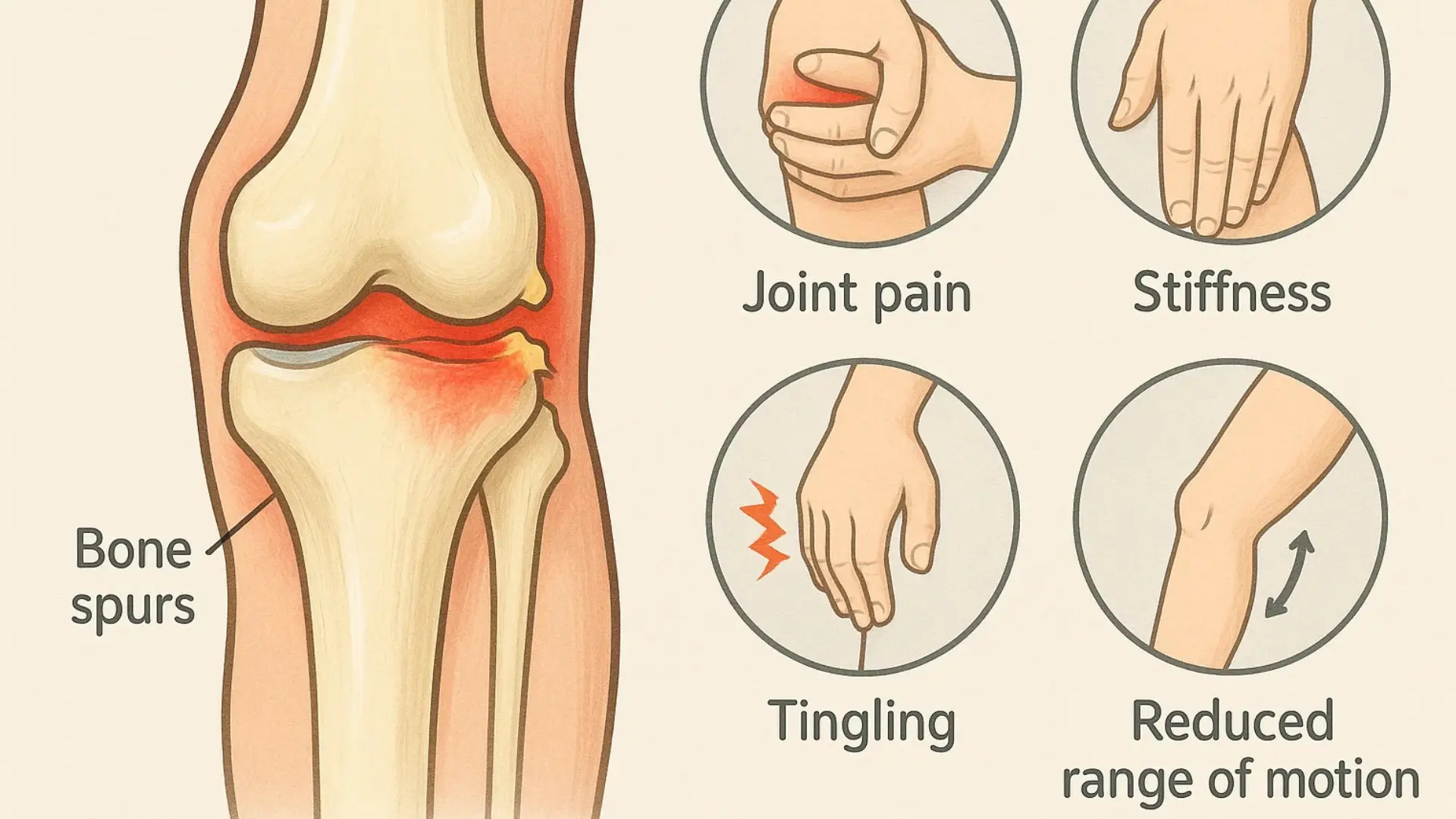
Bone Spurs Symptoms
- Pain near affected joints: Often worsens with activity or pressure.
- Stiffness: Particularly after periods of rest or inactivity.
- Reduced range of motion: Difficulty moving the joint fully.
- Numbness or tingling: If nerves are compressed by the spur.
- Swelling or inflammation: Around the affected area.
- Muscle weakness: Especially if spinal nerves are involved.
- Visible bumps: In some cases, bone spurs can be felt under the skin.
- Joint locking or catching: The Joint may feel stuck during movement.
- Discomfort while walking or standing: Common with heel spurs.
Can I Live With a Bone Spur?
Yes, many people live with bone spurs without significant problems, especially if the spurs are small and not pressing on nerves or tissues. In such cases, bone spurs may not cause any symptoms and can go unnoticed for years. However, when symptoms like pain, stiffness, or numbness occur, they can affect your daily life and mobility. Managing a bone spur typically involves rest, physical therapy, anti-inflammatory medications, and lifestyle changes such as weight management and posture correction.
Still, if conservative treatments fail and symptoms worsen, medical intervention becomes necessary. For those experiencing severe discomfort or limited mobility, bone spurs surgery in India is a highly effective and affordable option. With skilled orthopaedic surgeons and modern facilities, India offers advanced care for long-term relief. Ultimately, while it's possible to live with a bone spur, timely treatment ensures a better quality of life and prevents complications.
Can Bone Spurs Return After Surgery?
Bone spurs can return after surgery, although it’s relatively uncommon, especially if underlying causes are addressed. Surgery removes the existing spurs, but if joint stress, inflammation, or conditions like osteoarthritis persist, new spurs may develop over time.
Book Appointment
GET A FREE QUOTE
To reduce the risk of recurrence, doctors often recommend lifestyle changes such as weight management, proper posture, physical therapy, and avoiding repetitive stress on joints. Patients considering bone spur surgery in India can benefit from comprehensive post-surgical rehabilitation programs designed to minimise recurrence and support long-term joint health through personalised care, exercises, and expert orthopaedic guidance.
Bone Spur Surgery Success Rate in India
Bone spur surgery generally has a high success rate, with most patients experiencing significant relief. According to orthopaedic studies, success rates range between 85% to 95%, depending on the location of the spur, the surgical method, and the patient’s overall health.
Patients undergoing bone spur surgery in India benefit from experienced surgeons, advanced technology, and quality rehabilitation, contributing to excellent recovery outcomes. When post-operative care is followed properly, patients often regain full mobility and live pain-free. However, long-term success also depends on managing underlying causes like arthritis or joint stress.
- Spine bone spur surgery: ~85–90% success rate in reducing nerve pain and improving function
- Heel spur surgery: ~90–95% success in pain relief and walking comfort
- Shoulder/knee spur removal: >90% patients report restored joint mobility
- Minimally invasive techniques: Reduce recovery time and risk of complications
- Post-surgical physiotherapy: Crucial for regaining full motion and strength
- Hospital infrastructure in India: Modern tools and skilled teams boost success rates
- Patient age and general health: Younger and healthier patients tend to recover faster
- Lifestyle changes: Maintaining weight, avoiding joint stress help preserve the result
- Recurrence prevention: Depends on long-term inflammation control and joint care.
Bone Spur Surgery Cost in India
The cost of bone spur surgery in India is significantly lower compared to many Western countries, making it a preferred destination for affordable orthopaedic care. Depending on the location of the spur, type of surgery (open or minimally invasive), hospital reputation, and post-operative care, the cost typically ranges from ₹50,000 to ₹1,50,000.
Book Appointment
GET A FREE QUOTE
Prices may vary slightly based on city, surgeon expertise, and diagnostic requirements. Despite the affordability, Indian hospitals offer high-quality care with advanced technology, experienced orthopaedic surgeons, and comprehensive rehabilitation services, ensuring effective treatment outcomes at a reasonable price.
|
Type of Surgery |
Estimated Cost (INR) |
|
Heel Spur Surgery |
₹50,000 – ₹80,000 |
|
Spinal Bone Spur Surgery |
₹1,00,000 – ₹1,50,000 |
|
Shoulder/Knee Spur Removal |
₹70,000 – ₹1,20,000 |
|
Arthroscopic Bone Spur Removal |
₹90,000 – ₹1,40,000 |
|
Post-surgery Rehab & Therapy |
₹10,000 – ₹25,000 |
Types of Bone Spurs Surgery
Bone spur surgery is performed using different surgical methods based on the location and severity of the spur. The goal is to relieve pressure, reduce pain, and restore mobility. Common surgical techniques include open surgery, arthroscopy, and minimally invasive procedures. Each method is chosen according to the affected joint, overall patient health, and degree of tissue or nerve compression. Below are the major types of bone spur surgeries explained individually:

Types of Bone Spurs Surgery
Bone Spur Surgery Hospital
Bone spur surgery hospitals in India are known for their advanced technology, skilled orthopaedic surgeons, and cost-effective treatment options. These hospitals offer specialised care for conditions like spinal, heel, and joint bone spurs, ensuring effective diagnosis, surgical precision, and post-operative rehabilitation.
Many international patients prefer India for its affordable and high-quality care. We Care Health Services is a trusted facilitator that connects patients with top hospitals, assisting with treatment planning, travel, and recovery support, making the entire medical journey smooth and stress-free.
|
Hospital Name |
Location |
|
We Care Health Services |
Pan-India |
|
Medanta – The Medicity |
Gurugram |
|
Apollo Hospitals |
Chennai, Delhi, etc. |
|
Fortis Memorial Research Institute |
Gurugram |
|
Max Super Speciality Hospital |
New Delhi |
|
Kokilaben Dhirubhai Ambani Hospital |
Mumbai |
|
Shalby Hospitals |
Ahmedabad + others |
|
HOSMAT Hospital |
Bangalore |
|
Sanjay Gandhi Institute of Trauma & Orthopaedics |
Bangalore |
|
CARE Hospitals |
Hyderabad |
We Care Health Services for Bone Spurs Surgery in India
We Care Health Services is a trusted medical facilitator offering personalised care coordination for bone spur surgery in India. They connect patients with top-tier hospitals and experienced orthopaedic surgeons across the country. With a focus on affordability, quality treatment, and international patient support, they handle everything from hospital selection and appointment scheduling to visa assistance and post-operative care. Whether it’s heel, spine, or joint-related bone spurs, We Care ensures a smooth and stress-free treatment journey. Their end-to-end guidance makes India a reliable destination for safe, effective orthopaedic surgery.
Book Appointment
GET A FREE QUOTE
- Expert Hospital Network: Connects patients to India’s leading orthopedic hospitals and surgeons.
- Affordable Packages: Offers cost-effective treatment options without compromising on quality.
- Focus Keyword – Bone Spurs Surgery in India: Specialised in facilitating all types of bone spur surgeries across major cities.
- International Patient Support: End-to-end care including medical visa, airport pickup, and accommodation.
- Free Second Opinions: Helps you make informed decisions with expert consultations.
- Personalized Case Handling: Assigns a dedicated medical coordinator for every case.
- Fast Appointment Scheduling: Minimises waiting time for surgery.
- Post-operative Support: Coordinates follow-up care and rehabilitation services.
- 24/7 Assistance: Available round-the-clock for patient queries and emergencies.
- Trusted by Thousands: A highly rated name in Indian medical tourism for bone and joint surgeries.