
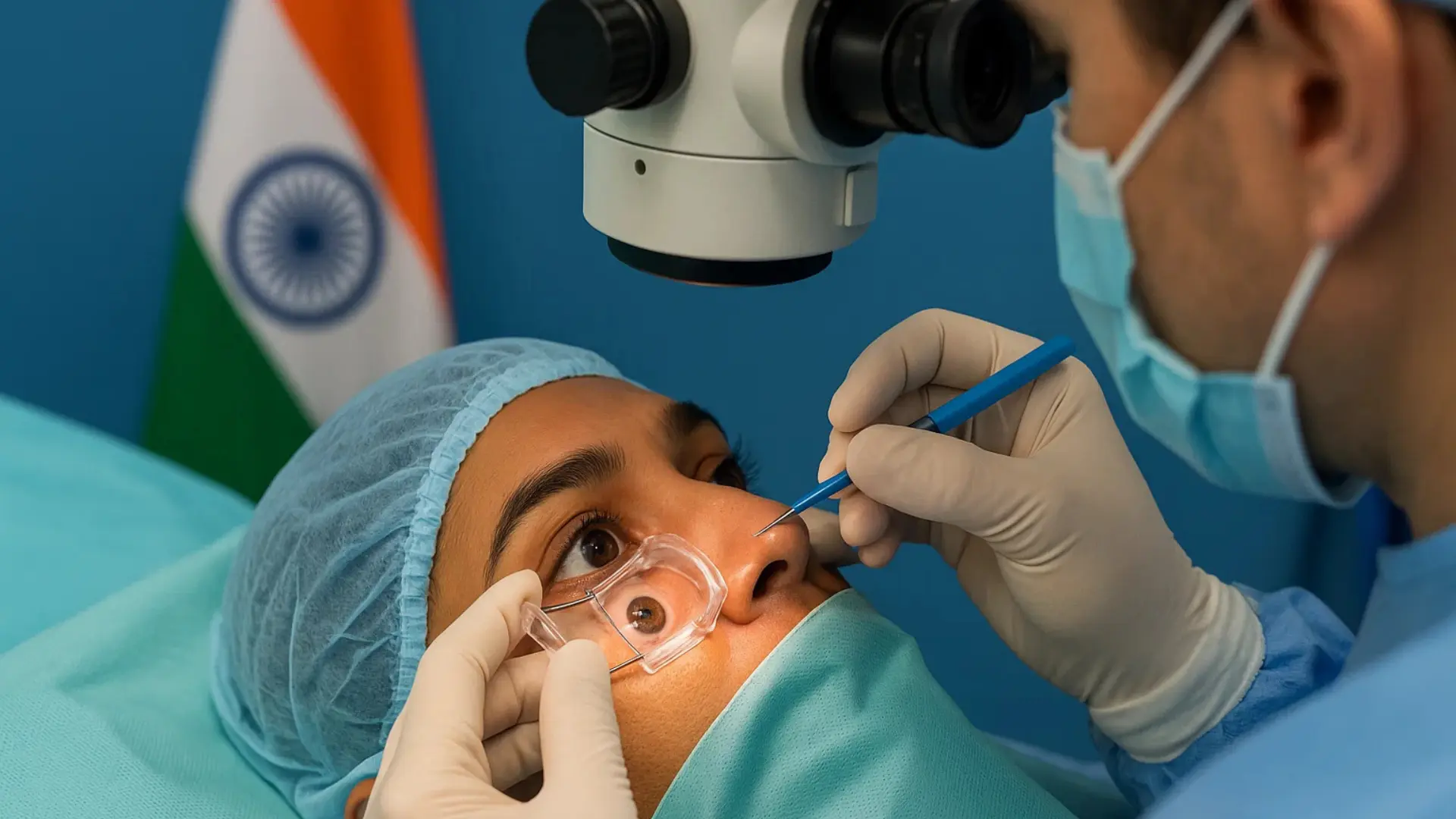
Irregularly shaped cornea is the reason for Astigmatism, and Astigmatism surgery in India is performed by expert surgeons and a team. In some rare cases, it is also found that irregularly shaped lenses can be a reason for astigmatism. It may be associated with nearsightedness or farsightedness.
The curvature gets into a different direction because of the irregular shape, and light entering into the eye gets affected. So there are different conditions, need a proper acknowledgement by the doctor is needed before surgery.
What is Astigmatism?
Astigmatism is a common eye condition caused by an irregularly shaped cornea or lens, which prevents light from focusing properly on the retina. Instead of being perfectly round, the cornea is shaped more like a football, leading to blurred or distorted vision at all distances.
Book Appointment
GET A FREE QUOTE
It can occur alongside nearsightedness or farsightedness and may cause symptoms like eye strain, headaches, or difficulty seeing at night. Astigmatism is usually present from birth but can also develop after an eye surgery or injury. It is easily corrected with eyeglasses, contact lenses, or refractive surgery like LASIK for clearer vision.
Types of Astigmatism
Astigmatism surgery in India is classified based on how the eye focuses light due to corneal or lens irregularities. The main types include myopic astigmatism, hyperopic astigmatism, and mixed astigmatism. Each type affects vision differently, depending on whether nearsightedness or farsightedness is present. Understanding the type helps eye specialists choose the most effective treatment, like glasses, lenses, or surgery.
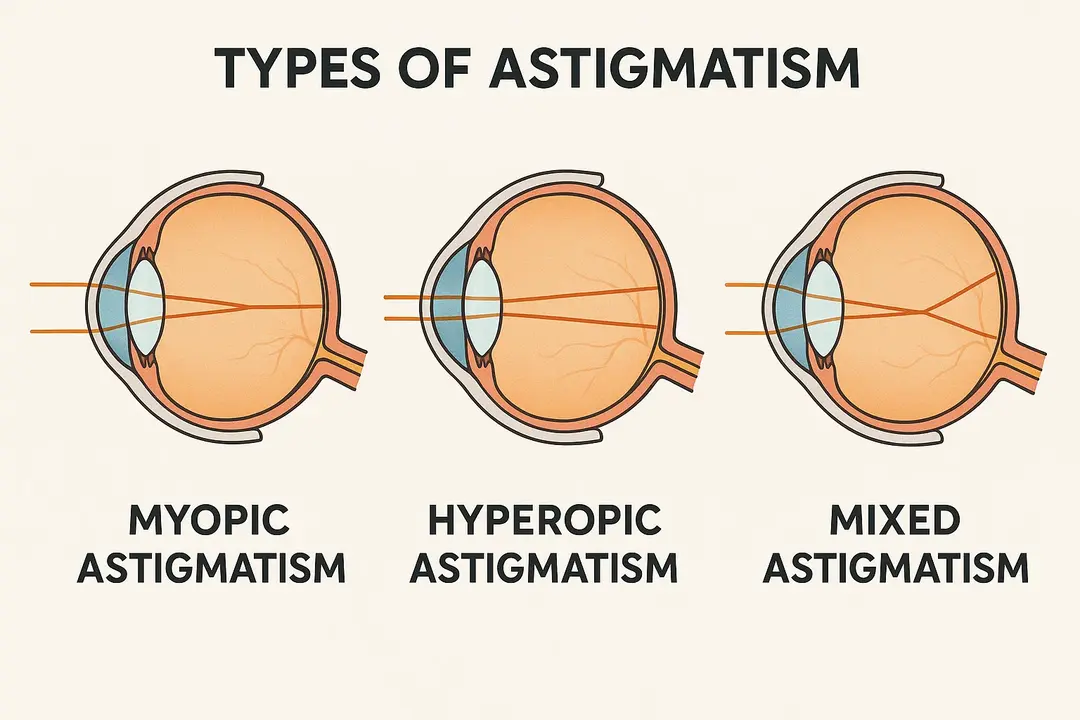
Types of Astigmatism
Astigmatism Treatment Surgery
Surgical options for astigmatism aim to reshape the cornea or replace the lens to improve how light focuses on the retina. Common procedures include LASIK, PRK, and toric intraocular lens (IOL) implantation. These treatments offer long-lasting vision correction, especially for moderate to severe astigmatism, reducing or eliminating the need for glasses or contact lenses.
- LASIK: Uses a laser to reshape the cornea.
- PRK (Photorefractive Keratectomy): Suitable for thinner corneas.
- Toric IOLs: Implanted during cataract surgery to correct astigmatism.
- SMILE: Minimally invasive laser technique for mild to moderate astigmatism.
- Limbal Relaxing Incisions (LRI): Tiny cuts on the cornea to relax steep curvatures.
How Successful is Astigmatism Surgery?
Astigmatism surgery in India is generally very successful, with high patient satisfaction and improved vision outcomes. Procedures like LASIK and PRK have success rates above 90% for mild to moderate astigmatism, often eliminating the need for glasses or contact lenses. Toric intraocular lens (IOL) implants, used during cataract surgery, also provide excellent correction for those with higher degrees of astigmatism.
Most patients experience clearer, more stable vision within weeks of recovery. However, the success depends on factors like the severity of astigmatism, corneal thickness, overall eye health, and the technology used. Some individuals may still need minimal corrective lenses after surgery, but significant improvement is usually achieved. Follow-up care and proper screening enhance both the effectiveness and safety of the procedure.
How to Permanently Remove Astigmatism?
Astigmatism can be permanently corrected through refractive eye surgery, which reshapes the cornea to allow light to focus correctly on the retina. The most common procedures include LASIK, PRK (Photorefractive Keratectomy), and SMILE (Small Incision Lenticule Extraction). These laser surgeries alter the curvature of the cornea, addressing the irregular shape that causes astigmatism.
Book Appointment
GET A FREE QUOTE
For patients undergoing cataract surgery, toric intraocular lenses (IOLs) can be implanted to correct astigmatism permanently. While surgery offers a long-term solution, not everyone is a candidate—factors like corneal thickness, eye health, and age matter. A thorough eye exam is essential to determine the best option. With proper post-operative care, these procedures typically provide permanent correction and excellent visual outcomes.
Which Surgery for Astigmatism?
Several surgical options are available to correct astigmatism by reshaping the cornea or replacing the eye's natural lens. The most common surgeries include LASIK, PRK, SMILE, and toric intraocular lens (IOL) implantation during cataract surgery. The best procedure depends on the severity of astigmatism, corneal thickness, eye health, and patient age. LASIK and PRK are ideal for younger individuals with stable prescriptions, while toric IOLs suit older patients with cataracts. Each method aims to reduce or eliminate dependence on glasses or contact lenses with long-term visual improvement. Here are some suggested Astigmatism surgery in India.
How much is a laser for astigmatism?- Astigmatism Surgery Cost India
The cost of laser eye surgery for astigmatism varies based on the procedure type, clinic reputation, surgeon expertise, and location. On average, LASIK and PRK range between ₹40,000 to ₹1,20,000 per eye in India, while SMILE surgery is slightly more expensive due to advanced technology. Prices may include pre-operative tests, surgery, and follow-ups.
Toric IOL surgery during cataract treatment can cost more due to the cost. It's important to consult an eye specialist to get an accurate quote based on your specific condition and suitability.
|
Surgery Type |
Estimated Cost (per eye) |
|
LASIK |
₹40,000 – ₹1,00,000 |
|
PRK |
₹35,000 – ₹90,000 |
|
SMILE |
₹70,000 – ₹1,20,000 |
|
Toric IOL Implant |
₹60,000 – ₹1,50,000 |
Hospitals for Astigmatism Surgery in India
India offers world-class eye care with advanced technology for astigmatism correction, including LASIK, PRK, SMILE, and Toric IOL implantation. Leading hospitals have experienced ophthalmologists, modern laser systems, and comprehensive pre- and post-operative care. Cities like Delhi, Mumbai, Chennai, and Bangalore host top institutions known for their success rates, safety, and affordability.
Book Appointment
GET A FREE QUOTE
Many hospitals are NABH or JCI-accredited, ensuring global standards. Patients from India and abroad prefer these centres for high-quality outcomes, shorter recovery, and transparent pricing. Below is a list of 15 top eye hospitals known for excellence in astigmatism treatment.
|
Hospital Name |
City |
|
Sankara Nethralaya |
Chennai |
|
AIIMS (Dr. R.P. Centre) |
New Delhi |
|
LV Prasad Eye Institute |
Hyderabad |
|
Narayana Nethralaya |
Bangalore |
|
Centre for Sight |
Multiple Cities |
|
Dr. Agarwal's Eye Hospital |
Chennai |
|
Shroff Eye Centre |
New Delhi |
|
Max Healthcare Eye Department |
New Delhi |
|
Fortis Memorial Research Institute |
Gurugram |
|
Apollo Hospitals |
Chennai |
|
Nethradhama Eye Hospital |
Bangalore |
|
Vasan Eye Care |
Multiple Cities |
|
Aravind Eye Hospital |
Madurai |
|
Netralaya Super Speciality Hospital |
Mumbai |
|
Eye7 Chaudhary Eye Centre |
New Delhi |
We Care Health Services for Astigmatism Surgery in India
We Care Health Services offers a seamless pathway for astigmatism surgery in India by connecting you with accredited hospitals and experienced ophthalmologists across Delhi, Mumbai, Chennai, Bangalore, and Hyderabad. They provide transparent pricing packages for procedures like LASIK, PRK, SMILE, and Toric IOL implants.
Typical costs range from USD 600–1,500 per eye, or about USD 2,000 for SMILE both eyes. Beyond surgery, We Care assists with logistics, consultations, and post-operative care—ideal for medical tourists seeking quality treatment under expert supervision. While they’re not direct healthcare providers, their service helps simplify hospital coordination and enhance your safety and convenience.
We Care Health Services is a trusted medical tourism facilitator offering comprehensive support for astigmatism surgery in India. They partner with top eye hospitals and surgeons across cities like Delhi, Chennai, Mumbai, and Bangalore. Services include:
- Access to world-class LASIK, PRK, SMILE, and Toric IOL procedures
- Cost-effective packages for both domestic and international patients
- Assistance with hospital selection, appointment scheduling, and travel logistics
- Collaborations with JCI- and NABH-accredited hospitals
- Transparent pricing and no hidden costs
- Multilingual support and patient coordination
- Ideal for individuals seeking high-quality, affordable eye care
- Personalised guidance through consultation, surgery, and recovery