
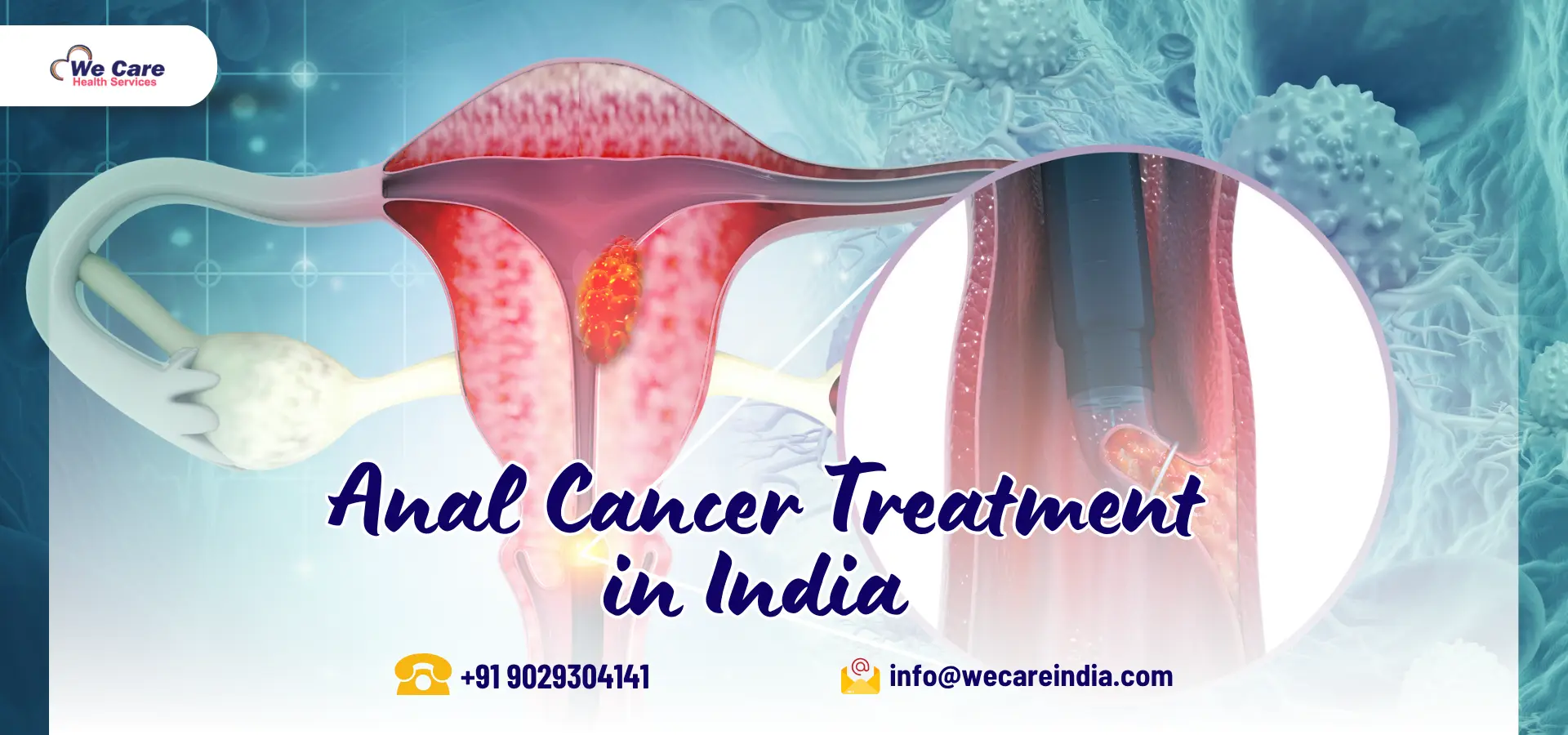
The anal cancer treatment in India is the best, and it is a kind of cancer that forms because of the excessive part of the large intestine. If it is not noticed in the early stage, then it may cause death and may spread to different parts of the body. It is good if it is diagnosed. In the early stages, it looks like a fistula or a protruding skin in the anal area. Most of the time, doctors see it similarly, but when it loses its capability of contact Inhibition, then it is very harmful.
Anal cancer is a disease in which malignant (cancer) cells form in the tissues of the anus.
The anus is the end of the large intestine, below the rectum, through which stool (solid waste) leaves the body.
The anus is formed partly from the outer skin layers of the body and partly from the intestine. Two ring-like muscles, called sphincter muscles, open and close the anal opening to let stool pass out of the body. The anal canal, the part of the anus between the rectum and the anal opening, is about 1½ inches long.
Stages of the Anal Cancer
Anal Cancer treatment in India, searched for the patterns in which it is diagnosed. In the Initial stage, it starts in the skin and then increases in centimetres. The top layer of the anal tissue is made up of cuboidal tissues, and in the upper section, there are some columnar cells. These columnar cells are prone to malignancy, even interferons can’t protect them.
- Stage 0: - anal cancer is a very early cancer. The cancer is found only in the top layer of anal tissue.
- Stage I: - The cancer has spread beyond the top layer of anal tissue, and is smaller than 2 centimeters in diameter. It has not spread to the muscle tissue of the sphincter.
- Stage II: - Cancer has spread beyond the top layer of anal tissue and is larger than 2 centimeters in diameter, but has not spread to nearby organs or lymph nodes (small, bean-shaped structures found throughout the body that produce and store infection-fighting cells).
- Stage IIIA: - Cancer has spread to the lymph nodes around the rectum or to nearby organs such as the vagina or bladder.
- Stage IIIB: - Cancer has spread to the lymph nodes in the middle of the abdomen or in the groin, or the cancer has spread to both nearby organs and the lymph nodes around the rectum.
- Stage IV: Cancer has spread to distant lymph nodes within the abdomen or to organs in other parts of the body.
- Recurrent: - Recurrent disease means that the cancer has come back (recurred) after it has been treated. It may come back in the anus or in another part of the body.
Types of Anal Cancer
Anal cancer is a rare type of cancer that develops in the tissues of the anus, the opening at the end of the rectum through which stool leaves the body. It can affect both men and women and varies in type depending on the cells involved. Understanding the different types is crucial for diagnosis and treatment planning.
Risk factor is anything that increases a person’s chance of developing cancer. Some risk factors can be controlled, such as smoking, and some cannot be controlled, such as age and family history. Although risk factors can influence the development of cancer, most do not directly cause cancer. Some people with several risk factors never develop cancer, while others with no known risk factors do. However, knowing your risk factors and communicating them to your doctor may help you make more informed lifestyle and health-care choices.
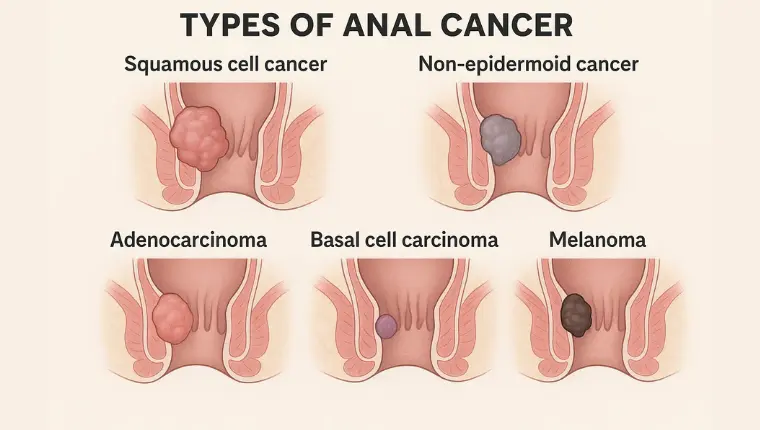
Types of Anal Cancer
Squamous cell cancer
About 9 out of 10 (90%) anal cancers are squamous cell cancers, sometimes called epidermoid cancers.
There are 3 types of squamous cell anal cancer
- Large cell keratinising
- Large cell non-keratinising (also called transitional)
- Basaloid
Non-keratinising and basaloid cancers are sometimes grouped as ‘cloacogenic’ anal cancer. A keratinising cancer has keratin (the protein that forms your hair and nails) in the cancer cells. This type of anal cancer starts in the transitional zone of the anal canal, where the squamous cells meet the glandular cells. All the squamous cell types of anal cancer are treated in the same way.
Non-epidermoid cancer
The other 1 out of 10 anal cancers (10%) are adenocarcinoma, small cell cancers, ' undifferentiated' cancers (known as basaloid cancers), and melanomas. This group is known as non-epidermoid cancers. They behave differently to squamous cell anal cancers, so the treatment is different.
Cancers that start at the anal margin usually look more like normal cells (they are ' well differentiated'). Anal margin tumours are more common in men than women. Cancers that start higher up in the anal canal are more common in women.
Adenocarcinoma
This is a rare type of anal cancer that affects the glandular cells that produce mucus in the anal canal. Only 5% of anal cancers are this type. This type of anal cancer is treated in the same way as rectal cancer.
Basal cell carcinoma
This is a type of skin cancer, and it develops in the area around the anus. You can find information about the treatment of basal cell cancers in the skin cancer section of Cancer Help UK.
Melanoma
This is another type of skin cancer. These cancers develop from the cells that produce melanin, the pigment or colour of the skin. Treatment is the same as for other melanomas.
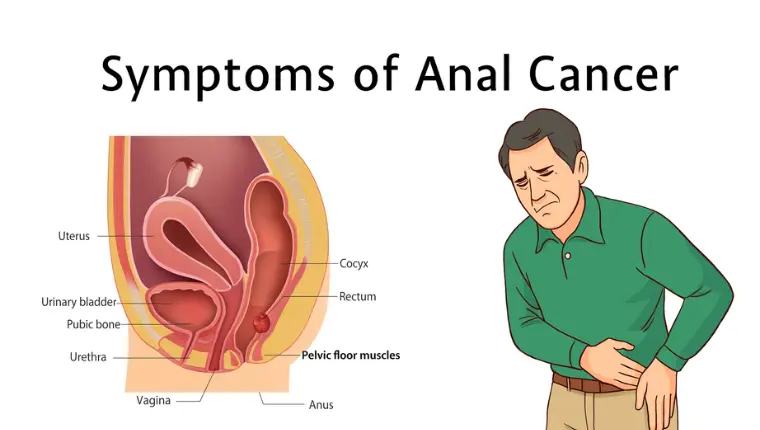
Symptoms of the Anal Cancer
Anal cancer often develops slowly, and its early symptoms can be subtle, making awareness crucial for timely diagnosis and treatment. Symptoms can vary depending on the tumor type, size, and location, but several common signs may indicate the presence of anal cancer.
Symptoms of the Anal Cancer
Key symptoms include:
- Rectal Bleeding: Blood in the stool or on toilet paper, often mistaken for hemorrhoids.
- Anal Pain or Discomfort: Persistent pain, pressure, or a feeling of fullness in the anal area.
- Itching or Irritation: Chronic itching around the anus that does not improve with standard treatments.
- Lump or Mass: A small growth, bump, or thickening near the anal opening, sometimes painful to touch.
- Changes in Bowel Habits: Unexplained diarrhea, constipation, or a change in stool shape and frequency.
- Mucus Discharge: Unusual mucus from the anus that may be mixed with blood.
- Swelling: Enlargement of nearby lymph nodes in the groin area, sometimes noticeable as lumps.
- Unexplained Weight Loss or Fatigue: Occurs in advanced stages when cancer affects overall health.
Since these symptoms can resemble more common conditions like hemorrhoids or infections, it’s essential to consult a doctor if they persist. Early detection and diagnosis through physical examination, biopsy, or imaging significantly improve treatment outcomes and survival rates.
Diagnosis of the Anal Cancer
Possible signs of anal cancer include bleeding from the anus or rectum or a lump near the anus.
These and other symptoms may be caused by anal cancer. Other conditions may cause the same symptoms. A doctor should be consulted if any of the following problems occur: -
- Bleeding from the anus or rectum.
- Pain or pressure in the area around the anus.
- Itching or discharge from the anus.
- A lump near the anus.
- A change in bowel habits.
Tests that examine the rectum and anus are used to detect (find) and diagnose anal cancer.
- Physical exam and history: - An exam of the body to check general signs of health, including checking for signs of disease, such as lumps or anything else that seems unusual. A history of the patient's health habits and past illnesses and treatments will also be taken.
- Digital rectal examination (DRE): - An exam of the anus and rectum. The doctor or nurse inserts a lubricated, gloved finger into the lower part of the rectum to feel for lumps or anything else that seems unusual.
Anal Cancer Treatment in India
Anal cancer treatment in India combines advanced medical care with personalized approaches to ensure effective outcomes. Treatment options depend on the type, stage, and patient health and typically include surgery to remove tumors, radiation therapy to target cancer cells, and chemotherapy to prevent spread.
Some cases may use a combination of these methods for better results. Indian cancer centers also offer minimally invasive procedures and supportive care, including pain management and nutritional guidance. With experienced oncologists, modern equipment, and cost-effective treatment plans, India provides high-quality care for both domestic and international patients seeking anal cancer management.
- Anoscopy: - An exam of the anus and lower rectum using a short, lighted tube called an anoscope.
- Proctoscopy: - An exam of the rectum using a short, lighted tube called a proctoscope.
- Endo-anal or endorectal ultrasound: - A procedure in which an ultrasound transducer (probe) is inserted into the anus or rectum and used to bounce high-energy sound waves (ultrasound) off internal tissues or organs and make echoes. The echoes form a picture of body tissues called a sonogram.
- Biopsy: - The removal of cells or tissues so they can be viewed under a microscope by a pathologist to check for signs of cancer. If an abnormal area is seen during the anoscopy, a biopsy may be done at that time.
Cost of the Anal Cancer Treatment in India
Anal cancer treatment costs in India vary depending on the type, stage, and treatment approach. Surgery, such as tumor resection, typically ranges from ₹2,00,000 to ₹6,00,000. Chemotherapy per cycle can cost between ₹15,000 and ₹50,000, while a full course of radiation therapy may range from ₹1,00,000 to ₹3,50,000. Advanced options like immunotherapy or targeted therapy can cost ₹2,00,000 to ₹10,00,000 depending on the drugs used. Overall, the total cost for a complete treatment plan—including surgery, chemoradiation, and follow-ups—usually falls between ₹3,20,000 and ₹10,50,000, with variations based on hospital, room type, and additional supportive care.
|
Treatment Type |
Approximate Cost (INR) |
|
Surgery |
₹2,00,000 – ₹6,00,000 |
|
Chemotherapy |
₹15,000 – ₹50,000 |
|
Radiation Therapy |
₹1,00,000 – ₹3,50,000 |
|
Immunotherapy |
₹2,00,000 – ₹10,00,000 |
Anal Cancer Experts in India
Anal Cancer Doctors in India can give treatment via radiotherapy, chemotherapy, and different types of preventive measures. The treatment scenario is strong, and with the commitment of the staff and doctors. The best doctors of the Indian hospitals are residing in the metro cities like Delhi, Mumbai, Kolkata, Chennai, and Hyderabad.
With the help of our data and our research here are some of our best doctors from the different cities. You can choose them without any hesitation and can contact us for the suggestions.
|
Doctor |
Specialty |
Location |
|
Dr. Vinod Raina |
Medical Oncology (GI cancers) |
Gurgaon / Delhi‑NCR |
|
Dr. Chetan Kantharia |
Surgical Gastroenterology |
Mumbai |
|
Dr. Chintamani Godbole |
Colorectal Surgery |
Mumbai |
|
Dr. Sandeep Nayak |
Surgical Oncology |
Bangalore |
We Care Health Services for Anal Cancer Treatment in India
We Care Health Services in India offers comprehensive, patient-centered care for anal cancer, making the treatment journey smoother and less stressful. Their hospitals are equipped with specialized departments for medical oncology, surgical oncology, and radiation therapy, ensuring that every patient gets the right care at every stage.
Highlights of We Care Health Services:
- Complete Cancer Care: From diagnosis and chemotherapy to surgery and radiation, all treatments are coordinated under one roof.
- Modern Technology: Advanced imaging and precision radiation tools for accurate treatment.
- Experienced Specialists: Multidisciplinary teams design personalized treatment plans.
- Patient Support: Assistance with travel, accommodation, and coordination, especially for those coming from other cities or countries.
- Affordable Options: Financial guidance and support for insurance and payment plans.
- Follow-Up Care: Ongoing monitoring, palliative care, and rehabilitation to support recovery and well-being.
Choosing We Care means you receive expert medical care combined with emotional support, making the journey less overwhelming. The coordinated approach of surgeons, oncologists, and therapists ensures all aspects of treatment are addressed. Patients can focus on healing while the hospital team manages logistics and care planning, creating a compassionate, efficient, and supportive environment for recovery.
Conclusion
We Care Health Services provides a holistic and compassionate approach to anal cancer treatment in India. By combining advanced medical technology, experienced specialists, and dedicated patient support, they ensure that every aspect of care—from diagnosis to follow-up—is carefully managed. Patients benefit not only from effective, personalized treatment plans but also from emotional and logistical support, making the journey smoother and less stressful. Choosing We Care means accessing high-quality care in a nurturing environment, giving patients confidence and hope throughout their treatment and recovery.