Fill in your details, we will contact you within 24 hours.
🔒 Your information is 100% safe and confidential.
There are different types of knee replacement surgery, such as arthroplasty, knee effusion, and knee replacement. These are based on the area that needs recovery; there are certain cases with complete replacement, such as osteoarthritis and rheumatoid arthritis. In India, you can choose a free consultation with doctors and receive all the guidance about the treatment suggestions.
There are different cases of knee replacement surgery, in which India is viewed as the best treatment. If you are looking for replacements and no medications, physiotherapy, and injections providing you relief, then it is better to choose India for affordable services and the best health outcomes.
Most of the time, doctors give you remarks of replacement is needed or not. You can check your symptoms; some conditions need replacement, only one of them is osteoarthritis. The other condition can be accidental injury or inflammation in the knee for a long time. Here are the symptoms that you can check for the knee replacement:
You can ask different questions at the centre that you are approaching for the knee surgery. There are different standards of hospitals, try to choose one with the NABH accreditation because they have good doctors with specialised team members. Knee replacement surgery is an orthopedic procedure, in metro cities of India, you can find best doctors and hospitals for that.
With the advancements in technology, Indian hospitals have included minimally invasive methods of surgery. There are techniques like robotic-assisted knee replacement, subvastus approach, or midvastus approach of operation. As the level of the surgery increases, A-grade hospitals are the ones to include them. Here is the best criterion that you can use to choose any specific centre:
There are mainly four types of protocol which need to be taken care of under any medical condition. These criteria are patient evaluation, safe surgery, early mobilization, and rehabilitation. A doctor and a reputed hospital have to take care of all the criteria mentioned in the list. They are only followed by the government-recognized bodies.
The process of evaluating a patient before knee surgery begins with gathering an accurate picture of the patient.
It should include background information about health history, type of injury, physical exam, and how bad the knee damage is.
Tests such as X-ray, blood tests, E.C.G., etc. can be used to see if a patient will be able to have a successful surgery. Any medical conditions that may lead to wounds, e.g., Diabetes, hypertension, or heart problems, etc., will be controlled if possible before having surgery.
This will help to reduce the likelihood of injuries and help with successful surgery and recovery time.
The emphasis of safe surgical practice is to avoid problems during the surgery and ensure that the patient gets a successful implant.
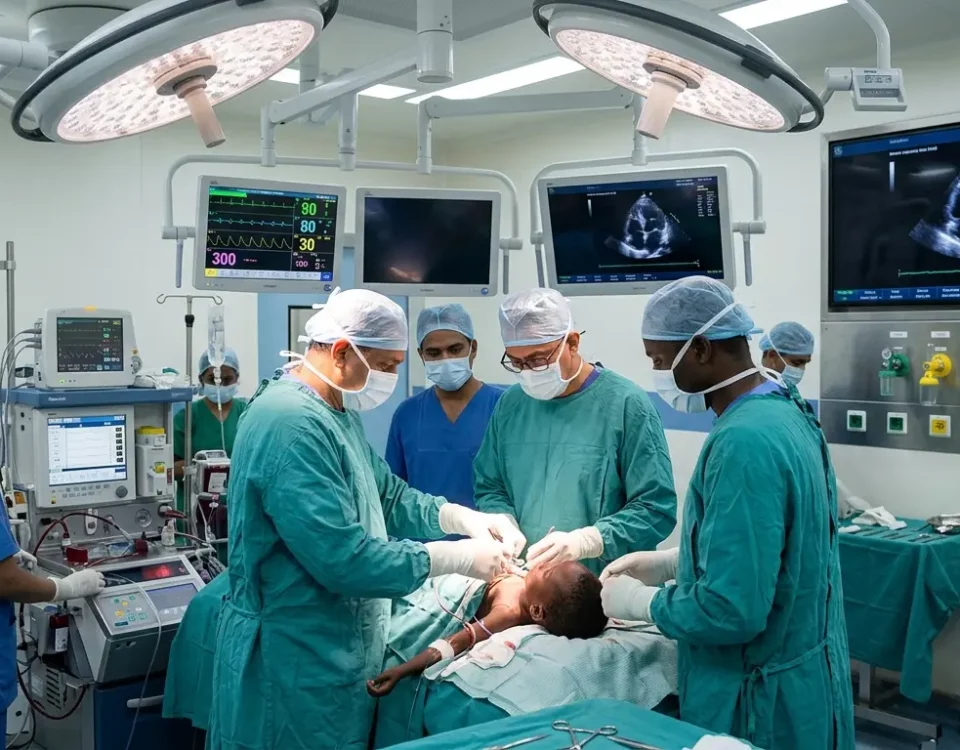
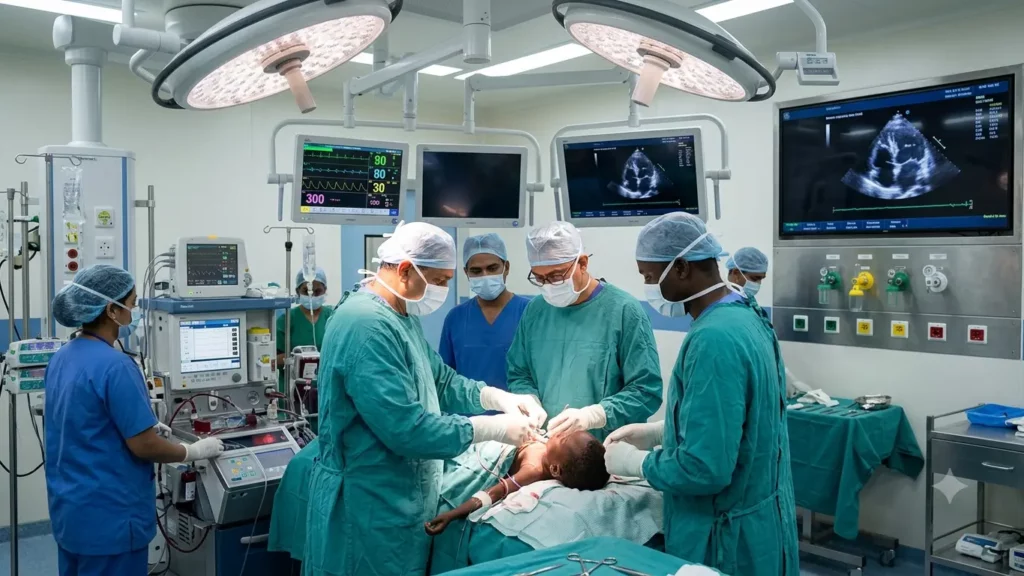
The operation is carried out by an experienced musculoskeletal team in a sterile manner within a sterile environment using imaging, precision instruments, and implant materials.
It will provide maximum opportunity for obtaining optimal alignment and function of the knee.
The patient's vitals are being continuously monitored by the anesthesiologist, and strict infection control measures, surgical checklists, and clinical guidelines. Patient's safety and a greater likelihood of long-term success.
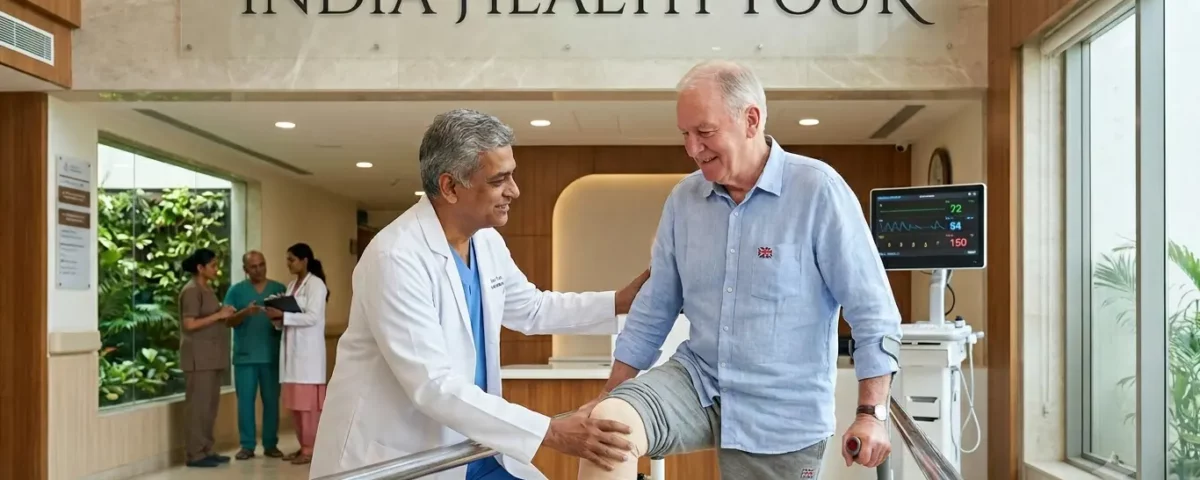
After knee replacement surgery, patients start early mobilization almost immediately; typically on the first day post-operatively, or within 24 hours of surgery.
A physiotherapist provides directions and assistance to help a patient stand, transfer to/from a chair, move about, and perform basic exercises as well.
Early mobilization has several benefits, including improved blood circulation, decreased risk of developing a DVT (deep vein thrombosis) or blood clot, decreased risk of muscle atrophy or weakness, increased joint range of motion, and an increase in the patient's confidence and ability to return to previous levels of function safely and quickly.
Recovery following knee replacement surgery relies heavily on rehabilitation.
Rehabilitation consists of a structured physical therapy program that includes strength training, flexibility training, practicing walking, and other rehabilitative activities.
The goals of rehabilitation are to reduce pain, increase range of motion, regain strength in the leg, and improve overall mobility.
Rehabilitation will progress based on the patient's individual condition and recovery rate, with an emphasized level of engagement by the patient.
The best possible outcome(s) for achieving an optimal level of functionality, improved long-term joint stability, and improved quality of life.
The very first procedure starts from your choice to take a surgery from Indian hospital. The most probable factor is affordable services with technology and the best doctors. There are both holistic approaches and technological ways to get rid of the post-surgical pain. Many other patients want to have a comfortable space with doctors, which is not sustained nowadays by the European countries' hospitals.
Along with the development in technology, all these factors came up at a single time. Now, you have to come to India with a complete fare procedure. You have to consult with doctors and then have to show your diagnostic reports. The next step is to remark on the surgery for replacement or transplant.
You have to consult with a doctor regarding your condition. It is better to take your reports for clear medical advice. An Orthopaedic examination is typically the initial step before planning any neurosurgery in India. This health test evaluates muscle strength, reflexes, sensation, balance, coordination, and cognitive abilities of the person undergoing replacement surgery. There are some advanced procedures included in this method, like MRI, CT scans, and some special laboratory tests.
There are different healthcare agencies that are making everything available for the patients. They give you proper guidance about the hospitals and the medical procedure, including stay facilities. You can hire them for your ease, and they will issue medical visas and will guide you about doctors and hospitals.
When looking to get surgery in India, international patients should apply for their medical visa after they have received an invitation letter from an accredited hospital recommending treatment. Here is the list of documents required for a Medical Visa:
A passport, stamped visa application form, recent photographs of yourself, and your medical records will generally be required to submit the application to the Indian Consulate or Visa Portal that will be used to facilitate your getting a medical visa from the individual consulate or embassy in your country. Once you receive your visa and are ready to travel to India for your treatment, as well as any follow-up care that may also be needed after your initial procedure, you can travel to India and obtain treatment at one of the accredited hospitals listed below.
Some basic documents are required by the FRRO, and this registration is required for long-term treatment. If your doctor is asking you to stay for more than 180 days, then you have to register for FRRO. During an extended time period, it is necessary to have information about the stay for protection and legal procedures.
There is a complete follow-up about the pain and stability for some weeks. Foreigners undergoing knee replacement surgery in India typically stay for several weeks after the procedure. It is better to receive early rehabilitation and for a follow-up evaluation to see how well their wounds have healed, how well they can move around, and how well they are recovering overall before traveling back home.
In addition to the surgeon evaluating each patient's recovery and whether or not he/she will be released for travel, patients need to take precautions. For example, while on board their plane, including wearing compression socks, remaining well-hydrated, and exercising his/her legs in order to minimize the chances of having a clot develop. Patients should have all of their medical records and prescriptions with them when traveling.
We Care Health Services is giving the best out of the procedures followed. There are different surgeries that need extended time periods and regular follow-up. Some others are complicated with some risks; we are handling all cases of surgery with 18 years of prior experience. This journey makes us unique, and we are standing in the first row in terms of facilities.
We will be taking care of you after surgery, and if it is needed, then we will plan your stay too. We are not limited to one or two surgeries; most of the advanced surgeries and patient cases are handled by us. Types of replacement surgeries, transplant surgeries, and graft surgeries are considered complex, but not with us. Here are some of our unique approaches toward the treatment procedure:
India is a relatively affordable place to get knee replacement surgery when compared with most Western nations, making it an attractive location for medical tourists. The average cost of knee replacement surgery in India is between $4000 and $8000. In Indian rupees, that's between ₹3.3 lakh and ₹6.7 lakh, depending on the hospital, city involved, surgeon's experience, implant specifications, and whether the surgery is completed using partial, total, or robotic-assisted methods.
Typical estimates include surgeon's fees, nursing care, hospital stay, as well as basic investigative tests. Total treatment costs in India remain extremely low, even after accounting for travel and lodging expenses, while producing high-quality results.
The success rate of knee replacement surgery is higher than in any other country. There are different parameters with age and the health of the patients. Knee replacement with third-degree deformity is 50 to 60%, and with normal healthy patients, it is more than 85%. Here is the table showing all kinds of success rates:
| Parameter | Details |
|---|---|
| Overall Success Rate | 90–95% |
| Pain Relief | Significant reduction in knee pain in most patients |
| Improvement in Mobility | Most patients regain better movement and walking ability |
| Implant Longevity | More than 90% of implants last 15–20 years or longer |
| Hospital Stay | Usually 2–5 days |
| Walking After Surgery | Within 24–48 hours with assistance |
| Return to Daily Activities | 6–12 weeks |
| Full Recovery | 3–12 months |
| Factors Affecting Success | Age, overall health, weight, implant quality, and rehabilitation compliance |
| Long-Term Outcome | Improved quality of life, independence, and joint function |
Fill in your details, we will contact you within 24 hours.
🔒 Your information is 100% safe and confidential.