

Total Knee replacement surgery in India is suggested when the previous surgery fails to work properly. Severe knee pain affects millions in India today. With rising cases of knee osteoarthritis from urban lifestyles and older age groups, many turn to surgery for relief. Total knee replacement surgery in India offers a smart path for those seeking quick fixes without breaking the bank.
India stands out as a top spot for medical travel. Folks from the US, UK, and beyond flock here for expert care in orthopedics. This guide breaks down everything you need: who qualifies, how much it costs, top surgeons to pick, and steps to heal right after.
For Free Online Consultation
GET A FREE QUOTE
The total knee replacement is a more complex procedure, often because there is a reduced amount of bone to place the new total knee into. Extra bone may be required, and this is usually received from a bone bank. Bone bank (allograft bone) is safe and has been. Here, we will talk exclusively about the treatment and Total surgery for the knee. ‘
Primary Total Knee Replacement Surgery
Primary total knee replacement, or TKR, helps millions walk without pain. But over time, some implants fail. This leads to the need for a second knee surgery. India stands out as a top spot for these fixes. You get world-class care at a fraction of the price found in the US or Europe. Skilled orthopedic teams here handle complex cases with ease.
Why Choose India for Total Knee Replacement (TKR)?
India draws patients worldwide for total knee replacement surgery. The mix of low costs and high skill makes it hard to beat. You get world-level care at a fraction of home prices.
This gap comes from lower hospital fees and skilled labor costs. Affordable knee replacement packages in India often bundle everything: surgery, stay, and basic rehab. You save up to 80% without skimping on safety. Think of it like buying a reliable car overseas. The value hits hard when quality matches the deal.
Understanding the Total Knee Replacement Procedure in the India
Total knee replacement in India follows global steps but adapts to local needs. You start with checks to ensure you're ready. The goal: swap worn knee parts with metal and plastic for pain-free motion.
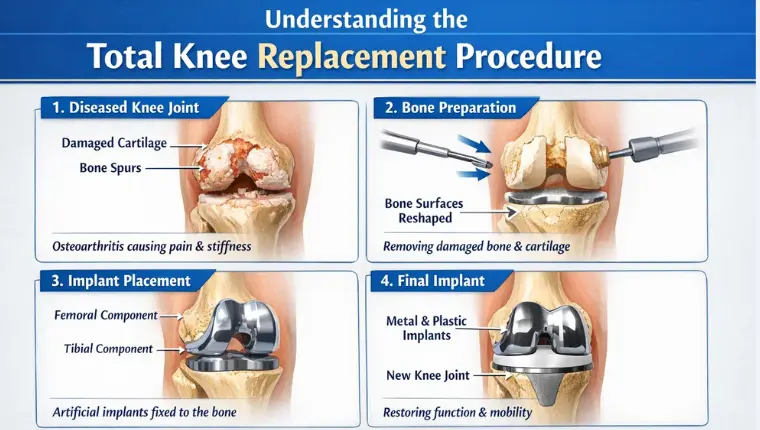
Understanding the Total Knee Replacement Procedure
Patient Candidacy and Pre-Operative Assessment
Docs first look at your knee pain level and daily limits. X-rays and MRIs spot bone wear and joint damage. For travelers, they check heart health and blood work too. Bring these reports before you fly: recent X-rays, blood tests, and allergy lists. This speeds up your visit. A quick pre-op scan in India confirms all is set. Most folks over 50 with bad arthritis qualify. But talk to your home doc first.
Surgical Techniques Available
Standard total knee arthroplasty cuts through the front of the knee. It removes damaged bits and fits new ones in place. This method works well for most. Minimally invasive total knee replacement uses smaller cuts. You heal faster with less pain. Cemented implants lock in right away; cementless ones grow into bone over time. India offers both, based on your age and bone strength. Your surgeon picks the best fit.
Implant Quality and Brand Availability
Hospitals stock top brands like Zimmer Biomet and Stryker. These parts meet FDA standards and last 15-20 years. No cheap knockoffs here—quality rules. DePuy Synthes options come in various sizes for custom fits. Prices stay low since India imports in bulk. You get durable knees that handle daily walks and stairs.
Tiered Cost Structures: Metropolitan vs. Non-Metropolitan Centers
In Delhi or Mumbai, expect $6,000 to $10,000 for a full knee replacement package. Bangalore matches this with its tech-savvy hospitals. These spots offer extras like English-speaking staff. Smaller cities like Chennai or Pune drop to $4,000-$7,000. You still get solid care, but options might thin out. Travel costs could even out the savings. Pick based on your comfort—big cities shine for international folks.
What the Package Typically Includes (Inclusions and Exclusions)
Most deals cover surgeon fees, anesthesia, and a 4-5 day hospital stay. Implants and basic meds fall in too. Add 10-15 physio sessions post-op. Watch for extras: private rooms add $500, or advanced imaging ups the bill. Air ambulance or visa help? Not usually included—budget separate. Here's a quick checklist:
- Included: Surgery, implants, standard room, routine drugs, initial rehab.
- Excluded: Pre-op tests if needed, extended stay, travel insurance.
Insurance and Medical Escrow Options for International Patients
Many US or UK plans cover part of India trips—check yours. Hospitals accept direct billing from big insurers. For cash payers, escrow holds funds till discharge.
Credit cards work fine, and some offer zero-interest plans. Wire transfers secure big amounts. Always get a detailed quote upfront.
This setup eases money worries so you focus on healing.
Selecting the Right Surgeon and Hospital
Your choice shapes the outcome of total knee replacement in India. Look for pros with proven tracks. Start online, then chat via video.
Key Credentials to Verify
Seek surgeons with 10+ years in knee ops and fellowships abroad. Groups like the Indian Orthopaedic Association list trusted names. Check success rates over 95%. Fellowships from US or UK spots add trust. Ask how many TKRs they do yearly—at least 200 keeps skills sharp. This info comes from hospital sites or direct asks.
Hospital Accreditation and Patient Testimonials
NABH or JCI stamps mean clean, safe care. They check staff training and gear upkeep. Top picks: Max Healthcare in Delhi or Manipal in Bangalore. Read reviews on real sites like Patients Beyond Borders. Look for patterns in pain control and staff kindness. Skip fakes—stick to dated, detailed stories.
The Consultation Process: Maximizing Virtual Appointments
Book a video call weeks before travel. It saves time and builds rapport. Prep questions like these:
- What technique fits my knee type?
- What's your complication rate?
- How soon can I walk after?
For Free Online Consultation
GET A FREE QUOTE
Understanding the Failure of Primary Knee Implants
Knee implants don't last forever. Wear and tear hit hard over the years. When they fail, daily tasks turn tough. Rates of primary TKR keep climbing worldwide. In India alone, thousands get these procedures yearly. Yet, about 10-15% may need Totals down the line. Factors like age and activity play a role. Total knee replacement surgery in India draws patients from abroad for its mix of expertise and value
Other culprits include implant wear, instability, or breaks. Wear thin plastic parts over time. Instability makes the knee wobble like a loose door hinge. Fractures in the implant or bone add more trouble. Studies show primary implants last 15-20 years for most folks. But active people or those with health issues see failures sooner. In India, doctors spot these issues early with routine checks.
The Role of Specialized Centers in India
Totals beat primaries in complexity. You need pros who handle bone gaps and infections daily. Top Indian centers boast advanced tools. Think high-tech imaging and labs that ID germs quick. They stock special implants for tough cases. Places like Apollo or Fortis draw global patients. Teams here do hundreds of Totals a year. This experience cuts risks and boosts success.
Total knee replacement surgery cost in India
Total knee replacements in India cost less than in much of the developed world; hence, India's popularity as a place to have them done. Prices for knees can be anywhere from INR 1,50,000 to INR 4,00,000, depending upon factors such as location, the level of experience of your surgeon, and the kind of prosthesis being used.
|
Type of Hospital |
Basic Implant |
Standard Implant |
Premium Implant |
|
Government/Trust |
₹1,50,000 |
₹1,80,000 |
₹2,20,000 |
|
Mid-Range Private |
₹2,00,000 |
₹2,50,000 |
₹3,00,000 |
|
Premium Private |
₹2,50,000 |
₹3,50,000 |
₹4,00,000+ |
There will typically be a higher fee for a premium private hospital than for an average government or community-run hospital due to the investment in their facilities and the greater personalized attention you receive as a patient. As a rule of thumb, when determining total costs for total knee replacements, you can expect them to include: surgeon's fees, implant (if applicable), inpatient services (including food) while hospitalized, anesthesia, and standard follow-up care after surgery.
For Free Online Consultation
GET A FREE QUOTE
Pre-Surgical Assessment and Optimization
Start with a full health check. Heart and lung tests ensure you're fit for the operating room. Fix dental issues first. Bad teeth can seed infections in your new knee. A quick clean-up helps a lot. Boost your nutrition, too. Good protein and vitamins speed healing. Indian hospitals often guide you on this before surgery day.
Types of Total Knee Replacement Procedures
There are different types of Total surgery; they are based on the problems of the knee that are ongoing with the patient at that time. The surgeon diagnoses and checks knee condition first, then goes on to treatment planning. Surgeons tailor the surgery to your knee's state. Bone loss level sets the type.
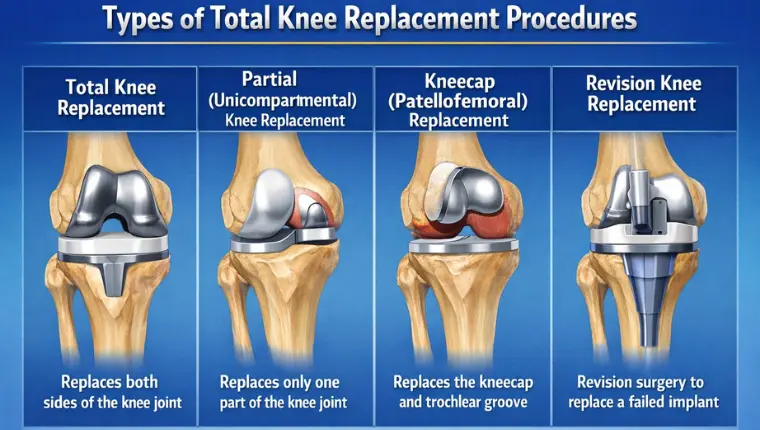
Types of Total Knee Replacement Procedures
Total Total Knee Replacement
Mild bone loss, like type I or II, needs simple swaps. Doctors just replace worn parts without much rebuilding. Moderate loss, type III, calls for extras. They pack in bone grafts or add metal wedges to fill gaps. Severe cases, type IV or V, get heavy support. Hinged implants lock the joint for stability. Rotating hinges let it move naturally. India's surgeons use Paprosky charts to grade this. It helps pick the best fix. Success rates hover around 80-90% in skilled hands.
The Two-Stage Total Protocol for Infection
Infection demands a two-step dance. First, they cut out the bad implant and clean deeply. Next comes an antibiotic spacer. It's like a temporary plug loaded with meds to kill bugs. You wait 6-8 weeks, on IV drugs, meanwhile. Stage two plants the new implant. Tests confirm the knee's clean first. This method cures PJI in over 85% of cases. Indian centers excel at this. Quick labs and cheap stays make it doable.
Custom Implants and Modular Systems
Off-the-shelf won't always fit Totals. Custom pieces match your unique bone shape. Modular systems shine here. Swap sleeves or stems like Lego blocks. Constrained bearings stop wobbles. Big hospitals in Mumbai or Delhi stock these. Brands like Zimmer or DePuy offer options. Patients get personalized fits for better results.
Choosing a Surgeon and Hospital in India
Pick wrong, and recovery drags. Smart choices lead to smooth sailing. Ask how many Totals they do yearly. Aim for 50 or more. Primaries don't count the same. High-volume docs master the tricks. They spot issues fast and fix them clean. In India, check credentials online. Groups like the Indian Orthopaedic Association list pros.
Best Total Knee Replacement Surgeon in India
India is home to several highly respected total knee replacement surgeons known for their clinical expertise, high success rates, and use of advanced techniques. Surgeons such as Dr. Ashok Rajgopal, Dr. IPS Oberoi, Dr. S. K. S. Marya, and Dr. Subhash Jangid have treated thousands of patients with consistent outcomes. They practice at leading hospitals equipped with modern technology, including computer navigation and robotic assistance. What sets the best surgeons apart is not only surgical skill but also careful patient selection, personalized treatment planning, and strong post-operative rehabilitation support.
|
Surgeon |
City / Hospital |
|
Dr. Ashok Rajgopal |
Gurgaon (Medanta) |
|
Dr. IPS Oberoi |
Gurgaon (Artemis) |
|
Dr. S K S Marya |
Gurgaon (Medanta) |
|
Dr. Subhash Jangid |
Gurgaon (Fortis) |
|
Dr. Naveen Sharma |
India-wide practice |
|
Dr. Anoop Jhurani |
Jaipur |
Implant Availability and Hospital Inventory
Totals need special gear. Standard kits fall short on bone loss. Hospitals must have augments, hinges, and sleeves ready. No delays mid-surgery. Top spots keep full stocks. This ensures the right part for your case.
For Free Online Consultation
GET A FREE QUOTE
Cost Analysis: What Determines the Price of Total Surgery in India?
Costs range from $8,000 to $15,000 total. That's way under $30,000-plus abroad. Implant choice bumps the bill. Hinged ones cost more than basic swaps. Two-stage for infection doubles stays and fees. Surgeon skill and hospital rep add up to. Factor in travel and rehab. Still, India saves big without skimping on quality.
Long-Term Outcomes With We Care Health Services
India Health Tour is working on the patients satisfaction and long-term outcomes. We are responsible for the ongoing treatment in India and the services provided by the hospital. We are known for the best hospital care and coordination of complex treatment and surgeries. Recovery takes grit. But it pays off in steps without pain.
There are different phases of the treatment, like diagnosis meetings and careful planning, and we do all in one phase. There are different types of cases in knee replacement surgery, and we can handle all typical cases. Here is the planning and Total for the patients.
Conclusion
Total knee replacement surgery in India tackles failed knee implants with skill and smarts. From spotting causes like loosening or infection to picking types like two-stage fixes, options abound. Key things to consider include surgeon picks, costs, and rehab commitment. Total knee replacement surgery in India blends top care, low costs, and skilled hands. You save thousands while gaining a pain-free knee. From robotic tech to rehab plans, it all adds up to quick wins.
For Free Online Consultation
GET A FREE QUOTE
Research surgeons and packages well. Verify credentials and read real stories. This ensures your trip turns into lasting mobility. India's centers blend top care with savings. You get back on your feet faster than you think. Risks exist, but expertise tips the scales. Ready to move again? Consult a specialist soon. Research Indian options and plan your second knee surgery. Your active life waits.