
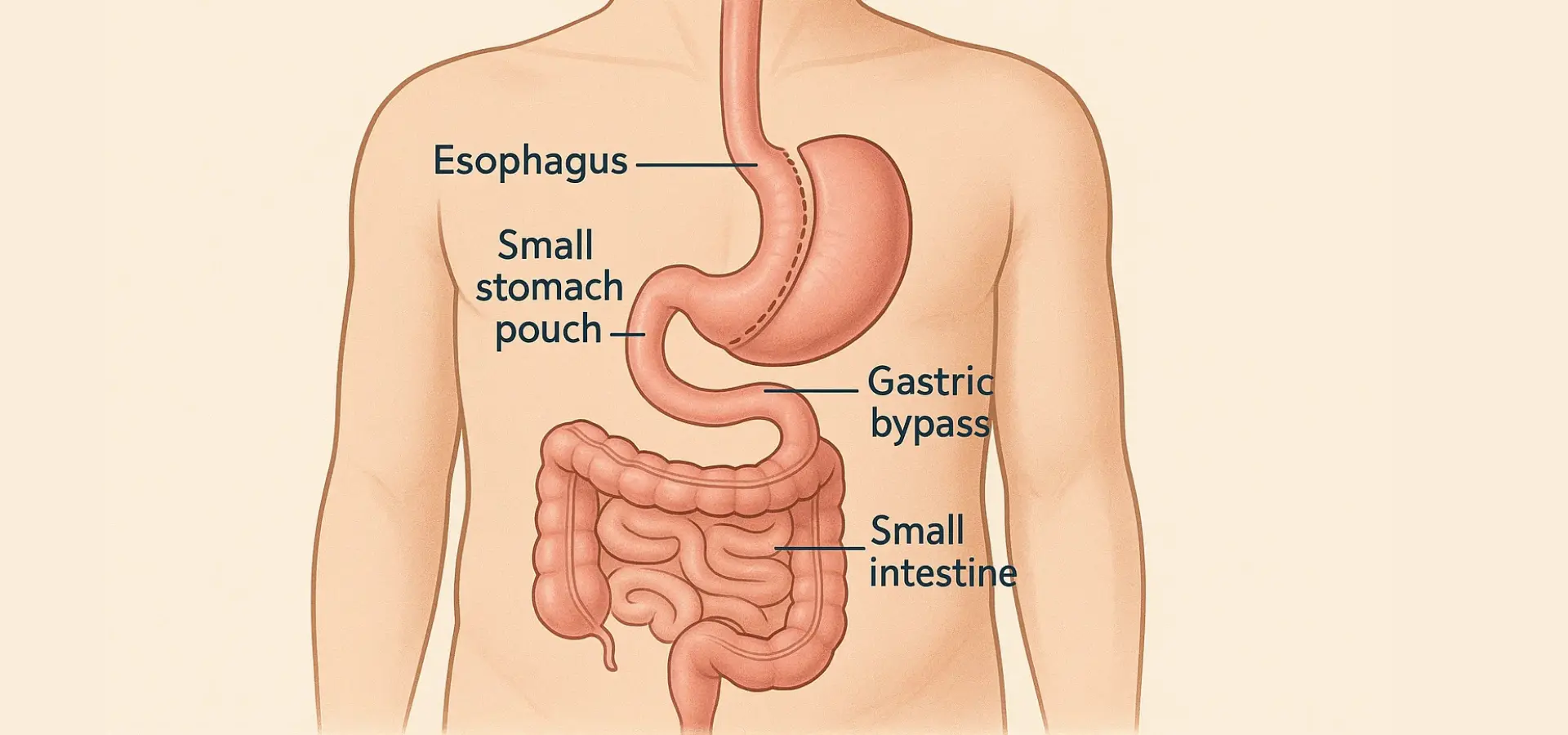
The bariatric surgery overview is good in India, with the best facilities and best doctors. There are different hospitals and care centres which are working in an unbiased manner and providing affordable services to patients. We Care Health Services is a patient support organization with coordination in various cities for treatment.
Bariatric surgery is a cosmetic surgery, and it is a collective name for many surgeries. There is sleeve gastrectomy, lip and chin augmentation, and other surgeries that may change the body and face of the person. The real purpose behind these surgeries is to enhance the beauty and physical confidence of the body.
For Free Online Consultation
GET A FREE QUOTE
What is Bariatric Surgery?
These are a group of surgeries designed to work for people who are extremely obese, and any method of weight loss is not working for them. Medication, diet, and exercise can’t help them, and losing weight is possible by making changes to the digestive system. There are different names in the list of the surgery like: gastric bypass surgery, sleeve gastrectomy, and biliopancreatic diversion.
Bariatric surgery is not a general recommendation; most people use it when they have to become a model, otherwise, there is an extreme need for weight loss. They came here after efforts from different surgeries.
Key Features of the Bariatric Surgery
There are different key features about food intake, rest, and care after the surgery; they should be considered after the procedure. They are good for maintaining good health and reducing calorie absorption from food. Also, these surgical options help in reducing hunger or the need for food.
- Restricting food intake – making the stomach smaller so you feel full faster.
- Reducing nutrient absorption – in procedures like gastric bypass, part of the intestine is bypassed.
Altering hunger hormones – some procedures reduce levels of ghrelin, the "hunger hormone." - Restrictive procedures: e.g., Sleeve gastrectomy, Gastric band – limit how much food the stomach can hold.
- Malabsorptive procedures: e.g., Gastric bypass, BPD/DS – reduce calorie and nutrient absorption.
- Combination procedures: e.g., Gastric bypass – both restrict and reduce absorption.
- Failed attempts at medical weight loss (diet, exercise, medication).
- Psychological readiness and willingness to follow long-term lifestyle changes.
- Performed laparoscopically (minimally invasive) in most cases.
- Typically takes 1–3 hours.
- Hospital stay is usually 1–3 days, depending on the type of surgery.
- Surgical risks: bleeding, infection, and blood clots.
- Long-term risks: nutrient deficiencies (iron, B12, calcium), dumping syndrome, and gallstones.
- Emotional adjustment and body image issues.
Causes of Having Bariatric Surgery
People usually turn to bariatric surgery when nothing else has worked—diet, exercise, all those “miracle” weight-loss medications. It’s what people turn to when they’ve tried literally everything—kale smoothies, gym memberships they barely used, those sketchy weight-loss pills that promise the world and deliver, well, disappointment.
For Free Online Consultation
GET A FREE QUOTE
This is survival mode. We’re talking real health scares—diabetes knocking at the door, heart acting up, can’t breathe at night because of sleep apnea—the kind of stuff that turns life into a struggle. Forget looking cute in selfies; this is about being able to walk to the mailbox without feeling like you ran a marathon.
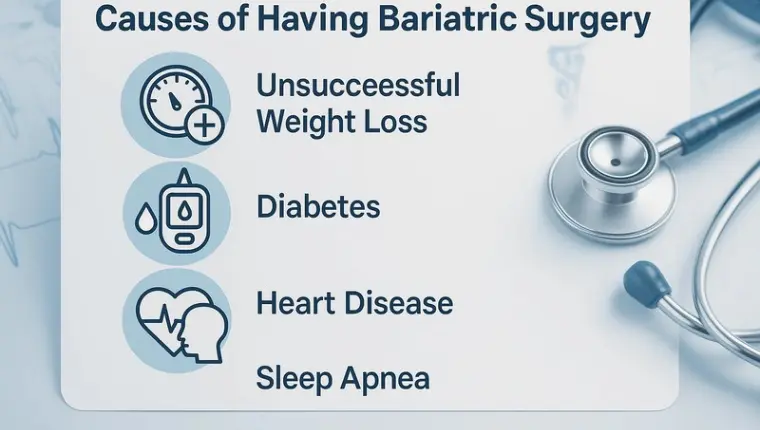
Causes of Having Bariatric Surgery
And let’s be real, by the time someone’s thinking about surgery, they’ve probably hit rock bottom with all the other “solutions.” It’s not vanity, it’s desperation to just feel human again. Surgery’s not magic. It’s a wrench in the toolbox for fighting back when your body’s just not playing fair. Here are some specific points:
- Patients with severe obesity, more than 40 BMI, are working on them.
- Inability to lose weight or maintain weight loss with diet and exercise alone
- Joint pain or osteoarthritis due to excess weight
- Reduced quality of life and daily functioning
- Mental health effects related to obesity (e.g., depression, social isolation)
- Family history of obesity and related health issues
- Prevention of future health complications linked to obesity
Success Rate of Bariatric Surgeries
The success rate of the surgery matters a lot for the people who are searching for the best care unit. Indian hospitals have a high success rate with affordable prices, but in these cases, affordability does not matter a lot; it is about the success rate.
So, bariatric surgery—honestly, it’s kind of a game changer for a lot of people. Most folks end up losing something like half their extra weight (sometimes even more!) within the first couple of years. And it’s not just about fitting into old jeans—stuff like type 2 diabetes? For a ton of people, it just vanishes. Really. Around 70-75% see their diabetes go into remission, at least for a while. And if you’ve been wrestling with things like high blood pressure, sleep apnea, or joints that seem to creak just for fun, all that usually gets a whole lot better, too. Here is the table showing bariatric surgery results:
|
Outcome |
Success Rate |
Notes |
|
Excess Weight Loss (EWL) |
50%–70% |
Within 1–2 years post-surgery |
|
Type 2 Diabetes Remission (1 year) |
70%–75% |
Highest within first year |
|
Type 2 Diabetes Remission (3–5 years) |
50%–60% |
Some relapse occurs over time |
|
Prediabetes Remission (1 year) |
~82% |
Declines slightly in following years |
|
Sleep Apnea Improvement |
75%–85% |
Many patients see major relief or resolution |
|
High Blood Pressure Improvement |
60%–70% |
Some may reduce or stop medication |
|
High Cholesterol Improvement |
50%–60% |
Often improves with weight loss |
|
Improved Quality of Life |
80%+ |
Most patients report better mobility, mood, and self-esteem |
|
Complication Rate (short-term) |
~3% |
Varies by procedure and hospital |
|
Mortality Rate (surgical) |
< 0.2% |
Very low when performed by experienced teams |
Now, I’m not saying it’s all sunshine and rainbows forever—some weight might sneak back, diabetes can come knocking again, but here’s the thing: most people still feel way healthier than before. And those horror stories you might’ve heard? Serious complications are actually rare, like 3% tops, and the risk of dying from the surgery is super low (less than 0.2% if you’re in good hands). At the end of the day, the real magic comes down to which surgery you pick, your age, how long you’ve been dealing with these issues, and, let’s be real, whether you stick with the new lifestyle. It’s not a miracle, but it’s as close as modern medicine gets sometimes!
Factors Affecting the Success Rate of Bariatric Surgeries
Several factors influence the success of bariatric surgery, both in terms of weight loss and the improvement or remission of obesity-related conditions. These factors can determine how much weight a patient loses, how long they maintain it, and how effectively associated health problems (like type 2 diabetes or sleep apnea) improve after surgery.
- Gastric bypass and biliopancreatic diversion often lead to greater weight loss and better diabetes remission compared to restrictive procedures like gastric banding.
- Higher starting BMI may result in more total weight lost, but the percentage of excess weight loss can be lower. Patients with moderate obesity often have better outcomes.
- Shorter duration of conditions like type 2 diabetes leads to higher chances of remission. Long-standing, insulin-dependent diabetes is less likely to fully reverse.
- Younger patients generally have better outcomes, including higher remission rates for metabolic diseases.
- Long-term success depends heavily on adopting healthy eating habits, regular physical activity, and consistent follow-up care.
- Regular check-ups, nutritional counseling, and psychological support improve outcomes and reduce the risk of complications or weight regain.
- Patients who are mentally prepared and emotionally stable tend to have better long-term results. Conditions like depression or eating disorders can impact outcomes if not addressed.
- Procedures done in high-volume, accredited centers by experienced surgeons have lower complication rates and better success outcomes.
- Lifelong use of vitamins and supplements (especially after malabsorptive procedures) is essential to avoid deficiencies that can affect recovery and overall health.
Types of Bariatric Surgery- Bariatric Surgery in India
Different types of bariatric surgeries are available for patients, but the doctor will recommend according to weight and the condition of the body. Here is the scope of the weight loss at the time of surgery.
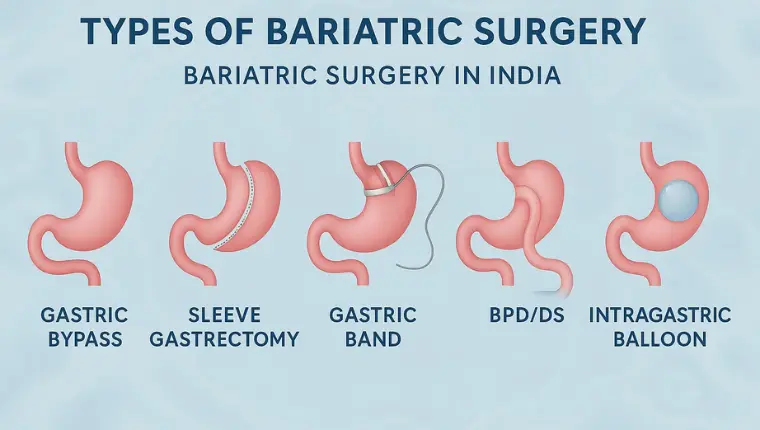
Types of Bariatric Surgery
|
Surgery Type |
Weight Loss |
Reversibility |
Diabetes Remission |
|
Gastric Bypass |
High |
No |
High |
|
Sleeve Gastrectomy |
Moderate-High |
No |
Moderate-High |
|
Gastric Band |
Low-Moderate |
Yes |
Low-Moderate |
|
BPD/DS |
Very High |
No |
Very High |
|
Intragastric Balloon |
Low |
Yes |
Low |
Okay, so bariatric surgery—think of it as a set of tools in the doctor’s toolbox for folks who’ve tried just about everything to lose weight and nothing’s really stuck. We’re talking about some pretty nifty procedures that either make your stomach way smaller (so you get full on, like, half a sandwich) or reroute things inside so your body doesn’t grab onto every single calorie. Sometimes it’s both, just to keep things interesting.
For Free Online Consultation
GET A FREE QUOTE
Docs usually bring this up when stuff like diets, exercise, or even meds just aren’t cutting it. If you’re dealing with health issues like diabetes, high blood pressure, or that snore-like-a-freight-train sleep apnea, surgery might help with all that, too.
There’s a handful of different types—each has its own perks and “hmm, maybe not for everyone” moments. I’ll walk you through the basics, no medical dictionary required.
Bariatric Surgery Cost in India
The cost of the bariatric surgery depends on the type of surgery. Bariatric surgery means dissecting and again making it comfortable for the body. The procedure also depends on how healing happens in a person. That’s why need of dieting and medication in the after-care is necessary.
For Free Online Consultation
GET A FREE QUOTE
Bariatric surgery Overview says: it offers a powerful tool for long-term weight loss and health improvement. The choice of procedure depends on individual health needs, goals, and medical history. Consultation with a bariatric specialist is essential to determine the most suitable option.
For the whole procedure of the consultation and getting treatment, here is the cost breakdown:
|
Type of Bariatric Surgery |
Approximate Cost Range (INR) |
Approximate Cost Range (USD)* |
|
Sleeve Gastrectomy (Gastric Sleeve) |
₹2,50,000 – ₹4,50,000 |
~$3,000 – $6,000 |
|
Gastric Bypass (Roux‑en‑Y) |
₹3,50,000 – ₹5,50,000 |
~$4,500 – $7,000 |
|
Mini Gastric Bypass |
₹3,00,000 – ₹5,00,000 |
~$4,000 – $7,000 |
|
Adjustable Gastric Banding (Lap Band) |
₹2,00,000 – ₹3,50,000 |
~$2,500 – $5,000 |
|
Biliopancreatic Diversion with Duodenal Switch (BPD‑DS) |
₹4,00,000 – ₹6,00,000 |
~$5,500 – $9,000 |
|
Revision Bariatric Surgery |
₹3,00,000 – ₹5,50,000 |
~$4,000 – $7,500 |
|
Robotic Bariatric Surgery |
₹4,00,000 – ₹6,50,000 |
~$5,500 – $9,000+ |
Factors Affecting the Costs of Bariatric Surgeries
There are some major and other minor factors that affect the cost of bariatric surgery in India. The complete cost of the surgery varies from 1,50,000 to 7,50,000, which is a great range of costs. depends on the types of surgery and on the reputation of the doctor performing the surgery. On the other hand, multispecialty or private sector hospitals generally have a higher cost than government hospitals.
For Free Online Consultation
GET A FREE QUOTE
These surgeries are complex and not covered by the standard packages. More complex procedures, such as Gastric Bypass or Biliopancreatic Diversion (BPD-DS), cost more due to longer operation time and higher risk. These factors can’t be compared in a single paragraph, but we are trying to define them with the help of the bullet points:
- Procedures like BPD-DS have a higher cost in comparison to Simpler surgeries, like Gastric Banding or Sleeve Gastrectomy, which are usually less expensive.
- Generally cost also increases with the expertise of the surgeon and the Success rates. Post-surgical outcomes may be better, which can justify the cost.
- Corporate or multispecialty hospitals charge more due to advanced infrastructure, ICU support, and better post-op care.
- Small cities like tier-2 and tier-3 have more affordable prices, but Metro cities like Delhi, Mumbai, and Bangalore have higher costs compared to smaller towns.
- There are additional services like diet, follow-ups, and diagnostic tests, all-inclusive, while other hospitals charge separately for these services.
- Laparoscopic surgery is standard and more affordable than robotic-assisted surgery.
- Robotic surgery is advanced but more expensive due to technology and specialist fees.
- Longer hospital stays due to complications or recovery issues will increase the final bill.
- Standard stay is 2–3 days for most bariatric procedures.
- Some health insurance plans cover bariatric surgery, especially if it's medically necessary (e.g., for diabetes or sleep apnea).
- Post-surgery, patients need lifelong supplements (like B12, iron, calcium), which add to long-term costs.
- Immediate post-op medications, pain relief, and antibiotics are usually part of the package but may vary.
- If a second (revision) surgery is required due to weight regain or complications, the cost increases significantly.
Best Hospitals for Bariatric Surgeries: Bariatric Surgery Delhi
Bariatric and other surgeries are better performed in the Delhi NCR region. There are different metro cities of India playing a role in the mainstream, but places like NCR have better connectivity for more patient access.
We Care Health Services is one of the best hospitals for different types of surgeries. The hospital is giving its services at affordable prices. There are different famous names like Fortis, Artemis, which are also playing better with technical facilities, but there are many factors affecting, like after-care and coordination at the time of patients.
For Free Online Consultation
GET A FREE QUOTE
We have considered different things, and here is a list of the best hospitals with their services in the table, but we still recommend We Care Health Services as the best option.
|
Hospital Name |
Location |
Accreditations |
|
Medanta – The Medicity |
Gurugram, Haryana |
NABH, JCI |
|
Fortis Memorial Research Institute |
Gurugram, Haryana |
NABH, JCI |
|
Max Super Speciality Hospital, Saket |
New Delhi |
NABH, JCI |
|
Apollo Hospitals |
Multiple Locations |
NABH, JCI |
|
Kokilaben Dhirubhai Ambani Hospital |
Mumbai, Maharashtra |
NABH, JCI |
|
Manipal Hospitals |
Multiple Locations |
NABH, JCI |
|
Wockhardt Hospital, Umrao |
Mumbai, Maharashtra |
NABH, JCI |
|
PACE Hospitals |
Hyderabad, Telangana |
NABH, JCI |
We Care Health Services for Bariatric Surgeries
We Care Health Services is the best option for different types of surgeries, including bariatric surgeries. With time, they evolved their services into better forms. There are different surgeries and technical facilities through which procedures can be performed in a minimally invasive way. There are different procedures, some of them is really complex.
We Care Health Services is known for the best patient coordination in all kinds of facilities. After 2012, the incoming of technical facilities in the medical field has increased. There are several reasons to choose India for the medical facilities, especially for the bariatric and cardiac treatment.
We Care Health Services is kinda the go-to crew. They don’t just toss you a hospital brochure and wish you luck—they actually hook you up with some legit surgeons and clinics, whether you’re thinking gastric bypass, sleeve gastrectomy, or even that lap band thing.
What’s cool is, they’ve got your back the whole way. I’m talking hand-holding from those nerve-wracking first chats to the “oh-my-god-why-did-I-eat-that” moments during recovery. Packages? Way less scary than you’d expect. Plus, they make the whole thing feel personal, not just another number in the waiting room. If you’re looking for safe, affordable, and honestly, just good vibes for your weight-loss journey, these folks are worth a look.
- Connects patients with top hospitals and expert bariatric surgeons in India
- Offers a wide range of procedures: gastric bypass, sleeve gastrectomy, gastric banding, duodenal switch
- Provides pre-surgery counseling and complete guidance for safe decision-making
- Ensures personalized care plans based on the patient’s health and weight-loss goals
- Support for medical travel, accommodation, and treatment packages at affordable costs
- Focus on post-surgery follow-up for long-term weight management and recovery
Best Surgeons For Bariatric Surgery
You’ve got India, right? It’s basically the Avengers HQ for bariatric surgeons—some serious heavy hitters in that league. Dr. Mohit Bhandari in Indore? Dude’s a legend with his robot-assisted stuff. Seriously, he’s done so many of these surgeries, it’s kinda wild. Then there’s Dr. Muffazal Lakdawala, chillin’ in Mumbai, who basically said, “Why not do this whole thing through a single cut?” and just… did it. Now he runs a top-tier clinic that everyone raves about.
For Free Online Consultation
GET A FREE QUOTE
Don’t sleep on Dr. Manish Khaitan, either. The guy runs NObesity (points for the name), and he’s all about making sure folks aren’t left out to dry—he’s done thousands of these ops and still checks in on people years later. And if you want a true OG, there’s Dr. Pradeep Chowbey in Delhi. Forty years in the game, he knows his way around a laparoscope better than most people know their own phone, and patients from all over India trust him. So yeah, if you’re looking for big names in weight-loss surgery, India’s got you covered.
|
Surgeon |
Hospital / Clinic |
|
Dr. Randeep Wadhawan |
Max Super Speciality Hospital, Dwarka, Delhi |
|
Dr. Ashish Vashistha |
Max Super Speciality Hospital, Saket, New Delhi |
|
Dr. Kapil Agrawal |
Habilite Clinics, Delhi |
|
Dr. Aloy Mukherjee |
Aloy Mukherjee Clinic, Delhi |
|
Dr. Rajat Goel |
Lajpat Nagar, New Delhi |
|
Dr. Sukhvinder Singh Saggu |
CK Birla Hospital, Delhi |
|
Dr. Paritosh S Gupta |
Artemis Hospital, Gurgaon |
|
Dr. Atul Peters |
Atul Peters Clinic, Delhi NCR |