

Pulmonary hypertension is a high blood pressure in the lung supply, or we can say that high blood pressure in the right-sided supply of the body. It mainly happens when there is a blocked artery in the pulmonary circulation. It can be noticed at the time of rapid breathing or shortness of breath, especially when chest breathing is done by such people.
There are different classifications of pulmonary hypertension, and surgery is required in the exclusive cases. There are advanced techniques that include the minimally invasive methods of surgery. We will study methods, causes and treatment of pulmonary hypertension surgery.
What is Pulmonary Hypertension?
Pulmonary hypertension is a health condition in which the pressure inside the blood vessels that carry blood from the heart to the lungs becomes higher than normal. This increase happens when the pulmonary arteries become narrow, blocked, or damaged, making it difficult for blood to flow smoothly.
Book Appointment
GET A FREE QUOTE
As a result, the right side of the heart has to work harder to pump blood, which can lead to serious complications over time. People with this condition may experience symptoms such as shortness of breath, tiredness, dizziness, chest discomfort, or swelling in the legs. Early detection and treatment are essential for better outcomes.
The heart works harder, trying to force the blood through. If the pressure is high enough, eventually the heart can’t keep up, and less blood can circulate through the lungs to pick up oxygen. Patients then become tired, dizzy and short of breath.
- The portion of the circulation that distributes oxygen-rich blood from the left side of the heart throughout the body is referred to as the systemic circulation.
- The blood then returns from the body to the right side of the heart and passes through the lungs to replenish oxygen.
- It then returns to the left side of the heart for another round through the systemic circulation.
- The portion of the circulation that distributes the blood from the right side of the heart to the lungs is referred to as the pulmonary (lung) circulation.
- The pulmonary arteries are the major blood vessels that carry blood from the right side of the heart to the lungs.
What are Pulmonary Hypertension Causes?
Pulmonary hypertension is a serious condition where the blood pressure in the arteries of the lungs becomes abnormally high. This usually happens when the pulmonary arteries become narrowed, blocked, or damaged, making it harder for blood to pass through the lungs. As a result, the heart has to work harder, which can lead to complications over time.. Here are some main causes:
- chronic obstructive pulmonary disease (COPD)
- emphysema,
- failure of the left heart ventricle,
- recurrent pulmonary embolism (blood clots travelling from the legs or pelvic veins obstructing the pulmonary arteries or chronic thromboembolic pulmonary hypertension), or underlying diseases such as scleroderma.
There are several causes behind pulmonary hypertension. One of the most common reasons is heart-related issues, such as left-sided heart disease or congenital heart defects. Lung problems like chronic obstructive pulmonary disease (COPD), interstitial lung disease, or sleep apnea can also trigger this condition. In some cases, blood clots in the lungs (pulmonary embolism) restrict blood flow, increasing pressure in the pulmonary arteries. Autoimmune disorders, such as scleroderma and lupus, are also linked to pulmonary hypertension. Additionally, some people develop it due to genetic factors or certain medications that affect the blood vessels in the lungs. Other Conditions Include:
- dermatomyositis,
- systemic lupus erythematosus,
- sarcoidosis,
- human immunodeficiency virus (HIV), and
- advanced liver disease (porto-pulmonary hypertension).
If medications and lifestyle changes do not control the condition, doctors may recommend advanced treatments, including pulmonary hypertension surgery in India. Surgical options like lung transplantation or pulmonary endarterectomy (removal of blood clots in the pulmonary arteries) are available in leading hospitals across India. These procedures can improve breathing and quality of life for patients with severe cases.
Book Appointment
GET A FREE QUOTE
Early diagnosis and the right treatment plan are crucial to managing this condition effectively. If symptoms like shortness of breath, chest pain, or swelling appear, seeking medical advice immediately is essential to prevent complications.
What are Pulmonary Hypertension Symptoms?
Pulmonary hypertension symptoms often develop slowly and can be mistaken for other conditions, making early detection challenging. The condition occurs when the pressure in the arteries of the lungs is too high, causing the heart to work harder to pump blood. Over time, this strain leads to noticeable signs and discomfort.
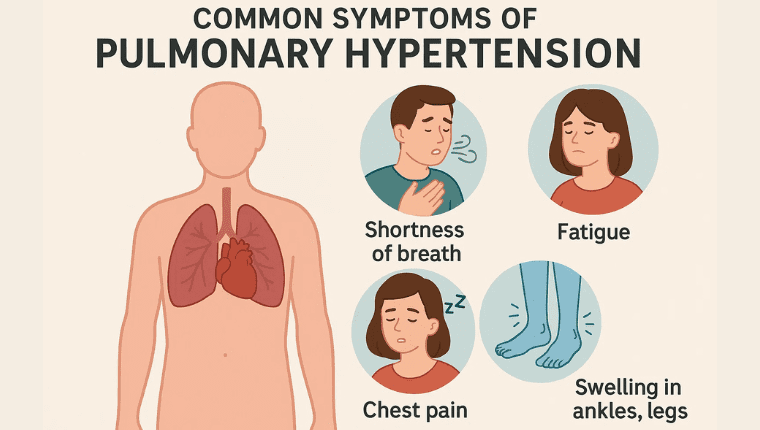
Common Symptoms of Pulmonary Hypertension
Common Symptoms of Pulmonary Hypertension
- Shortness of breath during daily activities or exercise – One of the earliest signs, it gradually worsens over time and may occur even at rest in severe cases.
- Persistent fatigue and weakness – Due to reduced oxygen supply and increased strain on the heart, patients often feel tired even after minimal activity.
- Chest pain or pressure – This can occur because the right side of the heart works harder to push blood through narrowed arteries.
- Swelling in the ankles, legs, and abdomen (oedema) – Fluid buildup is common as the heart becomes weaker and blood circulation slows down.
- Lightheadedness or fainting spells (syncope) – Caused by inadequate blood flow to the brain, often seen during physical exertion.
- Rapid heartbeat or heart palpitations – The heart tries to compensate for the extra pressure, leading to irregular rhythms.
Book Appointment
GET A FREE QUOTE
If symptoms progress despite medications, doctors may suggest pulmonary hypertension surgery in India. Procedures like pulmonary endarterectomy or lung transplantation can significantly improve breathing and life expectancy for advanced cases. Timely diagnosis and treatment are essential, as untreated pulmonary hypertension can lead to serious complications like right heart failure.
Pulmonary Hypertension Types- Pulmonary Hypertension Classification
Pulmonary hypertension surgery in India is performed in response to a minimal treatment option; otherwise, it is not the first step. Some severe conditions can be noticed at the time of the requirement for surgery. There are a few types of pulmonary hypertension which minimal surgery or blockage in the arteries to be removed.
Pulmonary hypertension (PH) isn’t just one disease – it’s a group of conditions that cause high blood pressure in the arteries of your lungs. To provide the right treatment, doctors classify PH into five main groups based on what’s causing it. This helps decide whether medication, lifestyle changes, or even pulmonary hypertension surgery in India is the best solution.
Why Does Classification Matter?
Knowing the exact type of pulmonary hypertension is crucial for choosing the right treatment. While some people improve with medicines and oxygen therapy, others with severe or clot-related PH may need surgical treatments like pulmonary hypertension surgery in India. Early diagnosis and proper classification can make a big difference in improving survival and quality of life.
Book Appointment
GET A FREE QUOTE
What are the Different Pulmonary Hypertension Treatments?
Pulmonary hypertension (PH) requires a personalised treatment plan because every case is different. The goal of treatment is to reduce symptoms, improve quality of life, and slow the disease’s progression. Depending on the severity and cause, doctors may suggest medications, lifestyle changes, or even advanced options like pulmonary hypertension surgery in India.
- Endothelin receptor antagonists – These reduce the narrowing of blood vessels.
- Phosphodiesterase-5 inhibitors – Help relax pulmonary arteries and lower pressure.
- Prostacyclin analogues – Improve blood flow and relieve symptoms.
- Anticoagulants – Prevent blood clots that can worsen the condition.
- Atrial Septostomy – A small opening is created between the heart’s chambers to relieve pressure.
- Pulmonary Endarterectomy (PEA) – A life-saving surgery for patients with Chronic Thromboembolic Pulmonary Hypertension (CTEPH) caused by old blood clots. This is one of the most successful pulmonary hypertension surgeries in India.
- Lung or Heart-Lung Transplant – For patients with severe PH that doesn’t respond to other treatments, transplantation can be the last option.
Why Early Treatment Matters?
Pulmonary hypertension is a progressive condition, and timely treatment can significantly improve life expectancy and comfort. Whether it’s medications, oxygen therapy, or advanced pulmonary hypertension surgery in India, starting the right treatment plan early is the key to managing this disease effectively.
What are the Diagnostic Tests For Pulmonary Hypertension?
Pulmonary hypertension or PH can be recognised in the breathing of any person; short breathing and pain at the time of lung expansion are two main symptoms. Finding out if someone has pulmonary hypertension is not always easy because the symptoms often look like those of other heart and lung problems. Doctors usually start with a detailed check-up and then recommend specific tests to confirm the condition and understand its severity.
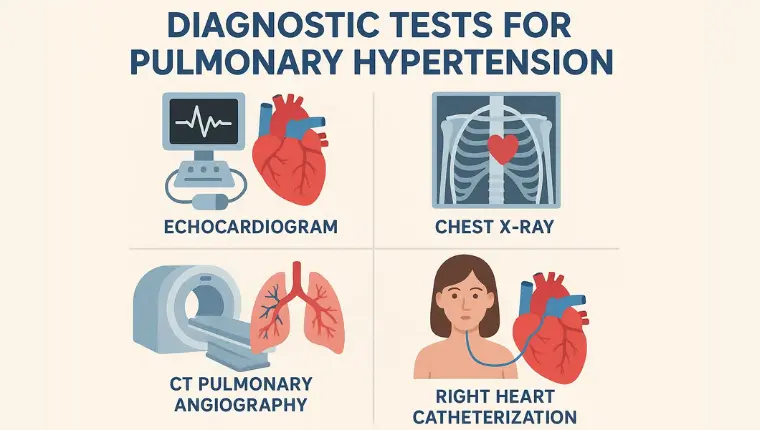
Diagnostic Tests For Pulmonary Hypertension
Echocardiogram
The first test most people go through is an echocardiogram. It uses sound waves to create images of the heart and helps doctors see how well it is pumping blood and whether the right side of the heart is under pressure.
Electrocardiogram (ECG)
An ECG records the heart’s electrical activity. It can show if the heart is enlarged or working harder than usual, which often happens in pulmonary hypertension.
Chest X-ray
A chest X-ray helps doctors look at the size of the heart and the condition of the lungs. Enlarged arteries or an enlarged right side of the heart can be signs of pulmonary hypertension.
Blood Tests
Blood work is often done to rule out other causes, such as thyroid issues, liver problems, or autoimmune conditions that might lead to pulmonary hypertension.
Right Heart Catheterisation
This is the most accurate test for pulmonary hypertension. A thin tube is inserted into a vein and guided to the right side of the heart and into the pulmonary artery. This allows doctors to directly measure the pressure in the lungs’ blood vessels.
Additional Tests
Doctors may also use CT scans, lung function tests, or a six-minute walk test to understand how the condition is affecting daily life. Early and accurate diagnosis is important because it helps doctors choose the right treatment, whether it is medication, oxygen therapy, or, in severe cases, pulmonary hypertension surgery in India.
Pulmonary Hypertension Surgery in India- Types and Methods
PH or pulmonary hypertension, in severe cases, can be treated with the help of surgery. It is not lung surgery; it is opening the blockage of the blocked or narrowed arteries. Pulmonary hypertension is a serious condition that puts extra pressure on the heart and lungs. While medications and lifestyle changes help in the early stages, advanced cases often require surgical intervention. Pulmonary hypertension surgery in India is performed at top cardiac and multispecialty hospitals with advanced facilities and skilled surgeons. Let’s look at the main surgical options and how they help patients.
Why Choose India for Pulmonary Hypertension Surgery?
India offers world-class cardiac care at an affordable cost. Highly experienced surgeons, advanced technology, and comprehensive aftercare make it a preferred destination for patients from across the globe. Whether it is a pulmonary endarterectomy, lung transplant, or balloon angioplasty, pulmonary hypertension surgery in India combines quality and affordability for better patient outcomes.
Book Appointment
GET A FREE QUOTE
India has become a preferred destination for advanced heart and lung surgeries, including pulmonary hypertension surgery in India, because of its combination of quality care and affordable pricing. Here are the key reasons why patients from around the world choose India for this life-saving procedure:
- Affordable Treatment Cost – The cost of pulmonary hypertension surgery in India is significantly lower compared to countries like the US or UK, without compromising on quality.
- World-Class Hospitals – India is home to internationally accredited hospitals equipped with advanced technology for complex surgeries like pulmonary endarterectomy, lung transplant, and balloon pulmonary angioplasty.
- Highly Skilled Surgeons – Experienced cardiac and thoracic surgeons in India have performed numerous successful surgeries for pulmonary hypertension, ensuring excellent patient outcomes.
- Comprehensive Care – From accurate diagnosis to surgery and post-operative rehabilitation, Indian hospitals provide complete care under one roof.
- Short Waiting Times – Unlike many countries, patients in India can schedule their surgery quickly, which is critical for life-threatening conditions like pulmonary hypertension.
- Medical Tourism Support – International patients receive assistance with visa, accommodation, and language translation, making treatment stress-free.
Cost of Pulmonary Hypertension Surgery in India
The cost of pulmonary hypertension surgery in India varies based on the type of procedure, hospital, and individual patient needs. India offers advanced medical care at a fraction of the cost compared to Western countries, making it an attractive destination for patients seeking treatment.
These costs are approximate and can vary based on the hospital, the surgeon's expertise, and the patient's specific condition. It's advisable to consult with the chosen medical facility for precise estimates and to inquire about the availability of financial assistance or insurance coverage.
India's healthcare infrastructure, combined with experienced medical professionals, makes it a viable option for patients seeking pulmonary hypertension surgery.
|
Procedure |
Estimated Cost (INR) |
Estimated Cost (USD) |
|
Pulmonary Endarterectomy (PEA) |
₹15,00,000 – ₹20,00,000 |
$18,000 – $24,000 |
|
Lung Transplant |
₹12,35,000 – ₹20,00,000 |
$15,000 – $24,000 |
|
Balloon Pulmonary Angioplasty (BPA) |
₹5,00,000 – ₹7,00,000 |
$6,000 – $8,500 |
|
Atrial Septostomy |
₹2,50,000 – ₹4,00,000 |
$3,000 – $5,000 |
Factors Affecting the Cost of Pulmonary Hypertension Surgery
The cost of pulmonary hypertension (PH) surgery in India can vary significantly due to multiple factors. Firstly, the type of surgery or procedure plays a major role; treatments like lung transplantation, balloon atrial septostomy, or pulmonary thromboendarterectomy have vastly different costs. Hospital selection also affects pricing, as top-tier private hospitals in cities like Delhi, Mumbai, or Bengaluru typically charge more due to advanced infrastructure and premium services.
- Surgeon expertise and reputation can influence the fee, with highly experienced specialists commanding higher rates.
- Pre- and post-operative care, including ICU stays, medications, diagnostic tests, and rehabilitation, adds substantially to the overall cost.
- Patient-specific factors, such as age, comorbidities, and severity of the condition, may require additional interventions or extended hospitalisation, further increasing expenses.
- Insurance coverage and government schemes can offset some costs, but out-of-pocket expenditure remains significant for complex surgeries.
- Additionally, the geographical location of the hospital and availability of advanced medical technology can create regional cost variations.
- Finally, the duration of hospital stay and the need for follow-up procedures or long-term medications also contribute to the total expenditure.
- Overall, understanding these factors helps patients plan and prepare financially for pulmonary hypertension surgery in India.
Best Hospitals For Pulmonary Hypertension Surgery
India is emerging as a preferred destination for advanced cardiac and pulmonary care, including pulmonary hypertension surgery in India. Top hospitals offer the best technology, experienced surgeons, and 24*7 care for patients with this serious condition.
From accurate diagnosis to advanced surgical procedures like pulmonary endarterectomy, lung transplantation, and balloon pulmonary angioplasty, Indian hospitals provide world-class treatment at affordable costs. International patients also benefit from medical tourism support, making the journey smooth and stress-free. Below is a list of 15 leading hospitals where pulmonary hypertension patients can access quality care:
|
Hospital Name |
Location |
Specialty |
|
We Care Health Services |
Delhi |
Multi-specialty care |
|
Max Super Speciality Hospital |
Delhi NCR |
Pulmonary hypertension treatment |
|
Fortis Escorts Heart Institute |
New Delhi |
Cardiology & pulmonology |
|
BLK Super Speciality Hospital |
New Delhi |
Pulmonary hypertension management |
|
Medanta – The Medicity |
Gurgaon |
Advanced cardiac & pulmonary care |
|
Apollo Hospitals |
Chennai |
Comprehensive pulmonary hypertension services |
|
Care Hospitals |
Hyderabad |
Pulmonary hypertension treatment |
|
Yashoda Hospitals |
Hyderabad |
Pulmonary hypertension management |
|
Sakra Premium Clinic |
Bangalore |
Pulmonology & respiratory care |
|
Wockhardt Hospitals |
Mumbai |
Pulmonary hypertension treatment |
|
Nanavati Max Super Speciality Hospital |
Mumbai |
Pulmonary hypertension services |
|
Kokilaben Dhirubhai Ambani Hospital |
Mumbai |
Pulmonary hypertension clinic |
|
Christian Medical College |
Vellore |
Pulmonary hypertension treatment |
|
Manipal Hospitals |
Bangalore |
Pulmonary hypertension care |
|
Pace Hospitals |
Hyderabad |
Pulmonary hypertension treatment |
Success Rate of Pulmonary Hypertension Surgery
Pulmonary hypertension surgery can be life-changing for patients with severe or advanced disease. The success of surgery depends on the type of procedure, the patient’s overall health, and the hospital’s expertise. In India, leading hospitals have reported encouraging outcomes, making pulmonary hypertension surgery in India a viable option for many patients.
Pulmonary endarterectomy (PEA) for Chronic Thromboembolic Pulmonary Hypertension (CTEPH) has the highest success rate among surgical interventions. Lung and heart-lung transplants are more complex but still offer improved quality of life and survival for carefully selected patients. Minimally invasive procedures like balloon pulmonary angioplasty (BPA) are gaining popularity due to lower risk and faster recovery.
|
Procedure |
Success Rate |
Notes |
|
Pulmonary Endarterectomy (PEA) |
85% – 95% |
High success in removing clots and restoring blood flow |
|
Lung Transplant |
70% – 80% |
Success depends on patient condition and post-operative care |
|
Heart-Lung Transplant |
65% – 75% |
For severe cases not responding to other treatments |
|
Balloon Pulmonary Angioplasty (BPA) |
80% – 90% |
Less invasive with faster recovery |
Early diagnosis, proper patient selection, and post-operative care play a crucial role in achieving these outcomes. Choosing pulmonary hypertension surgery in India ensures access to experienced surgeons and modern facilities, which significantly improve the chances of success and enhance the quality of life for patients.
Best Pulmonary Hypertension Specialists of India
India boasts a cadre of distinguished pulmonary hypertension (PH) specialists renowned for their expertise in diagnosing and managing this complex condition. These specialists are affiliated with leading hospitals across the country, offering advanced treatments and personalised care.
Whether you're seeking medical attention in metropolitan cities like Delhi, Mumbai, or Bengaluru, or in other regions, India's healthcare infrastructure provides access to top-tier professionals in the field of pulmonary hypertension.
|
Doctor's Name |
Hospital/Location |
Specialization |
|
Dr. Vivek Nangia |
Max Healthcare, Delhi |
Pulmonology & Sleep Medicine |
|
Dr. Ajay Lall |
Max Healthcare, Delhi |
Pulmonology & Critical Care |
|
Dr. Sandeep Nayar |
Max Healthcare, Delhi |
Pulmonology & Interventional Pulmonology |
|
Dr. Alok Srivastava |
Max Healthcare, Delhi |
Pulmonology & Sleep Medicine |
|
Dr. Deepak Bhasin |
Max Healthcare, Delhi |
Pulmonology & Critical Care |
|
Dr. Inder Mohan Chugh |
Max Healthcare, Delhi |
Pulmonology & Sleep Medicine |
|
Dr. Sharad Joshi |
Max Healthcare, Delhi |
Pulmonology & Critical Care |
|
Dr. Prashant Bobhate |
Kokilaben Dhirubhai Ambani Hospital, Mumbai |
Pulmonology & Pediatric Pulmonary Hypertension |
|
Dr. Rahul Chandola |
Fortis Healthcare, Delhi |
Pulmonology & Lung Transplantation |
|
Dr. Sandeep Attawar |
Gleneagles Global Hospital, Bengaluru |
Cardiac Surgery & Lung Transplantation |
|
Dr. M.S. Kanwar |
Indraprastha Apollo Hospital, Delhi |
Pulmonology & Respiratory Medicine |
|
Dr. Nikhil Modi |
Indraprastha Apollo Hospital, Delhi |
Pulmonology & Critical Care |
|
Dr. Sachin Kumar |
Sakra Premium Clinic, Bengaluru |
Pulmonology & Critical Care |
|
Dr. Ritesh Agarwal |
PGIMER, Chandigarh |
Pulmonology & Research in Respiratory Diseases |
We Care Health Services for Pulmonary Hypertension Surgery in India
We Care Health Services is a prominent medical tourism facilitator in India, specialising in assisting international patients seeking treatment for pulmonary hypertension (PH). Established in 2005, the organisation offers comprehensive services, ensuring patients receive world-class medical care at leading Indian hospitals. Their partnerships with top-tier hospitals in India ensure that patients receive advanced treatments for pulmonary hypertension, including:
We Care Health Services: Your Partner in Pulmonary Hypertension Treatment
By choosing We Care Health Services, patients can navigate the complexities of medical treatment abroad with confidence, ensuring a seamless and supportive healthcare journey. We Care Health Services provides a range of services tailored to the needs of international patients:
- Personalised Consultation: Assistance in selecting the right specialists and hospitals based on individual medical needs
- Treatment Coordination: Scheduling appointments, arranging diagnostics, and facilitating communication with medical teams.
- Travel and Accommodation Support: Helping with visa arrangements, flight bookings, and hotel accommodations.
- Post-Treatment Care: Ensuring follow-up consultations and rehabilitation services are accessible.
- Medical Management: Use of advanced medications and therapies tailored to individual needs.
- Surgical Interventions: Procedures like atrial septostomy and lung transplants for eligible patients.
- Multidisciplinary Care: Collaborative approach involving pulmonologists, cardiologists, and surgeons.
New Treatments for Pulmonary Hypertension
Pulmonary hypertension (PH) is a serious condition, but recent medical advances are offering new hope. One of the latest treatments is Sotatercept, which helps improve blood flow in the lungs and makes it easier for patients to exercise. Imatinib, a drug originally used for certain cancers, is being tested to reduce pressure in the lungs by controlling abnormal cell growth.
Another promising approach is Pulmonary Artery Denervation (PADN), a minimally invasive procedure that calms overactive nerves in the lungs, lowering pressure and improving breathing. Scientists are also exploring gene therapy targeting TSC2, which may help reverse the changes in lung blood vessels that cause PH.
Finally, research on SPHK2 inhibition is showing that targeting certain enzymes can prevent or reverse lung vessel damage. These new treatments focus not just on symptoms but on the root causes of pulmonary hypertension, giving patients better long-term outcomes.
Pulmonary Hypertension Treatment in Children
Pulmonary hypertension (PH) in children is a rare but serious condition where high blood pressure develops in the lungs, putting strain on the heart and potentially leading to heart failure. Treatment focuses on managing symptoms, improving quality of life, and preventing disease progression.
Medications such as sildenafil, bosentan, and prostacyclin analogues help relax and widen pulmonary blood vessels, reducing pressure. Oxygen therapy is often used to maintain adequate blood oxygen levels, easing the heart’s workload. In certain cases, surgical procedures like atrial septostomy, which creates a small opening between the heart’s upper chambers, or pulmonary artery banding, which reduces blood flow to the lungs, may be recommended.
Supportive care, including diuretics to remove excess fluid and nutritional support for proper growth, is also important. Early diagnosis and a coordinated approach involving pediatric cardiologists and pulmonologists are essential to monitor the child’s progress and adjust treatment for optimal outcomes.