

Nephrology is the branch of science that deals with the excretory functions of the body. The common diseases in nephrology are renal and bladder calculi. There are different solutions for these problems, including medicines and surgery. The other common problems are urinary tract infection and uremia. These issues have a back story, too; they happen because of chronic conditions.
Nephrology is a wide term; the issues that are concerned with the topic are specific. In India, there are many hospitals, especially in Delhi NCR, which are giving solutions and treating people. The hospitals harbouring the best surgeons and labs for all work in the same department.
What is Nephrology?
Nephrology is the field of medicine that focuses on keeping our kidneys healthy. Kidneys act like natural filters, clearing out waste, balancing water, salts, and minerals, and helping control blood pressure. When they don’t work properly, it can affect the whole body.
Book Appointment
GET A FREE QUOTE
Nephrology covers problems like kidney disease, kidney failure, infections, stones, and even the need for dialysis and transplants. A nephrologist is the doctor who specialises in these issues and guides patients in protecting their kidney health. In simple words, nephrology is all about understanding and caring for these small but powerful organs that keep us alive.
Which is the most Common diseases in Nephrology?
When we talk about nephrology, we’re really talking about how to keep our kidneys healthy and what happens when they don’t work as they should. Some kidney problems show up more often than others, and knowing about them makes it easier to catch early signs and get the right nephrology treatment available.
Kidney issues like CKD, stones, AKI, and glomerulonephritis are common, but with early detection and the right nephrology treatment available, most people can manage them well and live healthier lives.
Nephrology Diseases Symptoms
Kidney problems often develop quietly, and many people don’t notice symptoms until the disease has progressed. Recognising early warning signs is very important, as timely care and the right nephrology treatment can prevent serious complications. Symptoms may range from simple fatigue to more serious issues like swelling or changes in urination. Below are some of the common signs that may indicate underlying nephrology diseases.
Book Appointment
GET A FREE QUOTE
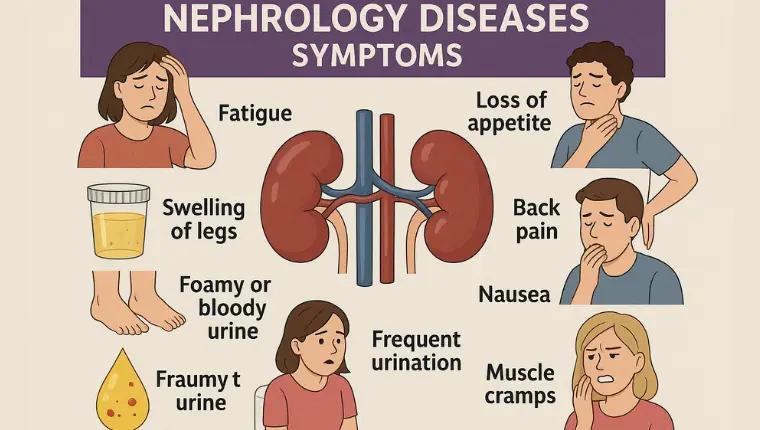
Nephrology Diseases Symptoms
- Swelling in the feet, ankles, or face
- Changes in urination (frequency, amount, or colour)
- Blood in urine
- Foamy or bubbly urine (protein loss)
- Severe or persistent back and side pain
- High blood pressure not controlled with medicine
- Constant fatigue or weakness
- Loss of appetite or nausea
- Shortness of breath
- Difficulty sleeping or poor sleep quality
- Muscle cramps, especially at night
- Puffiness around the eyes
- Itching or dry skin
- Trouble concentrating or mental fog
Causes of Nephrology Diseases
Kidney diseases don’t appear overnight; they usually build up over time due to lifestyle, other health issues, or sudden damage. Common causes include diabetes, high blood pressure, infections, and even certain medicines. In some cases, genetics or autoimmune problems play a role. The good news is that with awareness and the right nephrology treatment available, many kidney conditions can be managed or prevented before they become life-threatening.
Book Appointment
GET A FREE QUOTE
- Diabetes: High blood sugar damages kidney filters over time.
- High blood pressure: Strains the blood vessels in the kidneys.
- Kidney infections: Repeated or untreated infections weaken kidney function.
- Kidney stones: Can block urine flow and cause long-term damage.
- Genetic conditions: Like polycystic kidney disease.
- Autoimmune disorders, such as lupus, attack kidney tissues.
- Obesity: Increases the risk of diabetes and hypertension.
- Certain medications: Overuse of painkillers or antibiotics.
- Dehydration: Severe or repeated dehydration stresses the kidneys.
- Heart disease: Weakens the overall blood supply to the kidneys.
- Smoking and alcohol: Reduce kidney efficiency over time.
- Age factor: Kidney function naturally declines with age.
Kidney Disease Treatment
When kidney disease is detected early, simple steps can help slow its progress. Lifestyle changes such as a balanced diet, reducing salt, controlling blood sugar, and keeping blood pressure in check are essential. Doctors may prescribe medicines to manage related conditions like diabetes or hypertension. At this stage, kidney disease treatment focuses on protecting kidney function and preventing further damage.
The right kidney disease treatment depends on the stage, cause, and overall health of the patient. Early diagnosis and timely nephrology treatment available can truly change outcomes.
Cost of Nephrology Treatment in India
The cost of nephrology treatment in India depends on the type of disease, stage of kidney damage, hospital, and city. Basic consultations and medicines are affordable, but advanced care like dialysis and kidney transplant can be expensive. On average, dialysis sessions cost a few thousand rupees, while transplants require lakhs. However, India still offers more affordable options compared to many countries, with quality care provided by expert nephrologists and modern hospitals.
|
Treatment/Procedure |
Approximate Cost in India (INR) |
|
Nephrologist Consultation |
₹800 – ₹2,000 per visit |
|
Blood & Urine Tests |
₹500 – ₹2,500 |
|
Ultrasound / Imaging |
₹1,500 – ₹4,000 |
|
Dialysis (per session) |
₹2,500 – ₹5,000 |
|
Monthly Dialysis (8–12 sittings) |
₹20,000 – ₹50,000 |
|
Kidney Biopsy |
₹8,000 – ₹20,000 |
|
Kidney Transplant Surgery |
₹4,00,000 – ₹8,00,000 |
|
Post-Transplant Medicines (monthly) |
₹10,000 – ₹25,000 |
Best Nephrology Hospitals in Delhi
Delhi is home to some of the finest hospitals in India offering advanced nephrology treatment. These hospitals are equipped with modern dialysis units, transplant facilities, and experienced nephrologists who provide comprehensive care for kidney diseases. From chronic kidney disease management to complex transplant surgeries, Delhi’s healthcare centres are well-known for quality treatment and patient support.
Book Appointment
GET A FREE QUOTE
People from across India and abroad often choose Delhi for nephrology care because of its affordability, advanced technology, and high success rates in kidney-related treatments. Below is a list of the top nephrology hospitals in Delhi.
|
Hospital Name |
Address (Delhi NCR) |
|
AIIMS (All India Institute of Medical Sciences) |
Ansari Nagar, New Delhi – 110029 |
|
Indraprastha Apollo Hospital |
Mathura Road, Sarita Vihar, New Delhi – 110076 |
|
Fortis Escorts Heart Institute |
Okhla Road, New Friends Colony, New Delhi – 110025 |
|
Max Super Speciality Hospital, Saket |
Press Enclave Road, Saket, New Delhi – 110017 |
|
Sir Ganga Ram Hospital |
Rajinder Nagar, New Delhi – 110060 |
|
BLK-Max Super Speciality Hospital |
Pusa Road, Karol Bagh, New Delhi – 110005 |
|
Medanta – The Medicity (near Delhi) |
Sector 38, Gurugram, Haryana – 122001 |
|
Dharamshila Narayana Superspeciality Hospital |
Dharamshila Marg, Vasundhara Enclave, New Delhi – 110096 |
|
Batra Hospital & Medical Research Centre |
1, Tughlakabad Institutional Area, Mehrauli-Badarpur Road, New Delhi – 110062 |
|
Primus Super Speciality Hospital |
Chanakyapuri, New Delhi – 110021 |
|
Artemis Hospital (near Delhi) |
Sector 51, Gurugram, Haryana – 122001 |
|
Dr. Ram Manohar Lohia (RML) Hospital |
Baba Kharak Singh Marg, Connaught Place, New Delhi – 110001 |
|
Lok Nayak Jai Prakash (LNJP) Hospital |
Jawaharlal Nehru Marg, New Delhi – 110002 |
|
Venkateshwar Hospital |
Sector 18A, Dwarka, New Delhi – 110075 |
|
PSRI Hospital (Pushpawati Singhania) |
Press Enclave Marg, Sheikh Sarai, Phase II, New Delhi – 110017 |
We Care Health Services for Nephrology Treatment
We care health services for nephrology treatment is the best solution. The hospital allows foreigners and native citizens for advanced treatment options. There are many positive reviews from the patients and testimonials, too. Here you may find solutions to every problem, including nephrology, pediatric cardiology and fertility issues.
Book Appointment
GET A FREE QUOTE
In recent decades, hospitals were the only solution with a large network in metro cities and nearby areas. The unique quality of We Care Health Services is:
- The largest network of hospitals, you may find solutions in your city, too.
- Best staff and doctors who are coordinating well to provide a solution.
- Best care for the patients and a trustworthy institute for many.
- Multiple health departments under the same name that improve their policy.
- Working 24*7 for patients and also taking emergency cases.
- High success rate of surgeries
- Provides access to some of the best nephrology hospitals in India, especially in Delhi and other metro cities.
- Offers complete care for kidney problems like chronic kidney disease (CKD), kidney stones, dialysis, and transplants.
- Connects patients with experienced nephrologists and urologists.
- Assists in arranging advanced facilities such as hemodialysis, peritoneal dialysis, and robotic kidney surgeries.
- Helps both Indian and international patients find affordable nephrology treatment available without compromising on quality.
- Guides patients through the entire process — consultation, diagnosis, treatment, and post-care.
- Provides personalised treatment packages, making complex treatments like kidney transplant more accessible.
- Focuses on patient comfort, safety, and world-class medical standards.