
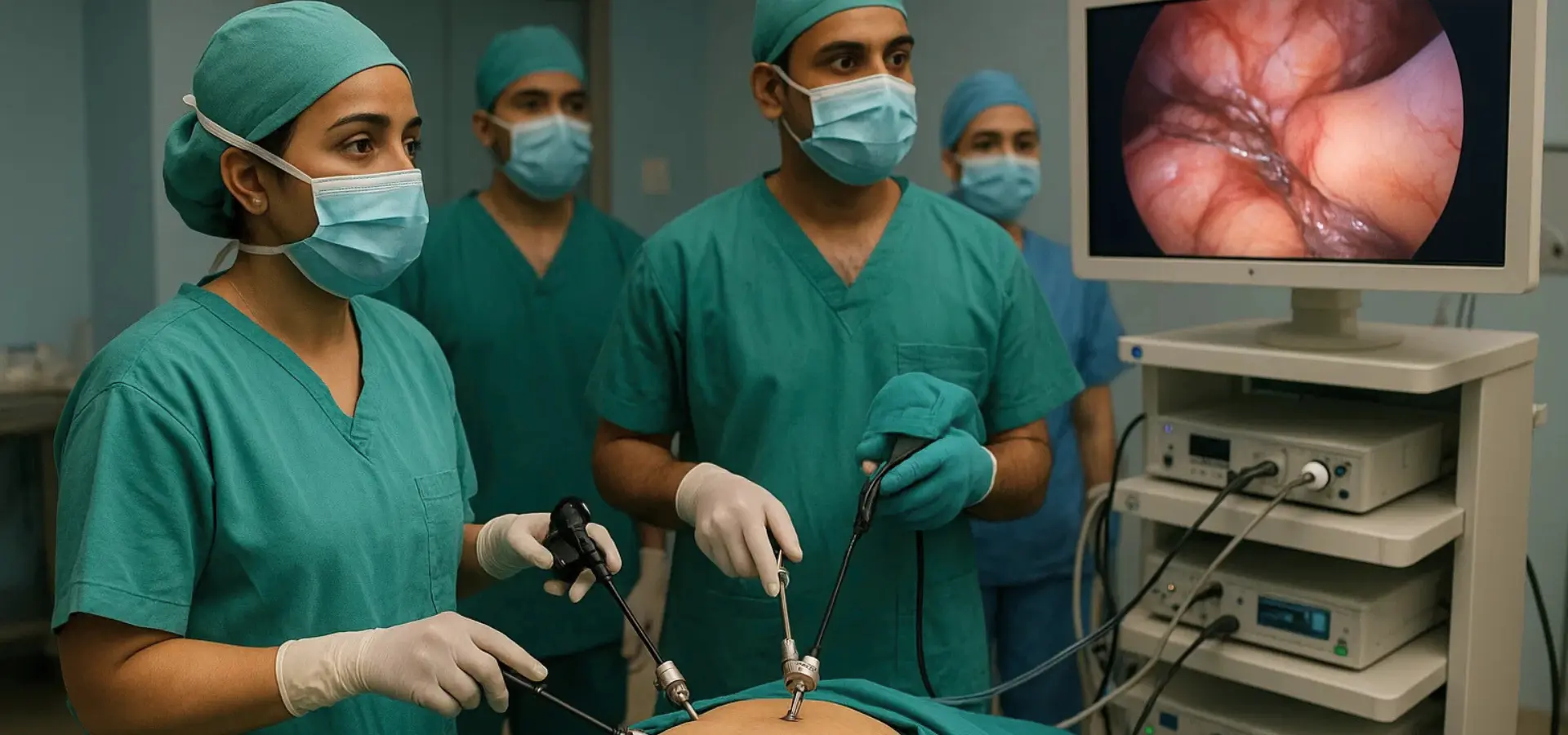
Minimal access surgery overview in India is best, with affordable cost and good technology. Many hospitals give the best results with a high success rate. Indian hospitals are also open to foreign clinics. They are also known as minimally invasive surgery and allow operations with fewer incisions.
Invasive surgery is known for more blood loss and more time in recovery. There are many procedures which is now easy after the invention of the less invasive methods, examples are cholecystectomy, tumour surgeries and different surface surgeries. Most of the time, surgical treatment is a terminal method and recovery time.
What is Minimal Access Surgery?
Minimal access surgery overview describes a modern technique where operations are carried out through very small incisions, rather than traditional open cuts. Surgeons use slender instruments and a tiny camera—known as a laparoscope, endoscope, or sometimes robotic tools—to navigate and operate inside the body while watching on a screen.
Book Appointment
GET A FREE QUOTE
This precise approach minimises injury, leading to less pain, smaller and less noticeable scars, shorter hospital stays, and quicker return to daily life. It is widely used in procedures like gallbladder removal, hernia repair, joint surgeries, and even complex robotic interventions. By reducing trauma and enhancing surgical accuracy, this method offers safer and more efficient outcomes across a broad range of medical specialities.
Types of Minimal Access Surgery
Minimal access surgery is the method of operating on internal organs without a large incision. Different surgeries can be accessed with the help of laparoscopy, endoscopy, and some robotic tools. These surgeries are done on an emergency basis to reduce the symptoms of any person. They are adopted by people because of their relevance to the body.
Minimal access surgery is all about doing surgeries with as little cutting as possible. Instead of big, open incisions, surgeons use tiny openings, cameras, or robots to get the job done in the gentlest way possible. Here are the main types:
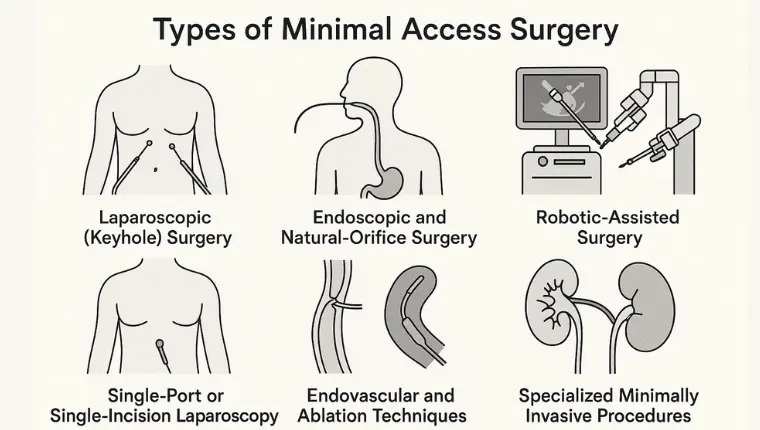
Types of Minimal Access Surgery
- Heart Surgery: Instead of opening the chest completely, surgeons use one or two small cuts to reach the heart—reducing pain and speeding up recovery.
- Spine Surgery: Modern imaging and skinny tools allow surgeons to fix spinal problems through very small openings, minimising muscle damage.
- Other niche areas: Surgeons are also using these methods for facial lifts, eye surgeries, and more.
Why Go Minimal?
This approach emphasises comfort and safety. Patients experience less pain, shorter hospital stays, and quicker recoveries, all while getting outcomes just as solid as with traditional surgery. As technology keeps improving, minimal access surgery is finding new uses across nearly every medical field.
Minimal Access Surgery Overview
Minimal access surgery is a modern surgical approach that avoids large incisions by using one or more small cuts instead. Through these tiny openings, surgeons insert a slender camera and special tools, guiding their actions while watching a live video feed. This technique—whether done in the abdomen, chest, or joints—results in much less tissue damage, reduced pain, and quicker healing compared to traditional surgery.
Book Appointment
GET A FREE QUOTE
It also leads to smaller, less noticeable scars and shorter hospital stays. Surgeons can now use advanced tools like robots for even greater precision and control, making complex operations more manageable. Widely applied in procedures like gallbladder removal, hernia repairs, and joint repairs, minimal access surgery is transforming patient care by offering safer, faster, and more comfortable surgical experiences.
Success Rate of Minimally Invasive Surgeries
A minimally invasive surgery overview reflects today’s surgical advances—delivering strong results with minimal disruption. By using small incisions, cameras, fine instruments, or robotic assistance, these processes dramatically reduce pain, scars, and recovery time.
For example, routine laparoscopic procedures—such as gallbladder or hernia operations—typically succeed 95% to 99% of the time in reputable medical centers. When it comes to diagnosing or treating inside the uterus, success is nearly 98% to 100% for simple evaluations, and 80% to 95% for more complex corrective procedures, depending on how complicated they are.
Looking at heart care, minimally invasive bypass surgeries have shown long-term survival of around 96%, with complication rates very close to traditional methods, while offering faster recovery. In oncology, laparoscopic rectal cancer surgeries in certain Indian centres show disease-free survival rates of 86% over five years, comparable to open surgery. These methods also tend to lower complication rates—studies show a very low death rate in benign gynecologic laparoscopic and robotic procedures, about one in every 6,456 patients.
In short, minimally invasive surgery combines effectiveness, safety, and quicker healing—making it both comforting and powerful for patients across many treatment areas.
Hospital for Minimally Invasive Surgery
India boasts a robust healthcare infrastructure with numerous hospitals specialising in minimally invasive surgeries (MIS). These procedures, including laparoscopic, robotic, and endoscopic surgeries, offer patients benefits such as reduced scarring, shorter recovery times, and minimised postoperative pain. Hospitals across the country have adopted advanced technologies and skilled surgical teams to provide high-quality care in various specialities, including gastrointestinal, gynaecological, urological, and cardiac surgeries.
These hospitals are recognised for their commitment to advanced surgical techniques and patient care. Patients seeking minimally invasive procedures can consider these institutions for their expertise and comprehensive services.
|
Hospital Name |
Location |
|
Medanta - The Medicity |
Gurugram, Haryana |
|
Apollo Hospitals |
Chennai, Tamil Nadu |
|
Fortis Memorial Research Institute |
Gurugram, Haryana |
|
Max Super Speciality Hospital |
New Delhi |
|
Indraprastha Apollo Hospital |
New Delhi |
|
BLK-Max Super Speciality Hospital |
New Delhi |
|
Kokilaben Dhirubhai Ambani Hospital |
Mumbai, Maharashtra |
|
Manipal Hospital |
Bengaluru, Karnataka |
|
Artemis Hospital |
Gurugram, Haryana |
|
Yashoda Hospitals |
Hyderabad, Telangana |
|
Rainbow Children's Hospital |
Hyderabad, Telangana |
|
Aster CMI Hospital |
Bengaluru, Karnataka |
|
Sakra Premium Clinic |
Bengaluru, Karnataka |
|
Care Clinic Hospital |
Bengaluru, Karnataka |
|
Continental Hospitals |
Hyderabad, Telangana |
|
Global Hospital |
Chennai, Tamil Nadu |
|
Wockhardt Hospitals |
Mumbai, Maharashtra |
|
SRCC Children's Hospital |
Mumbai, Maharashtra |
|
Lilavati Hospital |
Mumbai, Maharashtra |
|
HCG Cancer Centre |
Bengaluru, Karnataka |
Minimally Invasive Surgery Cost
Minimally invasive surgeries in India offer advanced medical care at a fraction of the cost compared to many Western countries. The expenses vary based on the type of procedure, hospital location, and complexity. For instance, laparoscopic surgeries can range from ₹40,000 to ₹1,50,000, while robotic surgeries may cost between ₹1,50,000 and ₹2,50,000. It's essential to consult with healthcare providers for accurate estimates tailored to individual cases.
|
Procedure Type |
Estimated Cost (INR) |
Estimated Cost (USD) |
|
Laparoscopic Surgeries |
₹40,000 – ₹1,50,000 |
$500 – $1,800 |
|
Robotic Surgeries |
₹1,50,000 – ₹2,50,000 |
$1,800 – $3,000 |
|
Heart Bypass Surgery |
₹4,00,000 – ₹6,50,000 |
$5,000 – $8,000 |
|
Spine Surgery |
₹84,000 – ₹2,96,000 |
$1,000 – $3,500 |
|
Knee Replacement |
₹3,00,000 – ₹4,00,000 |
$3,600 – $4,800 |
|
Hip Resurfacing |
₹3,00,000 – ₹4,00,000 |
$3,600 – $4,800 |
|
Urological Procedures |
₹50,000 – ₹2,00,000 |
$600 – $2,400 |
|
Gynecological Procedures |
₹40,000 – ₹1,50,000 |
$500 – $1,800 |
|
Gastrointestinal Surgeries |
₹50,000 – ₹2,00,000 |
$600 – $2,400 |
|
Bariatric Surgery |
₹2,00,000 – ₹3,50,000 |
$2,400 – $4,200 |
We Care Health Services For Minimal Access Surgery
We Care Health Services provides advanced minimally invasive surgical solutions, combining cutting-edge technology with expert care to improve patient outcomes. These procedures are designed to reduce trauma, minimise scarring, and promote faster recovery compared to traditional surgeries.
Book Appointment
GET A FREE QUOTE
- Orthopaedic Procedures: Surgeries through small incisions using specialised tools, resulting in less pain, faster mobility, and shorter hospital stays.
- Spinal Surgeries: Procedures such as lumbar discectomy, microdiscectomy, laminectomy, and spinal fusion are performed with minimal incisions to enhance healing and reduce complications.
- Gynecologic Surgeries: Laparoscopic and robotic surgeries for fibroids, endometriosis, ovarian cysts, and other conditions, ensuring precision and quicker recovery.
- Endocrine Surgeries: Minimally invasive treatment for thyroid, parathyroid, and adrenal gland disorders, focusing on safety and optimal outcomes.
- Pediatric Surgeries: Laparoscopic and thoracoscopic procedures for conditions like appendicitis and hernias, designed to minimise pain and scarring in children.
At We Care Health Services, our commitment is to provide patient-centred care with minimally invasive surgical techniques, ensuring faster recovery, reduced discomfort, and a higher quality of life for all patients.