
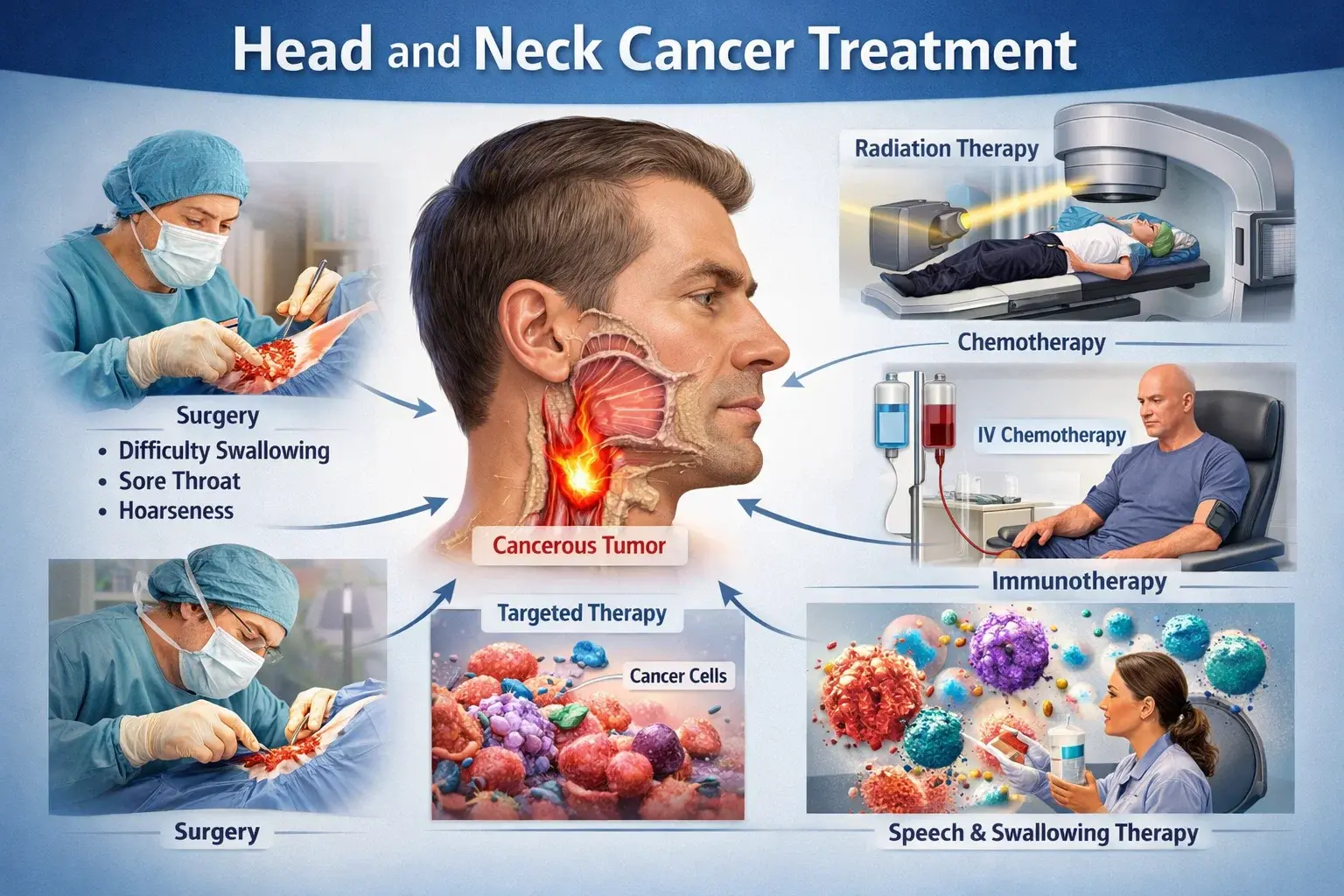
Head and Neck cancer treatment in India is one of the most savage replies to the medical technology and its efforts. Cancers in the region of the head and neck are malignancies that arise from locations like the mouth, throat, larynx, nasal cavity/sinuses, salivary glands, etc. Because these cancers affect several major functions associated with speech, swallowing, and breathing, they represent an enormous medical challenge. In recent years, India has become a major market for treating head and neck cancer; this is due to India having a good health care infrastructure, well-trained physicians who specialise in oncology, low dispensing of expensive treatments, and the St. Antonio-Massachusetts Cancer Treatment Team's combination of strategies.
Consult Now
GET A FREE QUOTE
Types of Head and Neck Cancer
India sees more oral cavity cancers than most places—80% tied to betel nut or gutka. These spread fast, needing urgent head and neck tumor removal. Laryngeal types rise with smoking, hitting men over 50 hard.

Types of Head and Neck Cancer
Compared to the West, where HPV drives oropharyngeal cases, India's mix demands more aggressive cuts. This ups the surgery needs; clinics handle twice the global average volume. Early detection could halve the burden, but habits keep numbers high.
Sun exposure affects the lips, and blunt smoking impacts the oral cavity. Also, sharp teeth or poor dental hygiene can cause irritation and discomfort for the patient. Consequently, gingivitis and/or malignancies of the floor of the mouth can lead to the presence of considerable swelling or blood clots. This can make it extremely difficult for the patient to chew food. Dentists can diagnose these conditions with the use of special instruments and/or small tissue specimens during an examination of the mouth. In India alone, the probability of cure increases to approximately 80% if diagnosed early. Additionally, quite a few clinics and private practices in India utilize inexpensive instruments to assist in the diagnosis of oral malignancies in a timely manner.
Symptoms of Head and Neck Cancer
Cancers of the head and neck are some of the few cancers for which a particular cause can often be identified. When examined, patients who report the symptoms described below commonly admit to being smokers and/or frequent consumers of substantial quantities of alcohol. In fact, some doctors candidly admit that it is quite rare to see patients with head and neck cancer who do not smoke or drink excessively.
Consult Now
GET A FREE QUOTE
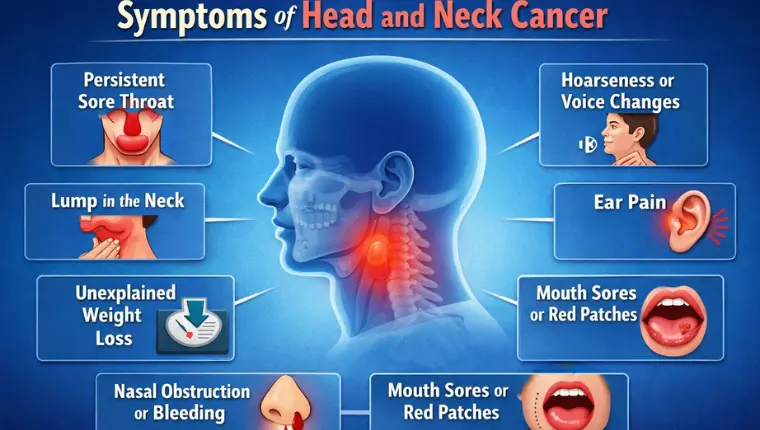
Symptoms of Head and Neck Cancer
- Regular check-ups by dentists (and doctors), including self-exams, along with knowledge of risk factors & symptoms, enable people to discover head/neck cancers while they are still in a stage that is less difficult to treat.
- In India, many screening camps have been established, & many more awareness campaigns have been developed for the high-risk areas to encourage identification as early as possible.
- From ear pain to voice shifts, early signs guide you to pros. In India, surgery like TORS, precise radiation, and rehab programs offer hope at fair costs. Survival jumps with fast action—many thrive post-care.
- If symptoms nag, see a doctor today. Your journey starts with one step toward better health.
Diagnosis of Head & Neck Cancer Treatment in India
Diagnosis in India uses top tools like PET-CT and biopsies for spot-on staging. Therapies range wide: surgery cuts clean, radiation targets smart, chemo and immuno fight system-wide. Urban spots offer all this; rural ones link up via networks. Costs vary, but schemes like Ayushman cover many. Outcomes improve yearly. Stats show one in four Indian men faces cancer risk from these habits. Women aren't safe either, as HPV links grow. Rural areas lag in checks, so cases are caught late. Yet, cities like Mumbai and Delhi see more survivors thanks to better care.
Minimally Invasive Method in Diagnosis
Your journey starts with a doctor's touch. They check your neck for swellings, feel lymph nodes, and look inside your mouth. A quick exam spots red flags like ulcers or white patches.
Next comes endoscopy. A thin tube with a light goes in through your nose or mouth. It shows hidden spots in the throat or voice box. Flexible ones bend easily; rigid ones give sharp views. Imaging steps up the game. Ultrasound maps neck lumps fast and cheaply, common in small clinics. CT scans slice through the head to stage the cancer—how far it has spread. MRI shines for soft parts, like tongue tumors, with clear details. These tools help plan your fight right.
- Choose surgery if the tumor is local and you're fit.
- Risks include voice changes or swallow issues, but teams manage them.
Side effects ease with ice packs or mouth rinses during treatment. Common mixes include cisplatin with 5-FU. You get IV drips over days, then rest. In metastatic cases, it slows the spread. India's generics keep costs low, so access grows. Side effects like nausea hit, but pills ease them. Doctors watch blood counts closely.
Therapies: Chemotherapy and Targeted Treatments
Chemo drugs kill fast-growing cells, used before or after other treatments. For advanced head and neck cancer, it shrinks tumors first. Common mixes include cisplatin with 5-FU. You get IV drips over days, then rest. In metastatic cases, it slows the spread. India's generics keep costs low, so access grows. Side effects like nausea hit, but pills ease them. Doctors watch blood counts closely.
The Rise of Targeted Therapy
Targeted drugs hit cancer's weak spots, like EGFR on cell surfaces. Cetuximab blocks it, slowing growth. Test first: biopsy checks markers. PD-L1 levels say if it works for you. Now routine in urban Indian oncology. For recurrent tumors, it pairs with radiation. Response rates top 40%, better than chemo alone. Fewer gut issues, too.
Consult Now
GET A FREE QUOTE
Immunotherapy: A New Frontier in HNC Treatment
Immunotherapy wakes your body's guards to fight cancer. Checkpoint inhibitors like pembrolizumab block PD-1, letting T-cells attack. For spread or return cases, it shines. Global trials show survival doubles in some. India adopts it fast; Keytruda is available in metros. You need a test for fit. Infusions every few weeks, with scans to track. Fatigue comes, but many feel stronger over time.
- Start with a biopsy to see if you qualify.
- Combine with other therapies for the best shot.
The Role of the Tumor Board in India
- No lone wolf wins this. Tumor boards gather surgeons, radiation docs, chemo experts, and pathologists. They review your scans and biopsy and pick the best plan.
- In India, cancer institutes like those in Pune run weekly meetings. This team approach cuts errors and boosts cures. Rural links via telemedicine grow, too.
- Patients feel heard; questions get straight answers.
Managing Treatment Side Effects and Rehabilitation
Treatments zap energy and mouth health. Mucositis burns like fire inside; xerostomia dries you out. Dysphagia makes eating a chore. Before starting, see a dentist for a cleaning and fixes. Nutritionists plan shakes or tubes if needed. Pain meds and gels soothe daily woes. Rehab starts early. Speech pros teach tricks to talk clearly post-larynx work.
Actionable Tips for Patient Rehabilitation
After treatment, rebuild step by step.
- Do swallowing exercises: sip water, blow bubbles to strengthen muscles.
- Eat soft foods like yogurt or mashed veggies; add protein shakes.
- Join support groups in cities for tips from survivors.
- Quit tobacco cold—counseling helps.
- Check in monthly for follow-ups to catch issues soon.
Looking Ahead: Prevention and Hope
Awareness saves lives—know your risks and check lumps early. Ditch tobacco and booze to slash chances. Indian oncology pulls in new tech, matching world care. Hope runs strong. With teams and tools, more beat head and neck cancer. Talk to a doc today; your story can end well.
Head and Neck Cancer Surgery in India
The primary treatment option for these cancers is surgery and surgeons who provide high-quality care to their patients and families through surgery are found throughout many hospitals in India. More information on cancer treatment surgical procedures will be described in the following paragraphs as well as the important role that early intervention plays in successful outcomes from these procedures. In addition, India has a well-trained team of oncologists working with high-quality medical facility infrastructure and offers reasonable prices for providing high-quality surgical treatment for cancer of the head & neck.
Primary Resection and Margin Control
Surgeons remove the tumor with a wide local excision, cutting a clean border around it. This aims for R0 resection, where no cancer cells remain. In India, frozen section checks during surgery confirm clear edges.
Tools like electrocautery seal blood vessels fast. For tongue cancers, they preserve nerves to keep taste and speech. Success hinges on the surgeon's skill; top teams achieve 90% clear margins. Patients wake up with less pain thanks to these methods. Follow-up scans track healing. This step sets up the rest of the treatment.
Neck Dissection Strategies: Elective vs. Therapeutic
Neck dissection clears lymph nodes where cancer hides. Elective ones happen for early cancers with no visible nodes, to prevent spread. Therapeutic dissections target swollen nodes in later stages.
Selective neck dissection spares vital structures like veins and nerves. Radical versions remove more but cause more side effects. Indian guidelines favor selective for cN0 necks, based on tumor site.
- For oral cancers, levels II-IV get checked first.
- Risks include shoulder weakness from nerve cuts.
- Recovery takes weeks, with physio helping regain strength.
Mandibular and Maxillary Reconstruction Considerations
When cancer eats jaw jawbone, a segmental mandibulectomy removes the bad part. Plates hold the jaw steady right away. Free flaps from legs or arms rebuild the shape.
Maxillary defects need dental implants later. In India, fibula flaps from the calf work well for long bones. Costs range from $5,000 to $15,000, covered by schemes like Ayushman Bharat. Healing takes months, but patients eat solids sooner. Dentists fit prosthetics for bite. These fixes restore smiles and function.
Principles of Microvascular Free Flap Reconstruction
Free flaps use blood vessels hooked to neck arteries for new tissue. Radial forearm flaps cover tongue defects with thin skin. Fibula flaps build a jaw with bone. Indian surgeons train abroad but adapt to local needs. Success rates hit 95% in cities like Delhi. Hyperbaric oxygen boosts healing in tough cases by pumping pure air.
- Donor sites heal with minimal scars.
- Flaps match the color and feel of lost tissue.
- Watch for flap failure signs like cool skin.
Rehabilitation of Speech (Alveolar Ridge Defects)
After ridge removal, speech slurs from air leaks. Maxillofacial prosthetics plug gaps with custom plates. Speech therapy trains tongue movements weekly.
Kids adapt faster than adults. In India, NGOs offer free sessions. Practice with mirrors builds confidence. Clear words return in 3-6 months for most. Family support speeds it up. These tools keep social life alive.
Functional Outcomes: Swallowing (Dysphagia Management)
Surgery stiffens the throat, causing choking risks. Dietitians start with soft foods like soups. Speech pathologists teach safe swallow techniques. Feeding tubes help short term if needed. Multidisciplinary teams meet often to tweak plans. Most wean off tubes in weeks.
- Chew slowly to avoid aspiration.
- Thicken liquids for better control.
- Track weight to spot issues early.
Consult Now
GET A FREE QUOTE
Oropharyngeal Cancer Surgery in India
Oropharyngeal cancer surgery in India is done to take out cancers found in the tonsils, base of the tongue, and soft palate. Surgery aims to remove cancer while still allowing patients to speak, eat, and breathe as much as possible. Several advanced surgical techniques are being used in India to allow doctors to perform surgery on oropharyngeal cancer, including transoral robotic surgery and laser-assisted techniques.
This type of surgery is done to remove the tumour without damaging neighboring tissue. In conjunction with skilled surgeons, modern diagnostic capability, and post-operative rehabilitation services, surgeons will provide their patients with improved outcomes. Additionally, costs are reasonable, and there is a full continuum of care for patients with cancer in India, making it an excellent option for surgery for patients with oropharyngeal cancer.
In metro hospitals like AIIMS, TORS cuts hospital stays to days. Bleeding stays low, under 50 ml. Patients speak and eat sooner. Adoption grows, but training limits it to big cities. Costs drop with local tech. This option suits HPV-linked cases best.
In advanced cases, it pairs with chemo. Voice rehab starts day one with humming exercises. Indian survivors join support groups. Stoma care needs daily cleaning. Life adjusts, but many return to work. This step trades voice for survival.
Postoperative Management and Multimodality Therapy Integration
Post-operative management of the patients is performed with the help of different procedures. Long-term outcomes can be improved after the post-operative follow-up procedure. It includes care includes controlling pain, monitoring wounds, providing nutritional support, and mobilising as soon as possible after surgery to regain function.
The most common type of cancer in the head and neck is squamous cell carcinoma, which arises in the cells that line the inside of the nose, mouth, and throat. Other less common types of head and neck cancers include salivary gland tumors, lymphomas, and sarcomas. Cancers spread in three main ways. The first is a direct extension from the primary site to adjacent areas. The second is spread through the lymphatic channels to the lymph nodes.
Adjuvant Radiotherapy and Chemotherapy Protocols
After surgery, radiation targets leftover cells if the margins were close or nodes break out. It starts 4-6 weeks post-op, in 6-week courses. Chemo adds drugs like cisplatin for high-risk cases. Timing matters to let wounds heal. Indian protocols follow NCCN guidelines, tailored to resources. Side effects include dry mouth, which can be alleviated with saliva substitutes. Survival jumps 20% with this combo. Scans guide doses. Teams watch for heart risks in long treatments.
Managing Post-Surgical Complications: Infection and Fistula
Infections show as fever or pus; antibiotics fight them quickly. Pharyngocutaneous fistulas leak saliva through the skin, needing wound care and nutrition tweaks. High-risk patients get preventive drains. In humid India, moisture worsens issues, so dry dressings help. Most heal in 2-4 weeks, and vigilance cuts hospital time.
- Spot red swelling early.
- Rest voice to aid closure.
- Nutrition via veins if oral intake fails.
Long-Term Follow-up and Survivorship Care in the Indian Setting
Follow-ups start monthly, then yearly, with exams and scans. Recurrence peaks in year two, so stay alert. Nutrition checks prevent weight loss from dry mouth. Psychosocial help tackles fear or depression. In India, community programs offer counseling. Quit tobacco for good odds. Survivors live full lives with check-ins. Family involvement strengthens bonds. This care extends beyond cure.
Treatment Options in India: Head and Neck Cancer Treatment in India
Treatment for head and neck cancer is multidisciplinary, involving surgery, radiation therapy, chemotherapy, targeted therapy, and immunotherapy. The choice of treatment depends on cancer type, stage, patient health, and available technology.
|
Hospital Name |
City |
Type |
Specialty / Strength |
|
Tata Memorial Hospital |
Mumbai |
Government |
High volume head and neck oncology, advanced surgery |
|
AIIMS |
New Delhi |
Government |
Multidisciplinary cancer care, affordable treatment |
|
Regional Cancer Centre (RCC) |
Thiruvananthapuram |
Government |
Comprehensive oncology services |
|
Chittaranjan National Cancer Institute |
Kolkata |
Government |
Dedicated cancer institute |
|
Medanta – The Medicity |
Gurugram |
Private |
Advanced surgical and radiation oncology |
|
Apollo Cancer Centre |
Chennai |
Private |
Robotic surgery, precision radiotherapy |
|
Max Super Specialty Hospital |
New Delhi |
Private |
Integrated cancer care |
|
HCG Cancer Centre |
Bengaluru |
Private |
Focused oncology network |
|
Narayana Health |
Bengaluru |
Private |
Cost effective advanced cancer care |
|
Fortis Memorial Research Institute |
Gurugram |
Private |
Multimodal cancer treatment |
Surgery: Surgical removal of tumors is often the primary treatment, especially in early-stage cancers. Indian hospitals employ advanced surgical techniques, including minimally invasive and robotic-assisted procedures, to remove tumors while preserving function and appearance. Reconstructive surgery, including microvascular free flap techniques, restores form and function after tumor removal.
Radiation Therapy: High-energy radiation targets cancer cells, either alone or in combination with surgery or chemotherapy. Modern techniques such as Intensity-Modulated Radiation Therapy (IMRT) and stereotactic radiotherapy allow precise targeting, reducing damage to surrounding healthy tissue.
Chemotherapy: Uses drugs to kill cancer cells or shrink tumors before surgery or radiation. Combination chemotherapy protocols are tailored based on tumor type, stage, and patient tolerance.
Targeted Therapy: Involves drugs that specifically target molecular pathways involved in cancer growth. Therapies like EGFR inhibitors are used for certain head and neck cancers, improving outcomes while minimizing side effects.
Immunotherapy: Recent advancements include immune checkpoint inhibitors, which help the body’s immune system recognize and attack cancer cells. These treatments are increasingly available in leading Indian oncology centers.
Multidisciplinary Cancer Care
Indian hospitals provide multidisciplinary cancer care, integrating surgical oncology, medical oncology, radiation oncology, pathology, radiology, nutrition, speech therapy, and psychological support. Tumor boards comprising specialists from multiple fields design individualized treatment plans, optimizing survival rates and post-treatment quality of life.
Cost of Head and Neck Cancer Treatment in India
Treatment costs in India are significantly lower than in Western countries. Surgery, radiation, chemotherapy, and advanced therapies are available at a fraction of the cost without compromising quality. Public hospitals offer affordable options for domestic patients, while private hospitals provide advanced care with comprehensive support. Cost packages often include consultation, diagnostics, surgery, hospitalization, medications, and follow-up care, making treatment accessible for domestic and international patients.
|
Treatment Component |
Government Hospitals (INR) |
Private Hospitals (INR) |
|
Diagnosis & Biopsy |
₹5,000 – ₹25,000 |
₹20,000 – ₹60,000 |
|
Surgery |
₹30,000 – ₹2,00,000 |
₹1,50,000 – ₹8,00,000 |
|
Radiation Therapy |
₹40,000 – ₹1,50,000 |
₹1,20,000 – ₹6,00,000 |
|
Chemotherapy |
₹30,000 – ₹1,50,000 |
₹1,00,000 – ₹4,00,000 |
|
Targeted / Immunotherapy |
Limited availability |
₹2,00,000 – ₹12,00,000 |
|
Hospital Stay & Care |
Mostly subsidized |
₹50,000 – ₹2,00,000 |
|
Total Estimated Cost |
₹1,00,000 – ₹3,50,000 |
₹3,00,000 – ₹15,00,000+ |
We Care Health Services For Specialist Oncologists and Expert Care
India has a large pool of highly trained oncologists specializing in head and neck cancers. Many have international exposure and participate in global research initiatives. Hospitals also employ specialized nursing staff, speech therapists, nutritionists, and psychologists, ensuring holistic patient care.
Conclusion
Head and neck cancer surgery in India tackles oral cavity and oropharyngeal threats wit skill and innovation. From precise resections to advanced flaps, treatments save lives and restore functions. Early detection through awareness cuts the burden. Multidisciplinary teams in growing centers promise better outcomes. Survival rates climb as tech spreads to more areas. If you face symptoms, seek a specialist soon—prompt care changes everything. Join the fight by sharing knowledge and supporting research.
Consult Now
GET A FREE QUOTE