
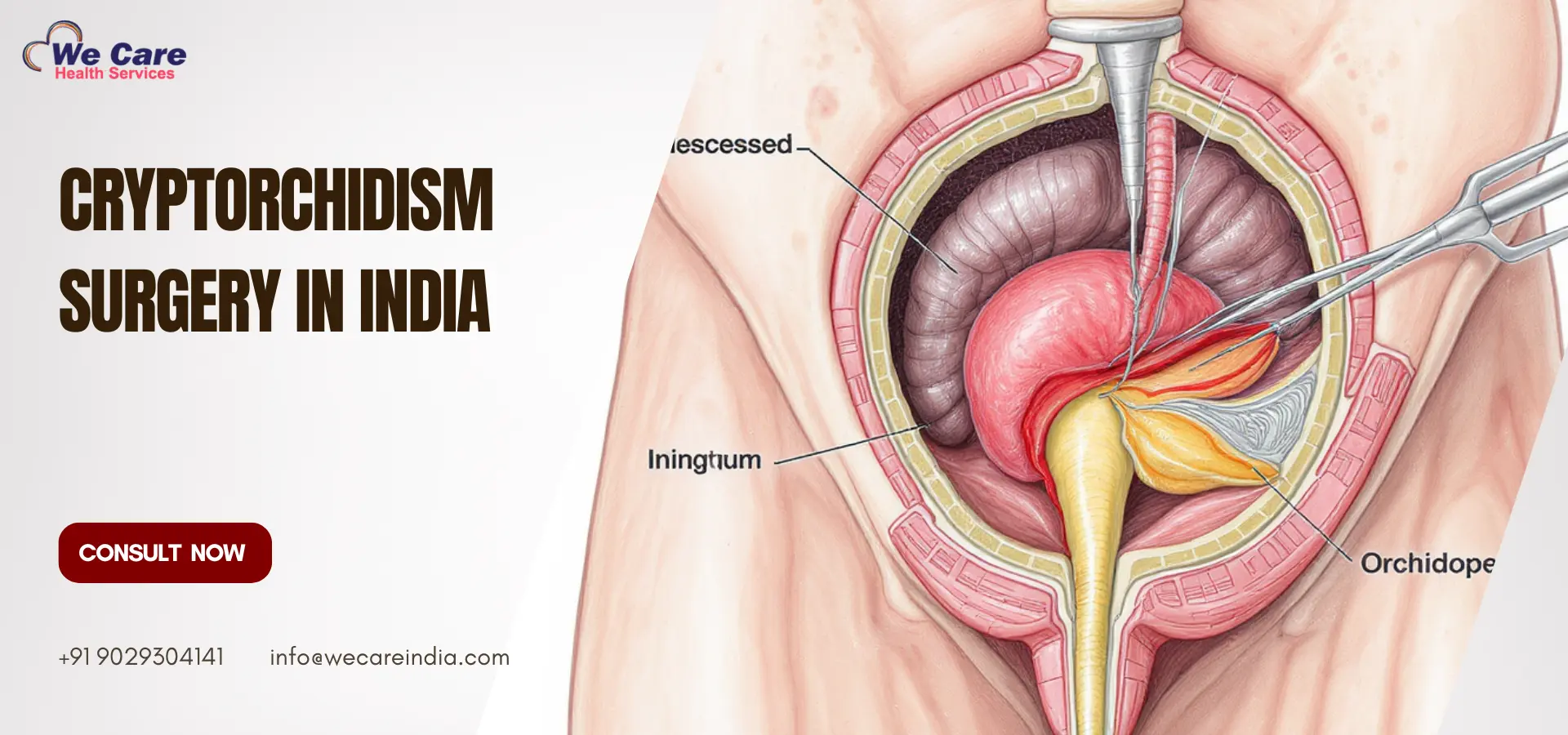
Undescended testicles are known as cryptorchidism, which is a birth defect and can be cured with the help of surgery. Cryptorchidism surgery in India is good for the initial days. Orchidopexy allows for the testicle to be placed into position within the scrotum and promotes normal testicular growth and future fertility. This procedure is performed by highly trained pediatric urologists and surgeons using safe, current surgical techniques, generally between six months and one year of age, for optimal outcome. The recovery time from this surgery is typically short, with high rates of success. Promptly repairing cryptorchidism lessens the development of complications in later life.
For Free Online Consultation
GET A FREE QUOTE
What is Cryptorchidism?
Cryptorchidism is a birth defect that can occur in male infants, whereby one or both testicles fail to descend into their proper place in the scrotum before birth. If a testicle hasn't moved into its proper position in the bag of skin hanging behind the penis (scrotum) before the birth of a baby boy. Normally, testicles descend naturally throughout a man's development; however, sometimes this process does not happen on its own. Many parents first notice it during a routine newborn checkup.
In some babies, the testicle may come down by itself within a few months. Some children may experience spontaneous descent of their testicles within three months. It is important to provide timely treatment, as this will ensure that the infant develops appropriately. Treating an undescended testicle when your son is still a baby may lower the risk of complications later in life, such as infertility and testicular cancer.
Cause of Cryptorchidism
The exact cause of an undescended testicle isn't known. A combination of genetics, maternal health, and other environmental factors may disrupt the hormones, physical changes and nerve activity that influence the development of the testicles. In a developing fetus, the testicles move during development under the influence of hormones, proper physical development, and an adequate amount of space within the body. If one or more of these factors is compromised, the testicles do not move to their normal position.
- Low birth weight
- Low levels of certain hormones can affect the normal movement of the testicles during fetal development.
- Premature birth
- Family history of undescended testicles or other problems of genital development. Family history or genetic changes can influence how the reproductive organs develop.
- Conditions of the fetus that can restrict growth, such as Down syndrome or an abdominal wall defect.
- If the pathway through which the testicle moves is narrow or blocked, descent can be affected.
- Alcohol use by the mother during pregnancy
- Cigarette smoking by mother or exposure to secondhand smoke
- Conditions such as diabetes, smoking, or exposure to certain chemicals during pregnancy may increase risk.
- Diabetes in the mother — type 1 diabetes, type 2 diabetes or gestational diabetes
- Parents' exposure to some pesticides
- Babies with lower weight may have delayed or incomplete physical development.
For Free Online Consultation
GET A FREE QUOTE
Symptoms of Cryptorchidism
The signs and symptoms of cryptorchidism are very easily noticeable, both testicles may be absent in the scrotum. Premature birth has these problems commonly. Most infants with Cryptorchidism will not show any symptoms, especially at this early age. One noticeable symptom of Cryptorchidism is a lack of testicle(s) in the scrotum during a physical examination.
An undescended testicle isn't in a cooler environment. This might increase the risk of complications later in life. Occasionally, an undescended testicle may be detected during a physical examination and can typically be felt near the groin. Treating an undescended testicle when your son is still a baby may lower the risk of complications later in life, such as infertility and testicular cancer. As the child ages and Cryptorchidism is not treated, potential problems can arise, including delayed development of the child, fertility problems for the boy, and/or a sensation of weight in the groin area.
- One or both testicles are not visible in the scrotum
- The scrotum looks smaller or less developed on one side
- A testicle may be felt in the groin but not in the scrotum
- No pain or discomfort in most infants
- Uneven appearance of the scrotum
- Delayed testicular development as the child grows
- Possible feeling of heaviness in the groin in older boys
- Fertility concerns later in life if not treated early
Different Types of Treatment for Cryptorchidism Surgery
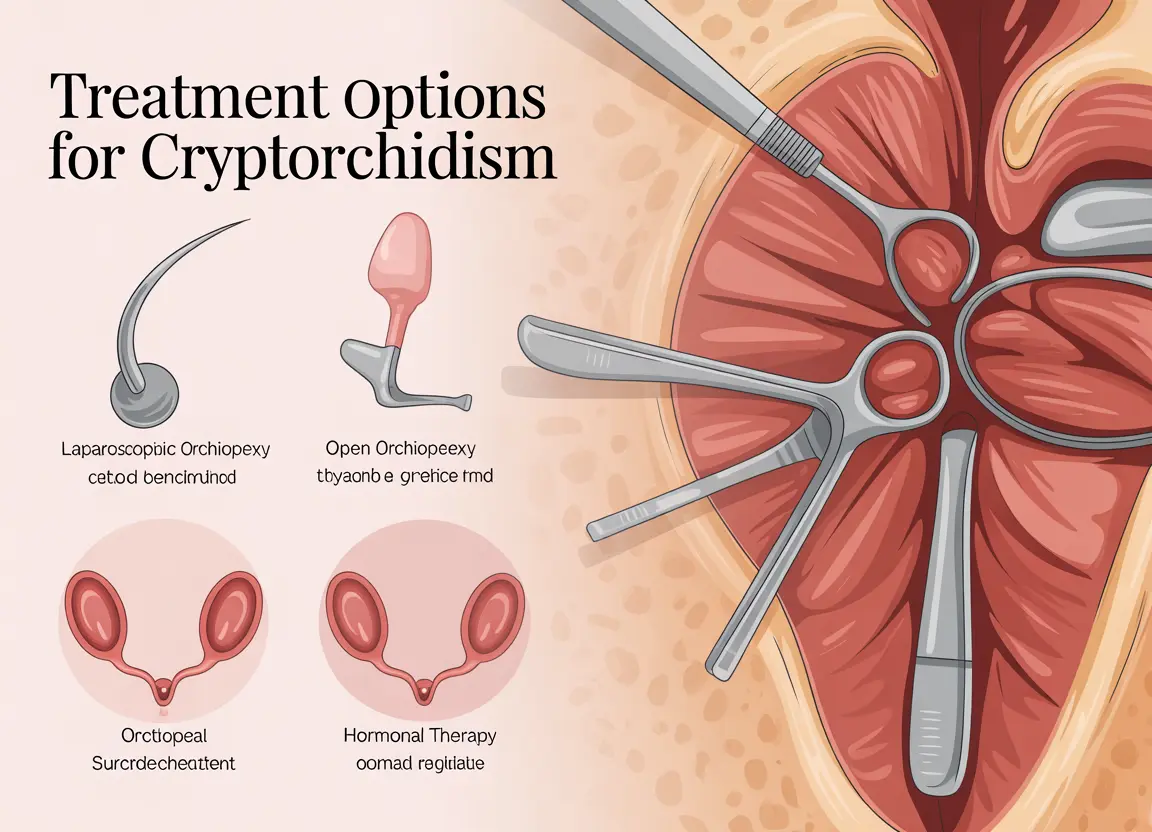
Increasing the level of the male sex hormone testosterone can increase the likelihood that undescended testicles will move into the scrotum. This is done by either giving injections of human chorionic gonadotropin (HCG) or gonadotropin-releasing analog (not approved in the United States). The surgical procedure is called orchiopexy. It is usually recommended between six months and one year of age for the best results. Orchiopexy is performed when other treatments, such a hormonal therapy, fail. It is performed under general anesthesia. If there is testicular torsion (twisting), the surgeon makes an incision in the scrotal skin and attempts to untwist and stabilize the spermatic cord.
For Free Online Consultation
GET A FREE QUOTE
Most children recover quickly and can go home the same day. Early surgical treatment helps support normal testicular growth, improves future fertility, and reduces the risk of complications later in life.
Different Types of Treatment for Cryptorchidism Surgery
Cost of Cryptorchidism Surgery
The costs related to artificial Cryptorchidism Condition Treatment in India are typically more affordable when compared to many other countries, while still maintaining high-quality modern surgical techniques and outcomes. The overall cost of the procedure will be influenced by a patient's choice of artificial disc type, the medical facility where the surgery occurs, the level of experience and expertise of the surgeon, and any additional diagnostic tests or post-operative rehabilitation services required.
|
Procedure |
Approximate Cost (INR) |
|
Open Orchiopexy |
₹25,000 – ₹60,000 |
|
Laparoscopic Orchiopexy |
₹30,000 – ₹70,000 |
|
Fowler-Stephens Orchiopexy |
₹40,000 – ₹80,000 |
|
Microsurgical Orchiopexy |
₹50,000 – ₹90,000 |
|
Orchiopexy (general private hospital) |
₹35,000 – ₹1,20,000 |
|
Undescended Testicle Surgery (international pricing) |
₹1,80,000 – ₹3,00,000* |
We Care Health Services For Cryptorchidism Condition Treatment in India
We Care Health Services collaborates with some of the best spine surgery facilities and most qualified spine surgeons in India to provide Cryptorchidism Condition Treatment and other spinal healthcare services. They are well known for providing spine surgery options at affordable and clear, upfront pricing. By providing patients with affordable options, We Care Health Services makes advanced spine surgery accessible for a large number of individuals. Patients have reported that We Care Health Services provides personalized medical support, working with a coordinator to assist them through their appointment(s), to assist them with their hospital admission(s), to assist them with their surgical experience, and follow-up. Many patients have reported having a more comfortable recovery experience, better communication throughout their treatment(s), and that their treatment package was professionally managed by We Care Health Services.
- Best for the multiple problems in the body.
- Different types of treatment can be provided with care
- Best staff and doctors with good communication skills.
- Known for the best results and high success rate of the surgeries.
- The survival rate of the patients is also high
- Best known for its cost transparency and affordable options.
- Has the cost of the packages been discussed?
- Better recovery and follow-up care.
Advantages of Cryptorchidism Treatment in India
Cryptorchidism procedures are offered in India with many meaningful benefits to provide pain relief to patients while being an uncomplicated and gratifying experience. The cost for individuals is relatively low in comparison to that of many other countries, thus enabling individuals to obtain the highest quality of spinal treatment at an affordable rate. Procedures are being performed by highly qualified specialist spine surgeons utilizing modern imaging equipment, enabling accurate placement of needles and safe injection of cement. Most hospitals provide Cryptorchidism as a day procedure, so most patients can return home the same day rather than having an extended recovery period following surgery. Patients frequently report relief from their pain within hours of the procedure, once the vertebrae have been stabilized and the collapse of the vertebra has been halted.
For Free Online Consultation
GET A FREE QUOTE
- Patients can recover quickly than they would with traditional surgery since patient rehabilitation takes much less time, allowing them to resume normal activities and regain their confidence in just a few days.
- Hospitals in India know how to provide patients with good personalised care that makes it a comfortable experience for those coming from other parts of India and from overseas.
- ET has long-term benefits of improving patients' functional abilities as well as preventing them from developing future compression fractures due to osteoporosis.
- Traditional methods for treating compression fractures included extended bed rest, significant doses of narcotics, and physiotherapy.
- Although these methods may provide temporary relief from pain, they often result in increased mobility limitations and eventually re-fractures.
- Using the new technology of Cryptorchidism can be an effective, less-invasive alternative to treat acute or chronic back pain resulting from compression fractures.
- In addition to providing immediate pain relief, Cryptorchidism will prevent future compression fractures from occurring, allowing you to enjoy a more active lifestyle.
Conclusion
The conditions of Cryptorchidism can be successfully treated with an appropriate diagnosis and management. It has been found that in India, the combination of an accurate diagnosis, the use of medical management, vestibular rehabilitation, and lifestyle modifications, is the most effective means of providing relief for most individuals. Successful treatment outcomes are determined by the prompt identification of the underlying cause of the symptoms of dizziness or vertigo, such as inner ear pathology, neurological factors, or postural dysfunction. The use of non-invasive treatments, such as balance exercises and repositioning maneuvers, provides long-term benefits, while medications provide temporary symptom relief. With the availability of qualified specialists, a variety of treatments, and the ability to provide cost-effective care, India is able to provide effective solutions for restoring balance, confidence and quality of life.