
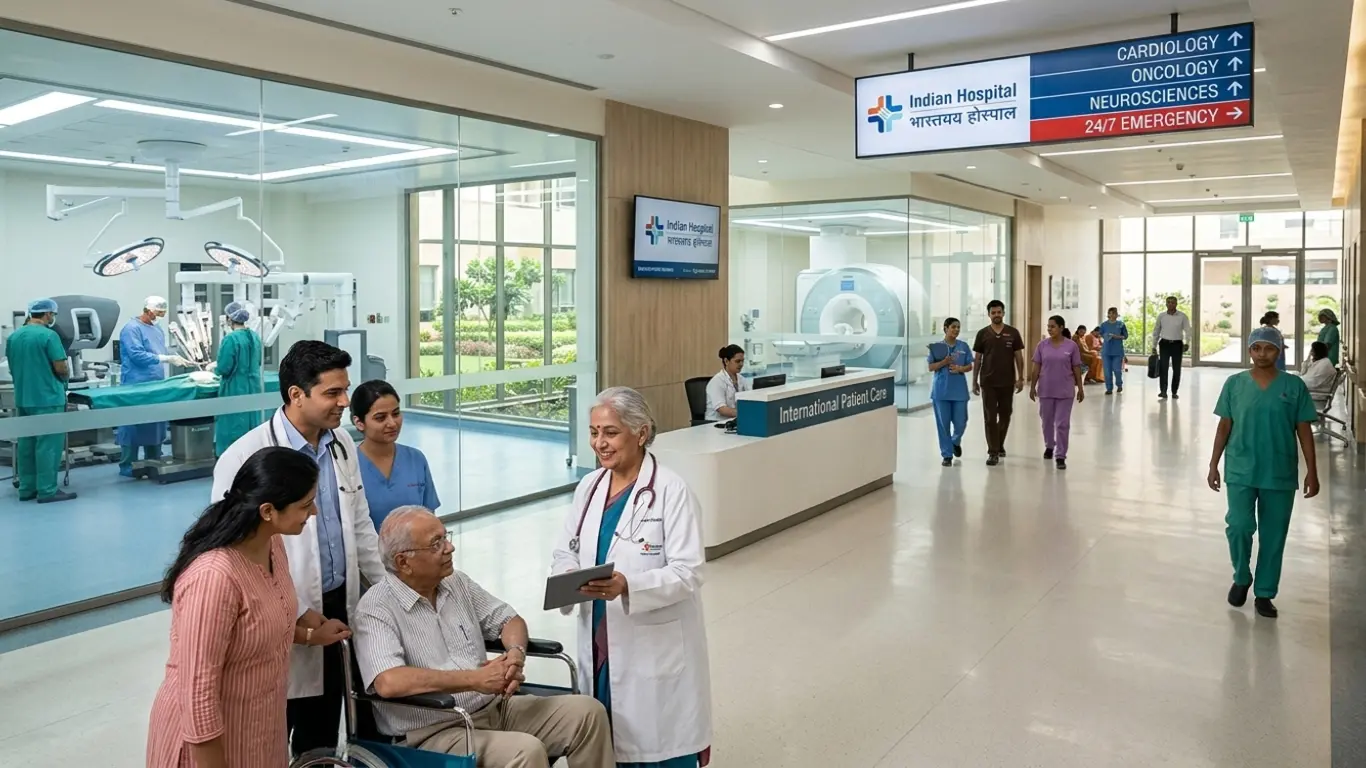
Best Hospitals in India: World-Class Medical Care
What do you expect from the best hospitals in India? They are giving you facilities, with insurance and affordable packages. They are coordinated with the best Indian agencies for better patient assistance. Patients with different languages are also well-managed by the Indian agencies, with the best coordination of staff.
For both Indian citizens and foreign patients, taking the help of doctors and emergency admissions is now easy. We Care Health Services is making itself a powerful choice for everyone. Patients with different languages are also well-managed by Indian agencies, with the best coordination of staff.
What Can You Expect from the Best Hospitals in India?
Unless you have the time and experience to evaluate a physician, hospital, and care team, choosing the right healthcare provider can be a very difficult challenge.
For an organization to qualify as a We Care Health Services Partner, they must meet the following criteria — our partner facilities undergo an exhaustive assessment process to ensure our clients will be receiving the best care possible.
Health & Safety
We only partner with medical facilities that meet or exceed US standards for cleanliness, safety, professionalism, and competency. Most of our represented hospitals are internationally accredited by JCI or ISO.
Communication
We ensure our represented partners can converse with our clients in fluent English at all stages of patient contact — from nurses making the beds to surgeons in the operating rooms.
Modern Equipment & New Technologies
We regularly consult with international health professionals to ensure that our partner facilities are making use of modern equipment and the latest medical technologies.
Insurance Policy
We require our partners to maintain valid insurance policies protecting clients receiving surgical procedures and/or medical treatment.
Site Inspections
indiahealthtour.com often insists on routine inspections of our international partner facilities. The inspection criteria include: standards of sanitation, infection control and hygiene protocols, disposal of waste and sharps, food preparation and quality, and security and safety for staff and patients.
The simple test: We Care Health Services only partners with those institutions that we would trust with our own families.
The International Benchmark Hospitals in India
Do you want a world-class hospital in India or Delhi NCR? An international benchmark defines the global standards. An International standard is checked when any person wants high-level treatment and also stays in the hospital for more time. There are some hospitals which are maintaining standards at a global level.
There are different measuring points of people, and one such is the technical standards of the hospitals. According to the rules set up, there are both government and private hospitals in the same list. We have already mentioned a checklist for you, and here is a reference to some of the best hospitals in India. They are often referred to as the top hospitals in India.
Top 10 Hospitals in India
These hospitals maintain global standards with both funded money and private budget programmes. In the last decade, robotic-assisted surgery, PET-CT scanners, CDSCO-certified surgical robots, and Devhast for robotic surgeries have become hallmarks of technical excellence in Indian hospitals.
All India Institute of Medical Sciences (AIIMS) & Safdarjung Hospital, New Delhi
These are government hospitals in central Delhi and one of the major health care systems supporting health services. AIIMS was established in 1956 and continues to serve as the country's top government-run medical institute, combining patient care, research, and education.
AIIMS is famous for handling highly complex and tough surgeries, rare diseases, and multidisciplinary treatments. The doctors here are often pioneers in their fields, and many are trained at international centres. Beyond patient care, AIIMS is a national reference centre for medical research. Here you will find affordable services and advanced medical facilities.
Medanta – The Medicity, Gurugram
Medanta is one of India's leading private super-speciality hospitals, known for blending advanced medical technology with a strong team of specialists. Founded by renowned cardiac surgeon Dr. Naresh Trehan, Medanta offers excellence across cardiology, neurology, oncology, orthopaedics, and transplant or organ sciences.
The hospital has modern robotic surgery units, hybrid operating theatres, and advanced imaging systems that meet international benchmarks. Medanta's philosophy focuses on teamwork, bringing doctors from different specialties together to design the best treatment for every patient. It is one of our recommendations for both international and Indian patients. Medanta is also considered the largest private hospital in India, spread across 43 acres with over 1,250 beds and more than 30 specialty departments.
Christian Medical College (CMC), Vellore
CMC Vellore holds a special place in Indian medical history. Founded in 1900 by Dr. Ida Scudder, it is one of the oldest and most respected teaching hospitals in Asia. CMC's strength lies in its blend of medical excellence, compassion, and affordability.
It offers strong programs in cardiology, neurosurgery, orthopaedics, and organ transplantation, while maintaining a strong community focus through outreach and charity work. The hospital is also a research hub, known for innovation in tropical medicine and infectious diseases. Many of India's top doctors have trained here, carrying forward its humanitarian mission.
Apollo Hospitals, Chennai
Apollo Hospitals revolutionized private healthcare in India when it opened its first branch in Chennai in 1983. It brought advanced medical technology, organized care systems, and a patient-friendly environment to the Indian landscape. Apollo Chennai remains its flagship unit, offering specialities in cardiology, oncology, neurology, and robotic surgery.
The hospital is known for its pioneering organ transplant program and heart care centre that has achieved international success rates. Apollo has a global patient base and maintains JCI and NABH accreditations, ensuring adherence to international standards of safety and quality.
Postgraduate Institute of Medical Education and Research (PGIMER), Chandigarh
PGIMER stands among the top public medical institutions in India, serving as both a research university and a tertiary care hospital. It is recognized for excellence in neurology, gastroenterology, and internal medicine. The institute's faculty are heavily involved in medical research and policy-making, contributing to India's health system on a national scale.
PGIMER also trains hundreds of postgraduate doctors every year, ensuring the next generation of specialists is equipped with top-tier clinical skills. Its patient services are efficient and affordable, reflecting the best of India's public healthcare system.
Kokilaben Dhirubhai Ambani Hospital, Mumbai
Kokilaben Hospital, located in Mumbai, represents the modern face of private healthcare in India. It combines cutting-edge medical infrastructure with five-star hospitality. The hospital has dedicated centers for cancer, neurosurgery, cardiology, and critical care, and boasts the largest number of full-time specialists in Western India.
Kokilaben was among the first Indian hospitals to implement the "Full-Time Specialist System," which ensures availability of senior doctors around the clock. The hospital also uses advanced robotics and imaging systems, making it a trusted destination for complex procedures and international patients seeking luxury medical care.
Fortis Memorial Research Institute (FMRI), Gurugram
Fortis Memorial Research Institute is a flagship hospital of the Fortis Healthcare network. Known for advanced tertiary and quaternary care, FMRI provides comprehensive medical services with special focus on oncology, cardiology, and organ transplantation. It is designed as an "Institute of Excellence," integrating technology and human expertise.
The hospital features smart ICUs, robotic surgery systems, and a strong emphasis on clinical outcomes. FMRI also stands out for its patient experience — comfortable infrastructure, supportive staff, and clear communication make treatment less stressful for patients and families.
P. D. Hinduja National Hospital & Medical Research Centre, Mumbai
P. D. Hinduja Hospital has been a trusted name in Indian healthcare for decades. Located in the heart of Mumbai, it offers a strong combination of specialist care, research, and innovation. The hospital's departments for nephrology, oncology, and cardiac care are among the best in the country.
Hinduja Hospital follows stringent global standards, holding NABH and ISO accreditations. It also operates a dedicated medical research wing that contributes to clinical trials and studies in collaboration with global institutions. Patients praise it for consistent quality, ethical practices, and compassionate care.
Narayana Health, Bengaluru
Founded by Dr. Devi Shetty, Narayana Health is globally admired for its mission to make quality healthcare affordable. The Bengaluru unit, known as Narayana Institute of Cardiac Sciences, is one of the largest cardiac hospitals in the world. It performs thousands of heart surgeries annually, including many for children and underprivileged patients.
Narayana Health has expanded into multiple specialties like oncology, orthopaedics, and critical care, while maintaining a focus on cost efficiency. Its model of high-volume, standardized care is often studied internationally as an example of balancing excellence with accessibility.
Sir Ganga Ram Hospital, New Delhi
Sir Ganga Ram Hospital blends tradition and modernity with remarkable balance. Founded in 1921, it is one of Delhi's oldest and most respected multi-specialty hospitals. The institution is known for departments like gastroenterology, nephrology, and reconstructive surgery. It serves both private and subsidized patients, offering a range of services under one roof.
The hospital's doctors are among India's most reputed specialists, and it plays an active role in postgraduate medical training. What stands out is its consistent record of clinical excellence, ethical medical practice, and community trust built over a century.
These ten hospitals together form the backbone of India's modern healthcare system. Each represents a different strength — AIIMS for research and public service, Medanta and Apollo for technology and private excellence, CMC and Narayana for compassion and affordability, and institutions like PGIMER, Hinduja, Fortis, Kokilaben, and Sir Ganga Ram for their specialized excellence. They not only treat millions of patients every year but also shape the way medicine is practiced and taught in the country. Whether public or private, each of these hospitals contributes uniquely to India's growing reputation as a hub for world-class healthcare.
Not sure which hospital is right for your condition?
Some Practical Advice for Choosing the Best Hospitals
We are giving you an exclusive guide for selecting a single hospital. You have to match hospitals with the diseases or treatment you are seeking. Hospitals with NABH and JCI accreditation are trusted places for patients.
Pick Your Hospital Based on What's Actually Going On
Got something simple? Fever, minor surgery — just see your regular doctor or the local district hospital. But if you're talking cancer, organ transplants, or serious heart problems, you want a big-league hospital known for handling tough cases and getting real results. Your primary doctor should know where to send you if things get complicated.
Match the Hospital to the Condition
If you're about to go under the knife, you deserve to know what you're getting into. Ask the surgeon or the hospital about their track record — survival rates, how many times they've done the operation, how often things go sideways. You wouldn't fly with a pilot who's only done one takeoff, right? Same logic.
Check the Multidisciplinary Approach
Major health problems are not a one-person show. You want a hospital where everyone works together — oncology teams that actually talk to each other, heart specialists who don't just pass the buck, plus people handling rehab and infection control. If the place doesn't have group meetings or "boards," that's a red flag.
Consider Logistics and Continuity of Care
If you'll need to keep coming back for checkups, pick a place you can actually get to without losing your sanity. See if they have video appointments, or if they'll help you get rehab close to home. Makes life a lot easier.
Verify Accreditation and Insurance Compatibility
Before you sign up for anything, make sure the hospital is legitimate — NABH or whatever the local gold standard is. Check if your insurance actually works there. Some hospitals have deals with insurance companies that might save you a lot, or at least make the bills a little less terrifying.
Budget Realistically
Government hospitals are way cheaper than private ones, but you might wait longer. Private hospitals are fast and modern, but your wallet will feel it. Always get a written estimate and ask for a proper breakdown. There's a ton of price variation even in the same city, so do your homework.
Visit, Meet the Team, and Ask Questions
If you can, go visit before you commit. Meet the surgeon, the anesthesiologist, some nurses — whoever's running the show. It helps to know who's got your back and what to expect after surgery. No need to be shy; it's your health, after all.
Centers That Balance Cost and Quality
If cost containment is essential but you still want tertiary expertise, public teaching hospitals such as AIIMS and PGIMER offer high-quality care at subsidized rates. Narayana Health demonstrates a different model: achieving quality outcomes at lower costs by standardizing pathways and scaling volumes. Trade-offs include waiting times and accommodation options. National studies and industry reports highlight the value orientation of these institutions.
We Care Health Services: Value With Services
We Care Health Services is one of the best hospital coordination services, helping patients globally. There are different terms and conditions of hospitals and treatment in different countries. So the hospital curriculum is really tough to define — with such legalities, we are working to inform both sides. We are providing a legal way of treatment in India, with the best coordination and cost transparency. There is no waiting list in the hospitals recommended by us. The personalized approach of the doctors and staff is helping many patients in the country.
In 19 years of our experience, we have earned honest reviews and testimonials. Here we are showing some of our best qualities, without offending the terms of other people:
What Do National Surveys Tell Us About Indian Hospitals?
Honestly, hospital rankings are kind of all over the place, and everyone's got their own angle.
You've got those big, flashy international lists — like Newsweek's World's Best Hospitals — where it's all about reputation and numbers, and Indian hospitals do pop up there pretty often. Then there's the homegrown stuff, like The Week Hansa Research and those rankings in medical magazines. Those dig a little deeper — they'll break things down by city or specialty, and actually care about what patients think, not just what some boardroom full of experts decides.
These local surveys are super useful. They'll spotlight a gem in, say, Pune that you'd never spot on some global list. Bottom line: don't just stare at one ranking and call it a day. Mix them up. That's how you get the real story.
Key Considerations About Indian Hospitals
A nuanced picture of where Indian healthcare stands today — its strengths, gaps, and areas of improvement.
Major Gap Between Policy/Standards and Reality
India has many well-written guidelines (like IPHS, NHM, NABH), but many hospitals fall short, especially at smaller, rural, or semi-urban public facilities. The infrastructure and diagnostics deficits are real and widespread.
Rise of Patient Expectations and Tech Infrastructure
Patients increasingly expect transparency, better diagnostics, shorter waiting times, and certified care. The tech improvements (cath labs, advanced machines) show investment is happening, but unevenly.
Workforce & Safety Culture Are Weak Links
Staffing shortages, pressure on staff, poor safety culture, and weak grievance systems feature repeatedly as gaps in multiple surveys.
Data Systems & Monitoring Are Lacking
Without good digital records, registries, and surveillance systems, it's hard to track outcomes, do quality control, and learn from errors. This reduces accountability and makes improvement slower.
Public vs Private Divide
Many studies show that private hospitals tend to do better on amenities, speed, and satisfaction; public hospitals lag in infrastructure, staffing, and diagnostics. But public hospitals remain crucial for poorer, rural populations.
Where Improvement Is Happening
Some states and hospitals are doing very well — earning accreditations, meeting quality standards, and instituting safety protocols. Some surprise inspections and self-assessments show an intention to improve.
Latest Technologies in Indian Hospitals
The latest technology is helping in curing diseases at the root. These technologies are introduced in advanced care of cancer and cardiac treatments, introduced in India after proper training and planning by the government.
128-Slice Digital PET-CT Scanner "Omni Legend" (Gurugram)
Mahajan Imaging & Labs in Gurugram has installed the Omni Legend PET-CT scanner from GE HealthCare. This AI-powered digital scanner can spot tumors as small as 1.4 mm, produces sharper and faster images, and delivers up to 60% less radiation than older machines.
SSI Mantra Surgical Robot (Made-in-India)
Noble Hospitals in Pune has installed the SSI Mantra — India's homegrown surgical robot and the first to receive CDSCO's official approval. It features five slim robot arms, a 3D HD headset for the doctor, and a 3D 4K vision cart. Designed for heart, urology, gynaecology, and more.
Mobile Tele-Surgical Unit: SSI MantraM
SS Innovations has launched the SSI MantraM — India's very first mobile tele-surgical robot. It can roll high-tech surgery into remote areas, connected via high-speed internet and satellite technology, allowing city-based specialists to guide surgeries from miles away and mentor local doctors on the spot.
Centre for Robotic Surgery "Devhast" at AIIMS Raipur
AIIMS Raipur has established the "Devhast" robotic surgery setup with the da Vinci Xi robot, enabling minimally invasive surgeries in urology, general surgery, ENT, gynaecology, and obstetrics. A significant milestone for a government hospital in central India.
Advanced Diagnostic Machines at Fortis Ludhiana
Fortis Hospital in Ludhiana has upgraded with a 3.0 Tesla MRI, a 128-slice CT scanner, a PET-CT, digital mammography, digital X-ray, and digital fluoroscopy — delivering clearer images, less radiation, and a better patient experience.
Indigenously-Built MRI & Linear Accelerator (AIIMS Delhi / SAMEER)
AIIMS Delhi is preparing to install a 1.5 Tesla MRI machine and linear accelerator developed using India-made technology via SAMEER research lab. This project aims to reduce dependence on expensive imported machines and lower costs for public hospitals.
Health "ATM" Kiosk at SGPGI, Lucknow
SGPGI in Lucknow has deployed a "Health ATM" self-service health kiosk that checks 20+ parameters — BP, ECG, blood sugar, oxygen levels, and more. It also supports telemedicine and e-prescriptions, making basic screening fast and accessible.
CT Scans & Cath Labs in Andhra Pradesh GGHs
The state has approved six new CT scan machines and three Cath Labs for major government hospitals across Andhra Pradesh, including facilities in Vizag, Kurnool, Guntur, and Tirupati — including top-tier scanners for chest and infectious disease hospitals.
Laser Proctology at Govt Hospital (MR Bangur, Kolkata)
MR Bangur Hospital in Kolkata has introduced laser proctology procedures — a minimally invasive, modern treatment for conditions like piles, fistula, and fissures. This marks a significant step forward for a government hospital, making advanced proctological care accessible to patients who previously had limited options in the public healthcare system.
CT & MRI Machines in Hamidia Hospital, Bhopal
AIIMS Bhopal is set to install a linear accelerator and an MRI machine — both developed indigenously in India by SAMEER research lab. The MRI is 1.5 Tesla, meeting the standard for quality hospitals. The goal is to reduce dependence on expensive imported medical machines and lower costs for public hospitals.
Write Us a Message
Fill in your details, we will contact you within 24 hours.
Your information is 100% safe and confidential.