

AIDS-related lymphoma treatment in India offers advanced, affordable, and compassionate care for patients diagnosed with this aggressive cancer. This type of lymphoma, commonly seen in individuals with HIV/AIDS, arises due to a weakened immune system and often progresses rapidly. It includes subtypes such as diffuse large B-cell lymphoma (DLBCL) and primary central nervous system (CNS) lymphoma.
Timely and effective treatment is crucial for improving survival rates. In India, specialised cancer centres provide comprehensive treatment plans that combine antiretroviral therapy (ART) with chemotherapy, radiation, or immunotherapy based on the stage and spread of the disease. Indian oncologists follow global protocols and offer access to cutting-edge technologies and targeted therapies.
What is AIDS AIDS-related cancer?
AIDS-related cancers are types of cancer that occur more frequently or aggressively in people with HIV/AIDS due to a weakened immune system. The most common AIDS-related cancers include Kaposi's sarcoma, non-Hodgkin lymphoma, and invasive cervical cancer.
Book Appointment
GET A FREE QUOTE
These cancers are often referred to as AIDS-defining illnesses, meaning their presence marks the progression from HIV to AIDS. AIDS-related cancers tend to grow faster and are harder to treat without proper immune support. Early detection, combined with antiretroviral therapy (ART) and cancer-specific treatments, is essential for improving outcomes and survival rates in individuals with AIDS-related malignancies.
The integration of HIV management with oncology care ensures better health outcomes. With skilled medical professionals, low-cost treatment options, and holistic patient care, AIDS-related lymphoma treatment in India is becoming a trusted choice for patients seeking quality and affordability.
Is lymphoma related to HIV?
Yes, lymphoma is closely related to HIV, particularly in individuals with advanced immune suppression. People living with HIV are at a significantly higher risk of developing certain types of lymphoma, especially non-Hodgkin lymphoma (NHL), including diffuse large B-cell lymphoma (DLBCL) and primary central nervous system (CNS) lymphoma.
These cancers are considered AIDS-defining illnesses, meaning their presence marks the progression from HIV to AIDS. The weakened immune system caused by HIV allows abnormal lymphocytes (a type of white blood cell) to grow uncontrollably, leading to lymphoma. Co-infection with viruses like Epstein-Barr virus (EBV) can also contribute to its development. Symptoms often progress rapidly and may include swollen lymph nodes, fever, night sweats, and unexplained weight loss.
Early and combined treatment is crucial. AIDS-related lymphoma treatment in India involves a combination of antiretroviral therapy (ART), chemotherapy, and supportive care, offering affordable and effective treatment options with improved survival rates for HIV-positive patients.
Most Common Lymphoma in HIV
The most common lymphoma in HIV-positive individuals is diffuse large B-cell lymphoma (DLBCL), a fast-growing type of non-Hodgkin lymphoma. It often appears at an advanced stage and may involve organs outside the lymph nodes, such as the brain, liver, or gastrointestinal tract. Another common type is primary central nervous system (CNS) lymphoma, especially in those with very low CD4 counts.
These lymphomas are classified as AIDS-defining illnesses and require urgent medical attention. With timely diagnosis and effective AIDS-related lymphoma treatment in India, including chemotherapy and antiretroviral therapy, many patients can achieve remission and improved quality of life.
What is the Main Cause of Lymphoma?
The main cause of lymphoma is the abnormal growth of lymphocytes, a type of white blood cell found in the lymphatic system. While the exact cause is often unknown, several risk factors contribute to its development.
These include genetic mutations, weakened immune systems, viral infections (like Epstein-Barr virus or HIV), exposure to certain chemicals, and autoimmune diseases. In some cases, inherited genetic conditions or previous cancer treatments may also increase the risk. Early diagnosis and timely treatment are essential for managing lymphoma effectively and improving long-term survival outcomes.
Book Appointment
GET A FREE QUOTE
- Genetic mutations: Abnormal changes in DNA can lead to uncontrolled lymphocyte growth.
- Weakened immune system: Common in people with HIV/AIDS, organ transplants, or autoimmune diseases.
- Viral infections: Epstein-Barr virus (EBV), HIV, and hepatitis C are linked to some lymphomas.
- Chemical exposure: Contact with pesticides, herbicides, or industrial solvents may increase risk.
- Autoimmune diseases: Conditions like lupus or rheumatoid arthritis may elevate lymphoma risk.
- Family history: A close relative with lymphoma may slightly raise your chances.
- Radiation exposure: Previous radiation therapy or high environmental radiation levels.
- Age and gender: Some types are more common in older adults and males.
- Previous cancer treatment: Chemotherapy or radiation for other cancers can increase the risk.
What are the symptoms of AIDS lymphoma?
A doctor should be seen if any of the following symptoms persist for longer than 2 weeks: painless swelling in the lymph nodes in the neck, underarm, or groin; fever; night sweats; tiredness; weight loss without dieting; or itchy skin. AIDS-related lymphoma often presents with symptoms that can be mistaken for common infections, making early diagnosis challenging.
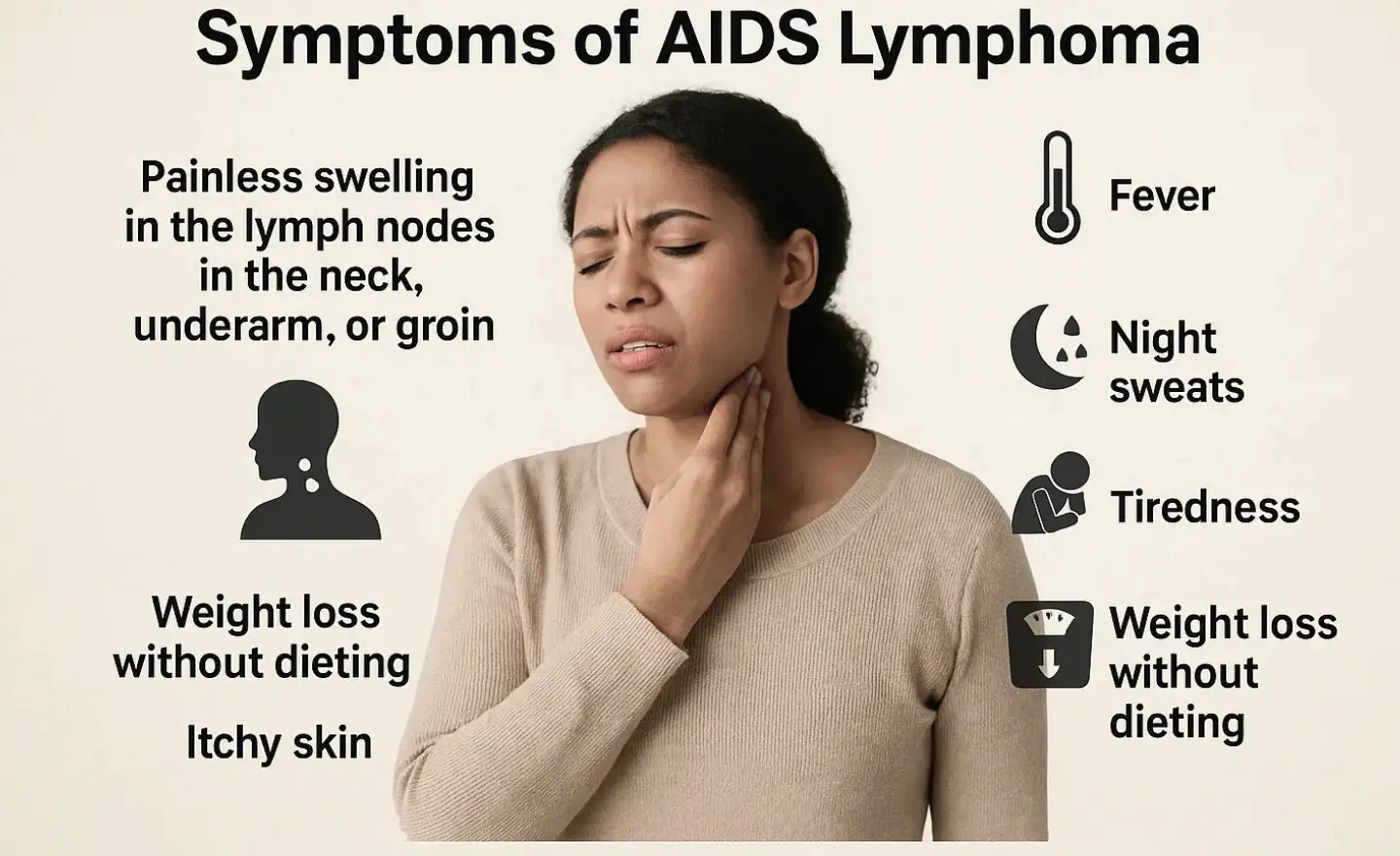
Symptoms of AIDS lymphoma
- Common signs include persistent, painless swelling of lymph nodes, especially in the neck, armpits, or groin.
- Patients may experience unexplained weight loss, fevers, night sweats, and extreme fatigue.
- Other symptoms include shortness of breath, chest pain, or abdominal discomfort, depending on where the lymphoma develops.
- In cases of primary CNS lymphoma, neurological symptoms like headaches, confusion, or seizures may appear.
- These symptoms tend to progress rapidly in HIV-positive individuals due to compromised immunity.
- Anyone with HIV experiencing such symptoms should seek immediate evaluation, as early detection and proper AIDS-related lymphoma treatment in India can significantly improve outcomes and survival chances.
Different Types of Lymphoma
There are mainly two types of lymphoma, but three cases of AIDS related lymphoma. Hodgkin lymphoma and non-Hodgkin lymphoma. Both Hodgkin lymphoma and non-Hodgkin lymphoma may occur in AIDS patients, but non-Hodgkin lymphoma is more common. When a person with AIDS has non-Hodgkin lymphoma, it is called an AIDS-related lymphoma.
Book Appointment
GET A FREE QUOTE
Non-Hodgkin lymphomas are grouped by the way their cells look under a microscope. They may be indolent (slow-growing) or aggressive (fast-growing). AIDS-related lymphoma is usually aggressive.
AIDS Related Lymphoma
- Diffuse large B-cell lymphoma
- B-cell immunoblastic lymphoma
- Small non-cleaved cell lymphoma
Diagnosis of AIDS Related Lymphoma
If a patient has AIDS and symptoms of lymphoma, a doctor will carefully check for swelling or lumps in the neck, underarms and groin. If the lymph nodes do not feel normal, the doctor may need to cut out a small piece of tissue and look at it under the microscope to see if there are any cancer cells. This procedure is called a biopsy.
In general, lymphomas are classified by (1) how rapidly they grow; (2) how curable they are and (3) similarities in overall survival and disease-free survival.
In general, patients with AIDS-related lymphoma respond to treatment differently from patients with lymphoma who do not have AIDS. AIDS-related lymphoma usually grows faster and spreads outside the lymph nodes and to other parts of the body more often than lymphoma that is not related to AIDS. Because therapy can damage weak immune systems even further, patients who have AIDS-related lymphoma are generally treated with lower doses of drugs than patients who do not have AIDS.
Book Appointment
GET A FREE QUOTE
What are the treatment options for lymphoma?
AIDS-related lymphoma treatment in India involves a combination of therapies tailored to each patient’s condition, overall health, and immune status. Common treatments include chemotherapy, antiretroviral therapy (ART), radiation therapy, and targeted or immunotherapy. Indian hospitals use a multidisciplinary approach to treat both HIV and lymphoma simultaneously, improving outcomes. With advanced medical infrastructure and affordable pricing, India offers world-class care, reducing side effects and relapse risks. Early diagnosis and coordinated care are crucial for long-term survival and quality of life.
Best Hospitals for Lymphoma Treatment
India is home to some of the best hospitals for lymphoma treatment, offering advanced therapies at affordable costs. These hospitals provide world-class care through a multidisciplinary team of oncologists, haematologists, and infectious disease specialists. Equipped with modern facilities like PET-CT, bone marrow transplant units, and immunotherapy labs, they ensure precise diagnosis and personalized treatment.
Many are NABH and JCI-accredited, following international protocols. Whether it's Hodgkin, non-Hodgkin, or AIDS-related lymphoma treatment in India, these centres deliver high success rates and compassionate care, attracting patients from across the globe for comprehensive, cost-effective cancer care.
|
Hospital Name |
City |
|
Tata Memorial Hospital |
Mumbai |
|
AIIMS (All India Institute of Medical Sciences) |
New Delhi |
|
Fortis Memorial Research Institute |
Gurugram |
|
Apollo Hospitals |
Chennai |
|
Max Super Speciality Hospital |
Delhi |
|
Medanta – The Medicity |
Gurugram |
|
BLK-Max Super Speciality Hospital |
Delhi |
|
We Care Health Services |
Delhi NCR |
|
HCG Cancer Centre |
Bangalore |
|
Kokilaben Dhirubhai Ambani Hospital |
Mumbai |
|
Narayana Health City |
Bangalore |
|
Amrita Institute of Medical Sciences |
Kochi |
|
Jaslok Hospital & Research Centre |
Mumbai |
|
Rajiv Gandhi Cancer Institute |
Delhi |
|
MGM Healthcare |
Chennai |
Cost of Cancer Treatment in India
The cost of cancer treatment in India is significantly lower than in Western countries, making it a preferred destination for patients worldwide. Despite the affordable pricing, Indian hospitals offer world-class care, advanced technology, and experienced oncologists.
Book Appointment
GET A FREE QUOTE
Treatment costs vary depending on the type of cancer, stage, and required therapies like surgery, chemotherapy, radiation, or immunotherapy. Comprehensive cancer care packages are available in major cities, often including diagnostics, hospital stay, and follow-up. India ensures high-quality outcomes at a fraction of the cost seen in the U.S., UK, or Europe.
|
Treatment Procedure |
Treatment Procedure |
|
Cancer Diagnosis & Scans |
₹20,000 – ₹60,000 |
|
Surgery (Minor to Major) |
₹1.5 – ₹4.5 Lakh |
|
Chemotherapy (per cycle) |
₹20,000 – ₹60,000 |
|
Chemotherapy (6 cycles avg.) |
₹1.2 – ₹3.5 Lakh |
|
Radiation Therapy (IMRT/IGRT) |
₹1.5 – ₹3 Lakh |
|
Bone Marrow Transplant |
₹12 – ₹25 Lakh |
|
Immunotherapy (per month) |
₹1.5 – ₹3 Lakh |
|
Targeted Therapy (monthly) |
₹80,000 – ₹2 Lakh |
|
Hospital Stay (avg. 7–10 days) |
₹40,000 – ₹85,000 |
|
Palliative Care/Supportive |
₹20,000 – ₹50,000 |
We Care Health Services for AIDS Related Lymphoma
We Care Health Services is a leading facilitator of specialised medical care for international patients, offering comprehensive support for AIDS-related lymphoma treatment in India. With deep expertise in oncology and HIV care coordination, We Care assists patients throughout every stage—from initial consultation to recovery. Leveraging a trusted network of JCI‑ and NABH‑accredited hospitals across Delhi, Mumbai, Bangalore, Chennai, and Hyderabad, they ensure access to top haematologists, oncologists, and infectious disease specialists.
- Extensive Experience
Over two decades of facilitating complex cancer treatments, including lymphoma in HIV-positive patients, with a track record of successful international case management. - Premium Hospital Network
Partnerships with renowned cancer centres offering PET-CT, bone marrow transplant units, advanced radiotherapy facilities (IMRT/SRT), and dedicated HIV-oncology care. - Integrated Medical Planning
Personalised treatment plans combining antiretroviral therapy (ART) with chemotherapy (e.g., CHOP, EPOCH), radiation, immunotherapy, or bone marrow transplantation. All cases are reviewed by multidisciplinary tumour boards. - Expert Clinical Access
Connects patients with specialists experienced in managing the dual challenge of HIV and lymphoma, ensuring optimal dosing, drug interactions oversight, and infection control. - Streamlined Patient Coordination
End-to-end assistance with hospital admissions, visa guidance, interpreters, international patient liaisons, and multilingual support teams. - Comprehensive Support Services
Includes accommodation, local transportation, nutritional counselling, counselling for emotional and psychosocial needs, and dedicated case managers. - Telehealth & Follow-Up
Pre-arrival and post-treatment teleconsultation to assess health status, adjust treatment protocols, and support long-term follow-up care with convenience. - Affordable, Transparent Pricing
Cost estimates tailored to individual needs, often 60–80% lower than in Western countries, with clear, all-inclusive financial planning and no hidden fees. - Patient-Centric Care Approach
24/7 helpline available, compassionate staff, spiritual and cultural accommodations, and a strong focus on privacy and timely care delivery.