
Top IVF Clinics In India: Top 10 Clinics with High Success Rate & Cost

IVF Clinics in India With Experienced Fertility Specialists

There has been a rise in the number of individuals diagnosed with different infertility conditions. This medical condition affects individuals psychologically. There has been a growing demand for fertility treatments around the world. IVF in India is the most preferred option. There are multiple IVF clinics in India which help treat either male or female infertility. 

Multiple factors cause infertility; they can be due to environmental, food and psychological factors. And often, due to these factors, individuals develop reproductive disorders which hamper the chances of natural conception. In conditions like these, medical assistance helps individuals suffering from these conditions.

Why Choose an IVF Clinic in India?

India is emerging as a hub of IVF treatment due to the affordability and high success rate. Meeting global standards in fertility treatments is always trusted, and some IVF clinics in India hold accreditations such as JCI and NABH.

  • High success rates
  • Safe and trusted treatment
  • Meeting global standards
  • Internationally certified IVF clinics
  • Modern and advanced technologies
  • Affordable treatments 
  • Growing number of fertility centres

Types of Fertility Treatments offered in IVF Clinics in India 

  • Diagnostic Testing – These are initial tests that include tests such as hormone tests, tests for ovarian reserve,  semen analysis and imaging.
  • Ovulation Induction – If individuals are experiencing irregular or absent ovulation, then medications are used to stimulate or regulate ovulation.
  • Intrauterine Insemination (IUI) – Healthy sperm is placed into the uterus during ovulation, which helps increase the chances of fertilisation.
  • In Vitro Fertilisation (IVF) – Gametes of both male and female are fertilised with sperm in a lab, and it is developed into an embryo and transferred to the uterus. 
  • Frozen Embryo Transfer (FET) – In this procedure, frozen embryos are transferred to the uterus. 
  • Intracytoplasmic Sperm Injection (ICSI) – Here, a single sperm is injected directly into the egg; it is suggested when there is male-factor infertility. 
  • Egg or Sperm Donation Program – Donor programs are undertaken in cases where either partner’s gametes cannot be used for IVF. 
  • Embryo Freezing and Cryopreservation procedures – Embryos are frozen for IVF cycles in future, or preserved after the IVF cycle.  
  • Preimplantation Genetic Testing (PGT) – Embryos are tested for genetic conditions or if there are chromosomal conditions present. 
  • Surgical Fertility Treatments – Some patients may require surgical treatments such as hysteroscopy or laparoscopy.
  • Fertility Preservation – Patients who wish to preserve fertility for the future undergo these procedures, such as egg, sperm and embryo freezing.  

Advanced Technology and Laboratory Facilities for IVF

  • Advanced labs help by providing suitable conditions for IVF procedures.
  • Specialised incubators are required to support embryo development.
  • ICSI is a micromanipulation technology where a single sperm is used to fertilise the egg.
  • Time-lapse embryo monitoring technology is an important procedure that helps by observing embryo development and selecting the healthiest embryo.
  • Technologies such as embryo freezing and cryopreservation should be available in the labs.
  • Arrangements for quality control and maintaining lab standards are required for a successful and safe procedure.
  • An experienced team of embryologists are very important for the safe handling of the whole procedure.
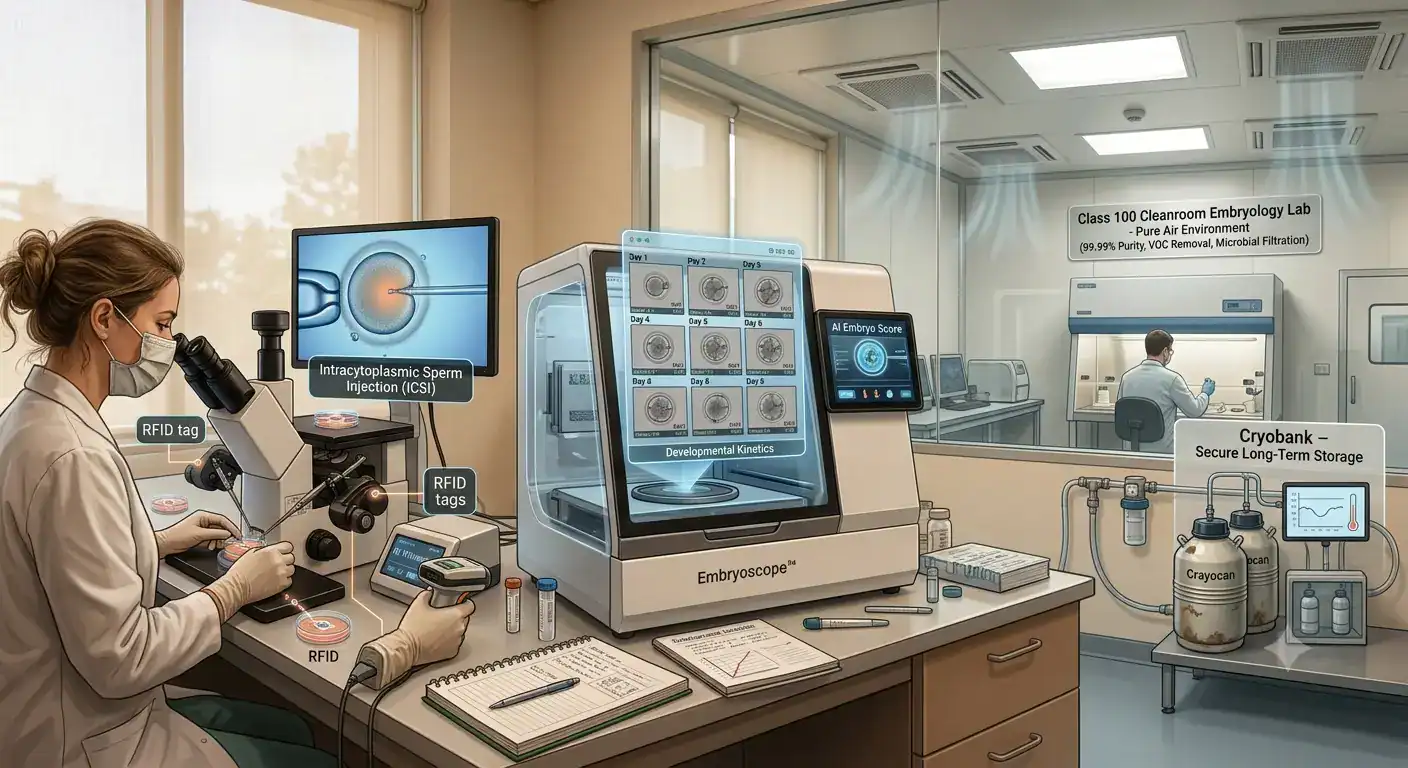
Advanced Technology and Laboratory Facilities for IVF

Experienced Team of Specialists and Embryologists

An experienced team of specialists plays an integral part in the entire course of treatment. Their experience and specialisation contribute to assessing each patient’s medical history, diagnosis and history of treatment results carefully before planning a fertility plan for the patient concerned. 

Fertility Specialists Directory
Dr. Neelam Bhise
Dr. Neelam Bhise
ACME Fertility
MS (OBG&Y) — B.Y.L. Nair Tertiary Care Hospital, Mumbai Fellowship in Reproductive Endocrinology, National University Hospital, Singapore (2017)
Fertility Specialist & Endoscopic Surgeon
20 years experience

Dr. Madhuri V.
Dr. Madhuri V.
Kiran Infertility Clinic
M.D. (Doctor of Medicine) D.G.O. (Diploma in Gynaecology and Obstetrics)
Infertility Specialist
Many years experience

Dr. Yashodhara Mhatre
Zoi Fertility
M.D. (OBG) · D.G.O.
Reproductive Endocrinologist, Infertility Specialist, Gynecologist & Obstetrician
27 years experience

Dr. Neha Gupta
Dr. Neha Gupta
Mediworld
M.B.B.S. (2005) · M.D. (OBG) (2010) Diploma in Assisted Reproductive Technology (2017) · IVF Training
Senior Consultant & IVF Specialist
16 years experience

Dr. Nishi Singh
Dr. Nishi Singh
Prime IVF Fertility
MBBS · D.G.O.
Infertility Specialist & Gynecologist
29 years experience
Dr. Srushti Joshi
Dr. Srushti Joshi
We Care Nidus Fertility
Senior Resident — LTMMC & Sion Hospital Resident Medical Officer — JK Women's Hospital
Fertility & Reproductive Medicine
Their expertise and knowledge help in complex, often unmanageable cases that doctors who have less experience are not able to handle, such as infertility factors, repeated IVF failures, age-related factors or conditions that affect natural conception.

Best IVF Clinics in India 

  • Select IVF
  • We Care Nidus Fertility
  • Go IVF Surrogacy
  • ACME Fertility 
  • Kiran Infertility Clinic
  • Zoi Fertility 
  • Mediworld Fertility 
  • Prime Fertility

What are the IVF Success rates in India?

Age Group Approximate Cumulative IVF Success Rate Key Factors Affecting Success
Under 30 years 85–90% Egg quality, embryo quality and underlying fertility condition
30–34 years 80–90% Ovarian reserve, sperm quality and uterine health
35–37 years 75–85% Declining egg quality and embryo development
38–40 years 60–75% Reduced ovarian reserve and increased chromosomal abnormalities
41–42 years 40–60% Egg quality, embryo viability and medical history
Over 42 years 15–35% Significantly reduced egg quantity and quality; donor eggs may be considered

IVF Success Rates in Major Cities of India

City Approximate Cumulative IVF Success Rate
Mumbai 80–90%
Delhi NCR 80–90%
Bengaluru 80–88%
Chennai 80–88%
Hyderabad 80–88%
Pune 75–85%
Kolkata 75–85%
Ahmedabad 75–85%
Chandigarh 75–85%
Kochi 75–85%

IVF Success Rates in Different Countries

Country IVF Success Rate per Embryo Transfer
India 85–90%
United States 40–55%
United Kingdom 30–45%
Spain 40–55%
Greece 40–50%
Czech Republic 40–50%
Thailand 40–55%
United Arab Emirates 35–50%
Australia 35–50%
Mexico 35–50%

Cost of IVF treatment in Indian clinics 

There has been a growing number of IVF clinics in India, and the treatment cost varies depending on which city, clinic, and treatment is chosen. There are multiple additional procedures that might be prescribed on the basis of diagnosis. 

There are procedures such as ICSI, embryo freezing, genetic testing, donor programmes and so on. Clinics may offer treatment packages, but patients are required to understand and ask if their concerns and confusion regarding the packages to the clinics before going for the treatment.

Cost Component Approximate Cost in India
Initial consultation and fertility evaluation ₹5,000–₹20,000
IVF cycle ₹1,00,000–₹2,50,000
Fertility medications ₹50,000–₹1,50,000
ICSI ₹30,000–₹1,00,000
Embryo freezing ₹20,000–₹50,000
Frozen Embryo Transfer (FET) ₹40,000–₹1,00,000
Blastocyst culture ₹15,000–₹40,000
Embryo storage ₹10,000–₹30,000 per year
Preimplantation Genetic Testing (PGT) ₹1,50,000–₹4,00,000
Donor egg programme ₹1,50,000–₹3,50,000
Estimated total cost of IVF ₹1,50,000–₹4,00,000+

Cost of IVF treatment in Major Cities of India

City Approximate IVF Cost per Cycle
Mumbai ₹1.5 lakh–₹3.5 lakh
Delhi NCR ₹1.2 lakh–₹3.0 lakh
Bengaluru ₹1.2 lakh–₹3.0 lakh
Chennai ₹1.0 lakh–₹2.8 lakh
Hyderabad ₹1.0 lakh–₹2.8 lakh
Pune ₹1.0 lakh–₹2.5 lakh
Kolkata ₹90,000–₹2.5 lakh
Ahmedabad ₹90,000–₹2.5 lakh
Chandigarh ₹1.0 lakh–₹2.5 lakh
Kochi ₹90,000–₹2.5 lakh

IVF Treatment Cost in Different Countries

Country Approximate IVF Cost per Cycle Approximate Cost in USD
India ₹1.5 lakh–₹3.5 lakh $1,600–$3,700
United States ₹14 lakh–₹24 lakh $15,000–$25,000
United Kingdom ₹6 lakh–₹9.5 lakh $6,300–$10,000
Spain ₹3.5 lakh–₹6.5 lakh $3,500–$6,500
Greece ₹2.5 lakh–₹4.5 lakh $2,500–$4,500
Czech Republic ₹2.5 lakh–₹5 lakh $2,500–$5,000
Thailand ₹4 lakh–₹6.5 lakh $4,000–$6,500
United Arab Emirates ₹6.5 lakh–₹10.5 lakh $6,800–$11,000
Australia ₹6.5 lakh–₹10 lakh $6,600–$10,500
Canada ₹9.5 lakh–₹14.5 lakh $10,000–$15,000
Mexico ₹3 lakh–₹5.5 lakh $3,000–$5,500
Singapore ₹9 lakh–₹14 lakh $9,600–$14,800

Factors To Compare Between IVF Clinics in India

Factor What to Compare
Fertility Specialist’s Experience Qualifications, expertise and experience in managing different infertility conditions
IVF Success Rates Clinic-reported success rates and how they are measured, such as per cycle, embryo transfer or live birth
Range of Treatments Availability of IVF, ICSI, IUI, FET, donor programmes and other specialised fertility treatments
Laboratory Facilities IVF laboratory standards, equipment, embryo culture systems and quality-control protocols
Embryology Team Qualifications and experience of embryologists and laboratory professionals
Treatment Costs Base IVF cost, package inclusions and possible additional expenses
Personalised Treatment Whether treatment plans are tailored to the patient’s age, diagnosis and fertility history
Counselling and Support Availability of emotional, psychological and fertility counselling
Location and Accessibility Distance, travel convenience and ease of attending repeated appointments
Transparency in Pricing Clear explanation of costs for medicines, laboratory procedures, freezing and additional treatments
Patient Reviews and Feedback Overall patient experiences, communication and quality of care
International Patient Support Assistance with travel, accommodation, treatment coordination and follow-up care for overseas patients

Safety Standards that IVF Clinics Should Follow

  • IVF laboratory is required to maintain controlled temperature, humidity and air quality to support gamete and embryo handling procedures.
  • HEPA filtration and positive pressure systems, and Volatile organic compound (VOC) control are installed.
  • Installation of embryo culture systems, where the incubators should maintain a stable temperature.
  • There must be advanced cryopreservation facilities with continuous monitoring of temperature and alarm mechanisms.
  • For issues like specimen misidentification during lab procedures, it is important to install barcode-based identification systems.
  • They should follow documented standard operating procedures, equipment validation protocols, calibration, and maintenance systems.
  • Infection prevention arrangements, which include sterilisation procedures and biomedical waste management, should be implemented so that the contamination risk is avoided.
  • There should be proper functioning systems for an uninterrupted power supply; backup systems should be present. 
  • The clinic should operate in adherence to the regulatory laws.

Accessibility and Location of the Clinic

Location has to be a major factor for fertility treatment since there are multiple diagnostic tests to be undertaken and for that reason it is important the clinic is chosen by a location which is near the accommodation of the patient. Most of the locations of the clinics are easily accessible to the patients. Most of them connect to the major roadways, airports, and metro networks, which helps in assuring the clinics making it easier for the international patients. A well-built infrastructure that has wheelchair-friendly infrastructure, on-site parking for ease and these clinics are built in major cities such as Mumbai, Bengaluru, Hyderabad and so on. 

How many IVF cycles are needed for achieving pregnancy?

There are no fix number of cycle required for getting pregnant, there are multiple factors involved:
  • Age remains a major factor determining the success of the cycle.
  • The success of the cycle is higher if under 35 years.
  • The chances of success may decline if over 35 in the first attempt.
  • If there are patients who suffer from reproductive conditions they may require more than one cycle. 
  • It has been observed that 3 cycles results in live births for women who are under 35.
  • If the patient goes for 6 cycles then the success rate rises
  • Depends on the quality of sperm and eggs.
  • Factors such as uterine and hormonal factors too are involved.
  • Quality and maintenance of the lab is also important.

IVF Cost at Clinics in India

The IVF cost at clinics in India consists of multiple procedures and treatments that is combined with a basic IVF cycle and here is a breakdown of the complete cost of IVF treatment.

Standard IVF Cycle Cost

 
Cost Component Estimated Cost (INR)
Initial Consultation & Fertility Assessment ₹1,000–₹5,000
Ovarian Stimulation & Monitoring ₹10,000–₹30,000
IVF Procedure & Egg Retrieval ₹40,000–₹80,000
Laboratory & Embryology Charges ₹30,000–₹60,000
Embryo Transfer ₹15,000–₹30,000
Standard IVF Cycle Cost ₹80,000–₹1,50,000
 

IVF with Medications 

 
Cost Component Estimated Cost (INR)
Initial Consultation & Tests ₹2,000–₹10,000
Ovarian Stimulation Medicines ₹30,000–₹80,000
Ultrasound & Hormonal Monitoring ₹10,000–₹25,000
Egg Retrieval & IVF Procedure ₹50,000–₹1,00,000
Laboratory & Embryology Charges ₹30,000–₹70,000
Embryo Transfer ₹15,000–₹30,000
Total IVF Cost with Medications ₹1,20,000–₹2,50,000
 

IVF Cost with ICSI 

 
Cost Component Estimated Cost (INR)
Standard IVF Cycle ₹80,000–₹1,50,000
ICSI Procedure ₹30,000–₹60,000
Monitoring & Laboratory Charges ₹20,000–₹40,000
Total IVF with ICSI Cost ₹1,20,000–₹2,50,000
 

Cost of Donor Egg IVF in India

 
Cost Component Estimated Cost (INR)
IVF Procedure ₹80,000–₹1,50,000
Donor Egg Programme ₹50,000–₹1,50,000
Medicines & Monitoring ₹20,000–₹60,000
Embryo Transfer ₹15,000–₹30,000
Total Donor Egg IVF Cost ₹2,00,000–₹4,00,000
 

Donor Sperm IVF Cost in India 

 
Cost Component Estimated Cost (INR)
Standard IVF Cycle ₹80,000–₹1,50,000
Donor Sperm ₹10,000–₹30,000
Medicines & Monitoring ₹20,000–₹60,000
Laboratory & Transfer Charges ₹20,000–₹40,000
Total Donor Sperm IVF Cost ₹1,30,000–₹2,50,000
 

IVF with PGT Cost in India 

 
Cost Component Estimated Cost (INR)
Standard IVF Cycle ₹80,000–₹1,50,000
Embryo Biopsy ₹50,000–₹1,00,000
PGT Testing ₹1,00,000–₹2,50,000
Embryo Freezing & Storage ₹20,000–₹50,000
Total IVF with PGT Cost ₹3,00,000–₹5,50,000

Things to remember before selecting IVF Clinics in India 

  • Check for the credentials of the clinic
  • Reviews of patients 
  • Experience and Specialisation of the doctor
  • Check if the lab is well-equipped with modern technology.

How can a doctor’s experience influence the planning treatment? 

The doctor’s experience plays a major role in planning for the IVF treatment, since with experience the planning for IVF treatment or any treatment for that sake is done with precision since they hold experience and have gone through these cases prior in their careers. 

  • With experience there is a refined protocol selection
  • Specialised and safe execution of the whole procedure
  • Their experience helps in providing the right amount of medications
  • There have the proper technical expertise for the treatment 
  • Empathetic care is provided to the patients.

Conclusion

There are a number of advanced IVF clinics in India that provide a safe and trusted IVF treatment in the country. Both local and international patients choose to come to India for IVF treatment due to the affordability and high success rates. Laboratories are well-equipped with latest technologies and equipment to carry out the whole procedure.

Frequently Asked Questions

How much will IVF cost in India?

The cost of IVF in India is around 1.5L to 3.5L in IVF clinics in India. It stays comparatively lower compared to other countries around the world. There are chances that the treatment cost may rise with combining additional treatments.

Which city in India is best for IVF?

Metro cities in India are popular for providing the best medical infrastructure for fertility treatments. Cities such as Delhi, Mumbai, Bengaluru and Hyderabad.

What age is best for IVF?

The age that is best for IVF treatment is under 35 since with an advancing age the quality and quantity of eggs decline and the success of treatment also is affected.

Is IVF pregnancy high risk?

It is not mostly considered to be a high risk procedure but is cautiously observed for complications if any.

How successful is IVF after 40?

The success of treatment is lower if using own eggs for treatment since after 35 years the quality and quantity of eggs both decline. The success of IVF if combined with the donor egg program is higher around 60-70%.