

Ceramic hip replacement in India is a good option for patients having difficulty in moving. There are many patients in old age who have different issues, and the most common is the degeneration of the bone surface. Hip replacement is among the most commonly performed orthopedic procedures, and the results are excellent. Over 90% of patients have excellent pain relief and improved ability to perform routine daily activities.
The success rate of the surgeries for hip replacement and knee replacement is more than 90%, and this is the reason to move on to the replacement side. Patients think it is completely replacement of bone to bone, but it is a specific part change or we can say that it is resurfacing sometimes. You will know more about the hip replacement terms in the next section.
What are the Common Conditions Indicating Hip Replacement?
Hip replacement is usually recommended when hip joint damage begins to interfere with daily life and conservative treatments no longer provide relief. Several medical conditions can lead to this stage, often causing persistent pain, stiffness, and reduced mobility.
Consult Now
GET A FREE QUOTE
- Post-traumatic arthritis- Post-traumatic arthritis occurs when the hip has been fractured or sustained an injury, and the surface of the joint has become damaged, creating an ongoing pain issue.
- Hip Fractures- Hip fractures are a very common problem in older adults, usually due to a fall or the result of serious osteoporosis, and typically may need to be replaced in order to facilitate more rapid healing.
- Congenital Hip Condition- Congenital hip condition (such as hip dysplasia) or a failure of development are common reasons for early degeneration in old age.
- Osteoarthritis occurs when the cartilage covering the bones in the hip joint becomes worn down over time, creating friction between the bones and causing continuous pain and difficulty with walking and standing.
- Rheumatoid arthritis occurs when the body's immune system attacks itself; this causes inflammation of the joints, resulting in swelling, destruction of the joint tissues, and continues even when you are at rest.
- Avascular necrosis occurs when there is an inadequate blood supply to the head of the femur, leading to death of the surrounding bone, resulting in the collapse of the joint and severe pain.
- Severe hip pain and stiffness are characterized by persistent pain that persists despite the use of medications, physiotherapy, lifestyle modifications, and other treatments, which can disrupt your sleep or daily activities.
What is Ceramic Hip Replacement?
A ceramic hip replacement is an operation in which one or both of the hip prosthetics are made of ceramics, and they are the pieces of your hip joint that are damaged from injury or degenerative disease. Ceramic prostheses are designed and manufactured to allow them to move and function as close to the way the original hip did, while reducing friction between the two moving surfaces.
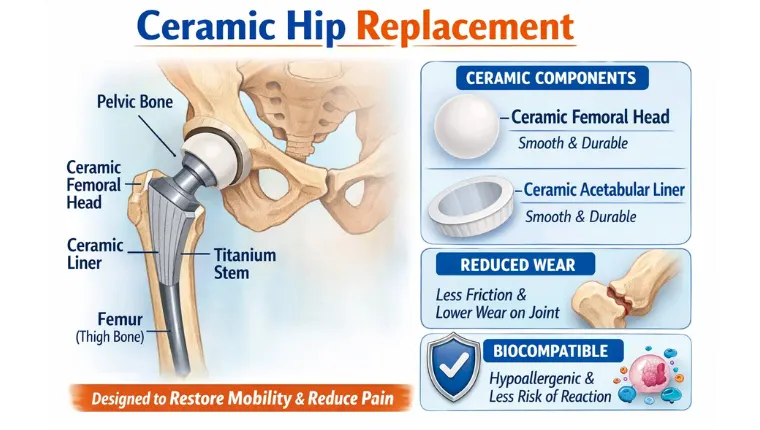
What is Ceramic Hip Replacement
In addition, the surface of ceramic hip prosthetics is very smooth, very strong and have a very high level of compatibility when compared to human tissue. A major advantage of ceramic hip prosthetics is that there is very little wear debris produced with normal use of ceramic hip implants, and therefore there is less chance for bone and soft tissue injury in the area around the implant. Because of these advantages, ceramic hip implants are frequently used for younger people who are still active and require a durable, long-term solution to a no-wear, stable hip joint.
How is Ceramic Replacement Better than Other Implants?
Ceramic Hip Replacement Implants have better durability, safety, and comfort for patients compared to various other types of implant materials. One of the most significant advantages of ceramic implants is their extremely smooth, polished surface, which greatly minimizes friction (wear) between joint components. The reduced amount of wear, over time, from reduced friction contributes to a longer lifespan, increasing the longevity of the ceramic implants for younger or more active patients.
- An important benefit is that there is less risk of osteolysis due to the minimal tenacity of ceramic products, therefore less wear and tear from associated debris to stress the remaining surrounding bone.
- Since modern ceramics are stronger than prior ceramics and less likely to break than even older metal implants, they also produce little or no by-product material, such as debris.
- Ceramic prostheses also allow better movement and greater stability, which can help patients walk more normally than before.
- With proper placement and maintenance, ceramic hip prostheses will provide excellent reliability, comfort, and longevity in comparison to many other forms of prosthetic replacement.
Consult Now
GET A FREE QUOTE
Understanding Ceramic Hip Replacement Technology
Ceramic hip replacement offers a modern fix for worn-out hips. It replaces the damaged joint with ceramic pieces that mimic the natural movement of bone. Patients often report less pain and more freedom after recovery.
Think of it like swapping a rusty bike chain for a smooth one—friction drops, so the joint lasts longer. Metal bearings can wear out faster and cause swelling from debris. Ceramic ones keep things quiet too, with less squeaking during walks or runs.
Studies show ceramic hips lose material at a rate 100 times slower than metal-on-plastic pairs. This means fewer issues over time. For active folks, that extra durability pays off big.
Older metal implants might need swaps after 10-15 years. Ceramic ones often go 25 years or more without trouble. Data from joint studies back this up, showing survival rates above 95% at 20 years. Ask your doc if your hip damage from arthritis or injury matches this tech. Not everyone needs it—sedentary seniors might do fine with cheaper types. But for long-term wins, ceramic shines.
The Procedure: Surgical Steps and Recovery Milestones
Surgeons start with small cuts using the direct anterior approach. This method skips muscle damage, letting you move sooner. They remove the old hip ball and socket, then fit in the ceramic parts.
The whole thing takes about 1-2 hours under general anesthesia. Right after, you'll get pain meds and learn to use a walker. Most patients stand the next day. Recovery hits key points fast. Week one focuses on basic walks with help. By month three, many ditch aids and return to light work. Indian centers push rehab hard, aiming for full motion in 6-12 weeks.
Ceramic Hip Replacement Pricing in India
Money matters a lot when picking surgery spots. Ceramic hip replacement costs in India surprise many with their affordability. You get world-class care without breaking the bank. Many patients fly in, get fixed, and head home changed. Check packages—some include airport picks and basic stays.
Consult Now
GET A FREE QUOTE
Implant Quality and Surgeon Experience: Where Value is Allocated
India's costs don't mean skimpy parts. Hospitals stock brands like Zimmer Biomet, Stryker, or DePuy Synthes. These match what you'd get anywhere, with strict quality checks. Surgeon skill bumps the price a bit. A top doc with 200+ hip surgeries a year charges more but lowers risks. Newer ones keep costs down, yet pick wisely for peace of mind. Value shows in the details. Experienced teams cut operation times and complications. That saves money long-term by avoiding fixes later.
Hidden Costs and Inclusions: Ensuring Transparency
Watch for extras like post-stay therapy, which adds $500-$1,000. Meds run $200 a month at first. If a family member comes, budget $50-$100 daily for their hotel. Good packages spell out everything—no surprises. Ask about revision coverage if needed down the line. For internationals, get quotes in writing that list airport transfers and follow-up calls.
- Tip 1: Compare the three hospitals' breakdowns.
- Tip 2: Factor in visa and flight costs, around $1,000 total.
- Tip 3: Use facilitators to spot hidden fees early.
Top Centers and Surgeons for Ceramic THR in India
Picking the right place makes all the difference. Look for spots with proven track records in ceramic hip arthroplasty. India's scene blends local know-how with global standards.
The Procedure: Surgical Steps and Recovery Milestones
Surgeons start with small cuts using the direct anterior approach. This method skips muscle damage, letting you move sooner. They remove the old hip ball and socket, then fit in the ceramic parts.
The whole thing takes about 1-2 hours under general anesthesia. Right after, you'll get pain meds and learn to use a walker. Most patients stand the next day. Recovery hits key points fast. Week one focuses on basic walks with help. By month three, many ditch aids and return to light work. Indian centers push rehab hard, aiming for full motion in 6-12 weeks.
Ceramic Hip Replacement Pricing in India
Money matters a lot when picking surgery spots. Ceramic hip replacement costs in India surprise many with their affordability. You get world-class care without breaking the bank. Many patients fly in, get fixed, and head home changed. Check packages—some include airport picks and basic stays.
Implant Quality and Surgeon Experience: Where Value is Allocated
India's costs don't mean skimpy parts. Hospitals stock brands like Zimmer Biomet, Stryker, or DePuy Synthes. These match what you'd get anywhere, with strict quality checks. Surgeon skill bumps the price a bit. A top doc with 200+ hip surgeries a year charges more but lowers risks. Newer ones keep costs down, yet pick wisely for peace of mind. Value shows in the details. Experienced teams cut operation times and complications. That saves money long-term by avoiding fixes later.
Hidden Costs and Inclusions: Ensuring Transparency
Watch for extras like post-stay therapy, which adds $500-$1,000. Meds run $200 a month at first. If a family member comes, budget $50-$100 daily for their hotel. Good packages spell out everything—no surprises. Ask about revision coverage if needed down the line. For internationals, get quotes in writing that list airport transfers and follow-up calls.
- Tip 1: Compare the three hospitals' breakdowns.
- Tip 2: Factor in visa and flight costs, around $1,000 total.
- Tip 3: Use facilitators to spot hidden fees early.
Consult Now
GET A FREE QUOTE
Top Centers and Surgeons for Ceramic THR in India
Picking the right place makes all the difference. Look for spots with proven track records in ceramic hip arthroplasty. India's scene blends local know-how with global standards.
Pre-Operative and Post-Operative Care For We Care Health Services
We Care Health Services is a pro-level care provider to patients with different diseases. There are different types of treatment that you can receive from these hospitals. Not only replacement treatment, pediatric surgeries, heart surgeries, transplants, and cancer treatment in the hospitals, but also follow-up that turns good surgeries into great outcomes. Ceramic hip replacement in India stresses full support. You start strong and end stronger.
Pre-Surgical Preparation: Optimizing for Success
Build core strength with simple exercises like leg lifts. Control issues like diabetes through diet and checks. Indian hospitals require blood work, X-rays, and heart scans weeks ahead. Quit smoking to speed healing. Lose extra weight if possible—it eases joint load. Your team sends a checklist to follow at home. This prep cuts risks. Patients who do it right recover twice as fast.
Post-Operative Rehabilitation Protocols
Rehab phases start gently. Day one: seated walks with a therapist. Ceramic joints allow weight on the leg sooner, unlike some others. Week two ramps up to stairs and balance work. Indian high-volume spots offer daily sessions in-house. Many stay 5-7 days, then undergo outpatient care. The full protocol includes ice, stretches, and pool therapy. By week six, most drive and shop alone. Listen to your body—push steadily.
Long-Term Follow-Up and Implant Longevity
Schedule check-ups every six months first, then yearly. Even from afar, video calls work with Indian docs. Watch for pain or looseness signs. Ceramic implants last 20-25 years easily. If revision hits, India's system handles it well—costs stay low. Most never need it. Stay active but smart. Low-impact sports keep the joints happy. Regular scans track wear.
Consult Now
GET A FREE QUOTE
Conclusion
Ceramic hip replacement in India blends tough materials, big savings, and skilled hands. You get bearings that outlast others, prices half of the West, and care from trained pros. It's a clear win for active lives without the huge bill. Do your homework on centers and surgeons. With NABH spots and real patient wins, India proves its worth. If hip pain holds you back, this path could set you free—start exploring today.