

Nephrostomy surgery in India is a popular method for draining urine from the kidney if the natural flow is impeded. Nephrostomy surgery is frequently indicated in situations including but not limited to kidney stones, cancers, infections, or stricture causing major obstruction to urine flow.
The procedure involves placing a thin catheter through the skin and into the kidney using real-time imaging such as ultrasound, with a local anaesthetic being used to ease discomfort.
Nephrostomy surgery is widely performed in both government and private hospitals by qualified urologists with expertise and imaging capabilities. Nephrostomy surgery provides effective relief of pain associated with obstructive nephropathy by enabling the use of draining of urine and stabilising patients who will ultimately receive surgical (definitive) treatment of their condition.
What is Nephrostomy?
A nephrostomy is an operation that involves placing a thin tube, called a nephrostomy catheter, directly inside your kidney through your skin. A nephrostomy is performed when your normal way of passing urine is blocked or not functioning properly. The blockade can result from stone formation or a tumor in the way of exiting urine or other conditions, including a birth defect or trauma to the urinary tract. Nephrostomy is performed under local anaesthesia with the aid of either ultrasound or X-ray guidance. Nephrostomy will relieve pain, reduce pressure, and control infection in your kidney. It will also help maintain the function of your kidneys until you receive further treatment.
What is the Purpose of a Nephrostomy?
The ureter is the fibromuscular tube that carries urine from the kidney to the bladder. When this tube is blocked, urine backs up into the kidney. Serious, irreversible kidney damage can occur because of this backflow of urine. Infection is also a common consequence of this stagnant urine.
In a successful nephrostomy, the catheter is inserted, and urine drains into the collection bag. How long the catheter stays in place depends on the reason for its insertion. In people with pelvic cancer or bladder cancer where the ureter is blocked by a tumor, the catheter will stay in place until the tumor is surgically removed. If the cancer is inoperable, the catheter may have to stay in place for the rest of the patient's life.
Symptoms of Urology Obstruction
That's when nephrostomy surgery comes in. This procedure drains urine from the kidney to ease the blockage. In India, more people face this due to kidney stones or tumors. About 12% of adults here deal with stones at some point. This guide covers everything you need to know about nephrostomy in India. From why it's done to costs and healing, you'll get clear facts. Major hospitals now use minimally invasive methods like percutaneous nephrostomy. These cut recovery time and risks. Let's dive in.
Kidney issues often lead to urine backup. This causes swelling and pain. Percutaneous nephrostomy helps by creating a direct drain path. Common causes include stones stuck in the ureter. Tumors from cancers like prostate or cervical can press on tubes too. Strictures, or narrow spots, block flow after infections or surgery. In India, stones hit hard—over 5 million cases yearly. Post-op issues from other kidney work also call for this.
- Is this drain a short fix or part of a bigger treatment?
- What happens if we skip it now?
- How long will the tube stay in?
Diagnosis of Urology Issues
Doctors start with scans to spot the block. Renal ultrasound shows swelling in the kidney. CT urogram gives a clear view of stones or growths. Labs check kidney function through RFTs—levels of creatinine and urea. They also test blood clotting to avoid bleeds. In Indian clinics, these happen fast, often the same day.
Not everyone fits the same mold. Some need just drainage; others plan stone removal later. An interventional radiologist or endourology expert leads this. They weigh your age, health, and block severity. This ensures the right path for you.
Doctors start with scans to spot the block. Renal ultrasound shows swelling in the kidney. CT urogram gives a clear view of stones or growths. Labs check kidney function through RFTs—levels of creatinine and urea. They also test blood clotting to avoid bleeds. In Indian clinics, these happen fast, often the same day.
Not everyone fits the same mold. Some need just drainage; others plan stone removal later. An interventional radiologist or endourology expert leads this. They weigh your age, health, and block severity. This ensures the right path for you.
Nephrostomy Procedure
Nephrostomy is a minimally invasive operation that creates a different route for urination drainage directly from the kidneys. When there are blockages in the normal route of urination caused by kidney stones, tumors, strictures, significant infection, or an injury, this procedure may be recommended. This helps prevent damage to the kidneys, reduces kidney damage, decreases the level of discomfort caused by the increased amount of fluid in the kidneys, and lessens the risk of developing an infected kidney.
You lie on your side for the procedure. It takes about 30 to 60 minutes. Local anesthesia numbs the skin over your back. The doctor uses fluoroscopy—a live X-ray—to guide tools. They poke a needle into the kidney's pelvis. Urine flows out right away. Next, a guidewire slides in through the needle. A pigtail catheter follows, curled to stay put. They secure it with stitches or tape. Think of a garden hose clogged at the end. This tube bypasses the clog to let water run free. In cases like infected swelling, doctors drain first. They tackle the stone after the infection clears. This saves the kidneys from damage.
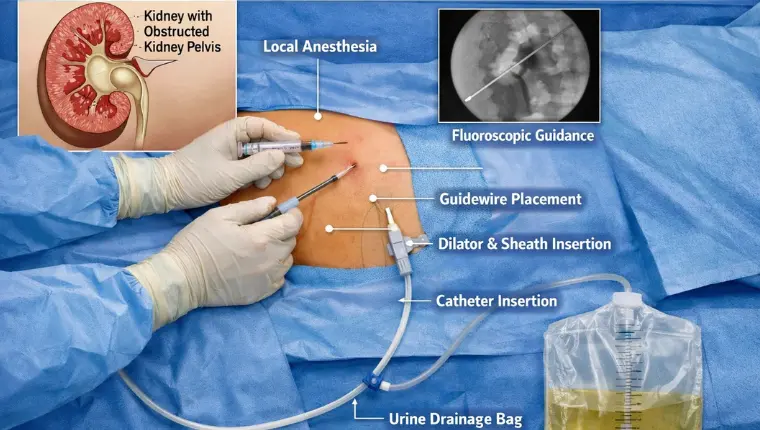
Nephrostomy Procedure
Nephrostomy Surgery Cost in India: Nephrostomy Surgery in India
Costs add up from several parts. Surgeon or radiologist fees run 20,000 to 40,000 INR. Anesthesia adds 5,000 to 10,000. Cath lab use hits 30,000 to 50,000 per hour. The nephrostomy kit—catheter and wire—costs 10,000 to 20,000 based on type. Follow-up items like bags and meds tack on 5,000 more. Total in a solid private hospital? Expect 80,000 to 1,50,000 INR. Prices dip in the south or rise in the north metros. Shop around for quotes.
|
Category |
Approximate Cost (INR) |
|
Percutaneous Nephrostomy (typical private hospital) |
80,000 – 1,00,000 |
|
Percutaneous Nephrostomy (Faridabad estimate) |
Starting ~80,000 |
|
Municipal/Standard Government Rates (Unilateral) |
~7,200 – 21,000 |
|
Nephrostomy + Stent Placement (Municipal) |
~10,800 – 31,500 |
Insurance Coverage and Government Schemes' Viability
Private plans from firms like HDFC or ICICI often cover 80-90%. They include the procedure and a short stay. But check for pre-approval on urology codes. Ayushman Bharat helps low-income families. It pays up to 5 lakh for an eligible kidney work. Many states add their own aid. Verify your policy early. It cuts stress on bills.
Consult Now
GET A FREE QUOTE
Comparative Cost Analysis: Public vs. Private Sector
Public spots like AIIMS charge low, under 20,000 INR total. Waits can stretch weeks, though. Private chains like Apollo or Fortis hit 1,00,000 plus. They offer quicker slots and plush rooms. For urgent needs, private wins on speed. Budget matters too—the public saves cash for non-emergencies.
After Surgery Procedure Recovery From Nephrostomy
After placement, you are watched for 12-24 hours. Nurses check urine output hourly. Mild blood in pee is common but fades quickly. Pain meds like paracetamol ease soreness. Docs ensure the tube drains well—no clogs.
After placement, you are watched for 12-24 hours. Nurses check urine output hourly. Mild blood in pee is common but fades quickly. Pain meds like paracetamol ease soreness. Docs ensure the tube drains well—no clogs. Head home the next day if stable. These tips keep you safe post-discharge. Rest easy the first week. Spot trouble signs fast:
- Suddenly less urine in the bag
- Red streaks or fever over 100°F
- Tube pulls loose—call right away
Success Rate of Nephrostomy Surgery
Nephrostomy is a surgical procedure performed by trained medical professionals to relieve an obstruction in the urinary tract caused by a blockage. Success will usually be defined based on how well the nephrostomy surgical procedure restores the flow of urine and protects the kidneys' function.
Consult Now
GET A FREE QUOTE
- Nephrostomy has a success rate between 90 to 98 percent in appropriately draining urine.
- Many patients will feel immediate relief of pain and pressure when the blockage is removed.
- By rapidly decreasing the size of the swollen kidney due to urinary obstruction.
- A high likelihood of controlling infection through effective drainage of infected urine.
- To stabilize the kidney's functioning when there is an urgency in medical treatment.
- To ensure proper placement of the nephrostomy tube guided by ultrasound or X-ray.
- To ensure adequate urine flow from the catheter.
- A low chance of tube obstruction if proper care is used.
- The majority of patients recover rapidly and with minimal discomfort.
- The incidence of tube-related complications, which typically involve the tube being displaced, leaking, etc., is rare and therefore causes no major problems in management.
- The success rate for patients adhering to hygiene and follow-up instructions remains high.
- Various factors have an impact on the likelihood of successful treatment:
- The level of experience of both the urologist and the interventional radiologist performing the procedure.
- The specific underlying cause of the obstruction (e.g., stones vs. tumors).
- The time frame for treatment of the obstruction is to avoid permanently damaging the kidneys.
Conclusion
Nephrostomy shines as a quick, low-cut fix for blocked kidneys. Success tops 95% in skilled hands. Costs vary, but options like insurance make it doable. Always chat deeply with your doc on risks and plans. India's urology scene grows strong— from city hubs to scheme aid. If facing this, seek care soon. Your kidney thanks you. Talk to a specialist today for peace of mind. Costs vary, but options like insurance make it doable. Always chat deeply with your doc on risks and plans. India's urology scene grows strong— from city hubs to scheme aid. If facing this, seek care soon. Your kidney thanks you. Talk to a specialist today for peace of mind.