
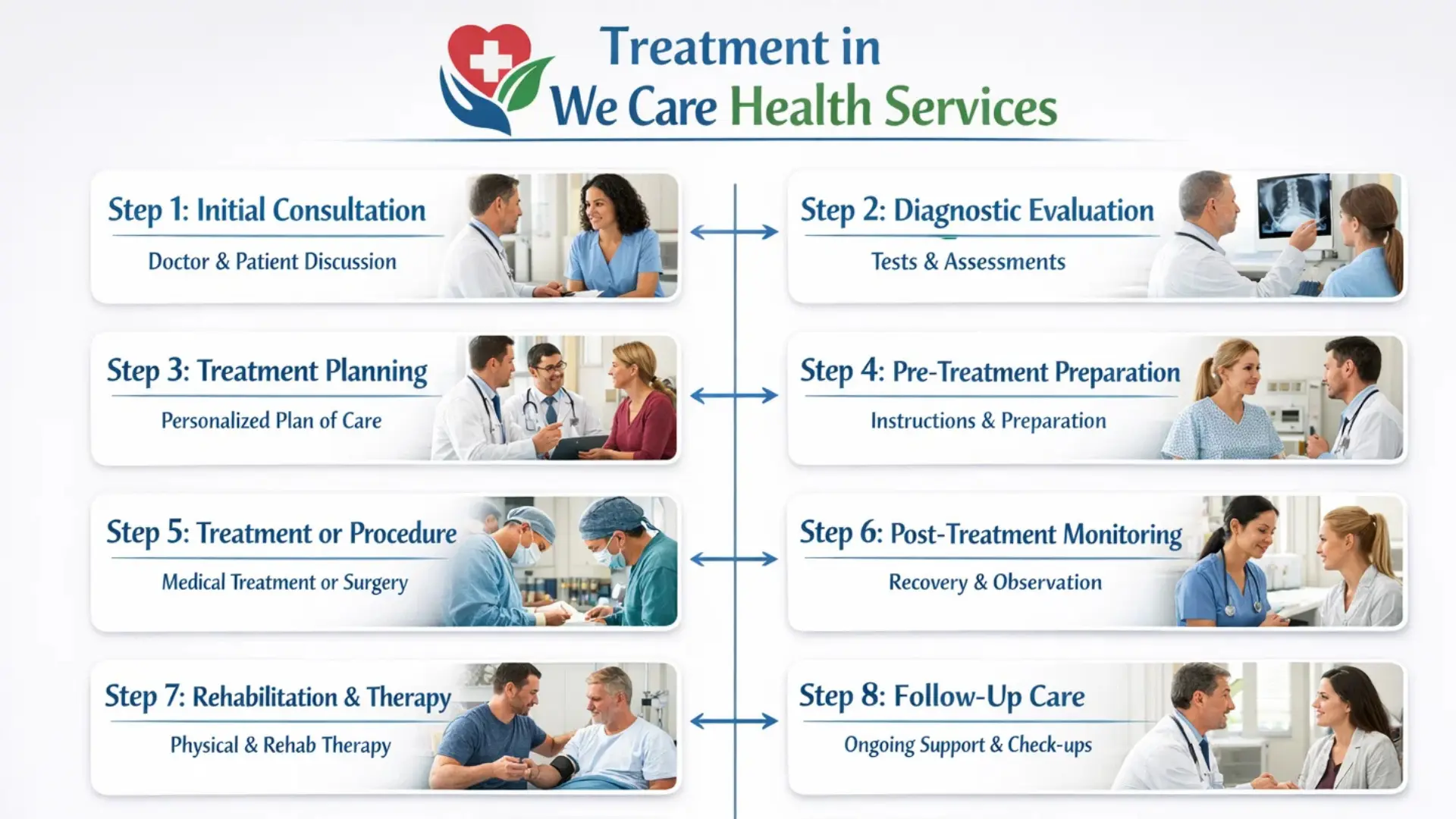
Treatment in We Care Health Services is fulfilling all criteria. There, you will meet the best coordinators and staff members who are available for follow-up sessions. We Care Health Services has been helping patients since 2006, and there are thousands of patients from foreign countries alone who have benefited from their services. There is no count for the citizens from the same country.
There is a protocol for treatment and patient orders; on the other hand, there are some treatments or surgeries that need to be done on an emergency basis. We are combining all these factors in one place.
For Free Online Consultation
GET A FREE QUOTE
Today's healthcare industry requires a comprehensive and organized treatment protocol for every patient to guarantee their overall safety, satisfaction, and optimal results (s). At We Care Health Services, our focus is on providing a patient-centric care experience that places an emphasis on transparency, efficiency, and continuity while taking an individualized approach to every patient's treatment regimen. By understanding the step-by-step Treatment Process, patients are more prepared for what will happen throughout their treatment, less fearful about the unknowns, and more likely to trust and adhere to their prescribed treatment regimen.
This article is intended to provide you with a complete overview of your treatment journey through We Care Health Services, from the initial Consultation through the post-treatment follow-up, inclusive of your Assessment, Diagnostic Assessment, Personalized Care Plan, procedure performed, Monitoring, and Long-Term Maintenance of your Health.
Step 1: Initial Consultation
This is the most important step for building trust between the patients. We Care Health Services, from the initial Consultation through the post-treatment follow-up, inclusive of your Assessment, Diagnostic Assessment, Personalized Care Plan, procedure performed, Monitoring, and Long-Term Maintenance of your Health.
Patients who are treated through a health agency in India have an initial contact point that mimics the methods of We Care Health Services.
Step 2: Diagnostic Evaluation
Effective and targeted treatment depends on accurate diagnosis. To obtain an accurate diagnosis, first of all, the examining physician will perform a thorough clinical assessment. This will include both a physical examination and review of medical history (vital signs, etc). Laboratory tests (blood and urine) will help to confirm or deny clinical findings. Advanced diagnostic methods (X-ray, CT scan, MRI, PET scan, Ultrasound) gives the physician precise digital visual information about the body. For complicated cases, the physician may refer the patient to a specialist (e.g., cardiologist, endocrinologist, oncologist, fertility specialist) for confirmation of diagnosis and developing a treatment plan.
Step 3: Treatment Planning
When a diagnosis is made, a tailored treatment plan will be developed based on the individual medical diagnosis and other individual factors and needs for the best treatment outcome for the patient.
To provide holistic treatment, We Care Health Services employs an interdisciplinary strategy that involves collaboration between medical doctors, nursing staff, registered dietitians, physical therapists, and mental health professionals to create a fully supportive environment for each patient.
In regard to treatment options, every patient receives complete information about the various types of treatments (including non-invasive, minimally invasive, and invasive), with explanations regarding their benefits and risks, potential costs and anticipated outcomes. All potential treatments require the patient’s informed consent before starting treatment, and a complete legal paper trail should be created in order to protect patient rights, abilities, and ethical treatment, as well as to ensure a fully transparent and patient-focused treatment planning process.
For Free Online Consultation
GET A FREE QUOTE
Step 4: Pre-Treatment Preparation
Ensuring patient safety and satisfaction starts with preparation for treatment. This process includes pre-treatment testing which may include additional laboratories, imaging studies, blood group tests, allergy assessments, anaesthesia assessments for surgical patients. Patients receive counselling on dietary recommendations, medication instructions and lifestyle changes they may need to make due to their treatment. Counselors also provide emotional support to alleviate patients’ worries and fear from anxiety. Coordinating scheduling and logistics facilitates the facilitation of the procedures for the hospitals and providers of care, as well as their resources to provide the treatment. Coordinate Local and travel services to provide accommodations for International patients to facilitate and assist in lowering patient risk; increasing patient compliance and promoting a smoother recovery experience.
Step 5: Treatment or Procedure
This brief overview provides insight into the treatment process. It covers everything from surgical interventions (major surgeries requiring hospitalisation) to minor interventions (e.g., dental care and/or dermatological procedures) where only outpatient care is needed. Major surgical procedures require hospitalisation, all of which require thorough pre-operative briefing and post-operative monitoring.
This section provides insight into the types of medical therapies and interventions available such as oral medications, intravenous (IV) or hormonal medications, physiotherapy, and occupational therapy, as well as support from mental health professionals who are part of your healthcare team. Technology continues to advance in the area of surgical procedures (e.g. robotic surgery), so many advanced technologies have been developed to provide increased accuracy and increased safety of patients, as well as providing quicker recovery times after surgical procedures.
Step 6: Post-Treatment Monitoring
After being treated, the patients were monitored closely in order to monitor recovery and to detect issues that may arise as a result of the procedure. The medical staff placed great emphasis on monitoring patients throughout their stay in the hospital and provided constant monitoring of each patient's vital signs, pain level, and the condition of their wounds.
In order to identify any complications quickly and effectively, we utilised a number of early detection methods, such as blood tests and temperature checks. The patient education that was provided during this time also included information on what to expect after returning home from the hospital, including the types of medications that they would need to take, what foods to eat, and changes in habits.
Patients were also informed of any potentially dangerous symptoms or warning signs (such as high fever, difficulty breathing, or excessive bleeding) they may experience after they went home so that they could seek medical attention when necessary. This ultimately helps to reduce the risk of a patient being readmitted into the hospital.
Step 7: Rehabilitation and Therapy
The provision of Rehabilitation will enhance functional abilities, quality of life, and also reduce recurrence risk after treatment has been completed. Physical Rehabilitation is a part of Rehabilitation that consists of Physiotherapy, Occupational Therapy, Mobility Training, and Structured Activity Plans based on your specific needs either due to having had surgery or due to having a chronic condition.
The mental aspect of your health is just as important; therefore, Mental Health Support consists of Counseling Services to help cope with the stress, anxiety, or depression associated with living with a long-term illness; Support Groups for additional emotional and social support; and Psychological Therapy for Long-Term Illnesses.
Further, Nutrition Guidance provides healing through the user's personalized Diet Plan, Therapeutic Nutrition, and Nutritional Supplements, depending on the need for that type of support. All of these provided will assist the individual in completing their treatment and provide the tools to continue to recover and lead a healthy lifestyle.
Step 8: Follow-Up Care
Continuous follow-up is necessary to help maintain treatment results and promote long-term success with respect to health. By scheduling appointments for follow-ups with patients, physicians have the opportunity to monitor patient recovery with regular assessments through assessment of laboratory specimens, imaging if necessary, and so on.
Follow-up teleconsultations provide ongoing assistance to patients who are overseas or are homebound and utilize the same digital medical documentation that enables patients to obtain easy access to their medical history as well as any updates regarding their treatment progress. The treatment plans utilized for each patient can change based upon their specific recovery trend; therefore, medications, therapies, and other types of rehabilitation will differ depending upon the individual patient and their particular situation.
By managing side effects or complications proactively, it is possible to avoid recurrence (also called relapse) of major illnesses, retain patients in the process of following through with treatment and have the ability to support continued improvement in the patient’s overall health.
Step 9: Patient Education and Lifestyle Management
At We Care Health Services, we believe that caring for your health doesn't just mean seeing a doctor or being treated for an illness; It also means providing patients with access to education about health and healthy lifestyle choices throughout their lives. We offer each patient individualized dietary counseling as well as individualized nutrition counseling as part of a holistic approach to recovery and long term wellness, plus recommendations regarding both practical exercise and Limitations of exercise appropriate for the specific patient's condition.
Our programs address issues associated with stress and mental well-being through both educational resources and knowledge of how to effectively manage stress for improved physical performance, thus allowing every patient greater control over their chronic conditions and improving overall balance within his/her lives. The shared goals of empowering patients through education about preventive strategies can help decrease the incidence of chronic conditions and minimize future complications, consequently allowing patients greater ability to remain informed while taking an active role in their healthcare delivery system.
Step 10: Documentation and Record-Keeping
The accurate maintenance of Medical Records is a critical factor in the continuity of patient care; it also assists with Legal Compliance and Clinical Accountability. Through We Care Health Services, Electronic Health Records (EHR) are maintained for all patients, allowing for consistent and verifiable documentation of Patient Treatment, Medication History, Procedure History and Clinical Outcomes. All EHR’s are stored with the utmost confidentiality to protect patient privacy, while allowing for ease of access by the health care provider(s) for Follow-Up Care, Referral and/or Second Opinion. EHR documentation also supports transparent patient education and facilitates better communication among healthcare providers, thereby ensuring safe practice over a period of time.
For Free Online Consultation
GET A FREE QUOTE
11. Special Considerations for International Patients
International patient care includes all aspects of assisting with the international patient's treatment experience so that it is as efficient as possible, thus eliminating the stress of obtaining appropriate medical care. Medical visa assistance is available to assist international patients with the process of obtaining a medical visa to enter India for treatment. Airport pickup, accommodation and hospital transfer arrangements are provided for the convenience of patients while travelling to and within India.
Language assistance services allow patients to have clear communication with their healthcare providers through the support of trained translators who can help patients understand their healthcare provider's consultation and care instructions. Telemedicine services allow for follow-up consultations with patients once they return back home from their treatment experience in India, allowing healthcare providers to remain connected with their patients, even across borders. Transparent cost estimates and insurance information give patients the ability to prepare for their treatment journey without surprise expenses.
Conclusion: Challenges and Solutions
The accurate maintenance of Medical Records is a critical factor in the continuity of patient care; it also assists with Legal Compliance and Clinical Accountability. Through We Care Health Services, Electronic Health Records (EHR) are maintained for all patients, allowing for consistent and verifiable documentation of Patient Treatment, Medication History, Procedure History, and Clinical Outcomes. All EHRs are stored with the utmost confidentiality to protect patient privacy, while allowing for ease of access by the health care provider(s) for Follow-Up Care, Referral and/or Second Opinion. EHR documentation also supports transparent patient education and facilitates better communication among healthcare providers, thereby ensuring safe practice over a period of time.
For Free Online Consultation
GET A FREE QUOTE
The approach to caring for patients undergoing treatment is not limited to treating the illness itself but is also a holistic view of maintaining optimal health and well-being through prevention, therapy, physical rehabilitation and education along with ongoing monitoring. The structured process of We Care Health Services provides patients the ability to maximize the benefits, satisfaction and long-term health and wellness results of their treatment through a thorough approach.