
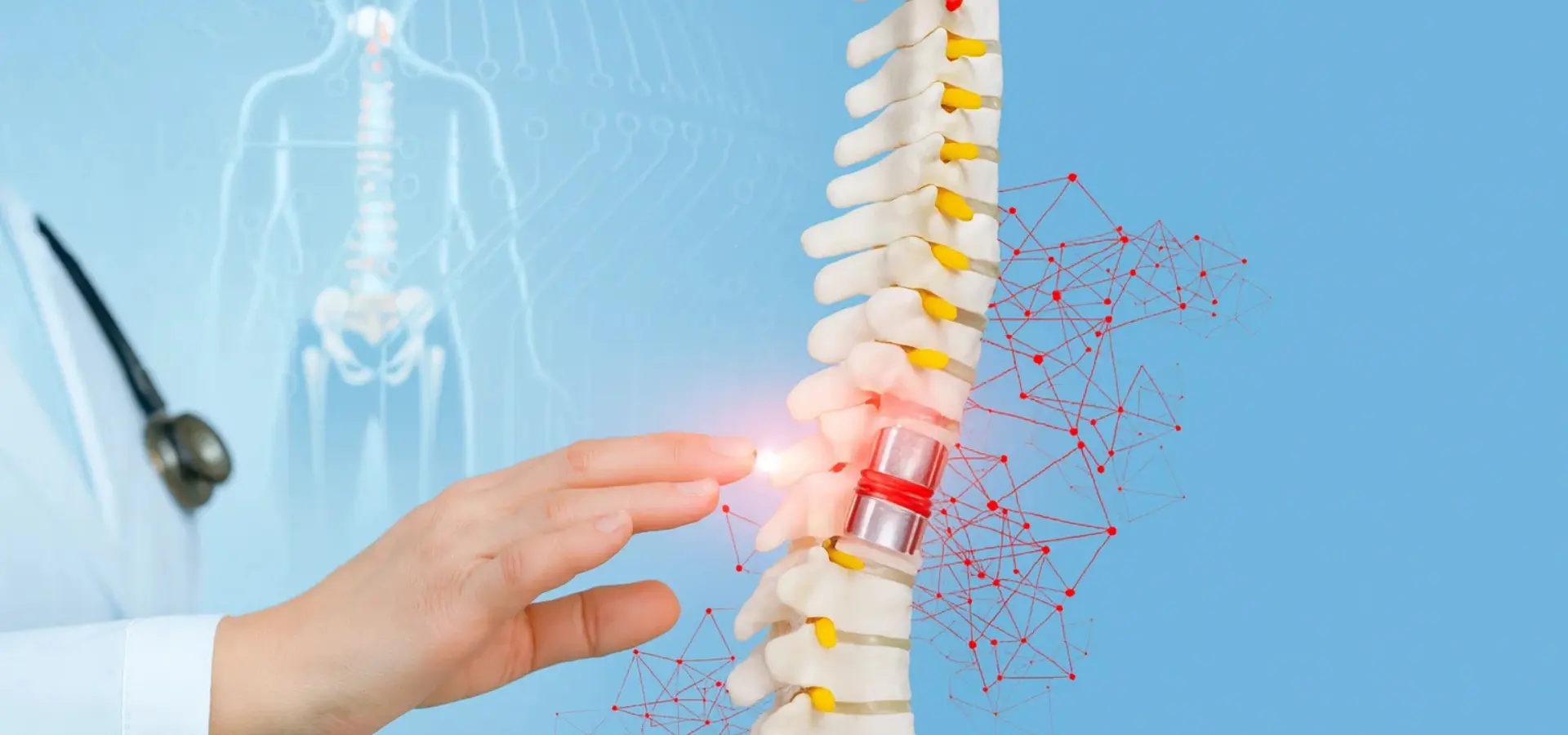
Artificial Lumbar disc replacement surgery is a procedure best suited for patients with disc problems. There are a few side effects of the fusion surgery, which is traditionally performed by surgeons to improve the condition of long-standing pain. Patients can be released on their regular schedule in less time than expected. The recovery of the patients depends on their flexibility, and most of the time, in a few weeks, they come into a stable position.
It is recommended for patients at a young age because they still have to work for a long time and can recover in few time. It helps reduce stiffness and maintain flexibility, which many patients prefer over traditional fusion. First of all, patients go for physiotherapy, lifestyle changes, and pain management treatment. If they don’t have that specific improvement, then they can go for surgery.
What is Artificial Lumbar Disc Replacement Surgery?
Artificial lumbar disc replacement surgery involves inserting an artificial spinal disc instead of enhancing vertebrae by means of fusing them together. This type of surgery is performed when traditional treatment methods (i.e., physiotherapy, medication, and/or injections) have not yielded satisfactory results with respect to the individual's level of pain, which is preventing him/her from performing his/her daily activities (e.g., work, sleeping, and/or moving). When compared with traditional spinal fusions, many individuals report improved flexibility, increased levels of activity, and lower levels of pain and discomfort.
How is artificial lumbar disc replacement material made?
Highly advanced production techniques are utilized in the development of artificial lumbar disc replacement materials as part of the biomedical engineering process. Most artificial lumbar discs are constructed of a variety of medical-grade metal alloys, such as titanium or Cobalt-Chromium, with high-density polyethylene.
Using computer-generated designs, the discs are manufactured to closely match the natural movement patterns of the vertebrae. Computer simulations allow for the assessment of the discs' strength, flexibility, and expected wear over time prior to their manufacturing. Very precise manufacturing techniques produce components of artificial discs to ensure smooth surfaces and accurate dimensionality. After manufacturing, artificial discs undergo multiple quality control tests, sterilisation, and biomechanical testing to validate quality and provide assurance of safety and durability. The goal of producing artificial discs is to support the normal motion patterns of the vertebral column and provide a reliable long-term solution for many years of use. Disc material is mainly composed of water and other proteins. As a normal part of aging, the water content gradually reduces. This can cause the disc to flatten out and even develop tears or cracks throughout the annulus fibrosis. These discs are often referred to as “degenerative” discs and may or may not cause pain.
Requirement of Disc Replacement: Alarming Signs?
Artificial lumbar disc replacement surgery is a good option for maintaining flexibility in the back. There are different procedures for disc replacement, but most of the time, they don’t allow much flexibility, and the recovery procedure is also slow.
When a spinal disc is damaged to the point of giving significant warnings to the body regarding its condition, artificial lumbar disc replacement is typically indicated. Some common early signs that the spinal disc has been damaged beyond reasonable recovery include persistent lower back pain that remains the same or continues to worsen ('A weak back' becomes your last resort) despite therapy and/or medication, and pain radiating to the legs, numbness/tingling, or inability to perform normal activities due to the pain emanating from the lumbar disc pressing against nerves.
- For chronic low-back pain that has persisted over the past several months:
- Pain extending into one or both legs.
- Numbness, tingling, or burning sensations.
- Leg weakness and/or difficulties walking.
- Inability to bend, twist, or stand for extended periods of time.
- Pain that interferes with normal daily function and/or sleep pattern.
Just as the presence of these symptoms can define a patient’s inability to perform usual daily activities, so too can the onset of severe issues with each of these areas indicate that the patient may be approaching a level of distress that precludes any reasonable expectation of improvement from conservative treatment options. At this point, the medical professional will evaluate the patient to determine if artificial lumbar disc replacement is an appropriate method of restoring mobility while relieving symptoms.
Disc Replacement Surgery in India
With the combination of a skilled specialist, cutting-edge technology, and affordable healthcare, disc replacement surgery in India is an excellent option for patients who are seeking relief from chronic back pain. People looking for different types of options in the surgery and also for affordable prices can choose India. Diagnostics in the technical era is easy, and the same technology has been introduced in India with full trust.
Doctors here are trained in different countries in the International training centres. India also welcomes patients from different countries. Staff from hospitals and surgery agencies give up-to-date information about the treatment and take follow-up sessions regularly. Hospitals here offer modern implants, experienced spine surgeons, and strong rehabilitation support, which helps patients recover with confidence.
Disc Replacement Surgery Success Rate
People usually resume their work and normal activities in a shorter amount of time than do patients receiving traditional spinal fusion due to the benefits of the artificial disc. There have been numerous studies that demonstrate that disc replacement surgery provides exceptional long-term success when applied to chronic back pain related to a single damaged disc and done in an appropriate patient population. Here are some key features of the treatment:

disc replacement surgery success rate
- The majority of patients will report significant improvement in pain, greater mobility, and improvements in their daily lives within the first few months following surgery.
- Due to the way the artificial disc maintains the natural movement of the spine, the long-term success rate is generally greater for those who have undergone a disc replacement versus spinal fusion surgery.
- Patients are able to return to work and other activities much faster following this procedure, and patients may sustain less risk of developing adjacent segment disease with disc replacement surgery.
- There is variability based on an individual patient’s age, lifestyle, and overall health, but the vast majority of patients achieve a long-term, stable outcome after disc replacement surgery.
- And this makes the use of this technique as a form of spinal care a viable and substantiated choice.
Artificial Disc Replacement Cost in India
The costs related to artificial disc replacement surgery in India are typically more affordable when compared to many other countries, while still maintaining high-quality modern surgical techniques and outcomes. The overall cost of the procedure will be influenced by a patient's choice of artificial disc type, the medical facility where the surgery occurs, the level of experience and expertise of the surgeon, and any additional diagnostic tests or post-operative rehabilitation services required.
|
Category |
Details |
|
Type of Surgery |
Artificial Lumbar Disc Replacement |
|
Purpose |
Replace a damaged lumbar disc while preserving natural spine movement |
|
Average Cost in India |
₹3,00,000 to ₹6,50,000 (varies by city and hospital) |
|
Cost Influencing Factors |
Type of implant, surgeon expertise, hospital category, number of levels treated, diagnostic tests |
|
Hospital Stay |
Usually 2 to 4 days |
|
Surgery Duration |
Around 2 to 3 hours |
|
Anesthesia |
General anesthesia |
|
Recovery Time |
Light activities in 2 to 3 weeks, full routine in 6 to 12 weeks |
|
Success Indicators |
Reduced pain, better mobility, faster return to daily activities |
|
Included in Package (varies) |
Consultation, imaging, surgery, implant, hospital stay, basic physiotherapy |
In many cases, the total cost will range from moderate to high based on whether the patient has undergone a single-level or multi-level operation. High-end private hospitals with cutting-edge technology and internationally accepted medical standards usually charge higher fees than other types of facilities, but these hospitals also provide patients with a smoother recovery process. Many patients believe they will receive the best value by utilizing this type of facility, since they use only high-quality implants, employ skilled spinal surgeons, and often allow patients to experience shorter lengths of stay. Because of the combination of affordability and reliable care, India is becoming an increasingly popular location for individuals seeking to have disc replacement surgery performed.
We Care Health Services For Artificial Lumbar Disc Replacement Surgery
We Care Health Services collaborates with some of the best spine surgery facilities and most qualified spine surgeons in India to provide disc replacement surgery and other spinal healthcare services. They are well known for providing state-of-the-art spine surgery options at affordable and clear, upfront pricing. By providing patients with affordable options, We Care Health Services makes advanced spine surgery accessible for a large number of individuals. Patients have reported that We Care Health Services provides personalized medical support, working with a coordinator to assist them through their appointment(s), to assist them with their hospital admission(s), to assist them with their surgical experience, and follow-up. Many patients have reported having a more comfortable recovery experience, better communication throughout their treatment(s), and that their treatment package was professionally managed by We Care Health Services.
- Best for the multiple problems in the body.
- Different types of treatment can be provided with care
- Best staff and doctors with good communication skills.
- Known for the best results and high success rate of the surgeries.
- The survival rate of the patients is also high
- Best known for its cost transparency and affordable options.
- Has the cost of the packages been discussed?
- Better recovery and follow-up care.