
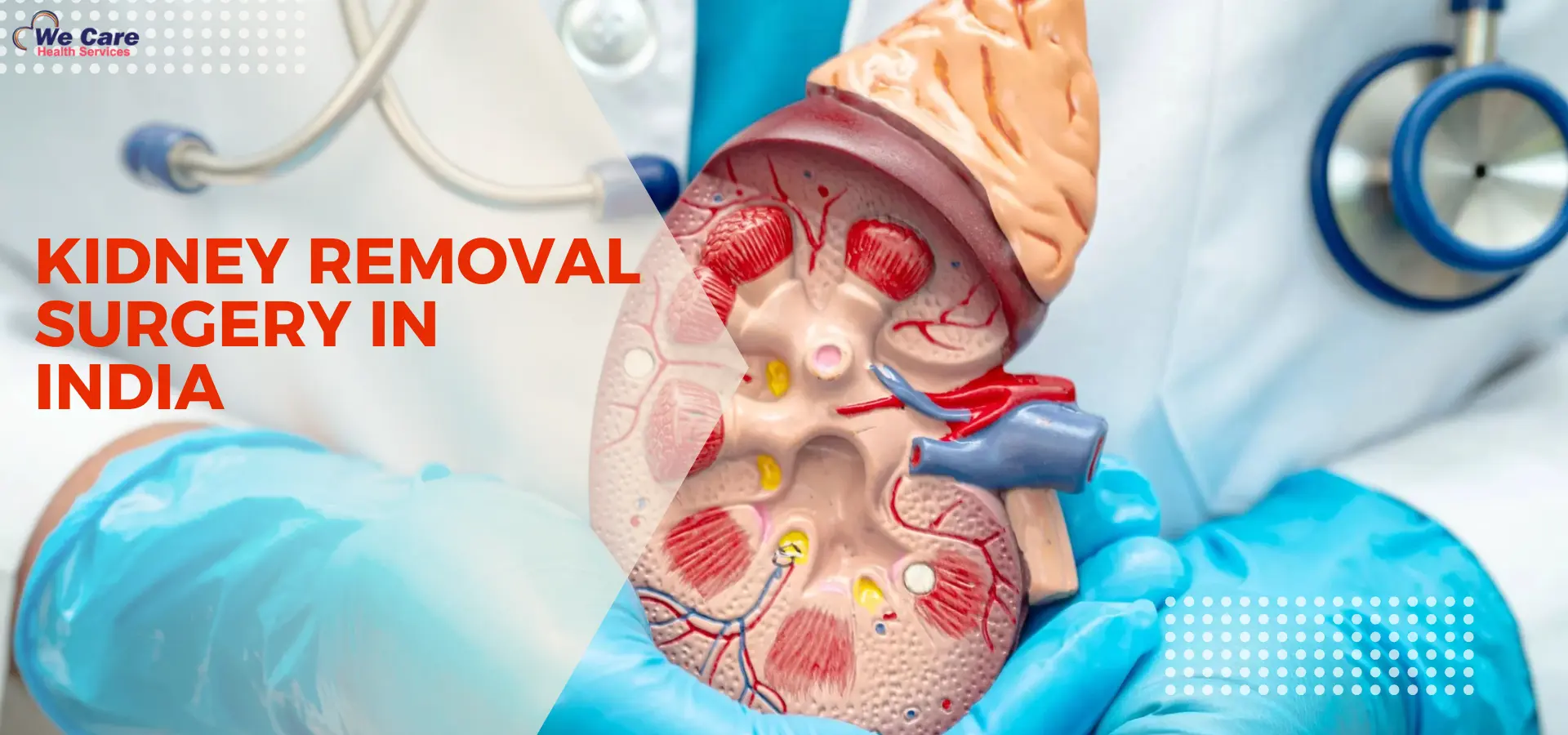
Nephrectomy Surgery in India is performed in response to Kidney cancer or tumour. It is the surgical removal of the whole kidney or a part of the kidney with malignancy. When cancer spreads in the endometrium layer of the tissues, a nephrectomy is the only solution that a doctor can provide.
There are two types of surgery: radical surgery and partial surgery. In the first case, there is the removal of the large part or whole, and in the second case, there is only the removal of a small part of the surgery. The term malignancy refers to the part of the tissue that is responsible for spreading infection in any organ.
What is Nephrectomy?
Nephrectomy is a treatment, or we can say that surgical removal of the kidneys to prevent the expansion of the cancer from one part of the body to another. It is commonly performed to treat kidney cancer, severe damage from stones or infections, congenital defects, or for kidney donation. There are various methods of performing surgery in a simple way. It is a complex practice, and replacement or transplant may be required simultaneously. The surgery may be done through open, laparoscopic, or robotic techniques. Most people can live a normal life with one healthy kidney after proper recovery and medical guidance. The doctor considers removing only the affected part of the kidney tissues, as transplantation is not easy.
Book Appointment
GET A FREE QUOTE
What Happens After a Nephrectomy?
Nephrectomy surgery is performed to prevent infections and infectious agents. After the removal of the kidney, there is a high chance that the other kidney will be enlarged and will function as the other one. The tissues of the kidney can regenerate themselves. In conditions like chronic kidney disease, scarring (fibrosis) develops. It happens if diseases of the kidney develop for a long time. This damage is usually permanent and progressive, meaning the kidney cannot grow back new healthy tissue.
Minor injuries or any kind of accidental injury can be cured by them. There are chances of repair and regeneration because the kidney is an essential organ of essence. In case of end-stage kidney disease, the treatment is transplantation or hemodialysis. If there is no treatment provided in this stage, there is a high chance of death.
What Are the Types of Nephrectomy Surgery?
Nephrectomy surgery in India has five types of surgeries based on the method of performance. The traditional method of surgery is not enough for the patients, and robotic-assisted surgeries have been invented. All the latest methods involve the less invasive methods of surgery. Kidney removal also depends on the age and health of the patient.
In India, patients have access to both traditional and advanced surgical techniques, each suited for different medical needs.

Types of Nephrectomy Surgery
Partial Nephrectomy
Partial Nephrectomy
It is more suitable for smaller non-malignant or infectious conditions. Here, the hurt or damaged part of the kidney is removed, but the normal part is spared. It is usually advised for patients with focal trauma, small kidney tumors, or focal infections. Preserving a part of the kidney maintains the function of the kidney to a greater extent in the long term.
Radical Nephrectomy
Radical Nephrectomy
Here, the whole kidney and surrounding fat, part of the ureter, and sometimes the adrenal gland are removed. Means in this case, the hormonal cycle gets disturbed. This kind of surgery is done mostly in the case of bigger tumors or when cancer has spread to a large area. Radical nephrectomy gives a wider removal of diseased tissue to avoid recurrence.
Simple Nephrectomy
Simple Nephrectomy
This is a procedure by which the kidney is excised along with the adjacent structures and is performed for cancers. It is normally carried out in benign conditions like extensive kidney infection, congenital defects, or rendering the kidneys functionless by stones or chronic illness. It is not from the malignant cells and can be completed comfortably with laparoscopic techniques.
Book Appointment
GET A FREE QUOTE
Laparoscopic Nephrectomy
Laparoscopic Nephrectomy
Otherwise referred to as keyhole surgery, this technique involves the use of small cuts and a laparoscope (telescope) to assist the surgeon. It has several advantages, such as less pain, less blood loss, quicker recovery, and shorter hospitalization compared to open surgery. The majority of Indian hospitals now use it as the first option wherever possible.
Robotic-Assisted Nephrectomy
Robotic-Assisted Nephrectomy
It is the most sophisticated nephrectomy offered in certain Indian hospitals. By robotic arms guided by a surgeon, the process is done with maximum precision, less scarring, and better results. It is particularly valuable in complicated partial nephrectomies where it is required to preserve healthy kidney tissue.
Nephrectomy Indications- What are the Indications of Kidney Removal Surgery?
Nephrectomy or kidney removal surgery in India is performed in response to severe infections like multiple stones, renal infection, and congenital diseases. High blood pressure and high blood sugar levels the another common issue that can be noticed in case of kidney removal surgery. Kidney removal surgery is the last procedure that a doctor can perform after overcoming so many difficulties. Here are some common indications of the kidney removal surgery:
Kidney Cancer
It is one of the major reasons for nephrectomy. If cancer is diagnosed properly in the kidney cells, then it needs to be removed either partially or totally. Infection of one kidney doesn't need to get into another, but if it happens, then it is a fatal condition. Depending on the size of the tumour, radical Nephrectomy is performed, and depending on the types of cancer, partial nephrectomy is performed.
Severe Infection in Which Kidney is Damaged
In cases where the kidney becomes severely damaged due to chronic infections, recurrent kidney stones, or long-term obstruction. This is also a kind of repetitive injury obstruction in the kidney and nephrology tissues. If in this case the kidney is no longer functioning and is causing repeated urinary tract infections, pain, or blood in the urine, then there are chances of complete surgery. Doctors suggested this kind of surgery with a perfect diagnosis. Cancer cells release interferons to protect other nearby cells, and in this case, it is effective by preventing further complications of the kidney.
Polycystic Kidney Diseases
Polycystic Kidney Disease—or PKD if you’re not into tongue-twisters—is basically when your kidneys decide to turn into a bag of water balloons. Over time, these cysts keep popping up and just wreck the normal kidney stuff, making it hurt, sometimes bleed, or catch an infection. Fun times, right?
If things get really out of hand, the kidneys can swell up to the point where you’re walking around with two watermelons in your abdomen. Not comfy, and definitely not a look anyone’s going for. Sometimes, if you’re heading toward dialysis or thinking about a transplant, doctors might just say, “You know what, let’s take one out to make room for the new guy.” In India, when it gets to that stage, you’ve got the big-shot nephrologists and urologists in the major hospitals handling it.
Kidney Injury
Sometimes life just throws an obstruction in the works—car crashes, gnarly falls, some freak accident at your job, whatever. Kidneys can get totally injured in such cases. If doctors can’t stop the bleeding or if the kidney just gives up after all that trauma, honestly, taking it out (nephrectomy, if you wanna get all medical about it) is pretty much the only way to keep someone alive.
Emergency nephrectomies are not very common, and they are the only way to save life in internal bleeding.
Transplant or Donor Nephrectomy
Organ donation is one of the most common reasons for the kidney removal surgery in India. The deceased or dead body is not commonly chosen for organ transplantation. Living donors, usually family members, may undergo a nephrectomy to donate one healthy kidney, especially from blood relatives. In case of donor surgeries, there are chances of good recovery in less time because of laparoscopic donor nephrectomy. So the procedure has made this process much safer and quicker. While it is a major surgery, it is life-saving for the recipient and often deeply satisfying for the donor.
Abnormal Growth Or Previous Surgery Operations.
There are some patients who have undergone different kidney surgeries to remove calculi and tumours in the kidneys. These cases are most of the time prone to infection of the kidney. Special cases like more kidney-related surgeries, but complications such as scarring, blockages, or abnormal growths.
Yanking out a kidney isn’t exactly something doctors do on a whim. They’ll only go down that road if the kidney’s gone totally rogue—like, it’s about to wreck your life, the pain is off the charts, or it’s messing up any shot at recovery from other treatments. In India, it’s not just one doc making the call either. Nope, you’ve got a whole squad: nephrologists, urologists, oncologists—all putting their heads together before they even think about surgery. Honestly, once you get why they’re suggesting something this drastic, it’s a bit less scary. At least you know there’s a plan, and it’s all about getting you back on your feet and improving your life down the line.
Medical Tourism in India For Nephrectomy: Kidney Removal Surgery in India For Foreigners
Medical tourism in India started for the fertility cases in the previous decades, and there is perfect handling of different cases of fertility issues. There are many IVF clinics like Go IVF Surrogacy working with foreign medical tourists in India. Covering different surgeries in a single chapter is only possible with Wew Care Health services. There are diverse facilities like minimally invasive surgery procedures, digital diagnosis, and robotic-assisted surgeries. These procedures are giving hope to the patient.
Book Appointment
GET A FREE QUOTE
Medical tourism
In particular, difficult procedures like kidney removal surgery have skyrocketed in India. Nephrectomy at affordable cost in India: Why? Patients from African countries, the Middle East, SAARC, Europe, and the US are considering India as their best option for Nephrectomy due to the availability of advanced healthcare and personal care.
Why International Patients Choose India
A kidney removal surgery in Western countries can cost between USD 15,000 to 25,000, and of course big NO if you are in India! It could be priced between USD 4000-12000 (depending on the hospital and type of surgery) for those in India. This is a big pull factor.
Best Hospitals with Better Infrastructure
For many patients, better infrastructure means the best hygiene and care of the patients. There are high chances of getting an infection during a surgery. With the technical facilities and good infrastructure, the hospital is itself an attraction. Also, there is a common trend that if any association is available at low prices, then their management is not good, like in the case of government hospitals, their hygiene level is compromised.
The hospitals, in coordination with We Care Health Services, are the best and provide both technical facilities and the best staff for coordination.
English Speaking Staff: Effective Communication
There are patients from different countries, like the Arabian, American, and African continents. Most of the patients know English to communicate. In India, you will notice hospitals with staff speaking different languages. So it could be the best decision, as doctors, nurses, and hospital staff are usually fluent in English, making communication smooth and stress-free.
Diverse Packages and Cost Transparency
Hospitals serving foreign patients have some criteria, and there are also tax audits, which are different from ordinary hospitals. The most important thing they can show you is all the possibilities of the expenses, and give transparency in the packages. It is better to choose complete treatment as provided by them. Inclusions in the packages are: airport pickup, accommodation for patient and attendant, hospital admission, surgery, meals, and translator service.
Best Nephrology Department of India
What are you expecting from a nephrology department? Facilities of kidney transplants, haemodialysis, laparoscopy for patients, operations, and nephrectomy. These are some of the highest services, and they are all offered by many hospitals in India. When it comes to kidney care, a handful of hospitals in India consistently stand out for their clinical expertise, advanced facilities, and patient outcomes. They Facilitataes:
- 24*7 care for the patients.
- Best emergency care
- Timely follow-up sessions
- An effective attitude for the patients
- Less recovery time with the best services
- Expert surgeons and nephrologists
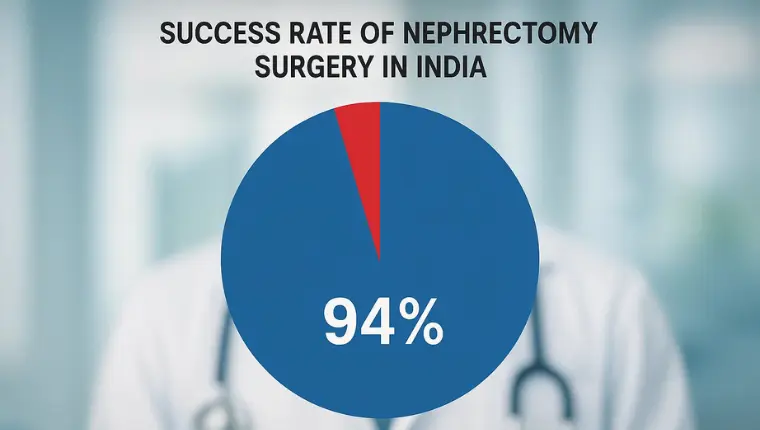
Success Rate of Nephrectomy Surgery in India
For most patients, there are high chances of better outcomes from surgery. The surgery is safe and effective, especially when performed in specialized centers that deal with kidney disorders. Most of the time, small hospitals do not frequently take on surgery cases. Renal Calculi surgery is performed most frequently in hospitals.
Success Rate of Nephrectomy Surgery in India
In cases of kidney cancer, partial or radical nephrectomy leads to excellent long-term outcomes, especially when the disease is caught early. Survival rates are comparable to global standards, with many patients going on to live normal and healthy lives with just one kidney. For non-cancer indications, such as kidney damage, infection, or donation, success rates are even higher since the surgery directly improves quality of life or enables a transplant.
|
Treatment |
Success Rate (Approx.) |
|
Medications (for CKD, BP, diabetes, infections) |
60–80% (in slowing disease) |
|
Hemodialysis |
85–90% (short-term survival) |
|
Peritoneal Dialysis (CAPD/APD) |
75–85% (first 5 years) |
|
Kidney Transplant |
90–95% (1-year survival) |
|
Nephrectomy (Kidney Removal) |
90–95% |
|
Stone Removal Procedures (PCNL, URS, ESWL) |
90–96% |
|
Plasmapheresis |
70–85% |
|
Lifestyle & Dietary Therapy |
50–70% (in slowing progression) |
|
Ayurveda & Complementary Care |
40–60% (supportive) |
Recovery is usually smooth with laparoscopic procedures, which are now widely available in India. Most patients can return to normal routines within a few weeks, and long-term complications are rare when proper care and follow-up are maintained.
Recovery from the Nephrectomy Surgery
Nephrectomy surgery is a major surgery, and the body takes time to heal. Also, diseases are caused by unregulated emotions and the pain in the tissues. The long and chronic conditions are special in these trends. So, there are high chances that the body will take a long time in the healing procedure. There are certain foods and some lifestyle adjustments that are necessary for this recovery.
Book Appointment
GET A FREE QUOTE
- In the initial 24 hours a patient is observed closely, as bleeding and infection chances are high during this period.
- For better circulation and not forming clogs in the internal organs, patients are encouraged to start moving slowly.
- Pain management is given through medications.
- Stitches or staples are usually removed after 10–14 days
- Energy levels are restored within a few weeks, more prepared protein is recommended, and no natural protein or fats. \
- Patients are advised to drink plenty of fluids, eat a balanced diet rich in fruits, vegetables, and lean proteins, and limit excess salt or junk food.
- If a nephrectomy happens because of kidney cancer, then there are high chances that the patient needs additional therapies such as targeted therapies and chemotherapy.
- After surgery Patient lives on one kidney. A single healthy kidney can function at nearly the same capacity as two, and many people live their entire lives with only one, but it should be healthy.
- Hydration is more important in the case of the kidneys.
- Controlling diabetes and hypertension, as these are the biggest threats to kidney health.
- It is necessary to avoid unnecessary medications like painkillers or over-the-counter drugs that can strain the kidneys.
- Recovery from kidney removal surgery is a journey of patience, discipline, and positivity.
Best Hospitals For Kidney Surgery in India
The famous Indian hospitals like Apollo, We Care Health Services, and Medanta are providing to best kidney treatment in India. They are leading hospitals equipped with modern technology, highly skilled nephrologists, and strong post-operative care. The best thing about these hospitals is no long waiting list, and they can also perform emergency removal of surgery.
If there is a requirement for the tools, then they will be available in the same hospital on an emergency basis. So we can say that the best choices are lying in Delhi NCR. They have International accreditations, world-class medical expertise, and also offer affordable treatment compared to Western nations. Easy transport from the airport and international transport make them more accessible for the patients. Here we are mentioning some of the best hospitals from the metro cities that are doing best in the Nephrectomy surgery.
Best Hospitals in India for Kidney Removal Surgery
|
Hospital |
City |
|
AIIMS (All India Institute of Medical Sciences) |
New Delhi |
|
Medanta – The Medicity |
Gurugram |
|
Apollo Hospitals |
Chennai |
|
Indraprastha Apollo Hospital |
New Delhi |
|
Fortis Memorial Research Institute |
Gurugram |
|
Max Super Speciality Hospital |
New Delhi |
|
Sir Ganga Ram Hospital |
New Delhi |
|
Artemis Hospital |
Gurugram |
|
Narayana Health City |
Bangalore |
|
Manipal Hospital |
Bangalore |
|
Christian Medical College (CMC) |
Vellore |
|
Asian Institute of Nephrology & Urology (AINU) |
Hyderabad |
|
KIMS Hospital |
Hyderabad |
|
PGIMER (Postgraduate Institute of Medical Education and Research) |
Chandigarh |
|
Ruby Hall Clinic |
Pune |
|
Jaslok Hospital |
Mumbai |
|
Kokilaben Dhirubhai Ambani Hospital |
Mumbai |
|
Lilavati Hospital |
Mumbai |
|
Amrita Institute of Medical Sciences |
Kochi |
|
Institute of Kidney Diseases & Research Center (IKDRC) |
Ahmedabad |
Cost of Kidney Removal Surgery in India
The kidney removal surgery in India is performed by expert nephrologists, and the cost depends on the essential factors such as age and health of the patients. We will mention both internal factors affecting the cost. For this purpose, we always mention the cost in the range. External factors such as the infrastructure and the location of the hospitals do not have much effect. But the cost is always more affordable in comparison to countries like the US and other European Countries. The cost packages are more transparent and affordable for the peopl. There is also NABH accreditation, which facilitates easy treatment for the ex-servicemen. If there is a benign tumour, then it would be a less severe range, and for the malignancy, there is a need for therapies like targeted therapies and radiation therapy.
We will mention the cost of the different treatments in the table:
|
Type of Surgery / Hospital |
Average Cost (INR) |
Average Cost (USD) |
|
Simple Nephrectomy (Open Surgery) |
₹1,20,000 – ₹2,00,000 |
$1,500 – $2,500 |
|
Radical Nephrectomy (Open Surgery) |
₹1,80,000 – ₹3,00,000 |
$2,200 – $3,600 |
|
Partial Nephrectomy (Open Surgery) |
₹2,00,000 – ₹3,50,000 |
$2,500 – $4,300 |
|
Laparoscopic Nephrectomy |
₹2,50,000 – ₹4,50,000 |
$3,000 – $5,500 |
|
Robotic-Assisted Nephrectomy |
₹3,50,000 – ₹6,00,000 |
$4,200 – $7,500 |
|
Government Hospitals (AIIMS, PGI, etc.) |
₹80,000 – ₹1,50,000 |
$1,000 – $1,800 |
|
Private Multi-Specialty Hospitals (Apollo, Fortis, Medanta, etc.) |
₹2,00,000 – ₹5,00,000 |
$2,500 – $6,200 |
Kidney Removal Surgery in India: Latest Technology Discovered
Kidney removal surgery in India is performed with the latest technology, and it is not easy for the doctors. In the advanced hospitals, 3-D printed surgery models of the kidney are helping patients understand their diseases. It is also helping doctors in the proper visualization of the condition of the surgery.
Book Appointment
GET A FREE QUOTE
Removal of the kidney involves a partial effect on the circulation and excretion. The experience is also enhanced by the intraoperative imaging of the kidney, which helps in complex PCNL procedures. In the case of renal calculi, there are high chances of breaking the stone with the help of High-Power Ureteric Laser Systems. Here are some common technologies invented for treating kidney conditions.
This is one of the best explanations of robotic assistance and one of the major future implications of the technology. It is a minimally invasive method of surgery. It is improving safety and recovery for living donors and complex recipient cases.
We Care Health Services for Kidney Removal Surgery in India
We Care Health Services is the best platform for various types of surgeries. It is a large project that is making medical tourism in India easy. It was not that frequent a decade that people were getting treatment in India. After the treatment facilities of We Care, expert surgeons and technical facilities are coming to India in an ambitious manner. Now there are many hospitals that are treating foreign patients in a wonderful way.
We Care is the coordination of many hospitals in different cities; you can access them in an easy way. It is not about kidney treatment or heart treatment; we are facilitating every surgery in an easy way. Here are some best efforts of:
Book Appointment
GET A FREE QUOTE
- It is open for every patient 24*7
- We are also giving emergency surgeries
- Hospitals with a minimum waiting list
- Best staff communicating in different languages
- Helping patients from India and foreign countries
- Smarter care and enhanced patient comfort
- Best technologies for minimally invasive methods
- The latest technology in kidney treatment and kidney removal surgery in India is available.
- High success rate of surgeries
- Different departments for each treatment, like the heart, lungs, and liver
- Proven experience and best technological facilities.
- Trained staff for the use of technology
- Accessible in various cities of India
- We see every case for research and study purposes
- Personalized approach for every patient.