

Diabetic kidney disorder can be cured with the help of diabetic nephropathy treatment in India. There is an affordable price for every treatment, and technical facilities have made it easy for doctors. Diabetes type 2, which is also known as Insulin-Dependent Diabetes Mellitus, can cause constriction of blood vessels.
Kidney failure is commonly noticed in cases of diabetes mellitus. It is one of the renal end-stage diseases. Diabetic nephropathy develops when high blood sugar levels damage the small blood vessels (glomeruli) in the kidneys, impairing their ability to filter waste from the blood properly. This is the reason various types of surgery or dialysis are required for the patient.
What is Diabetic Nephropathy?
Diabetic nephropathy is a kidney disease caused by long-term high blood sugar levels in people with diabetes. It damages the small blood vessels in the kidneys, reducing their ability to filter waste from the blood.
Book Appointment
GET A FREE QUOTE
This leads to protein leaking into the urine (called proteinuria or albuminuria). Over time, kidney function can worsen, eventually causing chronic kidney disease or kidney failure. Diabetic nephropathy is a common and serious complication of both type 1 and type 2 diabetes. Good blood sugar and blood pressure control can help slow its progression.
Types of Diabetes- Which Diabetes Causes Diabetic Nephropathy?
There are two types of diabetes. In both types, the body does not properly process and use food. The human body normally converts food to glucose, the simple sugar that is the main source of energy for the body's cells. To enter cells, glucose needs the help of insulin, a hormone produced by the pancreas. When a person does not make enough insulin, or the body does not respond to the insulin that is present, the body cannot process glucose, and it builds up in the bloodstream. High levels of glucose in the blood lead to a diagnosis of diabetes. Both types of diabetes can lead to kidney disease.
Type 1 Diabetes
About 5 to 10 per cent of people with diagnosed diabetes have type 1 diabetes, which tends to first occur in young adults and children. Type 1 used to be known as insulin-dependent diabetes mellitus or juvenile diabetes. In type 1 diabetes, the body stops producing insulin. People with type 1 diabetes must take daily insulin injections or use an insulin pump.
They also control blood glucose levels with meal planning and physical activity. Type 1 diabetes is more likely to lead to kidney failure. Twenty to 40 per cent of people with type 1 diabetes develop kidney failure by the age of 50. Some develop kidney failure before the age of 30.
Type 2 Diabetes
About 90 to 95 per cent of people with diagnosed diabetes have type 2 diabetes, once known as noninsulin-dependent diabetes mellitus or adult-onset diabetes. Many people with type 2 diabetes do not respond normally to their own or to injected insulin conditions called insulin resistance. Type 2 diabetes first occurs more often in people over the age of 40, but it can occur at any age-even during childhood.
Many people with type 2 are overweight. Many are also not aware that they have the disease. Some people with type 2 control their blood glucose with meal planning and physical activity. Others must take pills that stimulate the production of insulin, reduce insulin resistance, decrease the liver's output of glucose, or slow absorption of carbohydrate from the gastrointestinal tract. Still others require injections of insulin in addition to pills.
Cause of Diabetic Nephropathy
Diabetic kidney disease takes many years to develop. In some people, the filtering function of the kidneys is actually higher than normal in the first few years of their diabetes. This process has been called hyperfiltration. Here are some reasons for diabetic nephropathy:
- High blood sugar (hyperglycemia) from diabetes damages kidney blood vessels (glomeruli).
- This causes increased pressure in the glomeruli (hyperfiltration).
- Over time, the glomerular basement membrane thickens.
- Mesangial cells expand, leading to scarring (glomerulosclerosis).
- Damaged filters allow proteins (especially albumin) to leak into urine.
- Persistent proteinuria further damages kidney structures.
- Poor blood sugar control accelerates damage.
- High blood pressure worsens kidney stress.
- Inflammation and oxidative stress contribute to injury.
- These changes gradually reduce kidney function, leading to chronic kidney disease and potentially kidney failure.
Over several years, people who are developing kidney disease will have small amounts of the blood protein albumin begin to leak into their urine. At its first stage, this condition has been called microalbuminuria. The kidney's filtration function usually remains normal during this period.
What is the first sign of diabetic nephropathy?
The first sign of diabetic nephropathy is microalbuminuria, which means a small amount of albumin (a protein) leaks into the urine, indicating early kidney damage before symptoms appear.
As the disease progresses, more albumin leaks into the urine. This stage may be called overt diabetic nephropathy or macroalbuminuria. As the amount of albumin in the urine increases, the filtering function usually begins to drop. The body retains various wastes as filtration falls. Creatinine is one such waste, and a blood test for creatinine can be used to estimate the decline in kidney filtration. As kidney damage develops, blood pressure often rises as well.
Book Appointment
GET A FREE QUOTE
Overall, kidney damage rarely occurs in the first 10 years of diabetes, and usually 15 to 25 years will pass before kidney failure occurs. For people who have lived with diabetes for more than 25 years without any signs of kidney failure, the risk of ever developing it decreases.
Surgical Treatments for Diabetic Kidney Failure- Diabetic Kidney Disease Treatment Guidelines
Diabetic kidney failure, also known as end-stage renal disease (ESRD) due to diabetes, occurs when the kidneys lose most of their function. At this stage, surgical treatment options are considered, mainly to replace or support kidney function. The two main surgical approaches are dialysis access surgery and kidney transplantation.
Arteriovenous (AV) Fistula or Graft for Hemodialysis
Hemodialysis requires regular access to the bloodstream. These procedures are essential for patients starting long-term hemodialysis. This is achieved through minor surgery to create:
- AV Fistula: A connection between an artery and a vein, usually in the arm. It is considered the best option due to the lower risk of infection and longer lifespan.
- AV Graft: A synthetic tube connecting an artery and a vein, used when veins are unsuitable for a fistula. It may be used sooner, but it has higher complication rates.
Peritoneal Dialysis Catheter Insertion
Peritoneal dialysis is an alternative to hemodialysis and involves using the lining of the abdomen to filter blood. A catheter is surgically placed in the abdomen to allow the dialysis fluid to flow in and out. This method can be done at home and offers more flexibility, but requires a sterile environment and proper training.
Kidney Transplantation
A kidney transplant is the most effective long-term surgical treatment for diabetic kidney failure. In this procedure, a healthy kidney from a living or deceased donor is transplanted into the patient’s body.
Benefits:
- Eliminates the need for dialysis
- Improves quality of life
- Increases life expectancy compared to dialysis
Risks:
- Surgical complications
- Rejection of the new kidney
- Need for lifelong immunosuppressive drugs
Simultaneous Pancreas-Kidney Transplant (SPK)
For some patients with type 1 diabetes, a simultaneous pancreas and kidney transplant is an option. This procedure treats both kidney failure and the underlying diabetes.
Advantages:
- Cures diabetes and eliminates insulin dependence
- Reduces further kidney damage risk
Disadvantages:
- Major surgery with a higher complication risk
- Requires strict eligibility and donor availability
Surgical treatments for diabetic kidney failure aim to restore kidney function or replace it through dialysis or transplantation. While dialysis access surgery supports life, kidney transplantation, with or without pancreas transplant, offers the best chance for long-term health and improved quality of life.
Management of Diabetic Nephropathy NICE Guidelines
According to NICE guidelines, the management of diabetic nephropathy focuses on early detection, tight glycaemic control, and blood pressure management. Regular screening for albuminuria using the urine albumin-to-creatinine ratio (ACR) is essential. ACE inhibitors or ARBs are first-line treatments for patients with albuminuria, even if blood pressure is normal. Glycaemic targets should be individualised, aiming for an HbA1c of around 48 mmol/mol (6.5%) if safe.
Book Appointment
GET A FREE QUOTE
Lifestyle modifications, such as smoking cessation, a healthy diet, and physical activity, are recommended. Sodium-glucose cotransporter-2 (SGLT2) inhibitors are also advised for patients with type 2 diabetes and chronic kidney disease to slow disease progression.
- Screen annually for albuminuria using urine ACR.
- Confirm raised ACR with repeat testing.
- Start ACE inhibitors or ARBs in patients with albuminuria.
- Treat hypertension to target <130/80 mmHg.
- Aim for HbA1c around 48 mmol/mol (6.5%), if appropriate.
- Recommend SGLT2 inhibitors for type 2 diabetes with CKD.
- Advise lifestyle changes: healthy diet, exercise, and weight control.
- Strongly advise smoking cessation.
- Avoid nephrotoxic drugs (e.g., NSAIDs).
- Monitor renal function and ACR at least annually.
- Refer to a nephrologist if kidney function worsens or ACR >70 mg/mmol.
Diabetes Kidney Failure Treatment
Diabetes kidney failure, also known as end-stage renal disease (ESRD) due to diabetes, occurs when the kidneys can no longer function properly. This condition requires comprehensive treatment to replace kidney function and manage complications.
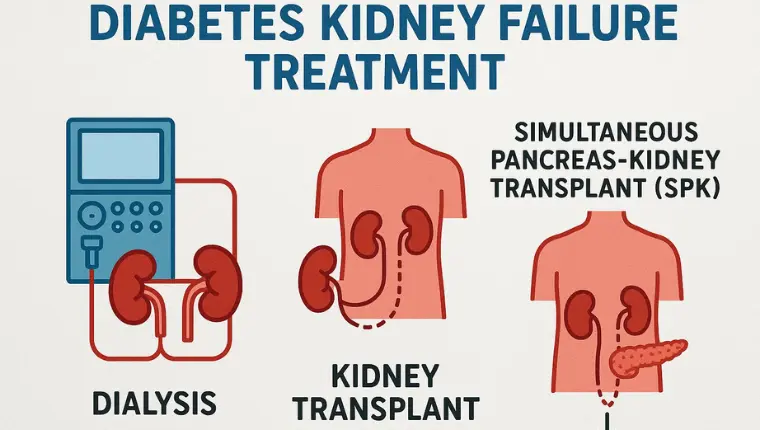
Diabetes Kidney Failure Treatment
Dialysis
When kidneys fail, dialysis is often the first treatment option. Dialysis helps remove toxins and excess fluids, but does not cure kidney disease. There are two main types:
- Hemodialysis: Blood is filtered through a machine, usually at a dialysis centre, three times a week.
- Peritoneal Dialysis: A catheter is placed in the abdomen, and fluid is used to filter waste from the blood inside the body.
Kidney Transplant
A kidney transplant is considered the most effective long-term treatment. A healthy kidney from a living or deceased donor is surgically placed into the patient. This can significantly improve quality of life and survival compared to dialysis. However, transplant patients must take immunosuppressive medications for life to prevent rejection.
Simultaneous Pancreas-Kidney Transplant (SPK)
For people with type 1 diabetes, a simultaneous pancreas-kidney transplant is an option. This procedure replaces both the damaged kidney and the insulin-producing pancreas, potentially curing diabetes and kidney failure. It’s a major surgery and requires careful candidate selection.
Medical and Lifestyle Management
Even with dialysis or transplant, blood sugar and blood pressure control remain essential. Medications like ACE inhibitors, ARBs, and SGLT2 inhibitors help protect remaining kidney function. Lifestyle changes such as a low-sodium, kidney-friendly diet, regular exercise, and quitting smoking are critical to slow disease progression and improve outcomes.
Managing diabetes-related kidney failure requires a combination of surgical treatments like dialysis or transplant, along with strong medical management and lifestyle changes to improve outcomes and extend life.
Cost of Diabetic Nephropathy Treatment
The cost of treating diabetic kidney disease can vary a lot depending on how advanced the condition is. In the early stages, it's mostly about regular checkups, lab tests, and medications, which aren’t too expensive. But as the disease progresses, treatments like dialysis or a kidney transplant can get very costly. Dialysis is ongoing and adds up each year, while a transplant is expensive upfront but can be more cost-effective in the long run. You’ll also need to consider the cost of medications, hospital visits, and follow-up care. Insurance often helps, but coverage depends on your country and healthcare plan.
|
Treatment Type |
Estimated Cost |
|
Regular doctor visits & meds |
$1,000 – $3,000 |
|
Diabetes/kidney medications (e.g., SGLT2 inhibitors) |
$4,000 – $6,000 |
|
Hemodialysis (clinic-based) |
$80,000 – $100,000 |
|
Peritoneal dialysis (home-based) |
$60,000 – $90,000 |
|
Kidney transplant (1st year, including surgery) |
$100,000 – $150,000 |
|
Transplant (after year 1 – meds & follow-ups) |
$10,000 – $25,000/year |
Hospitals For the Best Diabetic Nephropathy Treatment
Treating diabetic kidney disease effectively often means turning to hospitals with strong nephrology and transplant programs. Centres such as Medanta (Gurgaon), Fortis Memorial Research Institute (Gurgaon), and Apollo Gleneagles (Kolkata) stand out for offering comprehensive care—from early intervention and dialysis to advanced transplant services.
Book Appointment
GET A FREE QUOTE
|
Hospital |
City / Region |
|
Medanta – The Medicity |
Gurugram |
|
Fortis Memorial Research Institute (FMRI) |
Gurugram |
|
Apollo Gleneagles Hospital |
Kolkata |
|
P. D. Hinduja National Hospital |
Mumbai |
|
Gleneagles Hospitals (Nephrology dept.) |
Multiple (e.g., Chennai, Mumbai) |
|
CARE Hospitals (Nephrology & Transplant) |
Hyderabad, Bhubaneswar etc. |
|
Max Super Speciality Hospitals |
Nationwide (e.g., Delhi) |
|
Manipal Hospitals (Nephrology & Dialysis) |
Multiple cities |
|
Aster Hospitals (Nephrology) |
Kochi, Bengaluru, etc. |
|
Yashoda Hospitals (Institute of Nephrology) |
Hyderabad |
|
Sir Ganga Ram Hospital |
New Delhi |
|
Belle Vue Clinic (Renal Transplants) |
Kolkata |
|
General Hospital Ernakulam |
Kochi (Government sector) |
|
Dr. Mohan’s Diabetes Specialities Centres |
Chennai & various cities |
|
We Care Health Services |
(Implant as per your location) |
Renowned institutions like Gleneagles, CARE Hospitals, and Max Super Speciality also bring cutting-edge diagnostics and patient-centred care. Even general hospitals like Ernakulam Government Hospital deliver high-quality, subsidised renal services. And of course, We Care Health Services remains a trusted option for compassionate, multidisciplinary treatment.
We Care Health Services For Diabetic Nephropathy
We Care Health Services is a trusted healthcare facilitator offering access to top-tier diabetic nephropathy treatment in India. They collaborate with leading hospitals and specialists in nephrology and endocrinology to provide comprehensive care—from early-stage kidney monitoring to dialysis and kidney transplant coordination.
Patients benefit from personalised treatment plans, advanced diagnostic support, and end-to-end assistance, including travel, accommodation, and post-treatment follow-up. With a focus on patient comfort and affordability, We Care helps both domestic and international patients navigate complex treatments smoothly. Their network ensures timely intervention and improved outcomes for those suffering from diabetes-related kidney complications.
- Provides access to specialist nephrologists and endocrinologists.
- Offers early detection, diagnosis, and management of diabetic nephropathy.
- Offers early detection, diagnosis, and management of diabetic nephropathy.
- Coordinates dialysis services in top-tier hospitals across India.
- Facilitates kidney transplant procedures, including donor matching and post-op care.
- Offers early detection, diagnosis, and management of diabetic nephropathy.
- Coordinates dialysis services in top-tier hospitals across India.
- Facilitates kidney transplant procedures, including donor matching and post-op care.
- Provides access to specialist nephrologists and endocrinologists.
- Offers early detection, diagnosis, and management of diabetic nephropathy.
- Coordinates dialysis services in top-tier hospitals across India.
- Facilitates kidney transplant procedures, including donor matching and post-op care.
How to reverse kidney damage from diabetes?
While diabetic kidney damage (diabetic nephropathy) cannot usually be fully reversed, early-stage kidney damage can often be slowed—or even partially improved—with proper care. The goal is to control the underlying diabetes and protect the kidneys from further injury.
Book Appointment
GET A FREE QUOTE
- Control blood sugar: Aim for a target HbA1c of around 6.5–7% (as advised by your doctor).
- Manage blood pressure: Keep it below 130/80 mmHg using medications like ACE inhibitors or ARBs.
- Use SGLT2 inhibitors: These newer diabetes drugs (like empagliflozin or dapagliflozin) protect kidney function.
- Limit protein and salt intake: A kidney-friendly diet reduces strain on the kidneys.
- Stay well-hydrated: Drink enough fluids unless your doctor restricts it.
- Avoid NSAIDs and nephrotoxic drugs: These can worsen kidney damage.
- Quit smoking: Smoking speeds up kidney deterioration.
- Maintain a healthy weight: Obesity can worsen both diabetes and kidney disease.
- Exercise regularly: Improves blood sugar, blood pressure, and kidney health.
- Regular monitoring: Test urine for protein and check kidney function (eGFR) regularly.
Frequently Asked Questions:
- Stage 1: Kidney function is normal, but early signs like high blood pressure or slight protein in urine may appear.
- Stage 2: Mild loss of function with increased albumin in urine (microalbuminuria).
- Stage 3: Moderate kidney damage; symptoms may start, and protein in urine increases.
- Stage 4: Severe decline in function; waste builds up, and complications arise.
- Stage 5: End-stage renal disease (ESRD) or kidney failure—dialysis or transplant is required.