
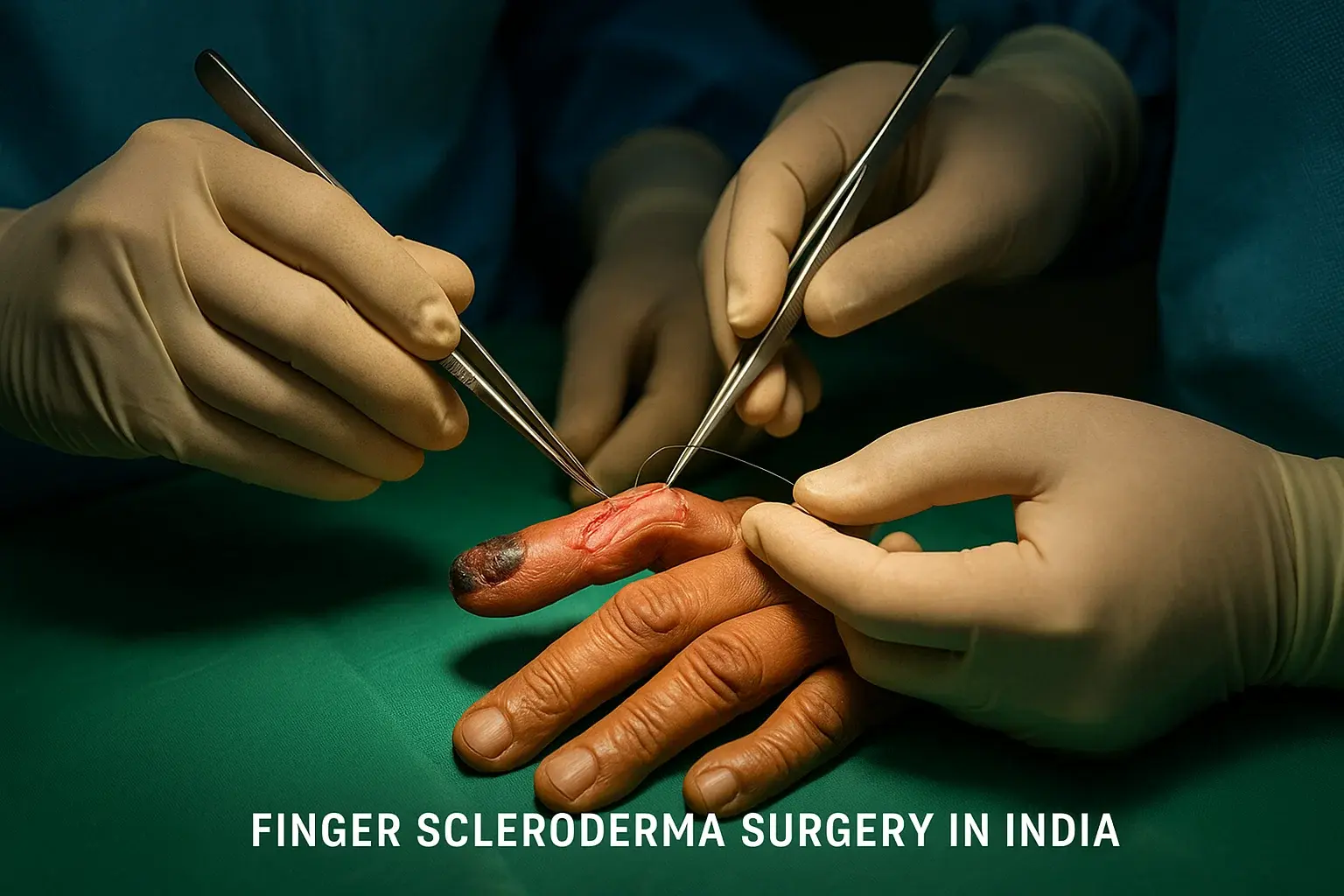
Finger scleroderma surgery in India offers advanced medical solutions for individuals suffering from severe digital complications caused by systemic sclerosis. Scleroderma can lead to tightening of the skin, restricted movement, painful ulcers, and in advanced stages, digital ischemia or gangrene. Surgical intervention becomes essential when conservative treatments fail to relieve pain or prevent tissue loss.
Book Appointment
GET A FREE QUOTE
Common procedures include digital sympathectomy, debridement, or even amputation in extreme cases. India’s top rheumatology and plastic surgery centres provide expert care with modern microsurgical techniques, making it a cost-effective and high-quality destination for scleroderma treatment tailored to the patient's condition and recovery goals.
What is Finger Scleroderma?
Finger scleroderma refers to the hardening, tightening, and thickening of the skin and tissues in the fingers due to systemic sclerosis, an autoimmune connective tissue disorder. This condition can cause pain, stiffness, reduced mobility, and poor blood circulation in the hands. Over time, it may lead to ulcers, digital ischemia, or even tissue loss.
Raynaud’s phenomenon often accompanies finger scleroderma, causing the fingers to turn white or blue in response to cold or stress. Early diagnosis and proper management are essential to prevent severe complications. In advanced cases, finger scleroderma surgery in India offers relief and functional improvement.
Finger Scleroderma Symptoms
Finger scleroderma, a localised manifestation of systemic sclerosis, primarily affects the skin and blood vessels of the fingers. Early symptoms often include stiffness, tightness, and swelling, especially in the morning or during cold exposure. As the disease progresses, skin thickening, ulcer formation, and decreased finger mobility may occur.
Book Appointment
GET A FREE QUOTE
Raynaud’s phenomenon is a common early indicator, where fingers turn pale or bluish due to poor circulation. Pain, numbness, and sensitivity to cold are also frequent. In severe cases, the condition may lead to digital ulcers or tissue damage requiring medical or surgical intervention.
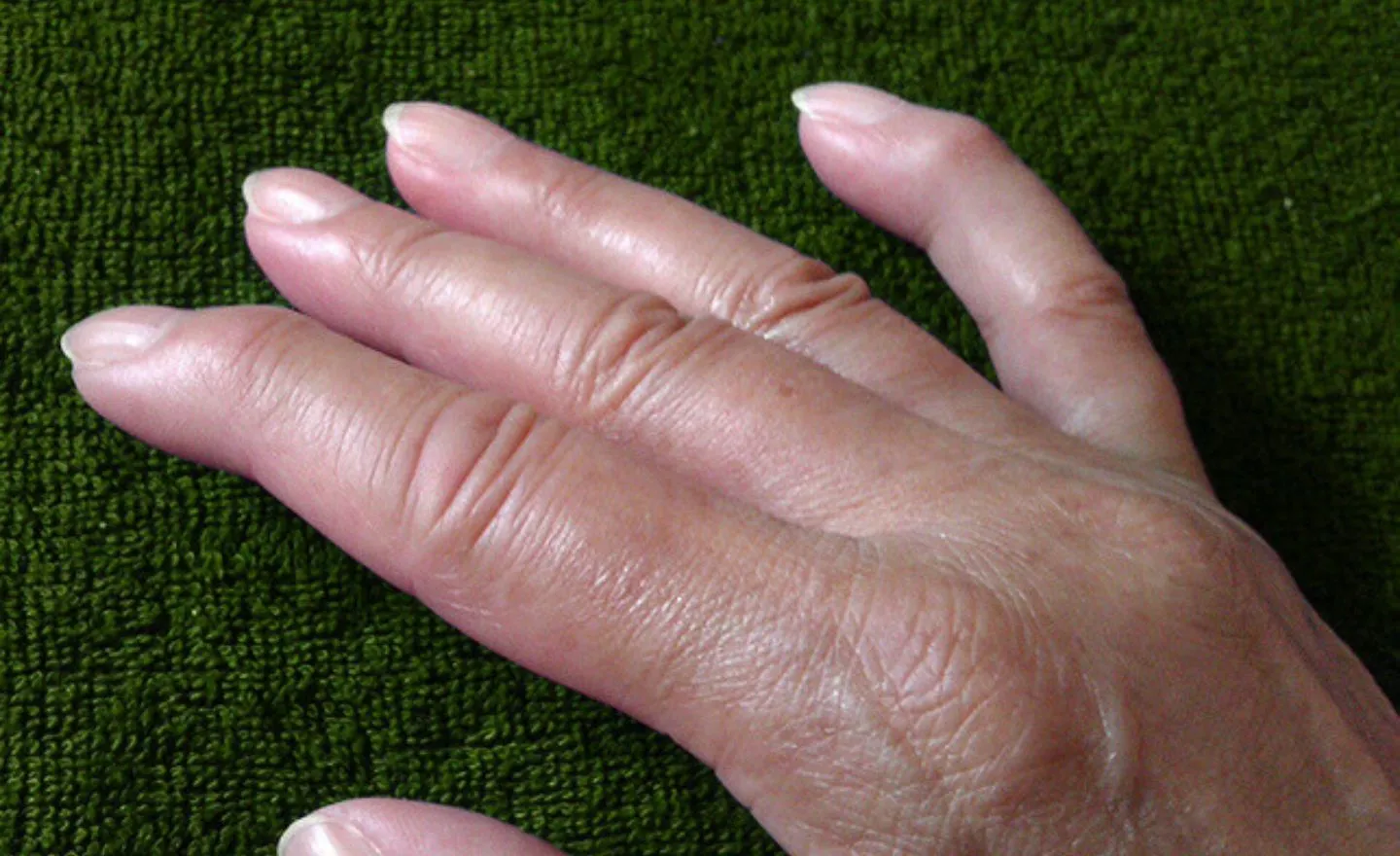
Finger Scleroderma Symptoms
- Skin Tightening: Noticeable hardening and thickening of the skin on fingers
- Swelling: Puffy fingers, especially in the morning or after cold exposure
- Stiffness: Reduced flexibility and difficulty in finger movement.
- Pain or Burning: Persistent discomfort in affected fingers
- Raynaud’s Phenomenon: Fingers turn white, blue, or purple in response to cold or stress
- Ulcer Formation: Painful sores or open wounds on fingertips
- Loss of Sensation: Numbness or tingling in the fingers
- Restricted Blood Flow: Coldness and poor circulation in the hands
- Nail Changes: Abnormal nail growth or ridges
- Joint Contractures: Bent fingers that cannot fully straighten
- Infection Risk: Increased susceptibility to skin infections
- Calcinosis: Calcium deposits under the skin, causing lumps or pain.
End-stage Sceleroderma Symptoms
End-stage scleroderma symptoms include severe skin tightening, chronic pain, joint contractures, digital ulcers, gangrene, difficulty breathing, heart failure, kidney dysfunction, and gastrointestinal issues. Organ damage becomes progressive, often leading to life-threatening complications and a significant decline in quality of life.
Finger Scleroderma Causes
Finger scleroderma is caused by an abnormal immune system response that triggers excessive collagen production, leading to hardening and thickening of the skin and tissues. While the exact cause is unknown, it is classified as an autoimmune disorder where the body mistakenly attacks its connective tissue.
Book Appointment
GET A FREE QUOTE
Genetic predisposition, environmental factors, and vascular abnormalities may contribute. Exposure to certain chemicals or viral infections may also trigger the condition. In finger scleroderma, these changes especially affect small blood vessels and tissues in the fingers, resulting in stiffness, pain, and restricted movement.
- Autoimmune Reaction: The immune system attacks healthy connective tissue
- Excess Collagen Production: Leads to thickened, hardened skin and tissues
- Genetic Factors: Family history may increase the risk
- Environmental Triggers: Exposure to silica, solvents, or certain industrial chemicals
- Hormonal Influences: More common in women, possibly linked to estrogen levels
- Vascular Abnormalities: Damage to small blood vessels in the fingers
- Oxidative Stress: Cell damage caused by free radicals
- Chronic Inflammation: Persistent immune activation in body tissues
- Infections: Certain viral or bacterial infections may initiate symptoms
- Immune Complex Deposition: Immune cells mistakenly target finger tissues
- Cold Exposure: Can worsen vascular constriction and symptoms
- Unknown Triggers: In some cases, the exact cause remains unclear.
Scleroderma Diagnosis- How to Diagnose Scleroderma?
Scleroderma is diagnosed through a combination of clinical evaluation, blood tests, and imaging studies. Doctors look for signs like skin thickening, Raynaud’s phenomenon, and digital ulcers. Blood tests help detect autoantibodies commonly linked to autoimmune diseases.
Imaging and capillaroscopy assess internal organ involvement and blood flow abnormalities. Early diagnosis is crucial to prevent complications and begin appropriate care. For those experiencing hand-related symptoms, timely diagnosis can lead to better outcomes and access to finger scleroderma treatment in India with specialised care.
Book Appointment
GET A FREE QUOTE
- Physical Examination- Checking skin tightness, swelling, and finger movement limitations.
- Blood Tests- ANA (antinuclear antibody), anti-centromere, and anti-Scl-70 to confirm autoimmune activity.
- Nailfold Capillaroscopy- A non-invasive test using a microscope to examine blood vessels near the fingernails for abnormalities.
- Skin Biopsy- Taking a small skin sample for microscopic analysis to confirm excessive collagen buildup.
- X-rays or MRI- Imaging to detect joint damage, tissue thickening, or calcium deposits.
- Pulmonary Function Tests- Important if systemic involvement is suspected.
- Echocardiogram- To assess heart function, especially in diffuse systemic cases.
- Consultation with a Rheumatologist- Essential for personalised diagnosis and initiating finger scleroderma treatment in India.
Different Types of Scleroderma
Trigger fingers, swollen fingers, and puffy fingers are common manifestations of early and mid-stage scleroderma. These symptoms interfere with hand function and daily tasks, often progressing to pain, stiffness, and immobility. In advanced cases, where conservative treatments fail, finger scleroderma surgery in India offers effective relief. Surgical options include tendon release, debridement, or skin grafting, depending on severity. India’s specialised hospitals provide expert rheumatologic and surgical care at a cost-effective rate, helping patients regain movement, reduce pain, and prevent further deformity with personalised treatment plans tailored to the stage of the disease.
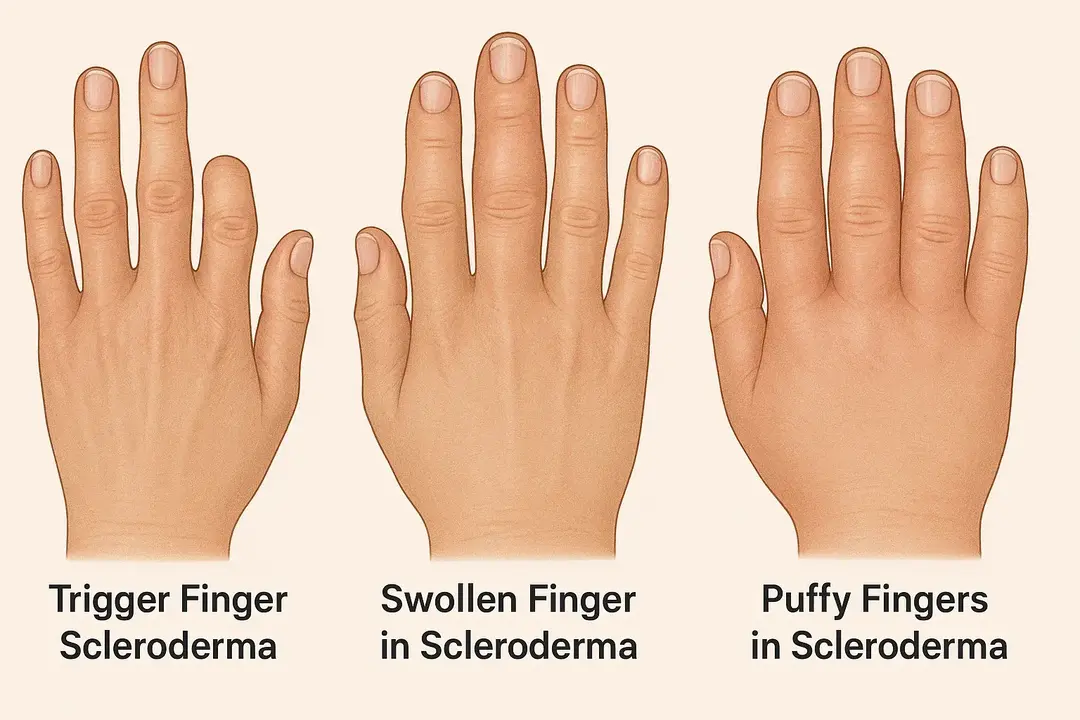
Different Types of Scleroderma
Sceleroderma Surgery Cost in India
The cost of finger scleroderma surgery in India is significantly lower compared to Western countries, without compromising medical quality. Surgery is often required in advanced stages to relieve joint stiffness, release contracted tendons, or remove dead tissue caused by ulcers or gangrene.
Costs vary depending on the type of procedure, hospital, and city. India's top rheumatology and plastic surgery centres offer affordable packages, including pre-surgical tests, hospitalisation, and follow-up care. This makes India a cost-effective destination for comprehensive scleroderma treatment with skilled specialists and modern facilities.
|
Type of Surgery |
Estimated Cost (INR) |
Estimated Cost (USD) |
|
Finger Contracture Release Surgery |
₹40,000 – ₹70,000 |
$480 – $850 |
|
Digital Sympathectomy |
₹60,000 – ₹90,000 |
$720 – $1,080 |
|
Ulcer Debridement and Skin Grafting |
₹50,000 – ₹80,000 |
$600 – $960 |
|
Amputation (severe gangrene cases) |
₹70,000 – ₹1,00,000 |
$850 – $1,200 |
|
Hospital Stay & Post-op Care (3–5 days) |
₹20,000 – ₹30,000 |
$240 – $360 |
Hospitals for Finger Sceleroderma Surgery in India
India offers advanced care for scleroderma patients through specialised hospitals equipped with expert rheumatologists, plastic surgeons, and vascular specialists. For those seeking finger scleroderma surgery in India, top hospitals provide state-of-the-art facilities, accurate diagnostics, and affordable surgical options.
These centres focus on restoring hand function, relieving pain, and preventing further complications. Cities like Delhi, Mumbai, Bangalore, and Chennai are home to leading institutions with strong reputations in autoimmune and reconstructive care. Many hospitals also offer international patient services for seamless travel, stay, and post-operative follow-up.
|
Hospital Name |
City |
|
All India Institute of Medical Sciences (AIIMS) |
New Delhi |
|
Apollo Hospitals |
Chennai |
|
Christian Medical College (CMC) |
Vellore |
|
BLK-Max Super Speciality Hospital |
New Delhi |
|
Fortis Hospitals |
Mumbai |
|
Manipal Hospitals |
Bangalore |
|
Medanta – The Medicity |
Gurugram |
We Care Health Services For Finger Scleroderma Surgery in India
We Care Health Services is a trusted medical facilitator offering specialised care for finger scleroderma treatment in India. They partner with top hospitals and experienced rheumatologists, plastic surgeons, and hand specialists across major cities. Their holistic approach includes personalised treatment plans, surgical coordination, and post-operative support.
We Care ensures transparent pricing, English-speaking assistance, and seamless care for both Indian and international patients. With a strong focus on patient comfort and clinical excellence, We Care makes the complex journey of scleroderma treatment smoother, more affordable, and reassuringly professional.
- Collaboration with India’s top rheumatology and surgical centres
- Expert guidance from board-certified specialists
- Affordable treatment packages with no hidden costs
- Full support for international patients (visa, stay, recovery)
- Personalised care coordination and follow-up
- Assistance in selecting the right hospital and surgeon
- Fast appointment scheduling and medical second opinions
- 24/7 patient assistance throughout the treatment journey.