
Bifida Surgery in India is easily accessible by middle-class families because of cost affordability. Spina bifida is a serious congenital condition where the spinal cord and backbone do not develop properly, often leading to physical and neurological challenges. In India, advancements in pediatric neurosurgery and neonatal care have made it possible to effectively treat spina bifida through both prenatal and postnatal surgical interventions.
With a growing number of top-tier hospitals and skilled surgeons, India has become a reliable destination for spina bifida surgery, offering quality care at comparatively affordable costs. This article explores everything you need about spina bifida surgery in India—from treatment options and success rates to hospital recommendations and financial assistance.
What is Spina Bifida?
Spina bifida is a neural tube defect that occurs when a baby’s spine and spinal cord do not form properly during early pregnancy. This condition can lead to physical and neurological impairments ranging from mild to severe, depending on the type and extent of the defect. The term “spina bifida” literally means “split spine,” and in most cases, it’s detected through prenatal screenings or at birth.
For Free Online Consultation
GET A FREE QUOTE
The three main types of spina bifida are spina bifida occulta (mildest form), meningocele, and myelomeningocele, which is the most severe and often requires surgical intervention shortly after birth. Timely spina bifida surgery in India can help reduce complications and improve the child’s quality of life.
What Causes Spina Bifida?- Spina Bifida Causes
Spina bifida is caused by the incomplete closure of the neural tube during the first month of pregnancy. While the exact reason is unclear, it is believed to result from genetic, nutritional, and environmental factors. A major risk factor is folic acid deficiency in the mother. Other influences, such as maternal diabetes, certain medications, obesity, and family history, can also increase the chances of spina bifida in a newborn. The spina bifida causes and symptoms are integrated, and they are explained below:
- Folic Acid Deficiency – Lack of folic acid during early pregnancy is the most significant risk factor.
- Genetic Factors – A Family history of neural tube defects can raise the risk.
- Maternal Diabetes – Uncontrolled blood sugar levels increase the risk of birth defects.
- Obesity During Pregnancy – Higher maternal BMI is linked to neural tube defects.
- Certain Medications – Anti-seizure drugs (like valproic acid) can interfere with fetal development.
- High Body Temperature – Prolonged fever or use of hot tubs in early pregnancy may impact neural tube closure.
- Low Vitamin B12 Levels – B12 plays a role in neural development, and its deficiency may contribute.
- Environmental Exposure – Exposure to harmful substances like pesticides may increase risk.
- Previous Pregnancy with Neural Tube Defect – A woman who’s had one affected child is at higher risk in future pregnancies.
Spina Bifida Symptoms and Signs
Spina bifida symptoms vary depending on the type and severity of the condition. In mild cases, there may be no visible signs, while severe forms like myelomeningocele can lead to paralysis, bladder issues, and developmental delays. Early diagnosis is crucial for effective treatment, and timely Spina Bifida surgery in India can significantly improve outcomes. Signs are often visible at birth and require immediate medical attention to prevent long-term disability and complications.
- Visible sac or bulge on the spine (usually lower back)
- Weakness or paralysis in the legs
- Abnormal feet or legs (clubfoot, uneven hips)
- Lack of sensation below the defect
- Bladder and bowel incontinence
- Hydrocephalus (excess fluid in the brain)
- Seizures (in some severe cases)
- Spinal curvature (scoliosis)
- Difficulty walking or delayed motor skills
- Tethered spinal cord (restricted movement of the spinal cord)
- Skin discoloration, dimples, or hairy patches on the back
- Cognitive or learning difficulties (in some cases)
For Free Online Consultation
GET A FREE QUOTE
Different Spina Bifida Types: Treatment According to Cause
Spina bifida occurs in three main types: occulta (mild), meningocele (moderate), and myelomeningocele (severe). Each type affects spinal development differently. Early diagnosis and timely Spina bifida surgery in India can significantly reduce complications, especially in severe cases like myelomeningocele, improving the child’s mobility and quality of life.
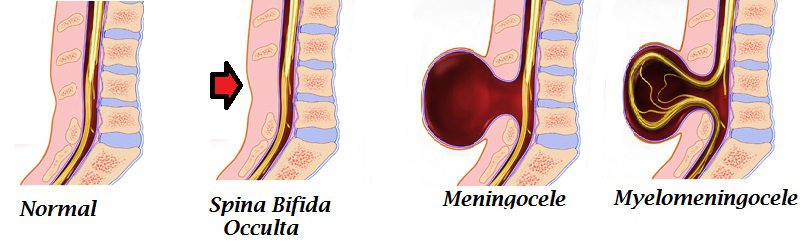
Different Spina Bifida Types
Types of Spina Bifida Surgery: Can spina bifida be cured with surgery?
Spina bifida cannot be fully cured, but surgery can significantly improve quality of life and reduce complications. For types like myelomeningocele, surgery is essential shortly after birth to close the spinal opening and prevent infection. While it can’t reverse existing nerve damage, timely Spina bifida surgery in India helps manage symptoms and improve mobility, bladder function, and overall well-being.
Spina Bifida Treatment Cost in India- Spina Bifida Surgery Cost
Based on the treatment, there is a different package for different people. The cost for the child and adult is also different. It is a particular relief that India offers the most affordable surgeries across the globe. Here is the procedure-wise description of the cost for spinal surgery treatment.
|
City |
Cost Range (USD) |
Cost Range (INR) |
|
New Delhi |
$4,950 – $6,050 |
₹4.1 – ₹5.0 lakh |
|
Mumbai |
$3,000 – $4,500 |
₹2.5 – ₹3.7 lakh |
|
Chennai |
$3,000 – $4,500 |
₹2.5 – ₹3.7 lakh |
|
Bangalore |
$3,000 – $4,500 |
₹2.5 – ₹3.7 lakh |
|
Hyderabad |
$3,000 – $4,500 |
₹2.5 – ₹3.7 lakh |
|
Kolkata |
$3,000 – $4,500 |
₹2.5 – ₹3.7 lakh |
|
Gurgaon |
$3,000 – $4,500 |
₹2.5 – ₹3.7 lakh |
|
Jaipur |
$3,000 – $4,500 |
₹2.5 – ₹3.7 lakh |
Best Spina Bifida Hospital in India- Spina Bifida Surgical Management
A hospital with different surgery departments is always best for spinal surgery management. It is better to choose a hospital that offers specialised care of the child or adults during the treatment. The listed hospitals in the table are open for all kinds of surgery. They are equipped with advanced technical equipment.
|
Hospital Name |
City |
Average Cost (USD) |
|
BLK Max Super Specialty Hospital |
New Delhi |
$4,950 – $6,050 |
|
Indraprastha Apollo Hospital |
New Delhi |
$4,500 – $6,000 |
|
Fortis Memorial Research Institute |
Gurgaon |
$3,000 – $4,500 |
|
Medanta – The Medicity |
Gurgaon |
$3,500 – $5,000 |
|
AIIMS (All India Institute of Medical Sciences) |
New Delhi |
$2,500 – $4,000 |
|
Kokilaben Dhirubhai Ambani Hospital |
Mumbai |
$3,000 – $5,000 |
Spina Bifida Surgery in India- We Care Health Services
Spina Bifida is quite a complicated surgery, but it is made easy with a handful of help from the surgeons and technical advancements. We Care Health Services is a coordinated programme for different surgeries, performing Knee Replacement and hip Replacements with better options. According to some surgeons, Spina Bifida is a structural problem, and others see it as a genetic defect. For all kinds of solutions, it is better to find a solution in the initial phase. Here are some points of the We Care Health Services:
For Free Online Consultation
GET A FREE QUOTE
- A multi-speciality hospital with highly skilled neurosurgeons.
- Offers specialised care for children with spina bifida, equipped with advanced neurosurgical tools and expertise in pediatric care.
- High success rate of the surgeries, which is more than 90%
- Known for its research-driven treatment and related conditions for children with spina bifida.
- One of India’s premier medical institutions, offering the best medical services and treatment options for spina bifida at a highly affordable cost.
- A leading hospital with a reputation for excellence in pediatric neurosurgery, equipped with advanced technology for spina bifida treatment.
- Renowned for advanced diagnostic and surgical facilities, expert pediatric neurosurgeons, and postoperative care.
Conclusion
Spina bifida surgery in India offers a combination of advanced medical expertise, world-class infrastructure, and affordable treatment options. With highly skilled neurosurgeons, cutting-edge surgical techniques, and comprehensive post-operative care, patients receive excellent outcomes and improved quality of life. Whether it’s prenatal, postnatal, or shunt surgery, India provides safe and effective solutions for managing spina bifida. International patients also benefit from personalized care, making India a trusted destination for this complex yet life-enhancing treatment.