

Stereotactic radiosurgery Treatment in India was introduced in 1997 to treat cancers and malignant tumours. Unlike its name, it is not a traditional surgery; it is a less invasive method. Other advanced technology was also introduced in the stereotactic radiosurgery like gamma knife and after that it is known as SRS.
With these high possibilities, stereotactic radiosurgery involves skilled surgeons and augmented reality (AR). It is a non-invasive neurosurgical treatment for patients with dislocation. Because of a cost-effective solution, India acts as a preferred destination for people seeking neurosurgery treatment.
For Best Cancer Surgery
GET A FREE QUOTE
What is Stereotactic Surgery?
Stereotactic Radiosurgery Treatment in India is a non-invasive radiation therapy technique used to treat brain and spinal conditions with high precision. Despite its name, it is not a traditional surgery but a highly focused radiation treatment that delivers a high dose of radiation to a targeted area while minimising damage to surrounding healthy tissues. SRS is commonly used for treating brain tumors, arteriovenous malformations (AVMs), trigeminal neuralgia, and certain spinal disorders.
In spine surgery in India, stereotactic body radiation therapy (SBRT) is a similar technique used to treat spinal tumors and metastases with pinpoint accuracy. Advanced technologies like Gamma Knife, CyberKnife, and Linear Accelerator (LINAC)-based systems make SRS highly effective. The procedure is painless, requires no incisions, and allows patients to return to normal activities quickly. With its growing adoption, SRS is transforming neurosurgical and spinal treatments by providing a safer, non-invasive alternative to traditional surgery.
Stereotactic Radiosurgery vs Radiotherapy: Understanding Terms & Treatment
Stereotactic Radiosurgery (SRS) and Radiotherapy (RT) are both radiation-based treatments, but they differ in technique, precision, and application. SRS is a highly focused, non-invasive procedure that delivers a single high-dose radiation beam to a specific target, often used for treating brain tumors, arteriovenous malformations (AVMs), and spinal disorders. In contrast, radiotherapy is a broader approach that delivers lower doses of radiation over multiple sessions to treat larger or more widespread cancers.
- Radiotherapy is performed in multiple sessions and stereotactic therapy is completed in 1 to 5 sessions.
- SRS is a high-dose radiation beam at a specific point, while radiotherapy is low-dose radiation in the broader area.
- No or less chances of impacting healthy cells, but radiotherapy could affect different healthy cells in nearby areas.
- SRS is ideal for brain tumors, trigeminal neuralgia, spinal metastases, and artervenous malformations (AVMs).
- On the Other hand, reproductive cancers are treated with the help of radiotherapy treatment.
- Radiotherapy may cause skin irritation and fatigue with long-lasting side effects, but SRS has minimal side effects not seen physically.
SRS is more precise, minimizing damage to surrounding healthy tissues, while radiotherapy is often used for larger tumors that require gradual radiation exposure. With advancements in stereotactic radiosurgery treatment in India, hospitals now offer cutting-edge technologies like Gamma Knife, Cyber Knife, and Linear Accelerator (LINAC)-based systems, ensuring safer, more effective treatments for neurological and spinal conditions.
What is the procedure of stereotactic surgery?
Stereotactic Radiosurgery (SRS) is a highly precise, non-invasive radiation therapy used to treat brain tumors, spinal disorders, and other neurological conditions. It is a kind of technology that is successful in treating multiple rare malingerings in the spinal cord and related areas. The procedure involves the following key steps:
With the advancement of stereotactic radiosurgery treatment in India, leading hospitals now offer this cutting-edge procedure for treating brain tumors, spinal metastases, and trigeminal neuralgia, ensuring high precision and minimal recovery time.
Stereotactic Biopsy: A Minimally Invasive Procedure
Biopsy is a method of extracting fluid or part of tissue to diagnose the malignancy in an area. The procedure with traditional means damages surrounding tissues and increases chances of spreading tumours from one part of the body to another. To minimise the effect of the tissue destruction minimally invasive procedure of stereotactic biopsy is introduced.
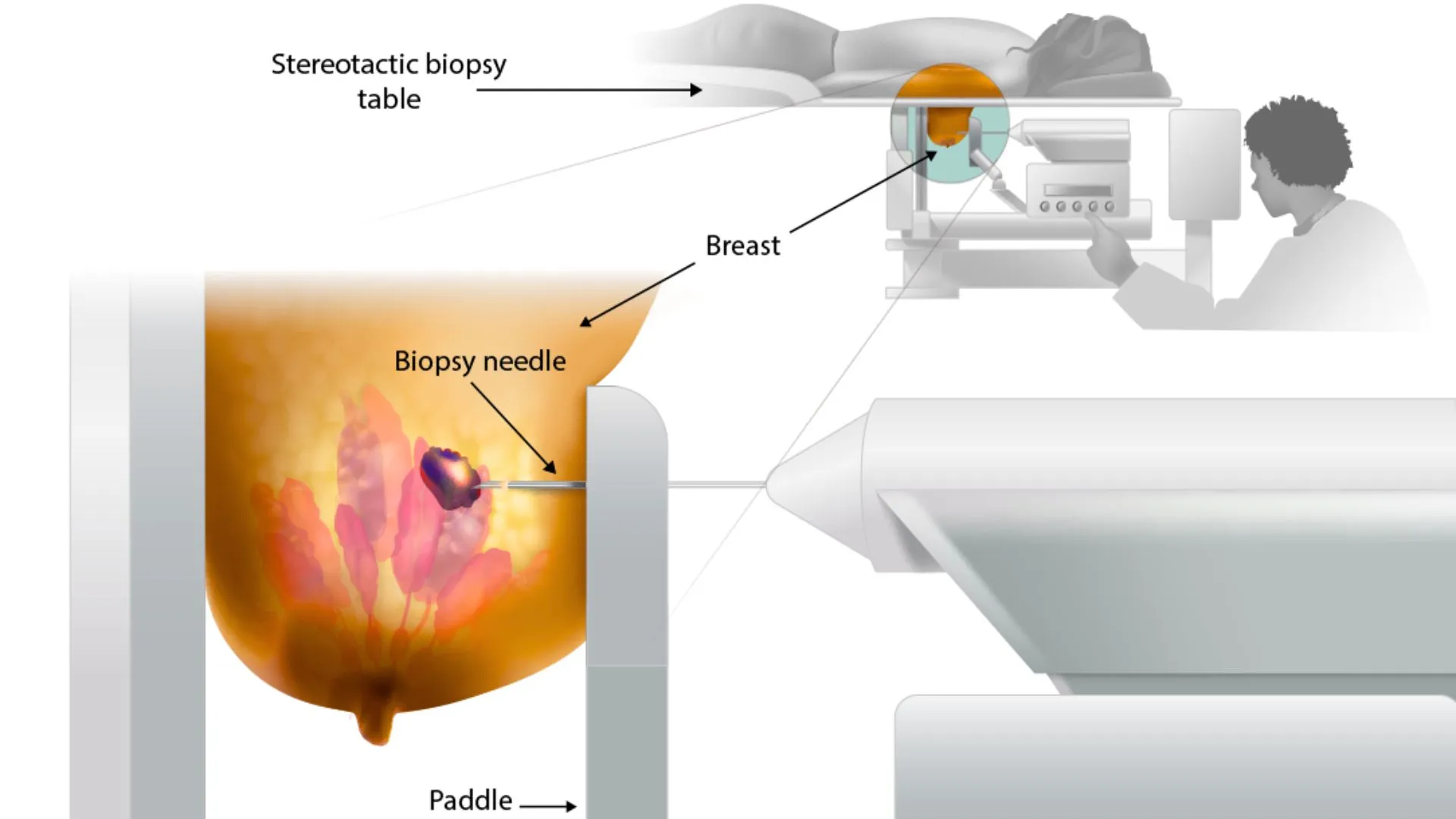
Stereotactic Biopsy
Stereotactic Biopsy for Brain Tumor helps in minimising fluids that could spread. The procedure is beneficial in diagnosing and treating wild cancers. A stereotactic biopsy is a minimally invasive procedure used to obtain a tissue sample from a deep-seated brain lesion or abnormality using precise imaging guidance. The Method Involves the following steps:
- Neurosurgeons create a 3D map of the brain to determine the safest and most precise pathway for biopsy.
- A small incision is made in the scalp, and a tiny hole (burr hole) is drilled into the skull.
- A thin biopsy needle is inserted along the planned trajectory to extract a tissue sample.
- The tissue sample is sent for pathological analysis to determine the nature of the abnormality.
- Patients typically recover within a few hours to a day, with minimal discomfort.
With advancements in stereotactic radiosurgery treatment in India, many leading hospitals use stereotactic biopsy to achieve highly accurate diagnoses with reduced risk and faster recovery times compared to open brain surgery.
Side Effects of Stereotactic Surgery: Long-term Side Effects of Stereotactic Radiosurgery
Stereotactic radiosurgery treatment in India, or Stereotactic Radiosurgery (SRS) is a non-invasive procedure with fewer side effects than traditional surgery, but some temporary or long-term effects can still occur. The severity of side effects depends on the treatment area, radiation dose, and individual response.
Although there are solutions for all kinds of side effects, whether they are mentioned for long terms or temporarily.
- One of the most significant risks is radiation necrosis, where dead tissue forms at the treatment site, potentially causing swelling, headaches, or neurological symptoms over time.
- In rare cases, delayed nerve damage may occur, leading to numbness, weakness, or coordination issues, especially if the procedure involves critical brain or spinal nerves.
- Patients treated near hormone-regulating structures, such as the pituitary gland, may develop hormonal imbalances requiring lifelong medication.
- Additionally, some individuals may experience cognitive changes, memory difficulties, or minor personality shifts if radiation affects brain function.
- However, with continuous advancements in stereotactic radiosurgery treatment in India.
- Advanced technologies like Gamma Knife and CyberKnife have significantly reduced the risk of severe long-term side effects, offering safer and more effective treatment options.
- Regular follow-ups and MRI scans help monitor any delayed complications, ensuring timely management if needed.
Best Hospitals For Stereotactic in India
Cancer radiation therapy options in India are limited to a range because of its role and the indications. Although it is preferred in cases of reproductive cancers. Stereotactic is a specialized form of radiation therapy used to treat various cancers by placing radioactive sources directly inside or near the tumor. Several hospitals in New Delhi offer advanced stereotactic treatments.
For Best Cancer Surgery
GET A FREE QUOTE
When considering stereotactic or Brachytherapy, it's essential to consult with oncologists at these hospitals to determine the most appropriate treatment plan tailored to your specific condition. Here are some notable institutions:
|
Hospital Name |
Location |
Specialty |
|
Indraprastha Apollo Hospitals |
New Delhi |
Comprehensive cancer care with advanced stereotactic |
|
Manipal Hospital, Dwarka |
New Delhi |
Uses Brachyvision technology for precise treatment |
|
Dharamshila Narayana Superspeciality Hospital |
New Delhi |
Personalized stereotactic treatment with advanced technology |
|
Rajiv Gandhi Cancer Institute and Research Centre |
New Delhi |
One of Asia's largest cancer centers with cutting-edge stereotactic |
|
Fortis Hospital, Vasant Kunj |
New Delhi |
Multi-specialty hospital with modern oncology facilities |
|
Action Cancer Hospital |
New Delhi |
Dedicated specialists focusing on targeted internal radiation therapy |
|
Apollo Hospitals Mumbai |
Mumbai |
Comprehensive cancer care with advanced stereotactic techniques. |
|
Apollo Hospitals Chennai |
Chennai |
Specialized radiation therapy with cutting-edge stereotactic treatments. |
|
Yashoda Hospitals |
Hyderabad |
Recognized for exceptional stereotactic services with state-of-the-art facilities. |
|
Apollo Multispecialty Hospitals Kolkata |
Kolkata |
Offers advanced stereotactic treatments with a team of experienced oncologists. |
|
Apollo Hospitals Bangalore |
Bangalore |
Provides high-dose rate stereotactic with modern equipment and personalized care. |
These are oncology hospitals with stereotactic treatment in India that give exclusive treatment of stereotactic. There are different forms of care to sustain all the needs of the patients.
Stereotactic Radiosurgery Cost in India
Stereotactic Radiosurgery Treatment in India, a form of internal radiation therapy, is utilized in India to treat various cancers. The cost of this treatment varies significantly based on factors such as the type and location of the cancer, the specific stereotactic technique employed, the hospital's facilities, and the patient's overall health condition.
The cost of stereotactic in India typically ranges from approximately ₹1,20,000 to ₹6,40,000 (about $1,500 to $8,000). The next is a minimum and maximum cost in the different cities of India:
|
City |
Starting Cost (INR) |
Starting Cost (USD) |
|
Delhi |
₹100,000 |
$1,200 |
|
Gurgaon |
₹91,000 |
$1,100 |
|
Noida |
₹80,000 |
$960 |
|
Mumbai |
₹100,000 |
$1,200 |
|
Hyderabad |
₹80,000 |
$960 |
|
Chennai |
₹91,000 |
$1,100 |
|
Kolkata |
₹80,000 |
$960 |
|
Bangalore |
₹100,000 |
$1,200 |
Many procedures need to be mentioned with the breakdown cost packages. For the specific cost, a patient needs to diagnose the stage of cancer and consult with the hospital's management. Different cancer treatment centers in India are providing guidance and awareness about cancer and its causative factors. They can also tell you about the cost. You can take an Idea from the table below for the breakdown costs for different procedures:
|
Procedure |
Description |
Estimated Cost (₹) |
|
Low-Dose Rate (LDR) stereotactic |
Continuous radiation over hours to days using implants |
1,50,000 - 3,00,000 |
|
High-Dose Rate (HDR) stereotactic |
Short bursts of high-dose radiation over multiple sessions |
1,50,000 - 2,50,000 |
|
Pulsed-Dose Rate (PDR) stereotactic |
Periodic radiation pulses allowing recovery between doses |
2,00,000 - 4,50,000 |
|
Prostate stereotactic |
Radioactive seed implants for prostate cancer |
4,15,000 - 8,34,000 |
|
Breast Cancer stereotactic |
Radioactive sources placed inside or near the tumor |
5,00,000 - 6,00,000 |
|
Eye & Rectum Cancer stereotactic |
Localized radiation for eye and rectal cancers |
Lower cost compared to other types |
Best Oncologists for Stereotactic Radiosurgery Treatment in India
The mentioned specialists are recognized for their expertise in stereotactic technology and are affiliated with leading hospitals across India. Targeted cancer treatment in India is possible in certain metropolitan cities and with limited surgeons. For personalized advice and treatment options, it's recommended to consult with these professionals directly.
For Best Cancer Surgery
GET A FREE QUOTE
Dr. Tejinder Kataria

Dr. G K Jadhav

Dr. Srinivas Chilukuri

Dr. Ashwathy Susan Mathew

Dr. Sapna Nangia

Dr. Vedant Kabra

Dr. Sanjeev Rohatgi

Dr. Dhanya K S

|
Doctor's Name |
Specialization |
Location |
|
Dr. Tejinder Kataria |
Radiation Oncologist |
Gurugram, Haryana |
|
Dr. G K Jadhav |
Radiation Oncologist |
New Delhi |
|
Dr. Srinivas Chilukuri |
Radiation Oncologist |
Chennai, Tamil Nadu |
|
Dr. Ashwathy Susan Mathew |
Radiation Oncologist |
Chennai, Tamil Nadu |
|
Dr. Sapna Nangia |
Clinical & Radiation Oncologist |
Chennai, Tamil Nadu |
|
Dr. Vedant Kabra |
Oncology Surgeon |
Gurugram, Haryana |
|
Dr. Sanjeev Rohatgi |
Oncology Surgeon |
Gurugram, Haryana |
|
Dr. Dhanya K S |
Radiation Oncologist |
Calicut, Kerala |
Side Effects Temporary
With advancements in stereotactic radiosurgery treatment in India, modern technologies like Gamma Knife and CyberKnife ensure precise targeting, reducing the risk of severe side effects while providing effective treatment for neurological and spinal conditions.
- If the pituitary gland is exposed to radiation, it may impact hormone production.
- Dead tissue may form at the treatment site over time, sometimes requiring medication or surgery.
- Patients may experience localised pain or weakness in rare cases.
- In rare cases, nerve irritation may lead to long-term neurological symptoms.
- Radiation can cause temporary swelling around the treatment site, leading to symptoms like dizziness or pressure.
- Most patients experience tiredness for a few days to weeks after treatment.
- Mild discomfort may occur, especially if the brain is treated.
Best Treatment Guidance and Care: We Care Health Services
We Care Health Services is recognised for delivering comprehensive medical care, including advanced procedures like Cancer chemotherapy treatment in India. Their integrated approach allows patients to undergo multiple treatments simultaneously, enhancing convenience and reducing overall recovery time. With a team of experienced cardiologists and state-of-the-art facilities, We Care Health Services ensures high-quality care tailored to individual patient needs.
Stereotactic Radiosurgery treatment in India is the best possible with time-diagnosis. Here are the possible advantages of the We Care India health Organisation
- Gives you pocket-friendly treatment solutions in the various cities of India.
- Hospitals are at the perfect site that is connected to the city and outstations for ease of travelling.
- Provide cost packages with different treatment services.
- Gives counselling about the treatment, mediations and psychological challenges during the treatment.
- Personalized approach to the various treatments. It has facilities for various surgeries and coordinates with the best Indian Surgeons.
- They made Stereotactic radiosurgery treatment in India in India an easy option for the patient.
- The hospital is equipped with cutting-edge technology for Cancer chemotherapy treatment in India, ensuring precision, safety, and high success rates in treating blocked arteries.
- A team of highly experienced cardiologists and interventional specialists perform procedures with expertise, reducing complications and improving long-term outcomes.
Functional Spinal Stereotactic Procedure
A Functional Spinal Stereotactic Procedure is a highly advanced, minimally invasive technique used to treat complex spinal disorders with extreme precision. By integrating stereotactic navigation, imaging guidance, and robotic-assisted technology, this procedure enhances accuracy and minimizes damage to surrounding tissues. The procedure involves:
- Precisely targets and removes tumors while preserving healthy spinal structures.
- Delivers high-dose radiation to spinal metastases or primary tumors without open surgery.
- Uses stereotactic navigation for precise pedicle screw placement in spinal stabilization.
- Stereotactic guidance helps in the accurate implantation of spinal cord stimulators (SCS) for pain relief.
- Used for conditions like spinal dystonia or spasticity management with deep brain stimulation (DBS).
- Advancements in stereotactic radiosurgery treatment in India, leading hospitals now offer Gamma Knife, CyberKnife, and robotic-assisted spinal procedures, ensuring safer and more effective treatment options for spinal disorders.