

Severe conditions like arthritis and frozen shoulder leads to replacements & rivision hip replacement surgery in India is a preferable option for International patients. It is a highly advanced and widely performed procedure designed to relieve pain and restore mobility in patients suffering from severe arthritis, hip fractures, or degenerative joint diseases.
The surgery involves replacing the damaged hip joint with an artificial implant, which can be made of metal, ceramic, or plastic. With state-of-the-art medical facilities, highly skilled orthopedic surgeons, and cost-effective treatment options, India has become a preferred destination for both domestic and international patients seeking hip replacement surgery.
What is Hip Replacement Surgery?
Revision Hip replacement surgery in India is a medical procedure in which a damaged or diseased hip joint is replaced with an artificial implant (prosthesis) to restore mobility and relieve pain. It is commonly performed on patients suffering from severe osteoarthritis, rheumatoid arthritis, hip fractures, avascular necrosis, or other degenerative joint diseases that cause chronic pain and limit daily activities.
The procedure can be total hip replacement (THR) or partial hip replacement (PHR), depending on the severity of the condition. Advanced techniques such as minimally invasive surgery and robotic-assisted hip replacement have further improved success rates, reducing recovery time and post-operative complications. Patients in India benefit from world-class healthcare at a fraction of the cost compared to Western countries, making hip replacement an accessible and effective solution for those in need of improved joint function and pain relief.
For Free Online Consultation
GET A FREE QUOTE
Why Hip Replacement is a Preferable Surgery in India?
Hip replacement surgery is highly preferred in India due to its affordability, advanced medical infrastructure, and experienced orthopedic surgeons. Indian hospitals offer world-class treatment at a fraction of the cost compared to Western countries, making it an attractive destination for both domestic and international patients. Due to the mentioned factors, India has emerged as a leading destination for hip replacement surgery, attracting thousands of patients seeking high-quality and cost-effective joint replacement procedures.
- Cost-Effective Treatment – Revision Hip replacement surgery in India is significantly more affordable than in countries like the USA, UK, or Europe, without compromising on quality.
- Highly Skilled Surgeons – India has some of the best orthopedic surgeons with extensive experience in performing hip replacement surgeries, ensuring high success rates.
- State-of-the-Art Technology – Leading hospitals are equipped with advanced robotic-assisted surgery, minimally invasive techniques, and high-quality prosthetic implants, improving precision and reducing recovery time.
- Shorter Waiting Times – Unlike in many Western countries, where patients may have to wait months for surgery, India offers immediate treatment options, reducing pain and discomfort.
- International Patient Services – Many Indian hospitals provide dedicated assistance for international patients, including visa support, travel arrangements, and language interpretation, making the medical journey seamless.
- Fast Recovery and Rehabilitation – With comprehensive post-surgical care, physiotherapy, and rehabilitation programs, patients recover quickly and regain mobility faster.
Symptoms Leading to Hip Replacement
Revision Hip replacement surgery in India is a procedure which frightens patients, and they look for alternative Options. Some choose conservative care, and others choose natural care, but once the hip joint freezes and degeneration starts, then it is hard to get on your feet without replacement. When you feel the need for a hip replacement, you feel certain symptoms:
Hip replacement surgery is recommended for patients suffering from severe hip joint damage that affects mobility and quality of life. The most common indications include:
- The most frequent reason for hip replacement where the cartilage in the hip joint, causing pain, stiffness, and restricted movement.
- An autoimmune condition that leads to inflammation, joint damage, and severe pain, making hip replacement necessary for relief.
- Avascular Necrosis (Osteonecrosis) is a condition where reduced blood supply to the hip bone causes bone tissue to die, leading to joint collapse and pain.
- Severe fractures, especially in elderly patients, may require partial or total hip replacement if the bone cannot heal properly.
- Conditions like hip dysplasia or developmental abnormalities lead to improper joint formation, causing long-term pain and mobility issues.
- Hip joint damage due to previous injuries or fractures can lead to arthritis and joint degeneration over time.
- Patients experiencing chronic hip pain that does not improve with medications, physiotherapy, or lifestyle changes may require Revision Hip replacement surgery in India for long-term relief.
- When hip pain severely affects walking, climbing stairs, or performing routine activities, surgery is often the best solution.
Revision Hip replacement surgery in India: 3 Types of Hip Replacement Surgery
Hip replacement is performed when degenerative bone diseases occur in a person's body. This condition occurs mostly in old persons, but in the case of autoimmune diseases, it has no direct relation to age. In a total hip replacement, the ball (femoral head) and socket (acetabulum) of the hip joint are replaced with artificial components. For a detailed description, you have to understand the structure of Hip.
What are the Steps of Hip Replacement Surgery?-Hip Replacement Surgery Procedure
Total hip replacement surgery is a kind of major surgery which takes more recovery time. The procedure needs careful evaluation of the diseases and conditions supporting the surgery procedure. During the whole procedure, doctors must take care of the emotions of the patients. Counselling for the family and the patients is also arranged by the medical staff. The procedure involves pre-operative preparation. Here is the detailed description:
For Free Online Consultation
GET A FREE QUOTE
Preoperative Preparation
Before surgery, the patient undergoes a CT scan, MRI, and X-ray. Blood tests detect the patient's overall health. Patients must discontinue blood thinners and other medications. Lifestyle adjustments and diet should be maintained to reduce recovery time. Fasting before surgery, arranging post-surgical assistance at home, and a careful intake of diet. Blood thinners are discontinued because of fear of more blood flow during operation.
Surgical Procedure
The surgical procedure starts with anaesthesia and ends with the procedure of wound care. Doctors also ensure that the artificial acetabulum bone fits well in place of the previous one. Cutting off the damaged bones to replace them with new ones is also a cumbersome procedure.
Post-Surgical Procedure and Recovery
Post-surgical recovery is essential for successful healing and mobility restoration in Rivision Rivision Hip replacement surgery in India. The key aspects of recovery include:
- Pain Management
- ICU monitoring
- Hospital Stay
- Physical Therapy for Recovery
- Wound Care
Gradually, patients return to normal activities, but patients have to avoid activities like running or jumping to prevent implant wear and tear.
Hip Replacement Surgery Cost in India: Procedure and Cost Comparison
Hip fracture surgery cost in India is much lower than hip ball replacement surgery cost, it is because of implant needs. Surgery has many angles and components to see from different dimensions. Surgery costs depend on certain factors, which are explained in the next section. Revision Hip replacement surgery in India is performed in well-established hospitals, and infrastructure also costs more. Here is the table defining all the different types of costs and procedures:
|
Surgery Procedure Involved |
Cost (INR) |
|
Total Hip Replacement |
2.8 to 3.5 lakhs |
|
Partial Hip Replacement |
3 to 3.7 lakhs |
|
Hip Resurfacing |
1.5 to 3 lakhs |
|
Minimal Invasion Hip Replacement |
1.6 to 3.5 lakhs |
|
Revision of Hip Replacement |
2.1 to 5 lakhs |
|
Bilateral Hip Replacement |
2 to 7 lakhs |
|
Robot-Assisted Hip Replacement |
4 to 5.4 lakhs |
There is also a difference in city-wise cost and that depends on the facilities provided by the different cities. The major metropolitan cities in India offer affordable costs for the replacement. Here is the starting cost of the different cities mentioned in the table:
|
Cities |
Cost (INR) |
|
Hip Replacement Surgery Cost in Delhi |
2 Lakhs |
|
Hip Replacement Surgery Cost in Mumbai |
2.8 Lakhs |
|
Hip Replacement Surgery Cost in Bangalore |
2.5 Lakhs |
|
Hip Replacement Surgery Cost in Chennai |
2.3 Lakhs |
|
Hip Replacement Surgery Cost in Hyderabad |
2.8 Lakhs |
|
Hip Replacement Surgery Cost in Indore |
2.8 Lakhs |
|
Hip Replacement Surgery Cost in Gurgaon |
2.5 lakhs |
Factors Affecting Hip Replacement Surgery Cost in India
As you have seen in the above sections, there is a difference between the cost of different procedures and cities, too. Another factor is the material used in the implant. Total replacement costs more in comparison to partial replacement. The experience of a doctor is another big factor that coordinates with the staff.
For Free Online Consultation
GET A FREE QUOTE
Best Surgeons and Hospitals for Revision Hip Replacement Surgery in India
Some chosen names are providing their best services and are concerned about the well-being of their patient. Other than surgeons, we have also mentioned some best hospitals that are exceptionally good in their work. Hip replacement surgery is a kind of complex treatment and also needs some emotional support from the counselors.
These hospitals provide overall guidance about the treatment and the procedure involved. If the family has emotional excuses, then it is solved with the help of counselling sessions. Here is the table section which gives details about the residential city and names of the surgeons:
Dr. Ramneek Mahajan

Dr Ashok Rajgopal

Dr. Dhananjay Gupta

Dr. Harshvardhan Hegde

Dr. Sameer Anand

Dr. IPS Oberoi

Dr. Vijay C Bose

Dr. Ameet Pispati

|
Name of the Surgeon |
Indian City Of Their Practice |
|
Dr. Ramneek Mahajan |
Kailash Colony, Delhi |
|
Dr Ashok Rajgopal |
Gurugram, Medanta Hospital |
|
Dr. Dhananjay Gupta |
Max Hospital |
|
Dr. Harshvardhan Hegde |
Fortis Escorts Heart Institute, Delhi |
|
Dr. IPS Oberoi |
Artemis Hospital, Gurgaon |
|
Dr. Sameer Anand |
Max Hospital |
|
Dr. Vijay C Bose |
Apollo Hospital, Chennai |
|
Dr. Ameet Pispati |
Jaslok Hospital, Mumbai |
|
Dr. Pradeep Bhosle |
Nanavati Hospital, Mumbai |
|
Dr. A.B. Govindraj |
Fortis Malar Hospital, Chennai |
|
Dr. Kaushal Malhan |
Fortis Hospital Mumbai |
The other table gives the names of the hospitals involved in the surgery:
|
Delhi |
Fortis Escorts Heart Institute |
|
Delhi |
Max Hospital |
|
Mumbai |
Kokilaben Dhirubhai Ambani Hospital |
|
Gurgaon |
Medanta Hospital |
|
Mumbai |
Apollo Hospital |
|
Delhi |
Medanta Medicity |
|
Delhi |
Apollo Hospital |
|
Delhi |
Jaslok Hospital |
|
Bangalore |
Narayana Health |
|
Bangalore |
Wockhardt Hospital |
|
Delhi |
Blk Super Speciality Hospital |
|
Mumbai |
Lilavati Hospital |
|
Hyderabad |
CONTINENTAL INSTITUTE OF CARDIOVASCULAR SCIENCES, HYDERABAD |
|
Bangalore |
MANIPAL HOSPITAL |
|
Mumbai |
ASIAN HEART INSTITUTE |
|
Chennai |
GLOBAL HOSPITAL |
|
Delhi |
INDRAPRASTHA APOLLO HOSPITAL |
|
Gurgaon |
PARAS HOSPITAL |
|
Chennai |
Frontier Lifeline Hospital |
|
Delhi |
National Heart Institute |
Average Age For Hip Replacement
Hip replacement is suggested by doctors in complicated conditions such as degenerative diseases. Rheumatoid arthritis is a condition in which bone degeneration is seen. Osteoporosis is another such case, and any other auto-immune disease which is degenerative needs hip replacement. The average age for replacement can’t be fixed because auto-immune deficiency conditions do not have a lower and upper age limit. Osteoporosis is an old age disorder, so most of the time, it affects people more than 60 years of age, but exceptions are also seen.
For Free Online Consultation
GET A FREE QUOTE
New Hip Replacement Technology 2025
New Hip replacement technology includes several modern techniques that improve the method of surgery, require less recovery time and are minimally invasive. Some of them, even those not introduced in the practice by doctors, can be included in the future to save the time and effort of the patients and doctors.
Here are different new procedures that might surprise you:
Robot-Assisted Hip Replacement
Robot-assisted surgery enhances precision by using computer-guided technology, it is a new idea to utilise artificial intelligence. This technique improves implant placement accuracy, reduces tissue damage, and accelerates recovery. These are all the major factors in the surgery. Surgeons use robotic arms for greater control, leading to better outcomes and longevity of the implant for more years.
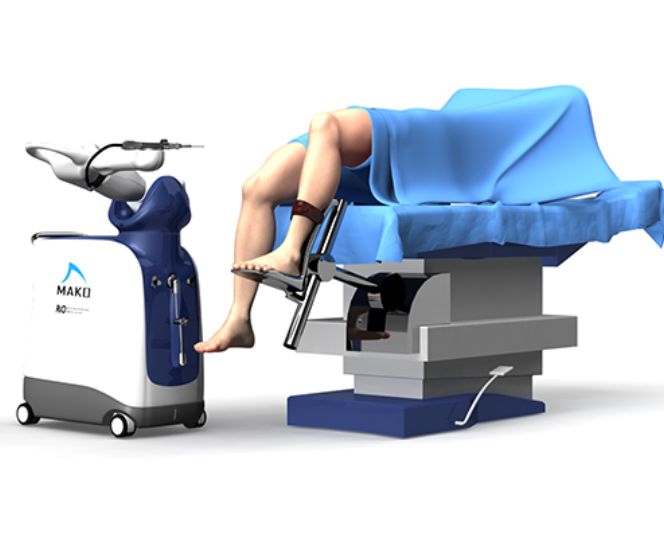
Robot-Assisted Hip Replacement
3-D Printed Implanted
Advancements in 3D printing technology allow for the customization of hip implants to match the patient’s anatomy and needs perfectly. These personalized implants offer better fit, increased durability, and improved functionality, especially in complex cases like hip ball and socket replacement.
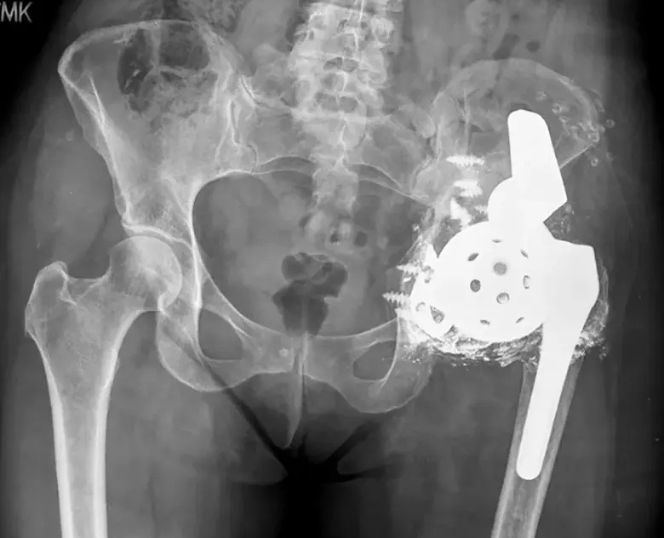
3-D Printed Implanted
Smart Implants
Smart implants contain sensors that provide real-time data on implant performance, movement, and stress levels; they don’t need to be cross-checked by doctors. These implants help doctors monitor a patient’s recovery remotely and make timely interventions if guided by them.
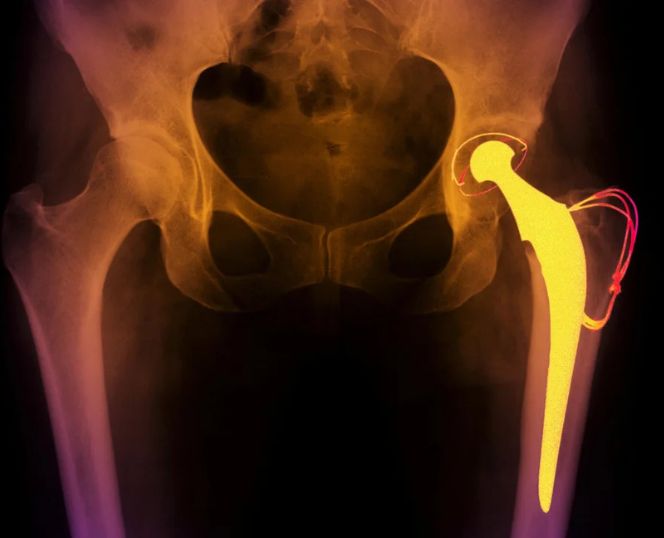
Smart Implants
Stem Cell Therapy For Hip Regeneration
Stem cell therapy is not introduced in the clinical practice of Rivision Hip replacement surgery in India. Research is ongoing into using stem cell therapy as a minimally invasive alternative to hip replacement. This technique focuses on regenerating damaged cartilage and bone tissue, potentially delaying or eliminating the need for hip implants in certain patients. Arthroplasty with the tissue implant may be introduced quickly in the Hip Regeneration.

Stem Cell Therapy For Hip Regeneration
Anterior Hip Replacement Approach
Most of the time, the posterior approach is used in revision hip replacement surgery in India. Unlike traditional methods that require cutting muscles, the anterior approach involves accessing the hip joint through a small incision at the front. This technique minimizes muscle damage, reduces pain, and speeds up recovery time, allowing patients to regain mobility faster. It needs procedural efficiency.

Anterior Hip Replacement Approach
We Care Health Services- Revision Hip Replacement Surgery in India
Hip replacement surgery is not a rare event but can be complicated because of the old age patient. It is emotionally challenging for the family members, too. We have also discussed post and Pre- and pre-operative health care services. Based on these services, it is important to understand the choice of the right clinic. India is now a medical heritage for various surgeries because of technical involvement in medical science.
There are major metropolitan cities involved in medical services such as hip replacements and heart transplants. The surgery involves pre-diagnosis and patient care with nutrient regulation in the post-operative services. Here are some unique points of We Care Health Services.