
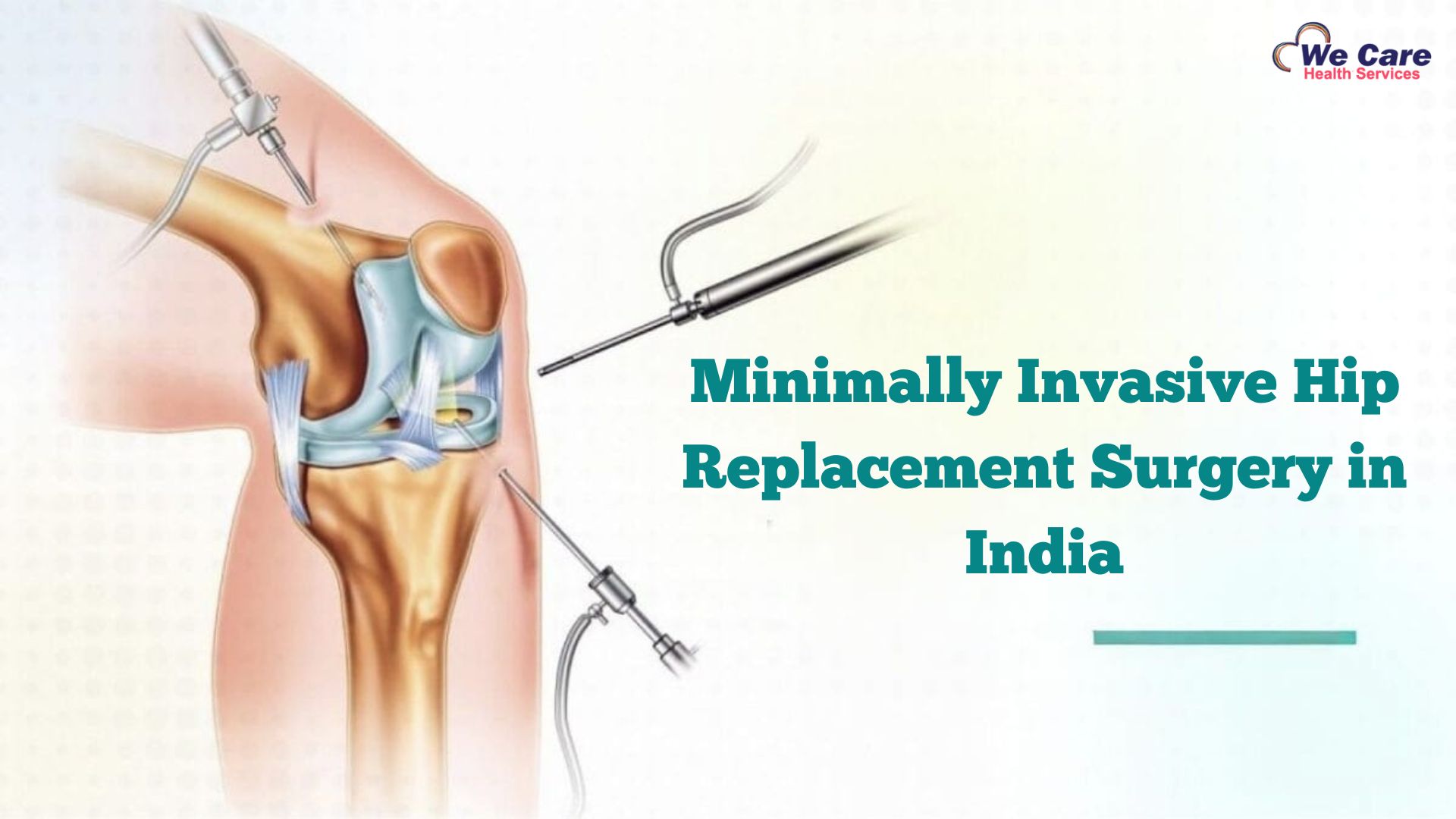
Minimally invasive hip replacement surgery in India is a modern technique that uses smaller incisions and advanced surgical methods to replace the damaged hip joint with an artificial implant. Unlike traditional hip replacement, which requires a large incision (8–12 inches), minimally invasive surgery (MIS) uses one or two smaller incisions (3–6 inches), reducing muscle damage, blood loss, and recovery time.
Minimally invasive hip replacement surgery in India is possible due to advancements in surgical techniques, specialised instruments, and improved imaging technologies. Unlike traditional hip replacement, which requires a large incision and significant muscle detachment, minimally invasive procedures use smaller incisions and preserve more surrounding tissue.
Consult Now
GET A FREE QUOTE
What is the Most Minimally Invasive Hip Replacement Surgery?- Mini Invasive Hip Surgery
Minimally invasive hip replacement surgery in India is an advanced technique that allows surgeons to replace a damaged hip joint with a prosthetic implant. Helps in minimising trauma to the surrounding muscles and tissues. Unlike traditional hip replacement, which requires a large incision and significant muscle detachment, this procedure is performed through smaller incisions, typically ranging from 3 to 5 inches. By using specialised instruments and advanced imaging technology, surgeons can precisely place the implant with minimal disruption, leading to faster recovery and reduced post-surgical pain.
The most minimally invasive hip replacement surgery is the Direct Anterior Approach (DAA). This technique is the least invasive because it avoids cutting major muscles and tendons, leading to a quicker recovery, reduced pain, and improved mobility after surgery. DAA also have some unique points by which it is considered as the best option:
- Muscle-Sparing Technique: Unlike traditional hip replacement, DAA accesses the hip joint from the front (anterior), allowing the surgeon to work between muscles instead of cutting them.
- Smaller Incision: Typically, the incision is around 3-5 inches, compared to 10-12 inches in traditional methods.
- Faster Recovery: Since muscles remain intact, patients often regain mobility more quickly and experience less pain.
- Lower Risk of Dislocation: Preserving muscle structures helps keep the new hip joint more stable.
- Shorter Hospital Stay: Many patients can go home within a day or two.
Minimally Invasive Hip Replacement Procedure
Minimally invasive hip replacement surgery in India follows the same basic principles as traditional hip replacement but with smaller incisions and less disruption to surrounding muscles and tissues. The procedure typically lasts 1 to 2 hours and involves the following steps:
Preoperative Preparation
Preparation is the phase in which the surgeon checks the compatibility of the patient for a different procedure. Till this time, it is not fixed that a patient will undergo minimally invasive hip replacement surgery. Here are some under preparations of the patient:
- The patient undergoes medical evaluation, including blood tests, imaging (X-rays, MRI, or CT scans), and a physical assessment.
- Anesthesia is administered, usually spinal or general anesthesia.
- The surgical area is sterilized, and the patient is positioned based on the chosen approach (anterior, posterior, or lateral).
Surgical Incision
- The surgeon makes one or two small incisions (typically 3 to 5 inches) instead of a large cut.
- The most common approach in minimally invasive surgery is the Direct Anterior Approach (DAA), which allows access to the hip joint without cutting major muscles.
- Special retractors and instruments are used to move muscles gently aside instead of cutting them.
Implant Placement
- A metal, ceramic, or plastic implant is inserted into the reshaped hip socket.
- A prosthetic femoral component (a metal or ceramic ball attached to a stem) is placed into the thigh bone.
- The components are either cemented or press-fit into place, depending on the patient’s bone quality.
- The new ball-and-socket joint is tested for smooth movement and stability.
- Soft tissues and muscles are repositioned to ensure proper joint function.
Closure and Recovery
- The surgeon closes the incisions with dissolvable stitches or surgical glue.
- A dressing is applied, and the patient is taken to a recovery room for monitoring.
- Most patients start walking with assistance within a few hours to a day after surgery.
Postoperative Care
After the completion of surgery, patients are monitored for a few time. If there is a need for physical therapy, then it would be scheduled after 2 to 3 days of the operation. The patient is guided for the phrase in the food.
- Physical therapy begins immediately to restore mobility and strength.
- Patients are usually discharged within 1 to 3 days or sometimes the same day for outpatient procedures.
- Full recovery takes 6 to 12 weeks, with ongoing rehabilitation exercises.
Minimally invasive hip replacement pros and cons
Minimally invasive surgery is a diverse and wide option for different organs and their functioning. It is preferred by the patients because of less recovery time and less damage. There are always two sides to any treatment system.
Minimally invasive hip replacement surgery in India is gaining popularity due to its numerous advantages over traditional hip replacement procedures.
Advantages of minimally invasive hip replacement surgery
- This advanced surgical technique involves smaller incisions, typically around 3 to 5 inches, which results in less tissue damage and a faster recovery process.
- Since the surgery preserves muscles and soft tissues, patients experience reduced postoperative pain, require fewer pain medications, and regain mobility more quickly.
- Additionally, the smaller incision leads to minimal blood loss, a lower risk of infection, and better cosmetic outcomes with smaller scars.
- Many patients undergoing this procedure can start walking within hours and are often discharged within one to three days, with some even qualifying for same-day discharge.
Disadvantage of Minimally Invasive Hip Replacement in India
Despite its benefits, minimally invasive hip replacement surgery in India has some limitations. Not all patients are suitable candidates, particularly those with severe arthritis, osteoporosis, obesity, or complex hip deformities.
- The procedure requires a high level of surgical expertise, as the limited visibility and small working area increase the risk of nerve damage and improper implant positioning.
- Additionally, minimally invasive techniques may take longer than traditional surgeries, leading to increased anesthesia exposure.
- Working through small incisions can increase the risk of nerve damage or improper implant positioning.
- Due to the complexity of the technique, surgery may take longer than traditional hip replacement, leading to increased anesthesia risks.
- Another challenge is that not all hospitals in India have the specialised equipment and trained surgeons necessary to perform this surgery, meaning patients may need to travel to advanced medical centers for treatment.
Minimally invasive hip replacement surgery in India is an excellent option for younger, active patients with good bone health who want a quicker recovery and reduced pain. However, a thorough evaluation by an experienced orthopedic specialist is essential to determine suitability. As India continues to advance in medical technology and expertise, this procedure is becoming more accessible, providing high-quality orthopedic care to a growing number of patients.
Consult Now
GET A FREE QUOTE
Minimally Invasive Hip Replacement vs Traditional
However, minimally invasive hip replacement surgery in India is not suitable for all patients. Individuals with severe arthritis, complex hip deformities, or weak bone structures may benefit more from traditional hip replacement, which provides better joint stability in complicated cases.
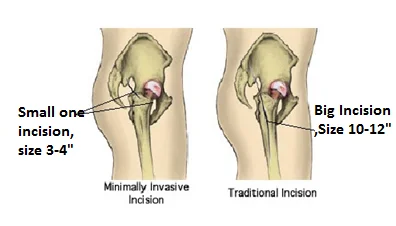
Minimally Invasive Hip Replacement vs Traditional
Traditional surgery, though more invasive, allows the surgeon a clearer view of the joint, reducing the risk of improper implant positioning. Additionally, not all hospitals in India have the advanced technology and skilled surgeons required for minimally invasive procedures, making traditional surgery more widely available.
|
Feature |
Minimally Invasive Hip Replacement Surgery in India |
Traditional Hip Replacement Surgery |
|
Incision Size |
3-5 inches (smaller scar) |
10-12 inches (larger scar) |
|
Tissue & Muscle Preservation |
Muscles and soft tissues are preserved |
Muscles are cut and reattached |
|
Pain & Blood Loss |
Less pain and minimal blood loss |
More pain and higher blood loss |
|
Recovery Time |
Faster (walking within hours, full recovery in 6-12 weeks) |
Slower (may take longer to regain mobility) |
|
Hospital Stay |
1-3 days, sometimes same-day discharge |
4-7 days |
|
Risk of Infection & Complications |
Lower due to smaller incision |
Higher due to larger wound area |
|
Suitability |
Best for younger, active patients with good bone health |
Suitable for older patients or those with severe arthritis, obesity, or deformities |
|
Surgical Time |
Slightly longer due to complexity |
Shorter due to better joint visibility |
|
Risk of Dislocation |
Lower (muscle preservation improves stability) |
Higher if muscles take longer to heal |
|
Availability in India |
Limited to advanced hospitals with trained surgeons |
Widely available across India |
While both procedures have their advantages, minimally invasive hip replacement surgery in India is ideal for younger, active patients with good bone health who seek a quicker recovery and reduced pain. Traditional hip replacement remains the best option for those with complex hip conditions requiring a more extensive surgical approach.
Minimally Invasive Hip Replacement Recovery Time
Minimally invasive hip replacement surgery in India offers a significantly faster recovery time compared to traditional hip replacement. Most patients can start walking with assistance within a few hours to a day after surgery, thanks to the muscle-sparing technique that reduces tissue damage and post-operative pain.
The initial recovery phase, during which patients regain basic mobility and independence, typically lasts 2 to 4 weeks. By following a structured physical therapy program, many individuals can resume light daily activities within 3 to 6 weeks. Full recovery, including a return to normal physical activities and exercises, usually takes 6 to 12 weeks, depending on factors such as age, overall health, and adherence to rehabilitation exercises.
Suitability of Minimally Invasive Hip Replacement
Minimally invasive hip replacement surgery presents several challenges despite its advantages. One of the primary difficulties is the steep learning curve for surgeons, as the procedure requires specialized training and experience. Due to the limited working space and reduced visibility, there is a higher risk of improper implant positioning, which can affect long-term outcomes.
Additionally, not all patients are suitable candidates. Individuals with severe hip deformities, osteoporosis, or obesity may face complications, making a traditional approach more appropriate for better joint stability.
- Patients with relatively good bone health (no severe osteoporosis).
- Individuals with a normal or slightly overweight BMI.
- Younger or active patients who need a quicker recovery.
- Patients without significant hip deformities or previous hip surgeries.
- Elderly patients with weak bones or severe arthritis.
- Patients with complex hip joint deformities.
- Those with a high BMI, as excess weight can put stress on the smaller incision.
- Patients with underlying conditions that may delay healing, such as diabetes or poor circulation.
When considering suitability, minimally invasive hip replacement is best for patients with good bone health, a normal or slightly overweight BMI, and no significant hip deformities. Younger or active individuals who need a quicker recovery may also benefit from this approach. However, elderly patients with weak bones, those with severe arthritis, or individuals with complex joint structures may not be ideal candidates.
People with high BMI or underlying health conditions like diabetes, which can slow healing, may require a different surgical approach. Carefully assessing each patient’s condition is crucial to determining whether a minimally invasive procedure is the right choice.
Challenges & Risks: Minimally Invasive Hip Replacement Surgery in India
Despite its benefits, minimally invasive hip replacement surgery presents some challenges. The procedure requires a high level of surgical expertise due to the limited visibility and working space. There is also a risk of improper implant positioning, which could affect joint stability. Additionally, working through smaller incisions increases the possibility of nerve or soft tissue damage.

Minimally invasive hip replacement surgery in India
In some cases, the surgery may take longer, leading to increased anesthesia time. Another limitation is that not all hospitals are equipped with the necessary specialized instruments and imaging technology required for the procedure.
Consult Now
GET A FREE QUOTE
- Requires specialized training and experience due to limited visibility and smaller working space.
- Complex cases may require a traditional approach for better stability and long-term success.
- Initially, procedures may take longer as surgeons navigate the learning curve, increasing anesthesia risks.
- Requires advanced surgical tools and imaging technology, which may not be available in all hospitals.
- Precision is crucial to avoid complications like improper implant positioning.
- Patients with severe hip deformities, osteoporosis, or obesity may not be ideal candidates.
How much does a hip replacement surgery cost in India?
Hip replacement surgery in India is known for its affordability compared to many other countries, making it a preferred destination for both domestic and international patients seeking quality orthopedic care. The cost of the procedure varies based on factors such as the type of surgery, the city and hospital chosen, the surgeon's expertise, and the implant materials used.
|
Type of Surgery |
Cost Range (INR) |
Details |
|
Minimally Invasive Hip Replacement |
₹2,50,000 - ₹6,50,000 |
Uses smaller incisions (3-5 inches) for faster recovery and less pain. Requires specialized expertise. Available in select hospitals. |
|
Total Hip Replacement (THR) |
₹1,50,000 - ₹4,80,000 |
Standard procedure replacing both the ball and socket of the hip joint. |
|
Partial Hip Replacement (Hemiarthroplasty) |
₹1,00,000 - ₹1,75,000 |
Only the femoral head (ball) is replaced; the socket remains intact. Suitable for fractures in elderly patients. |
|
Robot-Assisted Hip Replacement |
₹4,50,000 - ₹9,00,000 |
Uses robotic precision for implant placement, leading to better outcomes but higher costs. |
|
Hip Resurfacing Surgery |
₹2,50,000 - ₹5,50,000 |
Preserves more bone compared to THR, suitable for younger patients. |
|
Bilateral Hip Replacement (Both Hips) |
₹4,00,000 - ₹10,00,000 |
Both hips are replaced in a single surgery or staged procedures. More expensive due to double implants. |
City-Wise Average Costs for Hip Replacement Surgery in India
The cost range of minimally invasive hip replacement surgery in India and its different cities is affected by some factors. It varies from City to city. The health of the patient and implant cost are internal factors, and the infrastructure of the clinic and advanced facilities are external factors.
|
City |
Cost Range (INR) |
|
Mumbai |
₹5,37,000 - ₹6,84,000 |
|
Delhi |
₹4,31,000 - ₹5,54,000 |
|
Bangalore |
₹5,19,000 - ₹7,42,000 |
|
Chennai |
₹4,31,000 - ₹4,69,000 |
|
Kolkata |
₹5,51,000 - ₹6,84,000 |
|
Hyderabad |
₹1,50,000 - ₹4,00,000 |
Factors Affecting Cost of Minimally Invasive Hip Replacement
Patients need to consult with healthcare providers to obtain detailed estimates tailored to their specific medical needs and circumstances. While India offers cost-effective solutions for hip replacement, ensuring the quality of care and the credentials of the medical team is paramount for a successful outcome. Several elements can affect the overall expense of hip replacement surgery:
- Type and Quality of Implant: The choice between partial or total replacement and the materials used can significantly impact the cost.
- Hospital Location: Hospitals in metropolitan areas or tier-1 cities may have higher charges compared to those in smaller cities.
- Surgeon's Expertise: Highly experienced surgeons may charge more for their services, reflecting their skill and success rates.
- Post-Surgical Care: Expenses related to rehabilitation, physical therapy, and management of any complications can add to the total cost.
- Insurance Coverage: The extent to which insurance policies cover the procedure will affect out-of-pocket expenses.
Best Surgeons and Hospitals for Hip Replacement Surgery in India
Some chosen names are providing their best services and are concerned about the well-being of their patient. Other than surgeons, we have also mentioned some best hospitals that are exceptionally good in their work. Hip replacement surgery is a kind of complex treatment and also needs some emotional support from the counsellors.
- These hospitals provide overall guidance about the treatment and the procedure involved.
- If the family has emotional excuses, then it is solved with the help of counselling sessions.
- Here is the table section, which gives details about the residential city and names of the surgeons:
|
Name of the Surgeon |
Indian City Of Their Practice |
|
Dr. Ramneek Mahajan |
Kailash Colony, Delhi |
|
Dr Ashok Rajgopal |
Gurugram, Medanta Hospital |
|
Dr. Dhananjay Gupta |
Max Hospital |
|
Dr. Harshvardhan Hegde |
Fortis Escorts Heart Institute, Delhi |
|
Dr. IPS Oberoi |
Artemis Hospital, Gurgaon |
|
Dr. Sameer Anand |
Max Hospital |
|
Dr. Vijay C Bose |
Apollo Hospital, Chennai |
|
Dr. Ameet Pispati |
Jaslok Hospital, Mumbai |
|
Dr. Pradeep Bhosle |
Nanavati Hospital, Mumbai |
|
Dr. A.B. Govindraj |
Fortis Malar Hospital, Chennai |
|
Dr. Kaushal Malhan |
Fortis Hospital Mumbai |
Best Hospital For Minimally Invasive Hip Replacement Surgery in India
The best hospitals for minimally invasive hip replacement surgery offer advanced technology, highly skilled orthopedic surgeons, and specialised rehabilitation programs. These hospitals ensure high success rates, low complication risks, and patient-centered care. Accredited by NABH or JCI, they provide world-class medical facilities with robotic-assisted surgery and 3D imaging for precision. Additionally, they offer affordable treatment packages with insurance support. A strong focus on post-surgical recovery and minimally invasive expertise makes them ideal for a faster, smoother healing process.
Hospital Name Location Key Features Max Super Specialty Hospital New Delhi Advanced minimally invasive hip replacement techniques, robotic-assisted surgeries, high success rate. Apollo Hospitals Chennai, Delhi, Bangalore, Hyderabad Leading orthopedic center, state-of-the-art technology, experienced surgeons. Fortis Hospitals Mumbai, Bangalore, Gurgaon Expertise in minimally invasive joint replacement, advanced rehabilitation. Artemis Hospital Gurgaon Specializes in computer-assisted hip replacement surgery, NABH accredited. Medanta – The Medicity Gurgaon Minimally invasive and robotic-assisted hip surgeries, world-class orthopedic team. Shalby Hospitals Ahmedabad Known for joint replacement excellence, customized patient care, and early mobility programs. Wockhardt Hospitals Mumbai Internationally trained orthopedic surgeons, advanced pain management techniques. Kokilaben Dhirubhai Ambani Hospital Mumbai High-tech orthopedic unit, advanced post-surgery recovery programs. Narayana Health Bangalore, Kolkata Expertise in complex hip surgeries, leading orthopedic specialists. Hosmat Hospital Bangalore India’s largest orthopedic hospital, focused on minimally invasive techniques.
We Care Health Services- Hip Replacement Surgery in India
Minimaly Invasive hip replacement surgery in India is not a rare event but can be complicated because of the old age patient. It is emotionally challenging for the family members, too. We have also discussed post and Pre- and pre-operative health care services. Based on these services, it is important to understand the choice of the right clinic. India is now a medical heritage for various surgeries because of technical involvement in medical science.
Consult Now
GET A FREE QUOTE
There are major metropolitan cities involved in medical services such as hip replacements and heart transplants. The surgery involves pre-diagnosis and patient care with nutrient regulation in the post-operative services. Here are some unique points of We Care Health Services.