
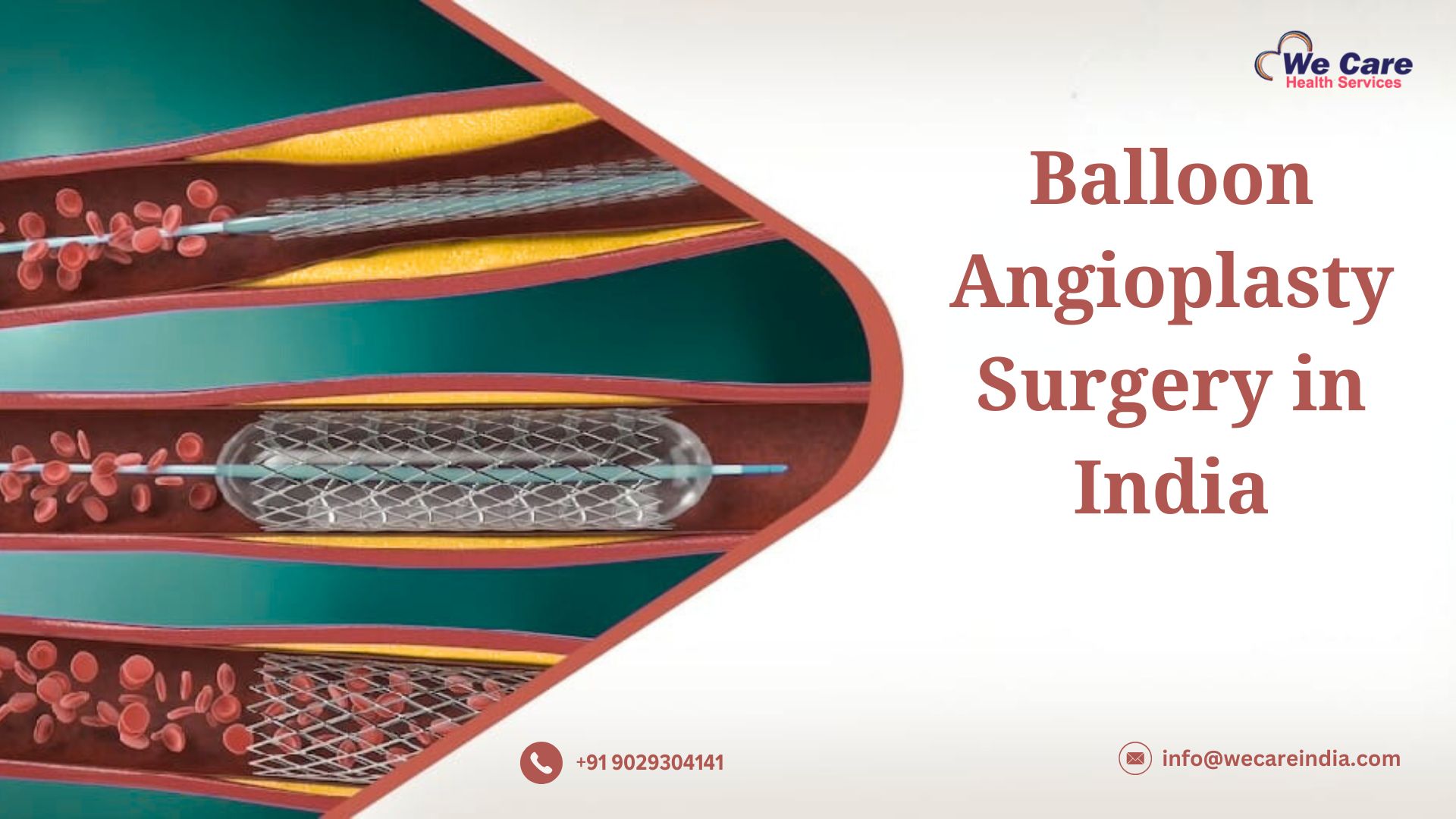
Balloon angioplasty surgery in India is an advanced procedure which is replacing bypass surgery because it can cure 100% blockages. If there are multiple blocks in the heart chances of heart surgery are more likely than if there are no blocks! Balloon angioplasty is a minimally invasive procedure used to open blocked or narrowed arteries, typically in cases of coronary artery disease (CAD).
It involves inflating a small balloon inside the artery to improve blood flow, often followed by placing a stent to keep the artery open. Angioplasty does not offer any specific treatment; they are better for blockage. Balloon Angioplasty surgery in India is a minimally invasive procedure used to open narrowed or blocked arteries, typically to improve blood flow to the heart (in cases of coronary artery disease) or other parts of the body.
What is Balloon Angioplasty Surgery?
Balloon angioplasty surgery in India is a widely performed, minimally invasive procedure used to treat narrowed or blocked arteries, primarily in cases of coronary artery disease (CAD) and peripheral arterial disease (PAD). The procedure involves inserting a catheter with a small balloon into the affected artery, which is then inflated to widen the vessel and improve blood flow. In many cases, a stent is also placed to prevent the artery from narrowing again. Balloon angioplasty surgery in India is popular due to its affordability, availability of advanced medical facilities, and experienced cardiologists.
Many hospitals offer this procedure at a lower cost compared to Western countries, making India a preferred destination for medical tourism. Additionally, the recovery time is relatively short, allowing patients to resume their normal activities within a few days. While the surgery is generally safe, potential risks include restenosis (re-narrowing of the artery), blood clots, or minor bleeding at the catheter insertion site. However, with advancements in technology and skilled medical professionals, balloon angioplasty surgery in India continues to be an effective treatment option for individuals suffering from arterial blockages.
For Free Online Consultation
GET A FREE QUOTE
Types of Angioplasty
Balloon angioplasty surgery in India is performed in several specialized types, depending on the affected artery and the patient’s medical condition. This minimally invasive procedure is widely used to treat arterial blockages caused by plaque buildup, improving blood flow and preventing serious complications like heart attacks, strokes, or limb ischemia. The major types of balloon angioplasty surgery available in India include:
Types of Angioplasty
Why is Balloon Angioplasty Surgery in India Popular?
India is a leading destination for balloon angioplasty due to its affordable treatment costs, state-of-the-art hospitals, and highly experienced interventional cardiologists. Many top hospitals in cities like Delhi, Mumbai, Bangalore, Chennai, and Hyderabad offer world-class facilities for this procedure, using advanced imaging techniques and the latest medical devices. The cost of balloon angioplasty surgery in India is significantly lower than in Western countries, making it an attractive option for both domestic and international patients. Additionally, hospitals in India provide comprehensive post-procedure care, including cardiac rehabilitation, lifestyle counseling, and long-term monitoring to ensure successful recovery.
Overall, balloon angioplasty surgery in India is a safe, effective, and widely available procedure for treating various types of arterial blockages, offering patients a minimally invasive solution to improve their heart health and overall circulation.
What are the steps for angioplasty?- Balloon Angioplasty Procedure
Balloon angioplasty is a minimally invasive procedure used to treat narrowed or blocked arteries, improving blood flow and preventing complications such as heart attacks and strokes. Before going into the procedure, patients are advised to stop blood thinners and an ECG with blood pressure is measured. The procedure is defined into three phases: pre-surgery, surgery and recovery.
It is a minimally invasive procedure there is less time required in the recovery. Here are the three phases of balloon angioplasty surgery in India:
Pre-Surgery Evaluation
Before undergoing balloon angioplasty, a thorough pre-surgery evaluation is essential to assess the patient’s overall health, identify potential risks, and ensure the procedure is suitable. This evaluation includes:
- The doctor reviews the patient’s medical history, including heart conditions, diabetes, high blood pressure, kidney disease, and previous surgeries.
- A physical examination is conducted to check vital signs, circulation, and overall health status.
- Records the heart’s electrical activity to detect arrhythmias, previous heart attacks, or other abnormalities.
- A non-invasive ultrasound test checks heart function, valve conditions, and pumping efficiency before the procedure.
- A specialized X-ray test uses a contrast dye to pinpoint the exact location and severity of arterial blockages. This test is often performed just before angioplasty.
- The doctor reviews current medications, including blood thinners (aspirin, clopidogrel), diabetes drugs, and blood pressure medications.
- Some medications may need to be adjusted or temporarily stopped before the procedure.
For Free Online Consultation
GET A FREE QUOTE
Surgical Procedure
A well-conducted pre-surgery evaluation helps reduce risks, improves procedure success rates, and ensures a smooth recovery after balloon angioplasty. After the first procedure, there is surgical intervention with the help of insertion and a catheter in the hollow region of the body:
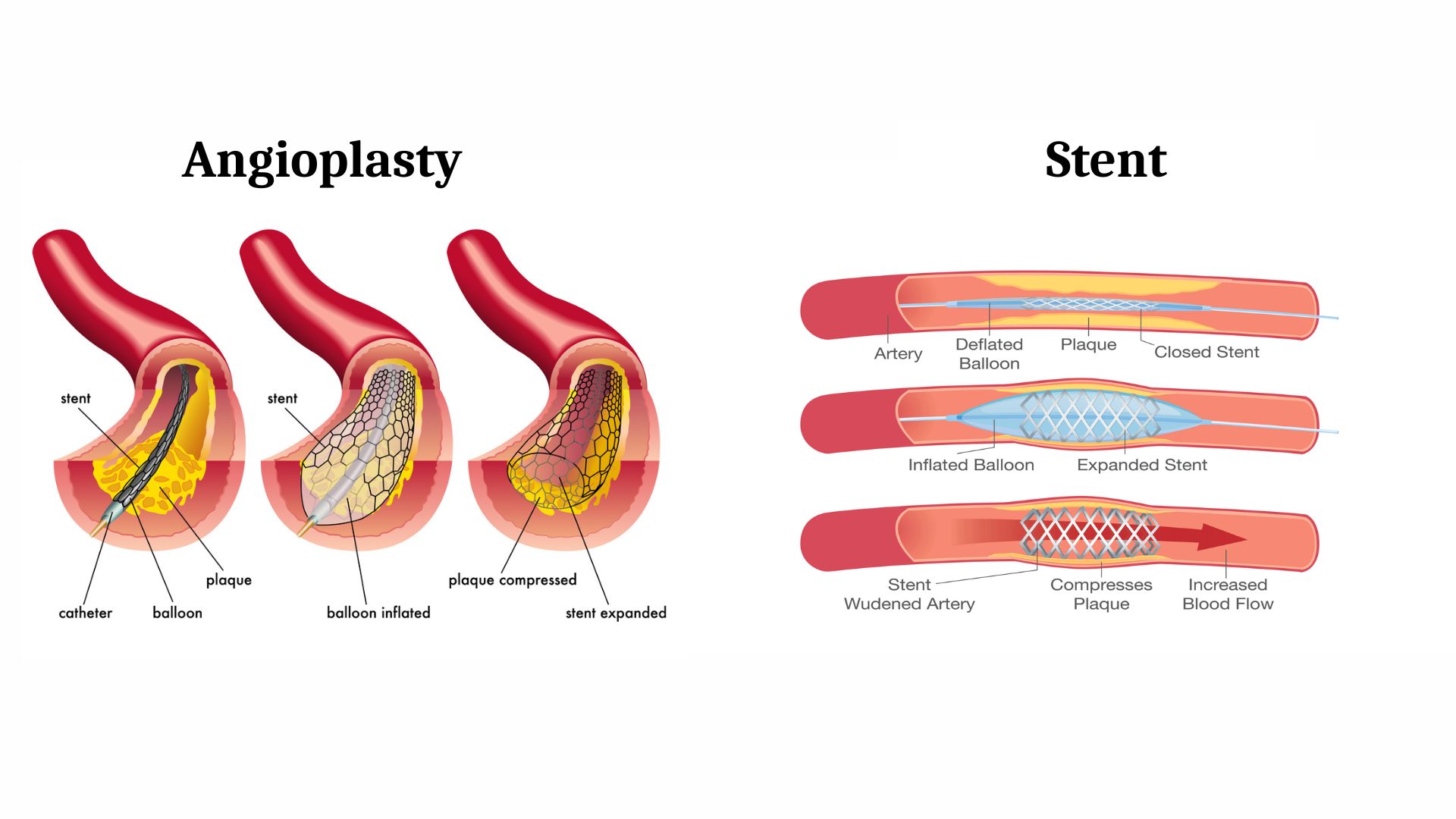
- The procedure begins with the insertion of a thin, flexible catheter into a blood vessel, usually through the groin or wrist.
- This catheter is guided to the affected artery using X-ray imaging and a contrast dye to visualize the blockage.
- Once positioned, a small balloon at the tip of the catheter is inflated, compressing the plaque buildup against the artery walls and widening the passage for improved blood flow.
- In many cases, a stent (a small mesh tube) is placed to keep the artery open and prevent future narrowing.
- After the balloon is deflated and removed, blood flow is restored, and the catheter is carefully withdrawn.
- The entire procedure typically takes 30 minutes to 1 hour and requires only local anesthesia and mild sedation.
- Patients are usually monitored for a few hours and may be discharged the same day or within 24 hours, with minimal recovery time.
- Balloon angioplasty is an effective alternative to open-heart surgery, offering a safer and faster solution for treating arterial blockages.
Risk And Recovery After Balloon Angioplasty Surgery
Balloon angioplasty surgery in India is generally a safe and effective procedure, but like any medical intervention, it carries certain risks. One of the most common concerns is restenosis, where the artery may narrow again, especially if a stent is not used. Blood clot formation inside the stent is another potential risk, which can lead to serious complications like a heart attack or stroke, requiring patients to take blood-thinning medications.
Some individuals may experience bleeding or bruising at the catheter insertion site, typically in the wrist or groin. In rare cases, the artery may become damaged or even rupture during the procedure, necessitating emergency surgical intervention. Other risks include kidney damage from the contrast dye used in the procedure, particularly in patients with pre-existing kidney disease or diabetes. Additionally, allergic reactions to the dye or certain medications may occur, causing symptoms such as a rash, breathing difficulties, or low blood pressure.
Recovery after balloon angioplasty is usually quick, with most patients being discharged within a day. However, careful post-procedure management is essential for long-term success. Patients are advised to avoid strenuous activities and heavy lifting for at least a week while gradually resuming light activities like walking. Medications, including blood thinners (aspirin or clopidogrel), cholesterol-lowering drugs (statins), and blood pressure medications, are prescribed to prevent further complications.
Balloon angioplasty cost in India- Angioplasty Surgery Cost in India
The cost of balloon angioplasty in India varies depending on factors such as the hospital, the city, the use of stents, and the patient's overall health condition. India is a popular destination for affordable and high-quality balloon angioplasty, offering advanced medical facilities and expert cardiologists at a fraction of the cost compared to Western countries. Below is a detailed table outlining the cost range and procedure details:
|
Procedure Details |
Description |
Estimated Cost (INR) |
|
Basic Balloon Angioplasty |
Angioplasty without stent placement |
₹80,000 – ₹1,50,000 |
|
Angioplasty with Bare-Metal Stent (BMS) |
Stent used to keep the artery open (non-medicated) |
₹1,50,000 – ₹2,50,000 |
|
Angioplasty with Drug-Eluting Stent (DES) |
Medicated stent to reduce restenosis risk |
₹2,00,000 – ₹4,50,000 |
|
Peripheral Balloon Angioplasty |
For blockages in leg, arm, or renal arteries |
₹1,20,000 – ₹2,50,000 |
|
Carotid Balloon Angioplasty |
For blockages in the carotid artery (neck) |
₹2,50,000 – ₹4,50,000 |
|
Renal Balloon Angioplasty |
For narrowing of kidney arteries |
₹1,50,000 – ₹3,00,000 |
|
Drug-Coated Balloon Angioplasty |
Uses a drug-coated balloon to prevent restenosis |
₹2,00,000 – ₹3,50,000 |
|
Balloon Angioplasty with Rotablation |
For heavily calcified arteries |
₹3,00,000 – ₹5,00,000 |
|
Emergency Balloon Angioplasty |
Performed urgently during a heart attack |
₹2,50,000 – ₹5,50,000 |
City-Wise Cost of Balloon Angioplasty in India
The cost of balloon angioplasty varies across different cities in India due to factors like hospital facilities, doctor expertise, and overall healthcare costs. India offers cost-effective and high-quality balloon angioplasty, making it a preferred destination for both domestic and international patients.
- Hospital Type: Premium private hospitals cost more than government or charitable hospitals.
- Doctor’s Experience: Senior cardiologists and renowned specialists may charge higher fees.
- Stent Type: Drug-eluting stents (DES) are costlier but more effective in preventing restenosis.
- Medical Insurance: Many policies cover part or all angioplasty costs.
|
City |
Basic Balloon Angioplasty (INR) |
With Bare-Metal Stent (BMS) (INR) |
Emergency Angioplasty (INR) |
|
Delhi |
₹1,00,000 – ₹1,80,000 |
₹1,80,000 – ₹2,75,000 |
₹3,00,000 – ₹5,50,000 |
|
Mumbai |
₹1,20,000 – ₹2,00,000 |
₹2,00,000 – ₹3,00,000 |
₹3,50,000 – ₹6,00,000 |
|
Bangalore |
₹1,00,000 – ₹1,75,000 |
₹1,75,000 – ₹2,80,000 |
₹3,00,000 – ₹5,50,000 |
|
Chennai |
₹1,00,000 – ₹1,70,000 |
₹1,80,000 – ₹2,75,000 |
₹3,00,000 – ₹5,50,000 |
|
Hyderabad |
₹90,000 – ₹1,60,000 |
₹1,70,000 – ₹2,50,000 |
₹2,80,000 – ₹5,00,000 |
|
Kolkata |
₹1,00,000 – ₹1,70,000 |
₹1,75,000 – ₹2,70,000 |
₹3,00,000 – ₹5,50,000 |
|
Pune |
₹90,000 – ₹1,50,000 |
₹1,70,000 – ₹2,50,000 |
₹2,80,000 – ₹5,00,000 |
|
Ahmedabad |
₹80,000 – ₹1,40,000 |
₹1,50,000 – ₹2,30,000 |
₹2,50,000 – ₹4,80,000 |
|
Lucknow |
₹75,000 – ₹1,30,000 |
₹1,40,000 – ₹2,20,000 |
₹2,50,000 – ₹4,50,000 |
|
Jaipur |
₹80,000 – ₹1,40,000 |
₹1,50,000 – ₹2,30,000 |
₹2,50,000 – ₹4,80,000 |
|
Bhubaneswar |
₹75,000 – ₹1,20,000 |
₹1,30,000 – ₹2,00,000 |
₹2,20,000 – ₹4,50,000 |
|
Chandigarh |
₹85,000 – ₹1,40,000 |
₹1,50,000 – ₹2,30,000 |
₹2,50,000 – ₹4,80,000 |
|
Indore |
₹80,000 – ₹1,30,000 |
₹1,40,000 – ₹2,20,000 |
₹2,40,000 – ₹4,50,000 |
Best Hospital for Angioplasty in India
The best angioplasty surgery in India is affordable, and the country is home to many talented surgeons. The angioplasty procedure is minimally invasive with the least side effects. Foreign tourism in India is allowed for international patients. Recovery duration is also less, overall procedure is the best for patients looking for emergency treatment and long-term benefits with a single Surgery. There is also a difference between the angioplasty and Stent procedure, it will be defined in the next section. For a click solution, here is the list of hospitals in the table.
For Free Online Consultation
GET A FREE QUOTE
|
Hospital Name |
Location |
|
Max Super Speciality Hospital |
New Delhi |
|
Metro Hospital |
Delhi |
|
Fortis Escorts Heart Institute |
New Delhi |
|
Apollo Hospitals |
New Delhi |
|
Medanta - The Medicity |
Gurugram |
|
Artemis Health Institute |
Gurugram |
|
Fortis Memorial Research Institute |
Gurugram |
|
Sterling Wockhardt Hospital |
Mumbai |
|
Star Hospitals |
Hyderabad |
|
Narayana Health |
Bengaluru |
Angioplasty vs Stent
Angioplasty and stenting are two interventional procedures used to treat blocked or narrowed arteries, primarily in the heart. While they are often performed together, they are not the same. Below is a comparison of angioplasty vs. stent placement:
Types of Angioplasty
|
Feature |
Angioplasty |
Stent Placement |
|
Definition |
A procedure to widen blocked or narrowed arteries using a balloon catheter. |
A procedure where a small mesh tube (stent) is placed in the artery to keep it open. |
|
Procedure |
A balloon-tipped catheter is inserted into the artery and inflated to push plaque against the artery walls. |
A stent (bare-metal or drug-eluting) is inserted at the blockage site after balloon inflation to keep the artery open. |
|
Use Case |
Used when mild to moderate narrowing is present, and the artery can stay open after balloon inflation. |
Used when angioplasty alone is insufficient, especially for severe blockages or high risk of re-narrowing (restenosis). |
|
Durability |
The artery may narrow again over time if no stent is used. |
Stents significantly reduce the risk of restenosis and keep the artery open for a longer time. |
|
Complications |
Higher chance of artery re-narrowing or collapsing after the balloon is removed. |
Small risk of blood clot formation inside the stent, requiring blood-thinning medications. |
|
Recovery Time |
Quick recovery: patients are discharged within 24 hours. |
Similar to angioplasty, but long-term blood thinners are needed to prevent clot formation in the stent. |
|
Cost |
Lower than angioplasty with stent (₹80,000 – ₹1,50,000 in India). |
Higher due to the cost of the stent (₹1,50,000 – ₹5,50,000 in India). |
Which is Better?
Angioplasty alone is suitable for minor blockages with a lower risk of re-narrowing. Stenting is preferred in cases of severe blockages, multiple artery diseases, or when long-term artery patency is required. In most modern heart treatments, angioplasty with stent placement is the preferred method to ensure better long-term outcomes and prevent restenosis.
For Free Online Consultation
GET A FREE QUOTE
We Care Health Services: Best Option for Balloon Angioplasty Surgery
We Care Health Services is recognised for delivering comprehensive medical care, including advanced procedures like balloon angioplasty. Their integrated approach allows patients to undergo multiple treatments simultaneously, enhancing convenience and reducing overall recovery time. With a team of experienced cardiologists and state-of-the-art facilities, We Care Health Services ensures high-quality care tailored to individual patient needs.
Balloon angioplasty surgery in India is best possible with time-diagnosis. Here are the possible advantages of the We Care India health Organisation
- Gives you pocket-friendly treatment solutions in the various cities of India.
- Hospitals are at the perfect site that is connected to the city and outstations for ease of travelling.
- Provide cost packages with different treatment services.
- Gives counselling about the treatment, mediations and psychological challenges during the treatment.
- Personalized approach to the various treatments. It has facilities for various surgeries and coordinates with the best Indian Surgeons.
- They made balloon angioplasty surgery in India an easy option for the patient.
- The hospital is equipped with cutting-edge technology for balloon angioplasty, ensuring precision, safety, and high success rates in treating blocked arteries.
- A team of highly experienced cardiologists and interventional specialists perform procedures with expertise, reducing complications and improving long-term outcomes.
- The hospital provides dedicated post-surgery monitoring, lifestyle guidance, and cardiac rehabilitation programs to ensure optimal recovery and heart health management.
- With advanced minimally invasive techniques, patients experience quicker recovery and shorter hospital stays, enabling them to return to daily life sooner.
- The hospital is well-equipped for international patients, providing visa assistance, travel coordination, and language support for a hassle-free experience.
Best Doctor for Angioplasty in India
These surgeons are recognised for their significant contributions to the field of interventional cardiology and have extensive experience in performing balloon angioplasty procedures. Patients seeking balloon angioplasty surgery in India can consider consulting with these specialists for expert care. India is home to numerous highly skilled cardiologists specializing in balloon angioplasty. Below is a selection of notable surgeons renowned for their expertise in this procedure:
Dr. Purshotam Lal

Dr. T. S. Kler
Dr. Balbir Singh

Dr. Subhash Chandra
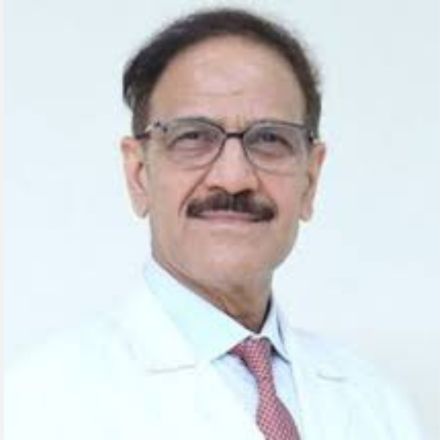
Dr. Ravinder Singh Rao

Dr. R. Balaji
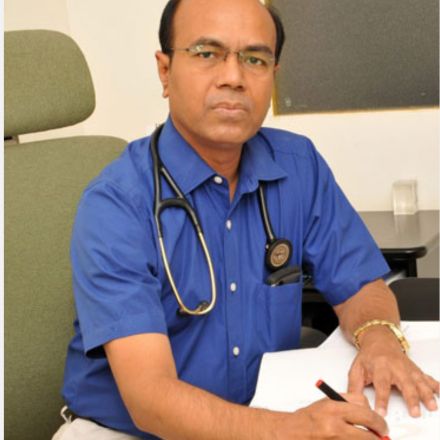
Dr. Anil Krishna Gundala

Dr. Chandrashekhar Kulkarni
Advancement in Angioplasty New Technology
Angioplasty new technology has significantly improved the treatment of blocked arteries, enhancing success rates and reducing complications. One of the most remarkable advancements is drug-eluting stents (DES), which release medication to prevent artery re-narrowing (restenosis), making them a superior alternative to bare-metal stents. Another innovation is bioabsorbable stents, which dissolve over time, eliminating long-term risks associated with permanent implants.
For Free Online Consultation
GET A FREE QUOTE
In addition, robot-assisted angioplasty ensures precise stent placement while minimizing radiation exposure for both patients and doctors. Shockwave intravascular lithotripsy (IVL) is another breakthrough that uses sonic pressure waves to break down hardened plaque in heavily calcified arteries, facilitating smoother angioplasty procedures. Optical coherence tomography (OCT) and intravascular ultrasound (IVUS) provide high-resolution, real-time imaging of the artery, ensuring accurate stent deployment and improved procedural outcomes.
Furthermore, nanotechnology-based drug delivery systems are being researched to enhance arterial healing and reduce clotting risks. With the rapid progress in angioplasty new technology, these advancements are revolutionizing heart care by making procedures safer, more efficient and ensuring better long-term results for patients with coronary artery disease.