
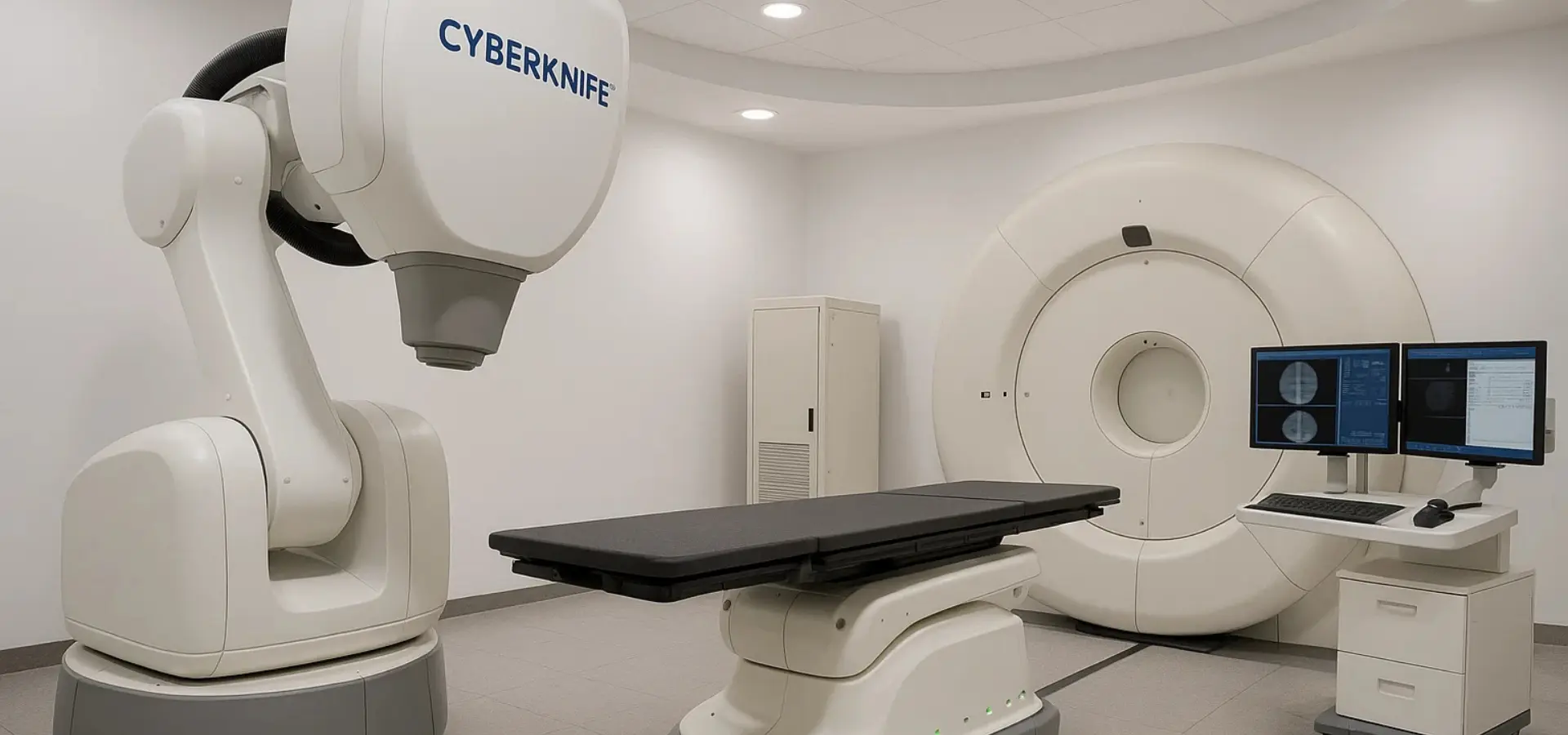
Cyberknife radiosurgery in India was introduced in April 2009; now it is a perfect treatment for tumours. Doctors recommend this treatment in cases of malignant and non-malignant tumors. When it comes to the first place, there are technological glitches, and doctors are not trained enough to use it.
Big hospitals like Apollo, BLK-Max, and Medanta Medicity were the first hospitals to own the technology. In recent years, it has expanded into different hospital chains, and patients are also preferring this method in surgery. There are different radiosurgeries like gamma knife, stereotactic radiation, and photoradiation, which are nearly the same and accepted by patients.
What Is Cyber Knife Stereotactic Surgery?
CyberKnife SRS: think of it as the snazzy, high-tech method of old-school radiation therapy. It doesn’t do scalpels, stitches, or any of that messy stuff. Instead, you lie there, and this destroys abnormal tissue while sparing nearby healthy structures with laser-precision beams of radiation, zapping just the bad stuff and dodging the healthy bits as much as possible.
Book Appointment
GET A FREE QUOTE
What sets CyberKnife apart is a robotic arm with a mind of its own (not really, but you get the idea) that swings around you, hitting the tumor from what feels hitting from different directions. And get this: it actually watches for things like your breathing or if you twitch, so if the tumor moves, the machine pivots on the fly to keep attacking the right spot. Works like a charm for hard-to-reach places—lungs, liver, prostate, spine, brain—pretty much anywhere you don’t want a surgeon poking around.
Key features of this technology are:
- Non-invasive and painless method of surgery
- No anesthesia or hospital stay is required in most cases. Means it is a same-day procedure.
- Usually completed in 1–5 sessions, has no big waiting list.
- Minimal side effects in comparison to conventional radiotherapy.
- Suitable for patients who are not good candidates for open surgery, meaning they don’t have good physical health.
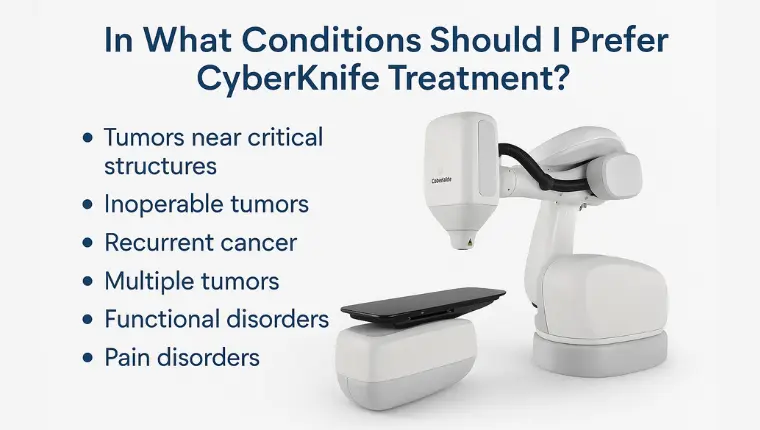
In What Conditions Should I Prefer Cyberknife Treatment?
Malingnanacy has no mind, and it could go anywhere near the sensitive structure of the body. Think if it is near some major blood vessels or near the nerve that is responsible for the transmission of the impulse. In such cases, open surgery is very risky, and the doctor wants an intelligent tissue that can detect contact inhibition and could act according to the malignant structure.
Cyberknife Treatment
CyberKnife radiosurgery in India, treatment is generally preferred when the goal is to target tumors or lesions with high precision. It is a better doctor in such cases, and eradicates both benign and malignant brain tumors. Usually, it is the choice of the doctor, and they diagnose you properly and recommend the surgery or the radiation treatment.
Some patients wish to avoid prolonged radiotherapy sessions, and the doctor recommends they undergo radiosurgery treatment. There are many cases in which we care for health services that treat and destroy cancer cells with this technology.
Book Appointment
GET A FREE QUOTE
On the other hand, precise treatment matters because in recent years, affordability was a factor to come in India for treatment, and now it is the success rate of the treatment. In recent years, the success rate of the surgeries has increased drastically. It was all possible because of the highly qualified doctors in the same field.
Success Rate of the Cyber Knife Stereotactic Radiosurgery
Most of the time, five sessions are required as a complete treatment for the CyberKnife. This is like feeling of tiredness after the session, and it is a reason for not completing it in just one day. The overall effect of the surgery is good, but the success rate of the surgery depends on the size, location, age, and health of the patients.
CyberKnife radiosurgery in India has a track record that is impressive—assuming we’re talking about the right tumors, of course. For brain tumors or those gnarly arteriovenous malformations, it’s nailing local control somewhere between 85% and 95%. And for prostate cancer, at five-year survival rates over 90% if it is diagnosed early, which is basically on par with surgery or old-school radiation but with way to minimally invasive method.
Success Rate of the Cyber Knife Stereotactic Radiosurgery
|
Type of Cancer / Condition |
Success / Local Control Rate |
Notes |
|
Brain Tumors (benign & malignant) |
85–95% |
Effective for meningioma, acoustic neuroma, glioma, and pituitary adenoma; minimal impact on nearby brain tissue. |
|
Spinal Tumors |
80–90% |
Good option when surgery is risky; helps relieve pain and control tumor growth. |
|
Prostate Cancer (early stage) |
90–95% (5-year control) |
Outcomes comparable to surgery and conventional radiotherapy; usually done in 5 sessions. |
|
Lung Cancer (inoperable cases) |
70–90% |
Tracks breathing motion; suitable for patients unfit for surgery. |
|
Liver Tumors |
70–85% |
Useful for primary and metastatic liver cancers; preserves liver function. |
|
Pancreatic Cancer |
60–70% (local control) |
Palliative role in advanced cases; helps reduce symptoms and extend survival. |
|
Arteriovenous Malformations (AVMs) |
80–90% |
Non-cancerous condition; effective in reducing or eliminating abnormal vessels. |
Now, toss in lung or liver tumors (especially if you can’t have surgery because not everyone’s lining up to go under the knife), and you’re still talking control rates from 70% up to almost 90%. The real charm here is it’s all about the precision—this thing is like the surgical equivalent of threading a needle in the dark while wearing oven mitts and still getting it right. Less damage to the normal cells nearby, fewer side effects, and the recovery rate is fast.
Obviously, results do depend on stuff like your overall health, how big and mean the tumor is, and a bunch of other doctor-sounding variables. But even skeptics will tell you: for folks who can’t do traditional surgery, or where “Complications” is already a four-letter word, CyberKnife is basically a godsend. You get serious tumor control without the massive hassle.
What is the Cost of Cyber Knife Stereotactic Radiosurgery?- Cyberknife Treatment Cost
The cost of the CyberKnife radiosurgery in India depends on the session taken for the treatment and the procedure of diagnosing the exact location of the surgery. Age and health of the patient are also considered when s/he are undergoing sessions. We can say that there are many factors responsible for an increase in the cost package. We will suggest to you some affordable and high-technology options.
The treatment is required in case of lung cancer, brain tumour, tumour near a blood vessel, and cancer in the glands or nearby areas. Tests, medications, and travel of the patients differ from the costs mentioned in the table. This ranges from 3 lakhs to 10 lakhs INR.
Best Clinic For Cyber Knife Stereotactic Surgery
A hospital or clinic is checked for the best use of the radiosurgery. It is just a normal open surgery, and without the supervision of the expert doctors, there is no authority to use it. The treatment is a focused approach, but a proper diagnosis of the malignant tumour is necessary. Cyber knife is a precise treatment with different angles, and a minor movement can be known.
Book Appointment
GET A FREE QUOTE
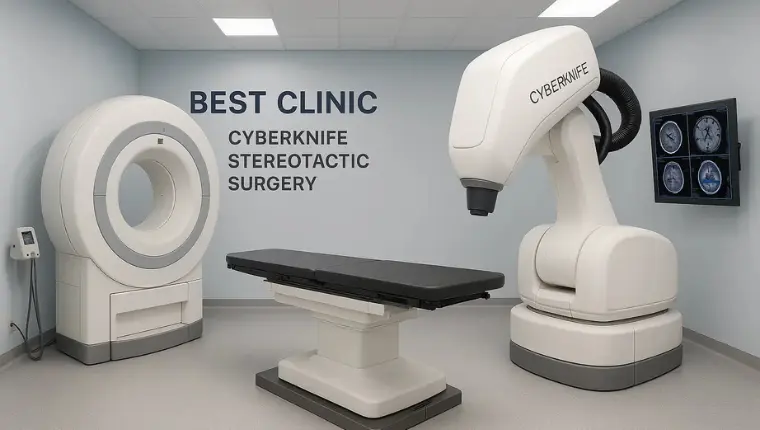
Best Clinic For Cyber Knife Stereotactic Surgery
The clinic or hospital using it already best and has experts for supervision, otherwise it would not allow treatment. For the best quality treatment and ensuring a success rate, We Care Health Services is also here. All of the mentioned hospitals are coordinated with We Care Health Services.
Best Clinic For Cyber Knife Stereotactic Surgery
|
Hospital / Clinic |
City / Region |
|
Seven Hills Hospital |
Mumbai |
|
Global Health City |
Chennai |
|
Wockhardt Hospital, Umrao |
Mumbai |
|
Manipal Hospital, Millers Road |
Bangalore |
|
Manipal Hospital, HAL Airport Road |
Bangalore |
|
Narayana Multispeciality Hospital, HSR Layout |
Bangalore |
|
Kauvery Hospitals, Electronic City |
Bangalore |
|
Cytecare Cancer Hospital |
Bangalore |
|
Manipal Hospital, Dwarka |
Delhi NCR |
|
Dharamshila Narayana Superspeciality Hospital |
Delhi NCR |
|
Sitaram Bhartia Institute of Science and Research |
New Delhi |
|
Pushpawati Singhania Hospital and Research Institute |
New Delhi |
|
Felix Hospital |
Noida |
|
Sir H. N. Reliance Foundation Hospital & Research Centre |
Mumbai |
|
Kokilaben Dhirubhai Ambani Hospital |
Mumbai |
We Care Health Services for the best Cyber Knife Treatment
We Care Health Services is a complete health coordinator for people suffering from heart problems, cancer, and replacement or transplant needs. They ensure complete health treatment with supervision and cost transparency. The treatment assisted by us has the highest success rate in comparison to the other hospitals.
Book Appointment
GET A FREE QUOTE
They coordinate care across a network of hospitals that offer CyberKnife and other stereotactic radiosurgery platforms. And you will get access to centres that actually perform the procedure. The treatment range in our package is different because of the undiagnosed conditions of the patients. Our services and reasons to choose us are: