
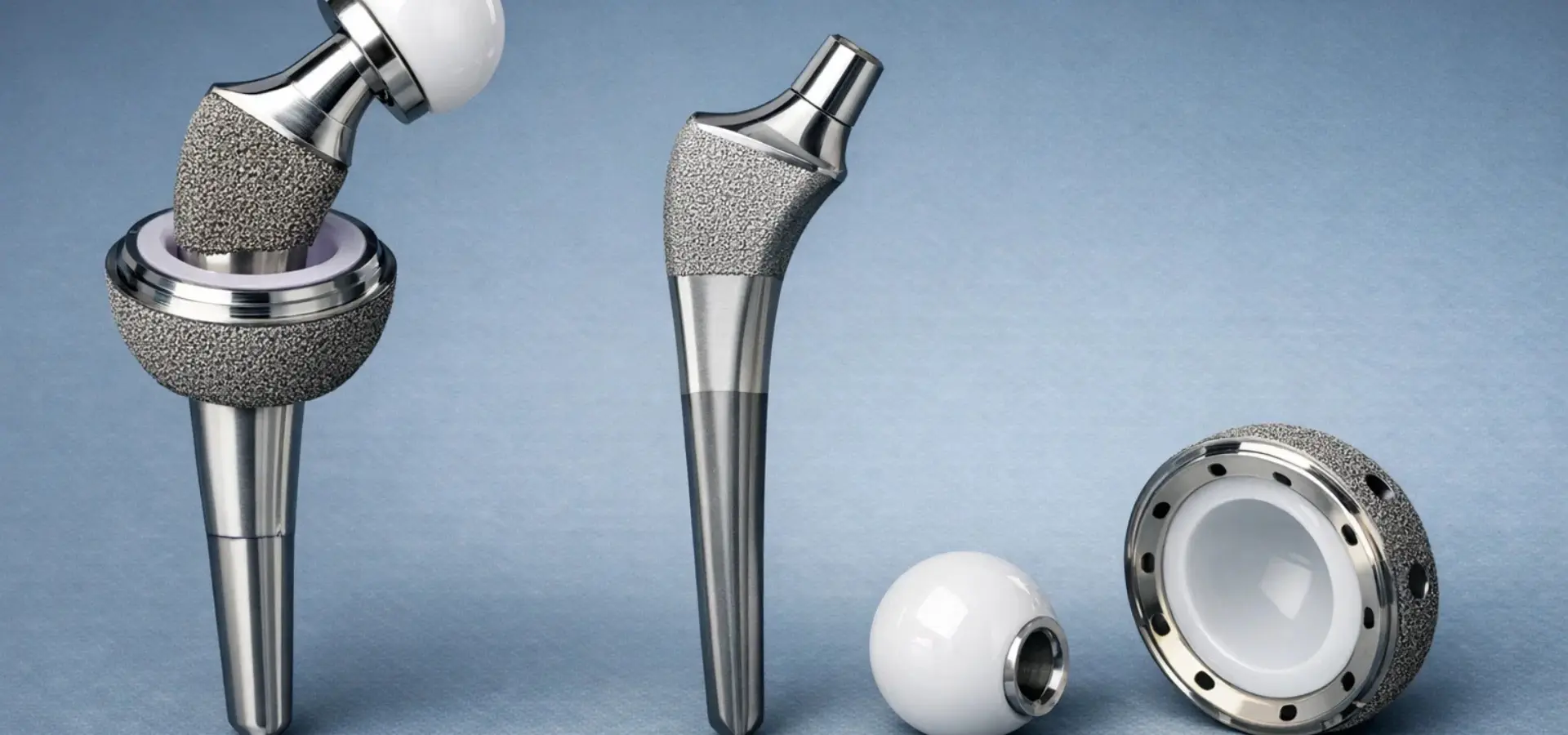
Hip Replacement Implants
Hip replacement implants in India are used to treat hip-related issues. The objectives of these products is to restore normal hip function and reduce pain while improving mobility. The majority of the most common types of implants are manufactured using biocompatible and durable materials such as titanium, which is lightweight and offers an advantage over cobalt chromium, a heavy-duty alloy with excellent wear properties and high strength. The use of ceramic and polyethylene for the interface between the implant and the bone creates less friction when compared with metal-on-metal interfaces. There are several manufacturers of implant products that are approved for global use, and the selection of the type of implant to use is based on multiple considerations, such as a patient's age, level of activity, quality of bone, and surgeon preference.
Different Types of Hip Replacement Implants in India
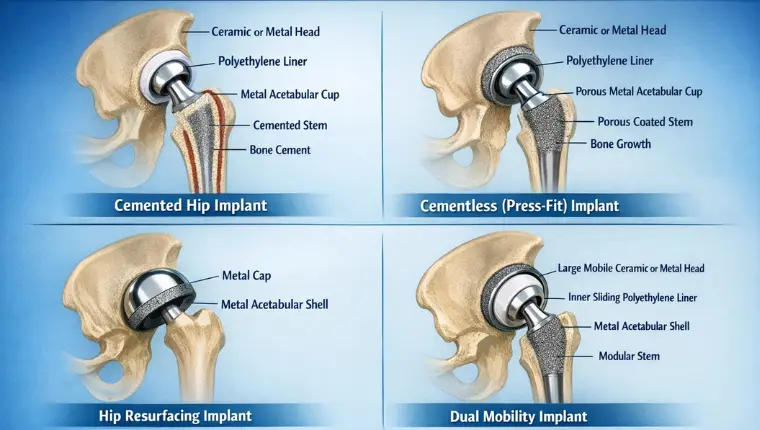
In India, hip replacement implants come in many types of materials that will fit different patient types. Patients with weaker bones (such as older persons) tend to receive implanted cemented devices, which are affixed to the bone with bone cement. Uncemented implants depend on the body’s natural ability to grow into the device, so they are frequently assigned to young, healthy, and athletic patients.
Different Types of Hip Replacement Implants in India
Hybrid implants have both cemented and uncemented attachments, meaning that a hybrid implant has both types of fixation. Likewise, the selection of a type of bearing surface — such as metal on polyethylene, ceramic on ceramic, or ceramic on polyethylene — is dependent upon an individual’s age, activity level, bone quality, and surgeon’s experience.
Consult Now
GET A FREE QUOTE
In this guide, you'll get a clear look at modern hip implant materials, bearing surfaces that rub together, fixation ways to hold them in place, and tips tailored to Indian patients. We'll break down what fits different needs, from young athletes to older folks on tight budgets.
Anatomy of a Modern Hip Implant System
Hip implants mimic the body's natural ball-and-socket joint. They include key parts that work together for smooth movement. Knowing these basics helps you grasp why certain types suit some people better than others. In this guide, you'll get a clear look at modern hip implant materials, bearing surfaces that rub together, fixation ways to hold them in place, and tips tailored to Indian patients. We'll break down what fits different needs, from young athletes to older folks on tight budgets.
Most stems use titanium alloys because they're light and strong, or cobalt-chrome for extra durability. Titanium feels closer to real bone, cutting down on stress elsewhere. In India, these materials come from trusted brands to match local needs. Cemented stems work fast and suit weaker bones, while cementless ones bond over time for active folks.
The inside gets a liner, like plastic or ceramic, for the ball to slide against. In cementless versions, tiny holes or coatings grab onto bone quickly. This setup shines for younger patients with solid hip bones. Shells often use titanium for flexibility. They shape to fit Indian body types, which vary by region and lifestyle.
Deciphering Material Combinations in Total Hip Arthroplasty (THA)
Bearing surfaces are where the action happens—the ball and liner that touch and move. They decide friction, wear, and how many years the implant lasts. In total hip arthroplasty, or THA, picking the right pair cuts risks like loosening. Options have evolved to handle India's mix of active youth and aging groups. Low-wear choices help those who walk miles or climb stairs often.
This combo has proven track records over decades. It costs less and works well for most. But tiny plastic bits from wear can spark bone loss, called osteolysis, after 10-15 years. Newer UHMWPE versions, cross-linked for strength, slow that wear. In India, MoP fits budgets in smaller cities where premium options are rare.
This setup suits active adults under 60 who want a hip that lasts 20+ years. Fracture risk exists, though rare at under 1%, mainly in falls or high impacts. For Indian patients with desk jobs but weekend hikes, it's a smart pick. Ceramics resist scratches better, key in dusty or polluted air that might grit into joints. Hospitals in Delhi and Bangalore stock these widely.
Benefits include less debris and pain, boosting the quality of life. But some hear squeaks from edge loading, and fractures, while low at 0.5%, need careful implant angles. In complex cases, like after accidents, surgeons avoid it. India sees rising CoC use in top centers for its long life. It fits the trend of folks staying fit longer.
Guidelines from the Indian Orthopaedic Association now limit MoM to rare cases, like revisions, not first-time surgeries. Many brands pulled risky large-head versions. For primary hip replacements in India, it's mostly off the table. Patients report better motion at first, but long-term data shows higher failure rates. Stick to safer options unless your doctor insists.
Fixation Methods: Cemented vs. Uncemented Implants
Fixation locks the implant to your bone. It depends on your bone health and age. Good choices prevent loosening, a top reason for repeat surgeries. In India, bone quality varies from vitamin D shortages to active lifestyles. Surgeons weigh these for the best results.
Consult Now
GET A FREE QUOTE
Fixation Methods: Cemented vs. Uncemented Implants
Cemented Fixation Techniques
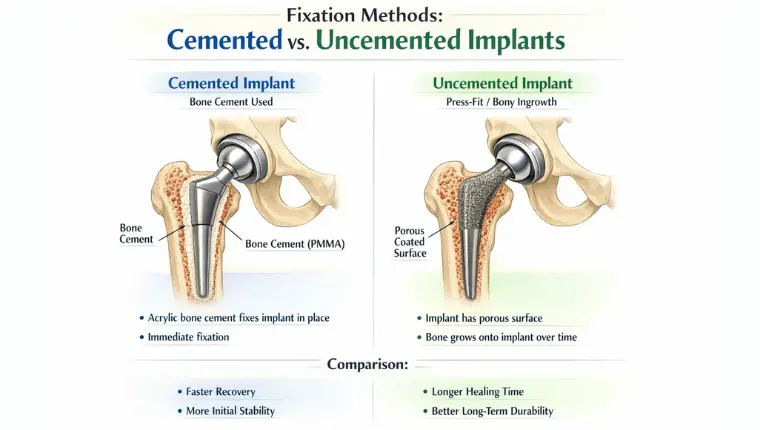
Cemented fixation uses polymethylmethacrylate, or PMMA, like a grout to bond metal to bone. It sets quickly, giving instant stability during walks right after surgery. This method fits elderly patients over 70 with thin or soft bones. It cuts surgery time, vital in busy Indian hospitals. Risks include cement bits breaking off, leading to inflammation after years. Studies show 90% success at 10 years. It's common in rural areas for reliable, low-cost outcomes.
Uncemented (Cementless) Fixation
Uncemented implants rely on your bone growing into the rough surface. Coatings like hydroxyapatite speed this up, creating a natural lock. It suits younger folks with dense bones, under 60, who load the joint soon. No cement means less allergy worry. Full bonding takes 6-12 weeks, so crutches help at first. In India, this is growing popular as people live longer and move more. Success hits 95% at 15 years with good patient care.
Hybrid Fixation
Hybrid mixes it up: cement the stem but leave the cup uncemented, or vice versa. Surgeons decide mid-operation based on bone feel. This balances quick hold with long-term growth. It's great for middle-aged Indians with uneven bone from diabetes or a poor diet.
Data from Indian registries shows that hybrids last well, with fewer revisions than all-cemented in active groups. Your surgeon's skill shines here.
Consult Now
GET A FREE QUOTE
Specialized Implants: Resurfacing and Reverse Total Hip Arthroplasty (RTHA)
Not all hips need full replacement. Some tweaks preserve more bone or fix tough cases. These suit specific to Indian profiles, like trauma survivors or sports lovers. Hip replacement implants in India are available in several types to suit different patient needs. Cemented implants use bone cement for fixation and are often preferred for elderly patients with weaker bones. Options expand choices beyond standard THA.
Hip Resurfacing (Surface Arthroplasty)
Hip resurfacing caps the femoral head with metal instead of removing it. It keeps more bone, easing future fixes if needed. Young men in their 40s, active in cricket or yoga, often choose this. Metal-on-metal versions raised ion issues, so now hybrids or ceramics test the waters. In India, it's less common due to costs, but it gains traction in metros. Bone preservation helps with cultural sitting styles. Success depends on perfect placement to avoid neck fractures.
Reverse Total Hip Arthroplasty (RTHA)
Reverse THA flips the setup: the ball goes on the pelvis, cup on the femur. It stabilizes hips prone to dislocations, like after bad falls or birth defects. Doctors use it for revisions with lost bone or upward shifts. In trauma-heavy India, post-accident cases benefit most. This design shifts the muscle pull for a better hold. Outcomes improve balance, a key for elders. It's a salvage tool, not first-line, with 85% stability rates.
Factors Influencing Implant Selection for the Indian Patient
India's diverse needs shape implant picks. From hot climates speeding wear to family duties demanding quick recovery, local factors matter. Surgeons blend global tech with home realities for smart choices.
Cost of Hip Replacement Implants in India
In India, the price of hip replacement devices varies depending on how the device is secured (using cement or not) and what type of materials are used for the wear surfaces of the prosthesis. Cemented implants are the least expensive and are typically used in older adults. Uncemented implants are more costly because they have special surface coatings that allow for the ingrowth of bone.
|
Implant Type |
Approximate Implant Cost (INR) |
|
Cemented implant |
₹50,000 – ₹80,000 |
|
Uncemented implant |
₹90,000 – ₹1,50,000 |
|
Metal on polyethylene |
₹70,000 – ₹1,20,000 |
|
Ceramic on polyethylene |
₹1,20,000 – ₹1,80,000 |
|
Ceramic on ceramic |
₹1,80,000 – ₹2,50,000 |
Ceramic based implants are priced higher than uncemented due to their increased ability to withstand wear and their long life. The metal on polyethylene configuration is the most cost-effective but still provides a good balance. Ultimately, the price of a final implant will depend on the manufacturer and the quality of the materials used in the construction of the device, along with hospital rules and guidance. Generally speaking, the total cost of the implant, as well as the other parts involved with the procedure, will determine the final price.
We Care Health Services for Hip Replacement
We Care Health Services has years of experience in replacement surgeries. There you will find different types of surgery with technology integration. Every doctor in the hospital and related to the agency is working honestly with the patients and trained in international places. There are different places in Delhi, India, for various kinds of surgery, but we are different.
Consult Now
GET A FREE QUOTE
Handling a patient is not blind work; we have counselors to help you during the procedure. Assistance to the foreign patients in coming and staying for the treatment is our unique service. There are different patients still attached to us and rating us best. There are inclusion and exclusion packages and cost transparency in the whole replacement procedure. Hip replacement surgery is performed with modern technology, and its key expectations are:
- Cost transparency
- High success rate after replacement
- Use of best implants: quality assurance
- Best Doctors for suggestions and procedure
- Technology in the treatment
- Integration with the traditional rehabilitation methods
- Complete package with inclusion and exclusion of cost.
Conclusion
No one implant rules all for hip replacement in India—it's about your bone, age, and life. Balance wear resistance with secure fixation for the longest run. Surgeon know-how drives success more than any material.