
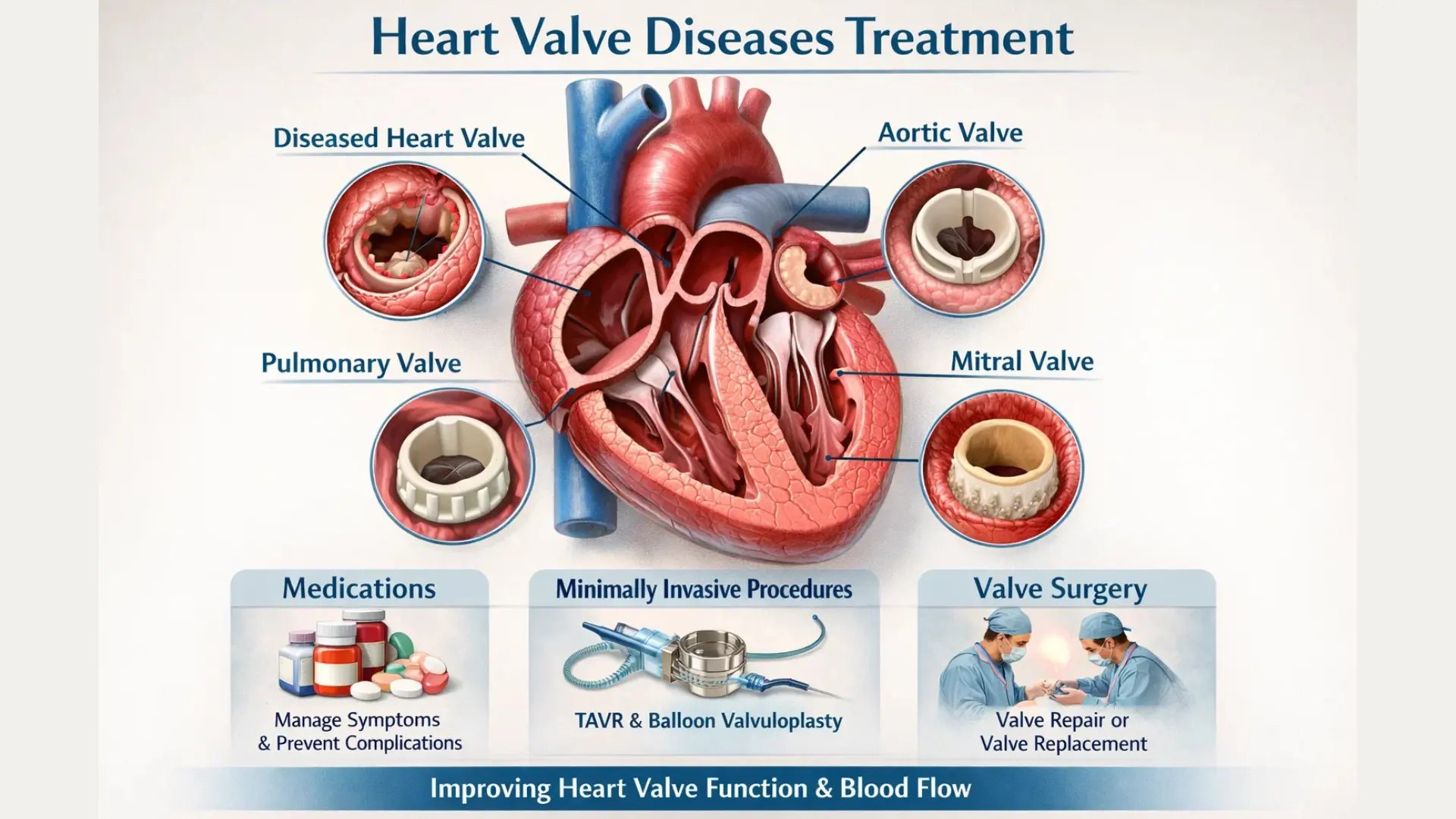
Heart Valve Diseases Treatment in India is successful with the advanced technology and efforts of cardiologists. Cardiac Valve Disease Treatment in India provides an excellent mixture of innovative health care technology along with maximum access, to provide for the needs of the patients who require care for this type of disease.
Depending on the severity of the condition, various treatments may be prescribed, which could include the use of medication to manage symptoms, minimally invasive procedures, and/or open heart surgery. The most commonly performed cardiac valve treatment procedures performed by Hospitals in India include valve repair, mechanical and/or biologic/or tissue valve replacement, and TAVR (Transcatheter Aortic Valve Replacement).
The majority of Cardiac Valve Disease treatment facilities in India invest heavily into their Cath Labs, Cardiothoracic Surgeons, and/or Cardiac Intensive Care Unit PCTs (Patients, Critical Patients, Patients with Complications). A personalized treatment plan is developed for each patient after a thorough evaluation of Cardiac Imaging and Cardiac Evaluation. Overall, patients can expect an effective outcome from their cardiac valve disease treatment in India with shorter waiting times and lower overall costs than in developed countries, both for domestic and international patients.
What is a Heart Valve?
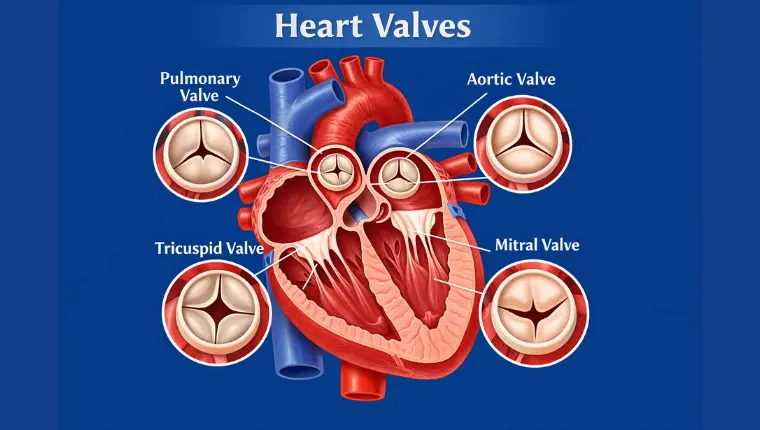
The heart valve governs the flow of blood through the heart. There are four valves in the human heart: the aorta (the biggest), the mitral, the tricuspid, and the pulmonary valve. The valves open and close as the heart beats (one time for each beat) so that blood goes forward and not backward.
The heart valves help to ensure that blood continues to circulate through all four chambers of the heart and into the lungs and to the rest of the body. Healthy heart valves work well and silently. When they become damaged (narrowed, leaking, stiff) blood can no longer flow as it should, and the heart needs to work harder; this can cause symptoms and other problems. The heart valve disease includes:
What is a Heart Valve
- Rheumatic fever, an inflammatory illness that may follow an untreated strep throat infection
- Endocarditis, inflammation and infection of the heart valves
- Idiopathic calcific aortic stenosis, a degenerative condition seen in the elderly, in which the aortic valve cusps become thickened, fused, and infiltrated with calcium
- Syphilis
- High blood pressure (hypertension)
- Arteriosclerosis
- Connective tissue disorders, such as Marfan's syndrome
Symptoms of Heart Valve Diseases
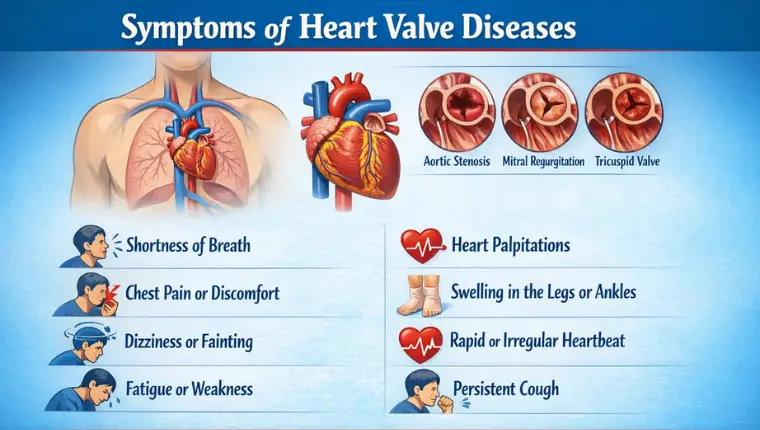
People with heart valve disease may experience a range of symptoms from mild to severe, depending on which valve(s) are impacted and the degree of blood flow disruption. Some individuals may not show symptoms during the initial stages of the disease. As this condition worsens, the heart becomes less able to propel blood effectively, thereby demonstrating additional symptoms of heart valve disease.
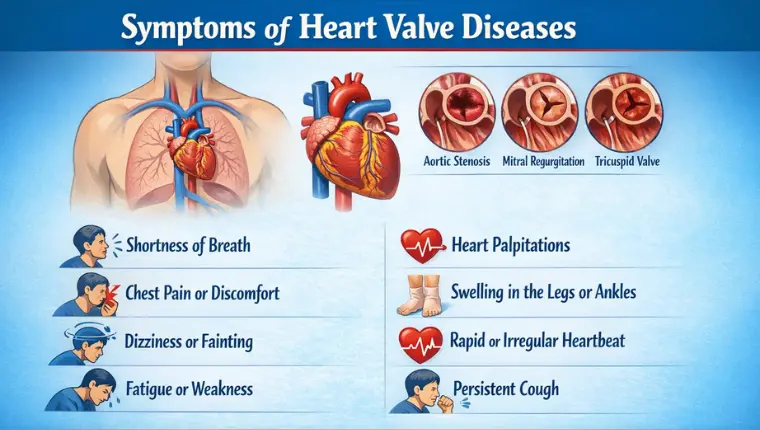
- Shortness of Breath with Activity or while Lying Down
- Decreased Exercise Tolerance & Fatigue in Daily Activities
- Chest Pain or Pressure, especially During Exercise
- Excess Fluid in Your Ankles, Feet, Stomach & Legs
- An Irregular Heartbeat and Palpitations or a Fluttering Sensation
- Dizziness, Lightheadedness, or Fainting Spells
- Sudden Weight Gain Due to Fluid Retention
- A Chronic Cough and Wheezing at Night
- Bluish Coloration of Your Lips and Fingertips in Advanced Stages
- Difficulty Sleeping Flat on Your Back because of Breathing Problems
Patients may notice gradual symptom onset, which may be attributed to old age or "general aging" as healthy. However, if early warning signs are not identified and treated, significant consequences can result — including heart attack or stroke!
If you have a heart valve problem diagnosed at an early stage, your physician will be able to manage your condition effectively with medications and/or surgery. In addition, early diagnosis allows for better long-term Heart Health.
Causes of Heart Valve Diseases
Heart valve disorders may be caused by many types of disease processes affecting the structure and/or function of heart valves; however, most of these diseases are progressive over time. Identifying the cause (etiology) assists in selecting the appropriate treatment approach for patients with heart valve disorders.
- Congenital aortic stenosis: When a child is born with congenital aortic stenosis, the problem is usually a bicuspid aortic valve.
- Acquired aortic stenosis: In adulthood, aortic stenosis is typically caused by rheumatic fever or idiopathic calcific aortic stenosis.
- Aortic regurgitation: In aortic regurgitation, the aortic valve does not close properly, allowing blood to flow backward into the left ventricle.
- Mitral stenosis: Congenital mitral stenosis is rare.
- Mitral regurgitation: As in mitral stenosis, the cause often is rheumatic fever, but the patient is usually an adult male.
- Mitral valve prolapse: In this condition, the leaflets of the mitral valve fail to close properly.
- Congenital pulmonic stenosis: In the relatively few newborns with severe congenital pulmonic stenosis.
- Adult disorders of the pulmonic valve: In adults, the pulmonic valve most often is damaged because of pulmonary hypertension.
Diagnosis of Heart Valve Diseases
If you are having symptoms, your doctor will begin by evaluating your risk of heart valve problems. Your doctor will ask questions about your family history of heart problems; your personal history of rheumatic fever, syphilis, hypertension, arteriosclerosis, or connective tissue disorders; and your risk of endocarditis caused by intravenous (IV) drug use or a recent medical or dental procedure. If the patient is an infant, the doctor will ask about the mother's health or environmental risk factors during pregnancy. Here are some exact methods of diagnosing heart valve diseases:
Symptoms of Heart Valve Diseases
- Check for abnormal heart sounds with a physical exam
- Echocardiogram for valve structure and blood flow
- Electrocardiogram (ECG) for evaluating heart rhythm and strain
- Chest X-ray to assess heart size and any serious fluid buildup in the lungs
- Cardiac MRI can be used in more complicated scenarios to provide more detail about the heart's anatomy
- CT scan for assessing calcification of the valves
- Cardiac Catheterization to measure the levels of pressure and the amount of blood flowing through the heart
- The use of Stress Testing to observe heart function under stress or exertion.
Cost of Heart Valve Disease Treatment in India
Heart valve disease procedures cost less in India than in many developed countries and still provide high medical quality. The money spent on such procedures will vary, depending on type of valve, severity of illness, hospital location, and surgical versus non-surgical approach (eg. open-heart surgery vs. catheter-based treatments). Valve repair procedure costs are generally lower than for valve replacement and catheter-based techniques. Most complete heart valve disease treatment packages will cover surgeon fees, hospital fees for length of stay, all necessary investigations, and some basic post-operative care. Despite the wide range of treatment costs, many patients choose to have their treatments performed in India because of the number of highly qualified cardiac specialists available, the quality of medical facilities, and the significantly lower overall cost of treatment.
|
Treatment Type |
Estimated Cost in India (₹) |
|
Heart valve repair surgery |
2,50,000 – 6,00,000 |
|
Open heart valve replacement |
3,00,000 – 9,00,000 |
|
Minimally invasive valve procedure |
4,00,000 – 7,00,000 |
|
Transcatheter valve replacement (TAVR) |
15,00,000 – 25,00,000+ |
|
Follow-up care and medications |
10,000 – 50,000 |
Best Hospitals and Clinics for Heart Valve Disease Treatment
Several well-respected hospitals and clinics in India provide advanced heart valve disease treatment options. Hospitals with multi-specialties, such as those located in Delhi, Mumbai, Chennai, Hyderabad, and Bengaluru, have well-developed departments of cardiology as well as experienced heart surgeons.
The comprehensive heart valve care available from these hospitals includes accurate diagnosis and both repairing and replacing heart valves. The comprehensive care provided also includes various minimally invasive options, including transcatheter valve therapy. Most hospitals use modern cardiac labs with imaging capabilities, as well as dedicated intensive care units for patients who undergo heart surgery.
|
Hospital / Clinic Name |
City |
|
All India Institute of Medical Sciences (AIIMS) |
New Delhi |
|
Fortis Escorts Heart Institute |
New Delhi |
|
Apollo Hospitals |
Chennai |
|
Asian Heart Institute |
Mumbai |
|
Medanta – The Medicity |
Gurugram |
|
Narayana Health |
Bengaluru |
|
Max Super Speciality Hospital |
New Delhi |
|
Kokilaben Dhirubhai Ambani Hospital |
Mumbai |
|
Care Hospitals |
Hyderabad |
|
Manipal Hospitals |
Bengaluru |
We Care Health Services for Heart Valve Diseases
When we search for different treatments at one place, the name we can’t afford to miss is We Care Health Services. They have the best management system, doctors, and coordinating staff in a single place. Your health is the primary consideration in how you manage Heart Valve Disease. It is important to assist you in the management of heart valve diseases early on to improve outcomes.
Heart Valve Disease affects how your heart pumps blood, and if untreated, may lead to later complications such as fatigue, shortness of breath, swelling, and many other issues. When treated appropriately by experienced professionals, early care can dramatically improve outcomes. Here we are hearing the diagnostic skills of the doctors and their way to manage complicated patients at We Care:
- After the cause of the problem has been determined, a specialized treatment plan will be developed.
- Some valve problems can be treated non-surgically with medications that manage symptoms and preserve cardiac function.
- For patients who do need to undergo intervention, there are several management options available.
- In most instances, when feasible, we recommend valve repair since it helps patients keep their healthy heart tissue intact and improves the overall performance of their heart in the long run.
- In some rare cases where repair is not an option, the choice of having the valve replaced will depend on the type of valve selected, as well as the age and health goals of the patient.
- Tissue heart valves, which are made of a durable material designed to wear down over time, will usually be selected for younger patients.
Techniques that take less time to complete and provide less discomfort are becoming more available. Follow-up care is important for continuing to support you during and after your treatment process and recovery. You are encouraged to regularly check in with your doctor to receive recommendations for lifestyle changes associated with a healthy heart, and also to receive medications that help improve your heart and cardiovascular system's function.
To achieve this goal is simple: to increase heart function, decrease symptoms, and return you to a better quality of everyday living with a sense of security and comfort.
Conclusion
There is no way to prevent the majority of congenital heart valve problems. Pregnant women should have regular prenatal care and should avoid alcohol. Heart valve disease is a complex and serious but treatable disease. It can be diagnosed and managed effectively through early identification and treatment, as well as through the use of advanced equipment, well-trained cardiac physicians, and a variety of treatment options available to patients.
There have been improvements in the overall health and quality of life for patients with this disease as a result of new technology, trained professionals, new treatment modalities, greater understanding of the condition, and the availability of modern diagnostic testing. Whether it is through medications, ongoing monitoring, or valve reconstruction, the treatment plan is personalized for each patient.
In order to achieve optimal long-term heart health, patients must carefully select the best hospital and continue with ongoing follow-up care. Timely intervention, patient education, and a supportive environment offer patients with heart valve disease the best chance for a successful recovery and a lifetime of good heart health.