

Paediatrics is the branch that considers the treatment of children and their diseases. In India, the pediatric surgery overview is positive in different hospitals. India is a diverse country with different regions and forms. The metro cities of India are particularly chosen for such treatments. Children are considered delicate flowers and tough surgeries should be performed in extreme cases.
In the present time, it is common to find congenital issues in the heart, lungs and genes that need surgery. All emergency conditions should be under a single roof in that case. In the mentioned overview, we considered all facilities for children's surgery.
What are Pediatric Surgeries?
Pediatric surgeries are used to correct anomalies in children. There are different birth conditions, such as heart diseases. Hernias, hydroceles and deformities in organs can be corrected in the early stage of life, not after that. It is better to perform surgery in the early stage in such cases.
For Free Online Consultation
GET A FREE QUOTE
So the term “pediatric surgery” is used to denote all the surgeries of children under the age of 12. They are slightly different from the adult surgeries. There are approximately 3.5 million pediatric surgeries performed annually. American records say 4.47% children need pediatric surgeries in the early stages of life from the total born.
In What Conditions is Pediatric Surgery Needed?
Pediatric surgery is a specialised branch of medical science focused on the surgical treatment of conditions affecting infants, children, and adolescents. It becomes necessary when congenital defects, developmental abnormalities, injuries, or acquired diseases cannot be managed by medication or non-invasive techniques. Some common conditions requiring pediatric surgery include:
- congenital anomalies like cleft lip and palate, oesophageal atresia (a blocked or missing part of the oesophagus), and anorectal malformations.
- Hernias, hydroceles, and undescended testicles are other frequent issues that often need surgical correction in young children.
- Emergency surgeries are also required in cases of appendicitis, intestinal obstructions, or traumatic injuries.
- In some cases, tumours—both benign and malignant—must be surgically removed to prevent complications.
A vital aspect of pediatric surgery is its child-centred approach. Children's bodies respond differently to anaesthesia and healing, so pediatric surgeons undergo specific training to handle delicate tissues and offer age-appropriate care.
Pediatric Surgery Overview in India
India has emerged as a leading hub for pediatric surgery due to its combination of skilled surgeons, advanced hospitals, and affordable treatment. Major cities like Delhi, Mumbai, and Bangalore house super-speciality centres offering advanced pediatric treatment. Many hospitals in India also follow international standards in neonatal and pediatric intensive care, making them trusted options for both domestic and international patients.
- Congenital: Present from birth
- Atresia: Absence or closure of a normal body opening
- Malformation: An abnormal formation of body parts
- Hydrocele: Fluid-filled sac around the testicle
Symptoms of the Congenital Diseases
Congenital diseases are conditions that are present at birth and may affect the structure or function of different organs or body parts. The symptoms of these conditions vary widely depending on the type and severity of the disorder, and they often require early diagnosis and treatment—sometimes through surgical intervention.
For Free Online Consultation
GET A FREE QUOTE
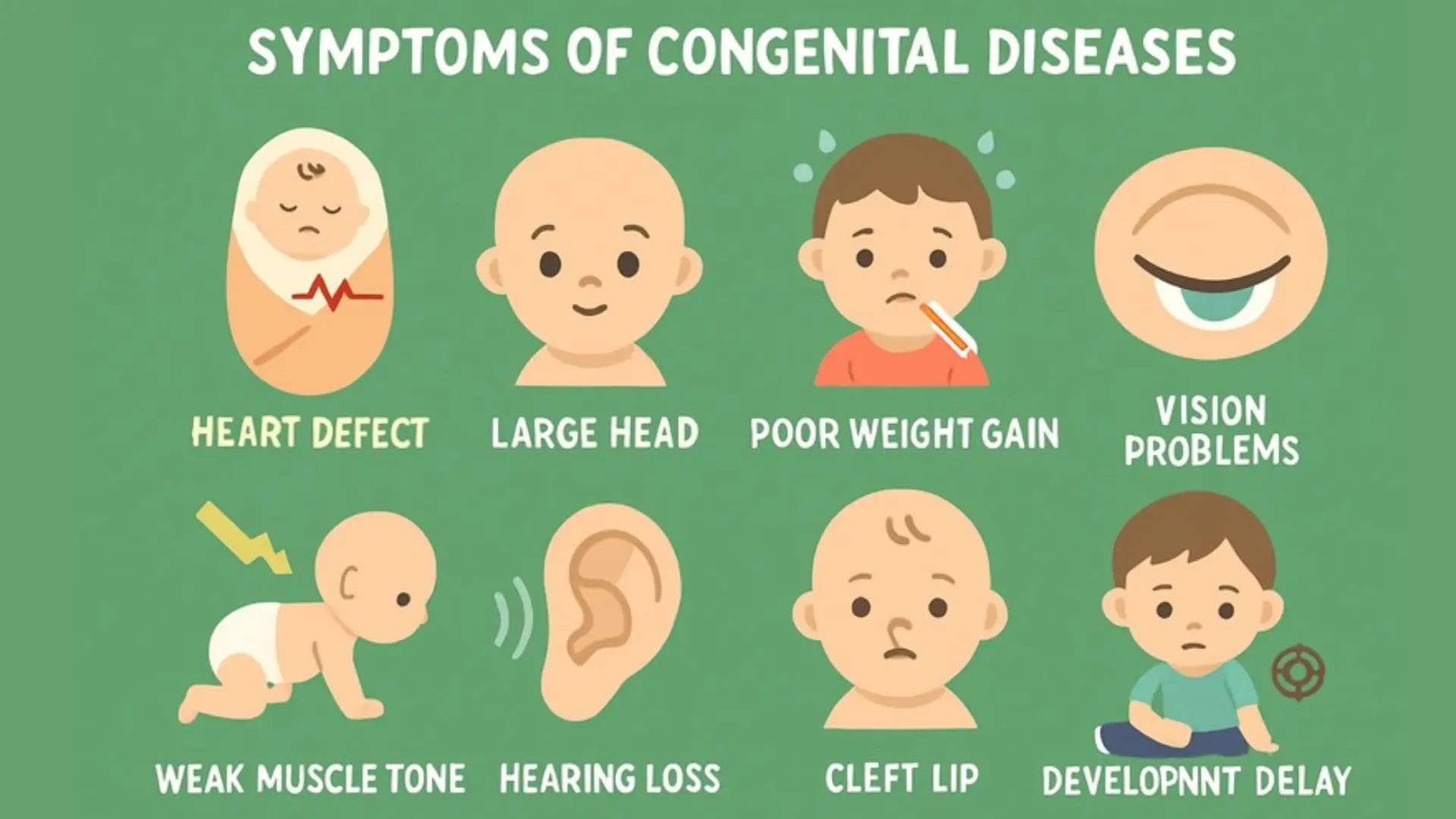
Most of the time, congenital diseases of the heart and fluid-filled cavities of the tissue require surgical intervention. In most cases, it is better to consider surgical options in the last stage, and the chambers of the baby are small and delicate. Fluid fluid-filled cavity, like a hydrocele, is dangerous for the initial brain development, and surgery is required. The same goes for heart diseases. We are considering some most common symptoms noticed in the children while pediatric surgery is needed:
Symptoms of the Congenital Diseases
- Common symptoms of congenital diseases include difficulty in feeding, poor weight gain, breathing issues, and persistent vomiting in newborns.
- Visible signs such as a cleft lip or palate, abnormal limb formation, or facial asymmetry may also be noticed.
- In more serious cases, babies may have blue skin (cyanosis) due to heart defects, a swollen abdomen, or an absence of an anal opening, which are signs of internal malformations.
- Some infants show delayed developmental milestones, poor muscle tone, or seizures, indicating neurological or metabolic congenital conditions.
- Many congenital diseases are life-threatening if not treated early, and this is where pediatric surgery plays a crucial role.
- For instance, conditions like oesophageal atresia, diaphragmatic hernia, and intestinal obstructions require immediate surgical correction to ensure the survival and healthy development of the child.
Pediatric Surgery Overview in India For Congenital Diseases
India offers advanced diagnostic and surgical care for congenital diseases through specialised pediatric hospitals. With highly trained pediatric surgeons and access to neonatal ICUs, the country has become a preferred destination for families seeking expert care. Early detection and timely surgery in India’s leading centres can significantly improve outcomes for children born with congenital conditions.
Pediatric Surgery Diseases List
Pediatric surgery covers a wide range of diseases and conditions that require surgical intervention during infancy, childhood, or adolescence. These surgeries aim to correct birth defects, treat injuries, or remove obstructions that affect a child's growth and development. Below is a categorised list of common pediatric surgical diseases.
Congenital Anomalies
Congenital conditions are present from birth and often require surgical correction. Common examples include:
- Cleft Lip and Palate – A gap in the upper lip or roof of the mouth.
- Oesophageal Atresia – A condition where the oesophagus does not develop properly.
- Congenital Diaphragmatic Hernia – A defect in the diaphragm allowing abdominal organs into the chest.
- Anorectal Malformations – Abnormal development of the anus and rectum.
- Spina Bifida – A neural tube defect affecting the spine.
For Free Online Consultation
GET A FREE QUOTE
As part of the pediatric surgery overview in India, many advanced centres offer minimally invasive techniques to treat such complex anomalies at an early stage.
Abdominal and Gastrointestinal Disorders
- Pyloric Stenosis – Thickening of the stomach muscle causing vomiting.
- Intestinal Obstruction – Blockage in the intestines due to various causes.
- Meckel's Diverticulum – A small pouch in the intestine that can become inflamed.
Urological Conditions
- Hydrocele – Fluid accumulation around the testicles.
- Undescended Testes (Cryptorchidism) – Testes that haven’t moved into the scrotum.
- Hypospadias – Urethra opening on the underside of the penis.
Tumours and Cancers
- Wilms' Tumour – A kidney cancer seen in young children.
- Neuroblastoma – A tumour originating in nerve tissue.
With the rise in quality healthcare, the pediatric surgery overview in India highlights the country's growing capability in managing such conditions with high success rates and affordable costs.
What is the most common paediatric surgery?
One of the most common pediatric surgeries performed worldwide, including in India, is the hernia repair, particularly for inguinal hernias. This condition occurs when a part of the intestine protrudes through a weak spot in the abdominal muscles, commonly seen in infants and young boys. The surgery is relatively simple and highly effective, often performed as a day-care procedure with minimal recovery time.
Another frequently performed procedure is circumcision, typically for medical or cultural reasons. Additionally, surgeries for undescended testicles, appendicitis, and cleft lip and palate repair are also common.
As highlighted in the pediatric surgery overview in India, the country offers a wide range of surgical solutions for these conditions at world-class hospitals. Skilled pediatric surgeons, affordable treatment, and advanced technologies make India a preferred destination for pediatric surgeries. These early interventions ensure that children grow up healthy and free from developmental complications.
How is pediatric surgery different from Common Surgeries?
Pediatric surgery is a specialised branch distinct from general or adult surgeries in many critical ways. It focuses on treating infants, children, and adolescents whose anatomical structures, healing patterns, and emotional needs differ significantly from adults.
India offers a highly advanced and affordable healthcare system for pediatric surgeries. Top-tier hospitals are equipped with dedicated pediatric surgical units, NICUs, and trained pediatric anesthesiologists. From congenital defect repairs to cancer surgeries, India provides personalised, safe, and effective treatments for children. The pediatric surgery overview in India highlights the nation's growing reputation for quality care and successful outcomes in even the most complex pediatric cases.
|
Aspect |
Pediatric Surgery |
Common (Adult) Surgery |
|
Patient Age |
Infants, children, adolescents |
Adults and elderly |
|
Anatomy |
Smaller, delicate organs and tissues |
Fully developed anatomy |
|
Healing Response |
Faster healing, but more sensitive |
Slower but more stable healing |
|
Anesthesia Management |
Requires pediatric-specific dosages and monitoring |
Standard adult protocols |
|
Surgical Instruments |
Miniaturized and specially designed for children |
Standard-size instruments |
|
Communication |
Often requires parental involvement and child-friendly approach |
Direct communication with patient |
|
Postoperative Care |
Needs specialized pediatric ICU and emotional support |
General ICU or surgical recovery unit |
Cost of Different Pediatric Surgeries in India
India offers high-quality yet affordable pediatric surgical care, making it a preferred destination for families worldwide. The cost of pediatric surgeries in India varies depending on the condition, hospital, and city. Despite the variation, treatment remains significantly less expensive compared to Western countries, without compromising quality. Here's a detailed table outlining the approximate costs of common procedures under the pediatric surgery overview in India.
|
Surgery Type |
Approximate Cost (INR) |
Approximate Cost (USD) |
|
Hernia Repair |
₹30,000 – ₹60,000 |
$360 – $720 |
|
Cleft Lip/Palate Surgery |
₹40,000 – ₹80,000 |
$480 – $960 |
|
Appendectomy (Appendix Removal) |
₹50,000 – ₹1,00,000 |
$600 – $1,200 |
|
Undescended Testes Surgery (Orchiopexy) |
₹35,000 – ₹70,000 |
$420 – $840 |
|
Esophageal Atresia Repair |
₹1,50,000 – ₹3,00,000 |
$1,800 – $3,600 |
|
Congenital Heart Surgery |
₹2,50,000 – ₹6,00,000 |
$3,000 – $7,200 |
|
Pyloric Stenosis Surgery |
₹60,000 – ₹1,20,000 |
$720 – $1,440 |
|
Hydrocele Surgery |
₹25,000 – ₹50,000 |
$300 – $600 |
|
Hypospadias Repair |
₹70,000 – ₹1,50,000 |
$840 – $1,800 |
|
Wilms Tumor Surgery |
₹2,00,000 – ₹4,00,000 |
$2,400 – $4,800 |
Best Hospitals for Pediatric Surgeries
India is home to some of the best hospitals offering world-class pediatric surgical care. Equipped with advanced technology, pediatric ICUs, and experienced surgeons, these hospitals handle everything from simple hernia repairs to complex congenital surgeries. As highlighted in the pediatric surgery overview in India, many of these hospitals also partner with medical facilitators like We Care Health Services to assist domestic and international patients with smooth, affordable treatment plans.
For Free Online Consultation
GET A FREE QUOTE
|
Hospital Name |
City |
|
All India Institute of Medical Sciences (AIIMS) |
New Delhi |
|
Apollo Children’s Hospital |
Chennai |
|
Sir Ganga Ram Hospital |
New Delhi |
|
Fortis Memorial Research Institute |
Gurugram |
|
Medanta – The Medicity |
Gurugram |
|
Kokilaben Dhirubhai Ambani Hospital |
Mumbai |
|
Christian Medical College (CMC) |
Vellore |
|
BLK-Max Super Speciality Hospital |
New Delhi |
|
Rainbow Children’s Hospital |
Hyderabad |
|
Narayana Health City |
Bangalore |
|
Wadia Hospital for Children |
Mumbai |
|
KIMS Hospital |
Hyderabad |
|
PGIMER |
Chandigarh |
|
Amrita Institute of Medical Sciences |
Kochi |
|
We Care Health Services (Facilitator) |
PAN India (Partner) |
We Care Health Services: Best Option For Pediatric Surgeries
When it comes to finding the best care for pediatric surgeries, We Care Health Services stands out as a trusted and patient-centric medical facilitator in India. With a vast network of accredited hospitals and leading pediatric surgeons, they ensure that every child receives timely, safe, and effective surgical treatment tailored to their specific needs.
As highlighted in the pediatric surgery overview in India, the country is rapidly becoming a hub for advanced and affordable pediatric care. We Care Health Services bridges the gap between patients and hospitals by offering end-to-end assistance—from consultation and diagnosis to post-surgery recovery support.
Whether it's a simple hernia repair or a complex congenital heart defect, We Care coordinates with top hospitals to provide world-class care under one roof. They also help international families with visa support, language translation, airport pickup, and accommodation, making the process smooth and stress-free.
Why Choose We Care Health Services for Pediatric Surgeries?
- Access to top pediatric surgeons and hospitals across India
- Pre-surgery consultation and second opinion options
- Affordable packages with no hidden costs
- Dedicated support for international patients (travel, stay, and more)
- Coordination of diagnostics, surgery, and post-op care
- Transparent, ethical, and compassionate medical guidance
- Assistance with insurance and financing if needed
With We Care Health Services, families can feel confident that their child is in expert hands. They are redefining trust and excellence in the field of pediatric surgery in India.
Common Pediatric Surgery Cases
Pediatric surgery addresses a range of conditions in children that need surgical intervention. These problems can be present from birth (congenital) or develop later in childhood. Below are some of the most frequently seen pediatric surgery cases, explained in simple, human terms.
Hernia (Inguinal and Umbilical)
Hernia (Inguinal and Umbilical)
One of the most common reasons a child might need surgery is a hernia. In many babies, especially boys, a small part of the intestine can push out through a weak spot in the abdominal wall, usually near the groin (inguinal hernia) or belly button (umbilical hernia). It appears as a soft bulge and may become more noticeable when the child cries or strains. Surgery is done to push the intestine back in and close the opening to prevent complications.
Undescended Testicles (Cryptorchidism)
Undescended Testicles (Cryptorchidism)
Sometimes, a baby boy is born with one or both testicles not in the scrotum, where they should normally be. Instead, the testicle stays inside the abdomen or groin. If it doesn’t come down on its own within the first year, a simple surgery called orchiopexy is done to bring it into place and prevent future fertility or cancer risks.
Cleft Lip and Palate
Cleft Lip and Palate
A cleft is a gap in the upper lip or roof of the mouth (palate) that occurs when the baby’s face doesn’t form completely during pregnancy. It affects feeding, speech, and appearance. Pediatric surgeons usually repair the lip within the first few months and the palate within the first year, helping the child eat, speak, and smile more easily.
Appendicitis
Appendicitis
Appendicitis is the sudden inflammation of the appendix, a small pouch attached to the large intestine. It causes pain in the lower right abdomen, often with fever and vomiting. If not treated, it can burst and become life-threatening. Emergency surgery is needed to remove the appendix, and most children recover quickly.
Hypospadias
Hypospadias
In some boys, the opening of the urethra (where urine comes out) is not at the tip of the penis but somewhere along the underside. This condition is called hypospadias. Surgery is usually done between 6 to 18 months of age to reposition the opening and ensure normal urination and future fertility.
Intestinal Obstruction
Intestinal Obstruction
Newborns and young children can sometimes have a blockage in their intestines due to birth defects, twisting, or abnormal tissue growth. This leads to vomiting, a swollen belly, and an inability to pass stool. Immediate surgery may be needed to remove the blockage and allow normal digestion.
For Free Online Consultation
GET A FREE QUOTE
Pyloric Stenosis
Pyloric Stenosis
In this condition, the passage between the stomach and small intestine becomes too narrow due to muscle thickening. Babies with pyloric stenosis often vomit forcefully after every feed. Surgery is performed to open the pathway, allowing the baby to eat and grow normally again.
Congenital Heart Defects
Congenital Heart Defects
Some children are born with heart defects like holes in the heart walls or narrowed blood vessels. These problems can cause tiredness, poor feeding, and even heart failure. Pediatric cardiac surgeons perform highly specialised surgeries to correct these issues and help the heart work better.
Wilms Tumor
Wilms Tumor
Wilms' tumour is a type of kidney cancer that mostly affects children under 5 years. It often shows up as a painless lump in the abdomen. Treatment usually includes surgery to remove the tumour, followed by chemotherapy. With early diagnosis, the success rate is very high.
Anorectal Malformations
Anorectal Malformations
Some babies are born without a proper anal opening or with it in the wrong place. This makes it difficult or impossible for them to defecate. Pediatric surgeons perform corrective surgeries, sometimes in stages, to create a normal passage and help the child live a healthy life.